

18th Century Bowfront Cabinet
An 18th century bowfront cabinet offers curved frontage and clever corner storage, combining practical interior space with graceful Georgian proportions.
18th Century Bowfront Cabinet
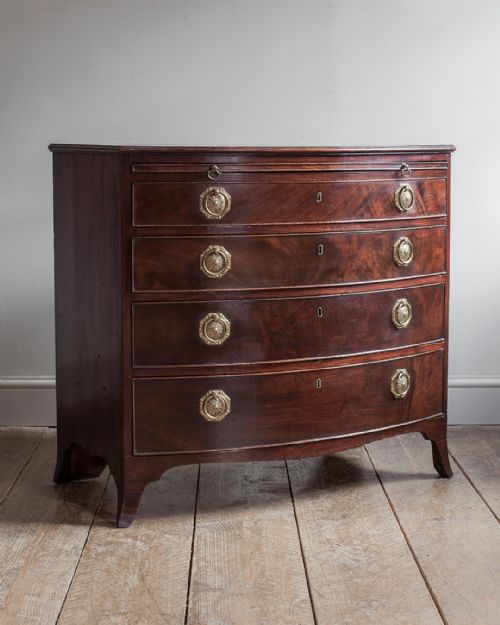
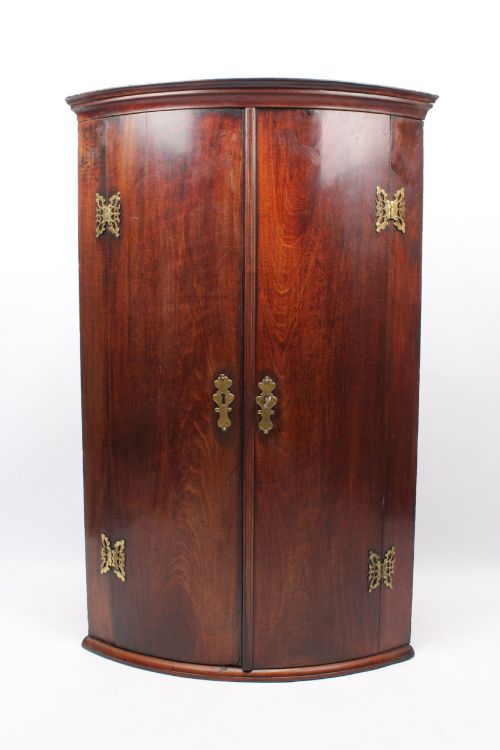
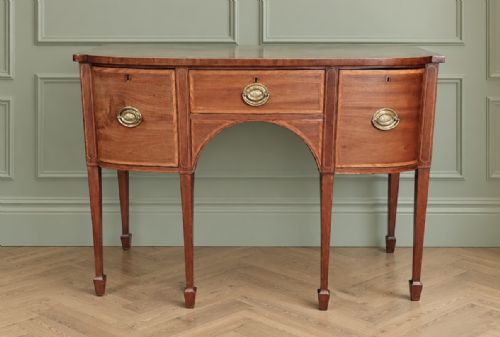
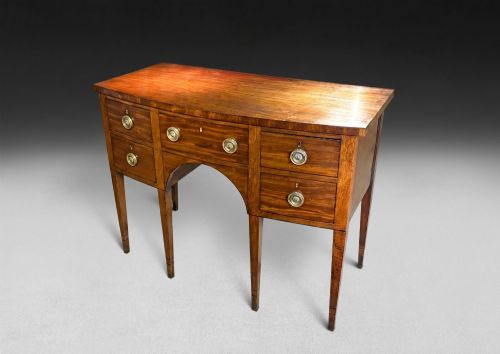
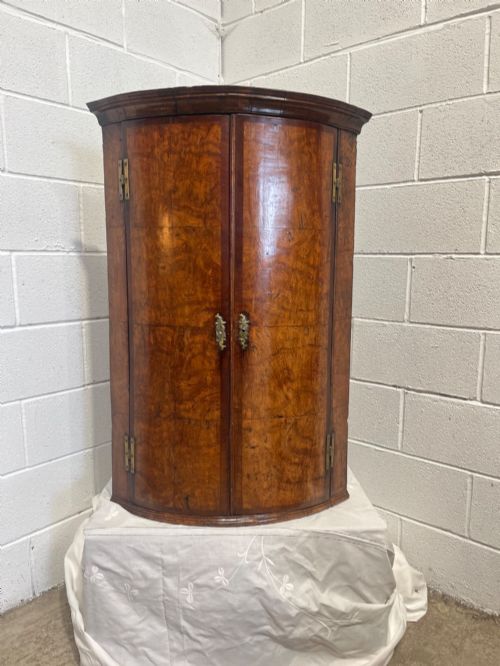
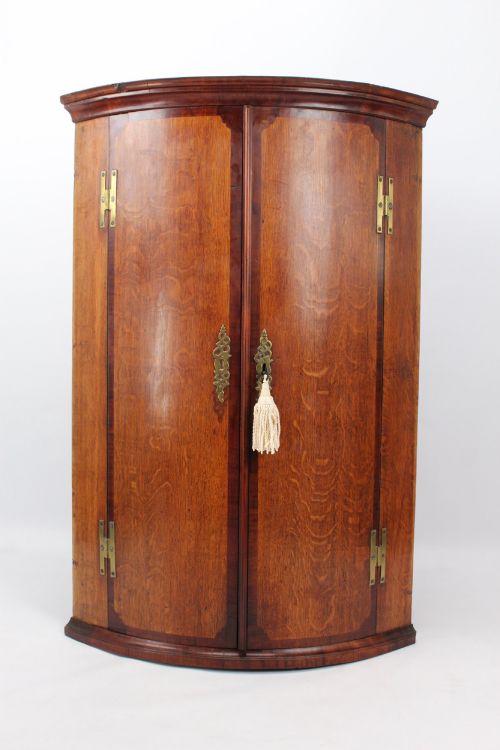
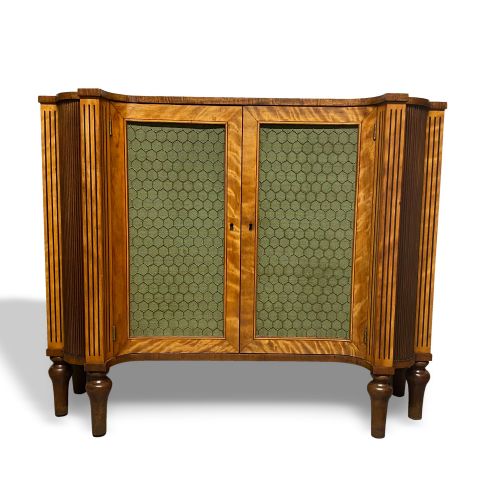
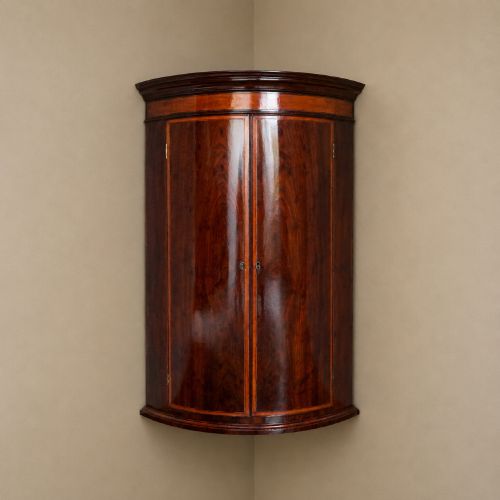
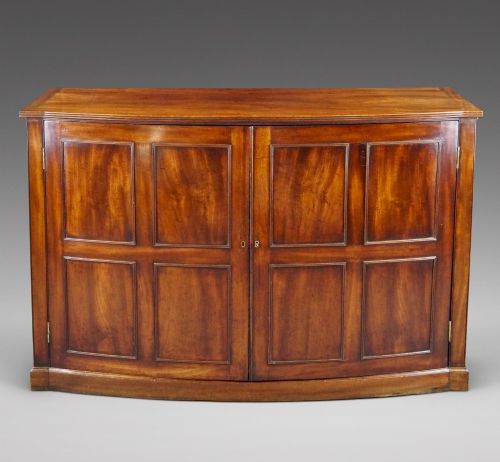
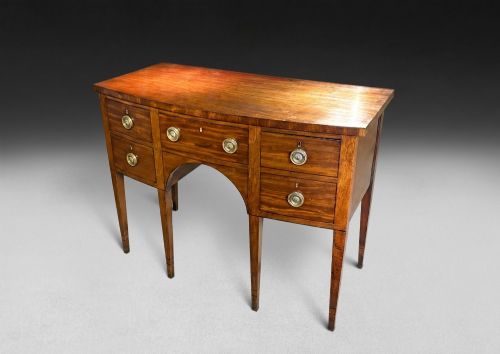
An 18th century bowfront cabinet encompasses various forms designed to fit domestic spaces, most frequently appearing as corner cupboards, sideboards, and chests of drawers. These pieces emerge predominantly from the Georgian period, spanning the eighteenth and early nineteenth centuries.
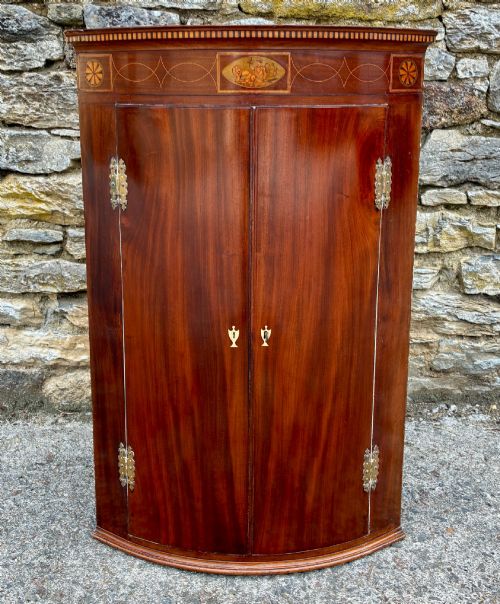
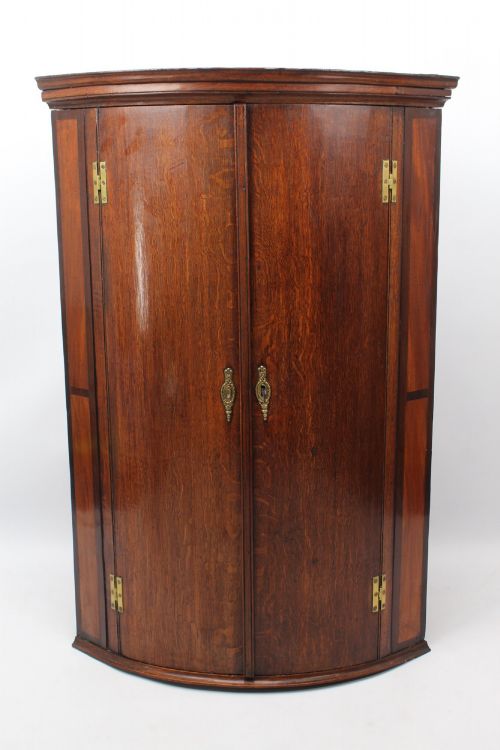
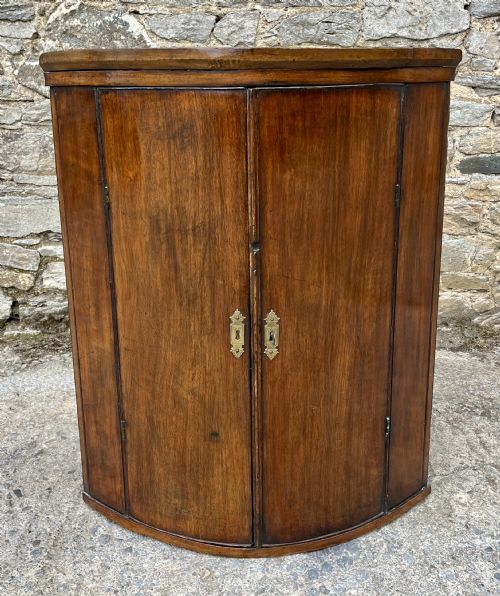
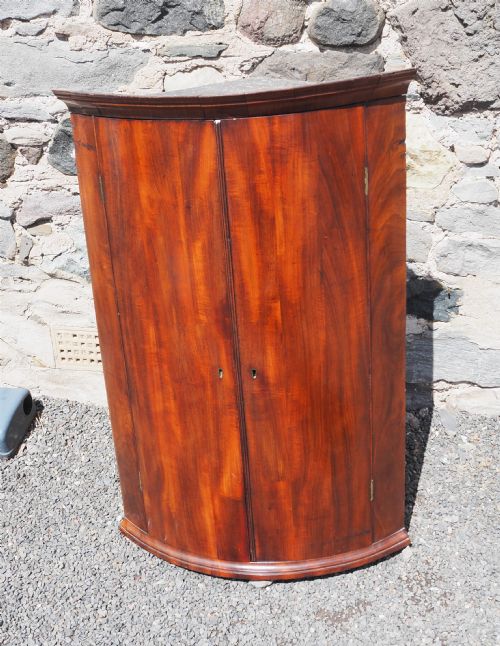
The curved profile defines the group, softening room angles when built as a corner cupboard or providing a projecting central curve on sideboards and chests. Oak and mahogany serve as the primary foundational timbers across these varied formats.
Buyers encounter hanging wall units alongside floor-standing cabinets and side cupboards. The selection demonstrates how cabinet makers adapted the convex curve to diverse storage needs within domestic interiors.
What separates examples
The choice of timber figure dictates much of the visual distinction, with heavily figured plum pudding mahogany or intricate marquetry setting certain pieces apart from plain oak or mahogany surfaces. Grain selection across curved doors demonstrates the maker's skill in matching timber.
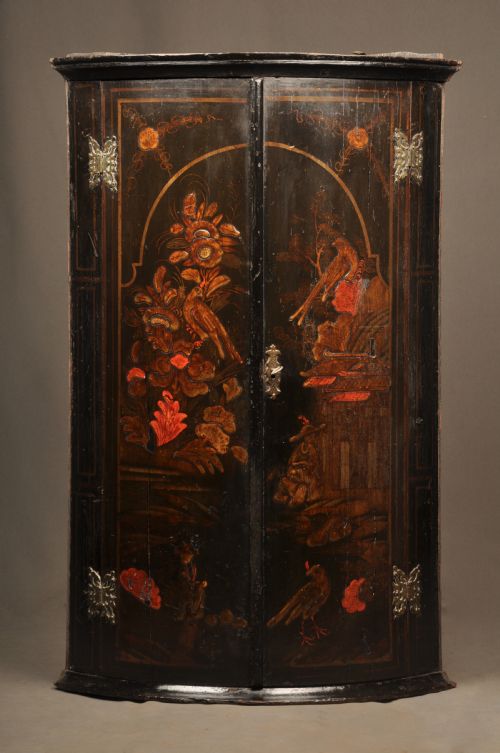
Proportion and the crispness of inlaid boxwood and satinwood stringing separate standard utility pieces from finer examples. Original brass fittings and intact lacquer or Japanned finishes further distinguish superior survivals.
The documented periods span the 18th century, Georgian era, and early 19th century up to 1800.
Ince and Mayhew
The 18th Century Bowfront Cabinet Glossary
- Bowfront
- A convex, outwardly curved front elevation typical of select Georgian sideboards and cupboards. This curved design softens room angles and maximises internal storage depth.
- Japanned
- European imitation of East Asian lacquerwork, utilising layered varnishes and raised metallic decoration. This technique appears on specialised 18th century Chinoiserie cabinets.
- Plum pudding mahogany
- Highly figured tropical hardwood exhibiting speckled, circular growth patterns resembling traditional festive puddings. Craftsmen prized this dense timber for decorative door panels.
- Stringing
- Thin inlay lines of contrasting wood, such as boxwood or satinwood, inserted into grooves along furniture edges. It provides geometric framing on drawer fronts and cabinet doors.
- Linen press
- A tall storage piece featuring upper doors enclosing sliding trays for textiles above a chest of drawers base. Georgian examples often incorporate curved bowfront lower sections.
18th Century Bowfront Cabinet: Frequently Asked Questions
Where did these cabinets go in a room?
Hanging corner cupboards positioned themselves high on walls to utilise dead space in room corners, often flanking a fireplace or window. Floor-standing sideboards and chests occupied principal reception rooms for storing dining silver and linens.
Smaller side cabinets and bedside units found places in private chambers. Their curved profiles allowed servants and family members to move past furniture in narrow hallways and bedrooms without catching sharp corners.
How do I identify a Georgian piece?
Examination of construction methods reveals the period, as hand-cut dovetails and secondary woods like oak or pine indicate eighteenth-century origin. Timber selection relies heavily on solid mahogany or oak beneath decorative veneers.
Hardware placement and the presence of hand-planed backboards provide further clues. Stylistic details such as boxwood stringing and bracket feet align with late 18th century design conventions.
How do I care for antique lacquer?
Antique Japanned and lacquered surfaces require stable indoor humidity away from direct sunlight to prevent cracking or fading. Dusting should occur gently with a dry, soft cloth without chemical polishes.
Moisture and alcohol can damage historic varnishes permanently. Professional conservation is recommended if structural or surface repairs become necessary.