



18th Century Basin Stand
An 18th century basin stand is a clever piece of utilitarian furniture designed for personal grooming, offering concealed storage and surfaces for washing.
18th Century Basin Stand
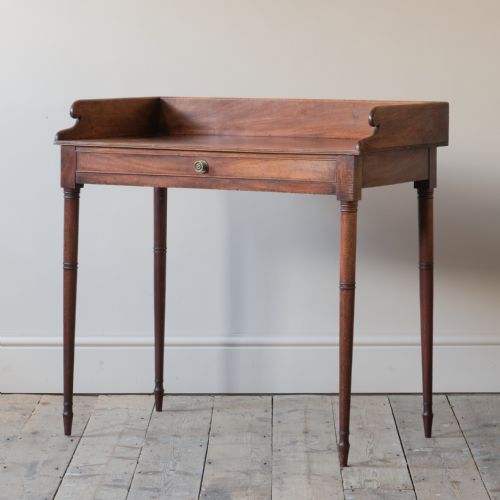
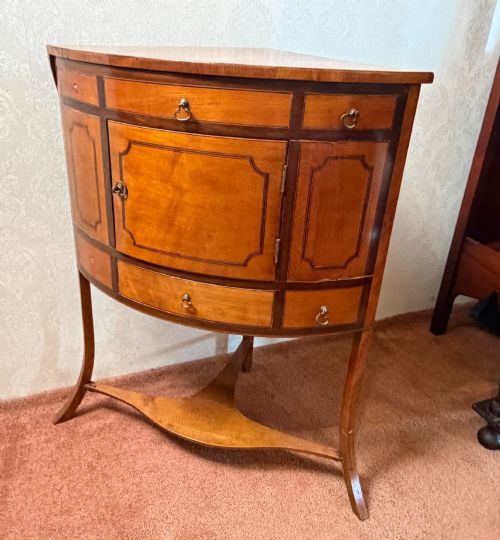
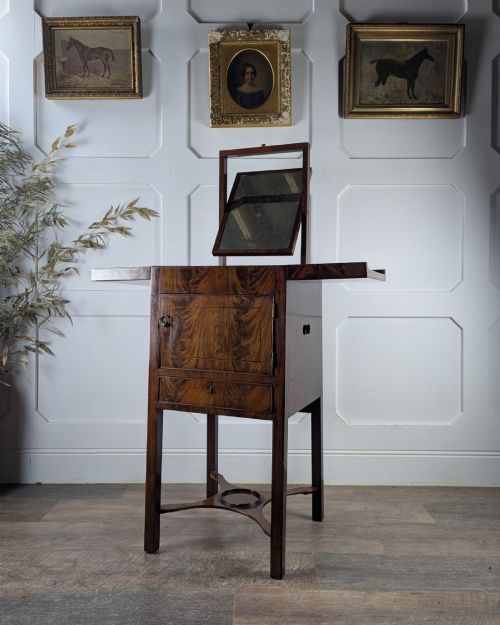
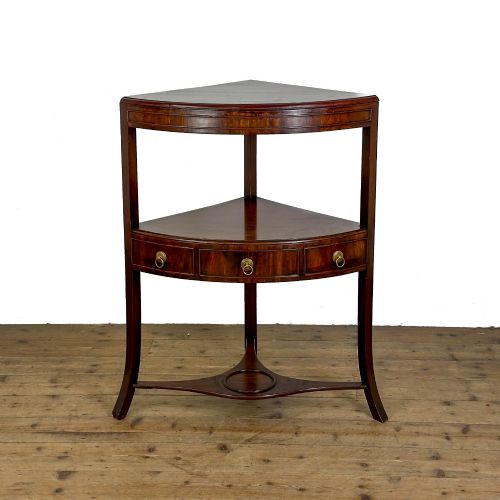
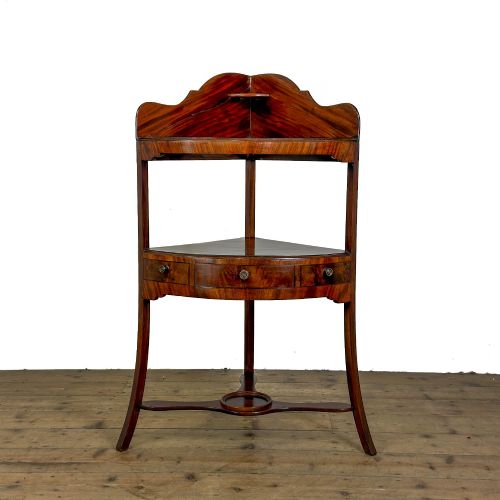
When you search for an 18th century basin stand, you encounter a specialised form of furniture built to hold washbowls, water jugs, and grooming equipment. These pieces appear primarily as freestanding washstands, corner washstands, and folding variations designed to fit neatly into period bedchambers.
The surviving examples on this page date predominantly from the Georgian and George III eras, with occasional pieces spanning into the nineteenth century. Most take the form of compact corner units or square washstands, reflecting the domestic spatial arrangements of the period.
How They Were Made
Cabinetmakers constructed these basin stands predominantly using mahogany, including Cuban mahogany, valued for its density and deep grain. Workshops frequently embellished finer surfaces with satinwood and boxwood inlay, adding delicate geometric stringing and contrasting borders.
Structural integrity relied on traditional joinery, incorporating folding tops, tiered shelves, and small drawer compartments designed to house shaving gear or porcelain basins. Brass fixtures and glass elements occasionally appear as supporting hardware and inset fittings.
Listings for this phrase frequently feature mahogany and Cuban mahogany, often incorporating boxwood inlay and satinwood details.
What Varies in Quality
The distinction between standard utility pieces and finer examples lies in the selection of timber and the precision of the cabinetwork. Dense Cuban mahogany and subtle boxwood inlay indicate a workshop of higher capability, whereas simpler constructions utilise plain mahogany without secondary woods.
Mechanical complexity also separates the ranges, seen in the smooth operation of fold-away tops, clever corner configurations, and integrated drawer structures. Pieces bearing maker stamps or exhibiting sophisticated Chippendale-influenced carving represent the upper tier of surviving examples.
Gillows Lancaster
The 18th Century Basin Stand Glossary
- Basin stand
- A dedicated piece of furniture designed to support a washbowl and toiletries for morning ablutions. These stands often incorporate tiers for water jugs and soap containers.
- Corner washstand
- A triangular variant shaped specifically to fit into the corner of a room to save floor space. They frequently feature high splashbacks and tiered shelves.
- Cuban mahogany
- A dense, dark timber harvested in the Caribbean and favoured by eighteenth-century cabinetmakers for its rich figure. It resists warping and takes a high polish.
- Boxwood inlay
- A decorative technique using thin strips of pale boxwood set into contrasting darker timber. This creates geometric borders and stringing lines on tabletops and drawer fronts.
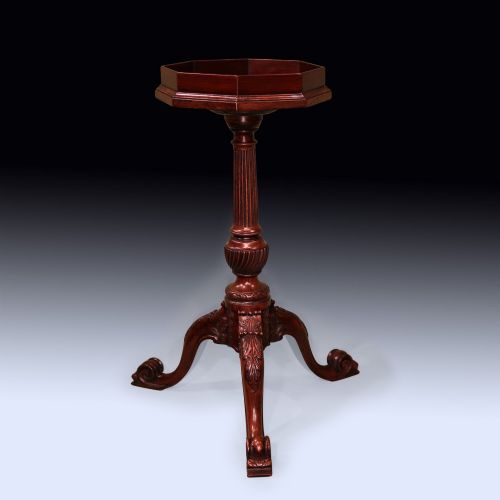
- Wig stand
- A small pedestal table with a rounded or spherical top designed to hold a gentleman's peredwig when not in use. They share similar proportions to small basin stands.
18th Century Basin Stand: Frequently Asked Questions
What is an 18th century basin stand?
An 18th century basin stand is a specialised piece of domestic furniture built to hold a washbowl, water pitcher, and grooming accessories. These pieces were essential for personal hygiene in bedchambers before plumbed bathrooms became common.
They typically feature a circular cutout on the top tier to support the basin, with lower shelves providing space for ewers and small drawers for powders or soaps.
How do I identify a George III washstand?
George III washstands are usually identified by their mahogany construction, slender legs, and specific functional tiers. They often display period characteristics such as boxwood stringing, brass pull handles, and undertiers with small drawer boxes.
Many examples are built as corner units to maximise bedroom space, reflecting the interior layouts of late eighteenth-century homes.
Were these stands used for washing?
Yes, these stands functioned as the primary washing stations in bedrooms before the advent of indoor plumbing. Servants would fill a basin with warm water brought from the kitchen or scullery.
The upper tier held the water bowl, while lower shelves accommodated the matching jug and receptacles for sponges and shaving gear.