


18k Yellow Gold Medal
An 18k yellow gold medal carries the quiet weight of personal devotion and fine metalwork from the turn of the twentieth century.
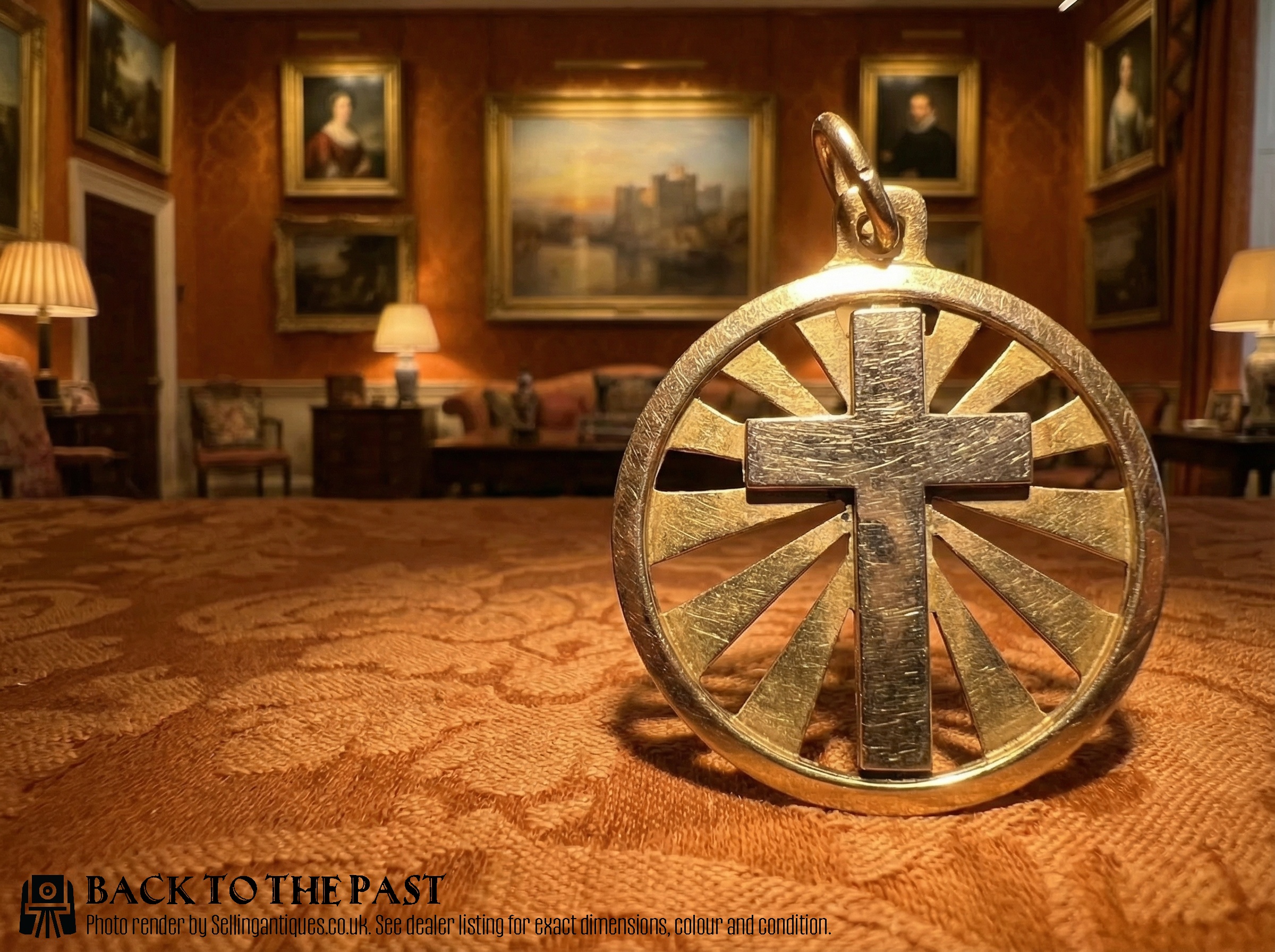
18k Yellow Gold Medal
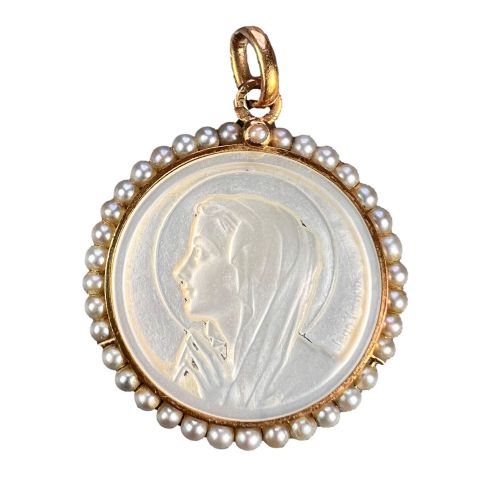
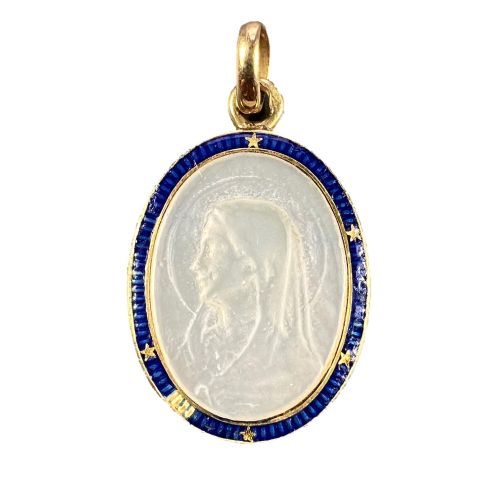
The pieces grouped under the search phrase 18k yellow gold medal span devotional pendants, charms, and commemorative medallions originating primarily from French workshops. Buyers encounter works dedicated to the Virgin Mary, Saint Christopher, and various saints, alongside zodiac and floral motifs.
Most examples date from the late nineteenth century through the mid-twentieth century, capturing periods such as Art Nouveau, Belle Epoque, and Art Deco. These items typically function as wearable pendants, suspended from chains by integrated loops or bail rings.
The selection ranges from simple stamped discs to intricate sculptural reliefs framed by delicate borders. Pendants incorporating religious iconography and heraldic designs dominate the available forms.
Materials and Technique
Goldsmiths utilised 18-karat yellow gold, occasionally mixing rose or white gold elements, to strike or cast the body of each medal. This high gold purity provides a warm, rich tone that resists tarnishing over decades of wear.
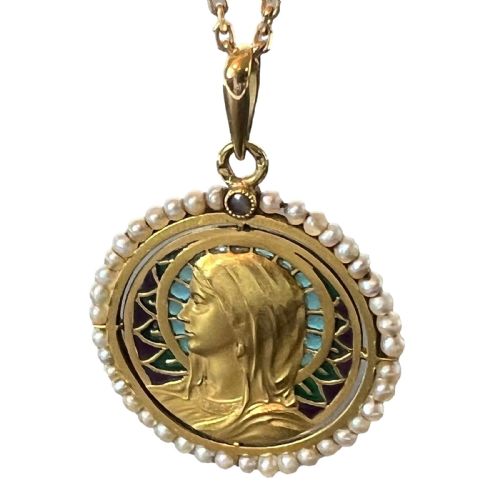
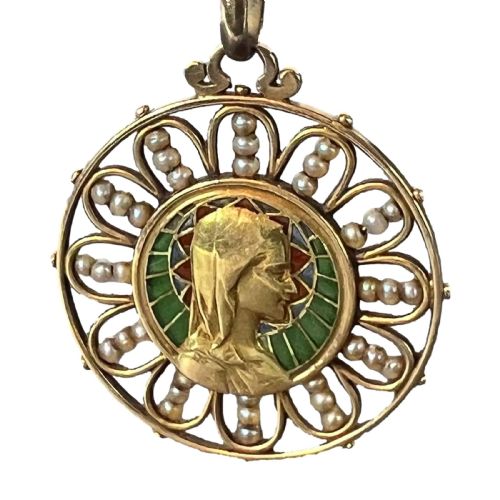
Enamelling techniques such as plique-a-jour introduce translucent pools of colour that catch the light behind figures and floral wreaths. Master medallists employed detailed hand-engraving and relief stamping to define facial expressions and drapery folds.
Subject matter spans religious icons, zodiac signs, hunting horns, and floral wreaths.
Factors of Quality
The crispness of the strike or the depth of the hand-carved relief distinguishes finer medals from standard production pieces. Sharp details in the hair, hands, and inscriptions indicate superior workshop execution.
Signed works by noted medallists command attention due to the artistry involved in their miniature sculptures. The integration of translucent enamel or applied seed pearls further elevates the standard of a piece.
Emile Monier·Paul Brandt·Mazzoni·Pageli Perriat·Dropsy·Guilbert·Vernon·Sellier·Rasumny·Ovide Yencesse·Tairac·Lasserre·Bouix·Perroud·Becker·Tricard·Augis·OBC·Lavrillier
The 18k Yellow Gold Medal Glossary
- Plique-a-jour
- An enamelling technique where enamel is applied in cells without a backing, resembling miniature stained glass. This method allows light to pass directly through the coloured glass.
- Medallion
- A large metal disc struck or cast to commemorate a person, event, or religious devotion. These pieces often feature sculptural relief work on one or both sides.
- Bail
- The loop attached to the top of a medal that holds the suspension ring or chain. Original bails often bear small control marks.
- Hallmark
- A small stamp impressed into the metal indicating purity, origin, or maker. French pieces frequently display the eagle head mark for eighteen-karat gold.
- Relief
- Sculptural projection from a flat background surface. High relief creates strong shadows and a three-dimensional appearance on the face of the medal.
18k Yellow Gold Medal: Frequently Asked Questions
What do these medals celebrate?
These medals commemorate religious devotion, patron saints, feast days, and personal milestones such as first communions. Makers also produced zodiac designs and seasonal motifs.
Many pieces served as protective talismans for travellers, notably depictions of Saint Christopher. Others honour historical Marian apparitions and sacred hearts.
How do I wear an antique medal?
Antique medals suspend easily from standard gold chains of matching tone, worn alone as a focal point or layered with other charms. Their generous bail loops accommodate various chain thicknesses.
Ensure the suspension ring is securely closed to prevent loss during daily wear. The substantial weight of eighteen-karat gold allows these pendants to hang well against the chest.
How do I identify the maker?
Makers typically signed their miniature sculptures near the lower edge of the medal design, often using a surname or initials. Examining the surface with a loupe reveals these hidden signatures.
French pieces also carry tiny workshop stamps and guarantee marks on the outer edge or the bail. These control marks help isolate the period of production.
What is plique-a-jour enamel?
Plique-a-jour is a demanding jeweller technique that creates translucent areas within a gold framework, similar to stained glass. Light shines through the coloured glass sections to illuminate the design.
Because this work lacks a solid backing, surviving examples require gentle handling to avoid fracturing the delicate enamel walls. This technique appears on choice turn-of-the-century devotional pieces.