


French Virgin Mary Charm
When you search for a French virgin mary charm, you uncover devotional pieces carrying the intricate artistry of earlier decades.
French Virgin Mary Charm
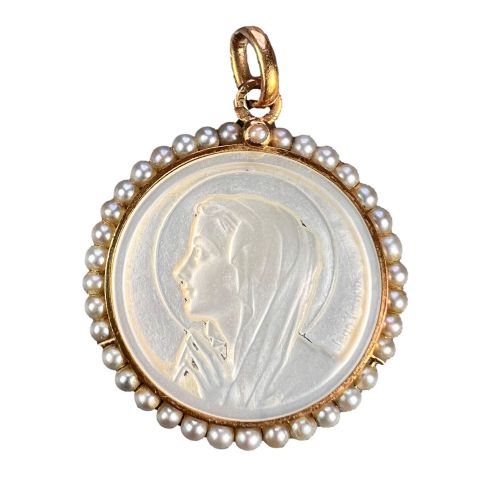
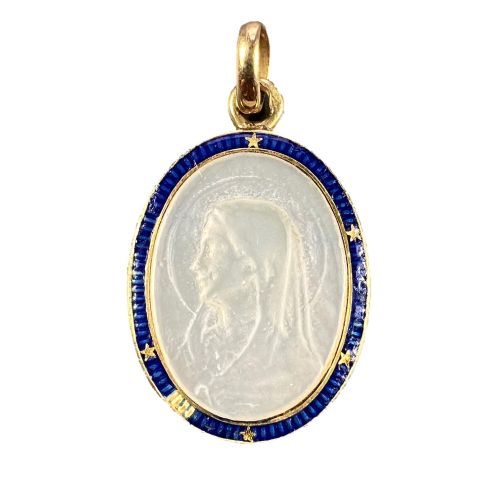
A French virgin mary charm bridges personal devotion with delicate jewellery, taking the form of pendants and medals worn close to the heart. These small treasures usually depict the Madonna and Child or the Virgin Mary alone, often rendered with regional French devotional iconography.
Most examples you encounter on this page date from the late nineteenth century through the mid-twentieth century, spanning periods such as Art Nouveau and Art Deco. They function as miniature works of art, designed to be suspended from chains or added to charm bracelets.
Materials and construction
Gold forms the structural core of these pieces, predominantly utilising 18K yellow, rose, and white gold to create polished or engraved frames. Artisans combined precious metals with natural elements like mother of pearl and seed pearls to lend luminous depth to the miniature portraits.
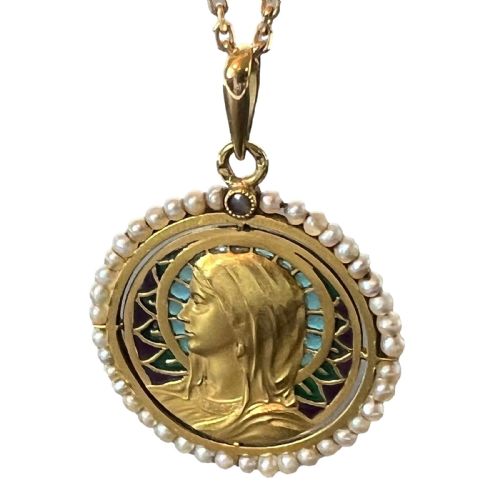
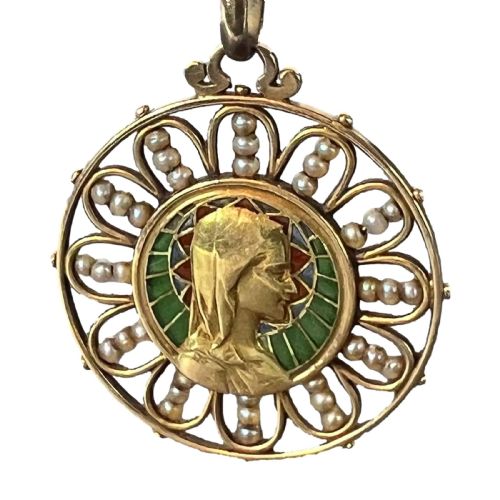
Enamel work frequently elevates the designs, particularly through translucent plique-à-jour techniques that allow light to filter through coloured glass much like miniature stained glass windows. Hand-engraving and piercing further define the metalwork, adding fine textural details to borders and halos.
Listings span several decades, featuring pieces originating from the late nineteenth century through to the mid-twentieth century.
Judging the range
The sophistication of the enamel work dictates much of the distinction between standard examples and finer items, especially where delicate plique-à-jour techniques require immense skill to execute without flaws. Pieces bearing the signatures of known medallists or incorporating natural seed pearls and mother of pearl display a higher degree of atelier craftsmanship.
Depth and clarity of the hand-engraving set individual medals apart, as crisply rendered facial expressions and drapery folds reflect superior artistic execution. The weight and richness of the 18K gold frame also contribute to the overall substance and tactile appeal of the pendant.
Emile Dropsy·Sellier·Monier·Augis·Mazzoni·Becker
The French Virgin Mary Charm Glossary
- Plique-a-Jour
- An enamelling technique where the enamel is applied without a backing, creating a transparent, stained-glass effect. Light passes directly through the coloured cells.
- Medal
- A flat piece of metal struck or cast with commemorative or religious imagery. These are often worn as pendants or kept as devotional tokens.
- Mother of Pearl
- The iridescent inner layer of mollusc shells used as a gleaming background for painted or carved figures. It provides a soft, pearlescent glow behind the gold motifs.
- Seed Pearl
- Tiny, naturally occurring pearls often used to accent borders or halos. Their diminutive size requires meticulous drilling and placement by the jeweller.
French Virgin Mary Charm: Frequently Asked Questions
How do I date a pendant?
Dating relies heavily on stylistic cues such as Art Nouveau floral motifs or Art Deco geometric framing, alongside specific periods recorded in the design history. Hallmark stamps and the presence of makers' marks also help anchor pieces to specific eras.
Earlier nineteenth-century examples often feature rose gold and dense engraving, while later mid-century pieces display different stylistic proportions. Comparing known signatures provides further chronological context.
How were these medals worn?
Historical evidence shows these pieces functioning primarily as pendants suspended from necklaces or attached to charm bracelets. Their dual classification as charms and medals allowed owners to wear them daily.
The inclusion of secure suspension loops or rings enabled them to be easily integrated into existing jewellery collections or worn as standalone devotional items.
What materials are most common?
Yellow gold in 18K purity forms the foundational material for the vast majority of these religious charms and pendants. Rose gold and white gold variants also appear across nineteenth and twentieth-century pieces.
Decorative additions frequently include translucent enamel, mother of pearl, and small seed pearls to enhance the visual impact of the sacred imagery.