


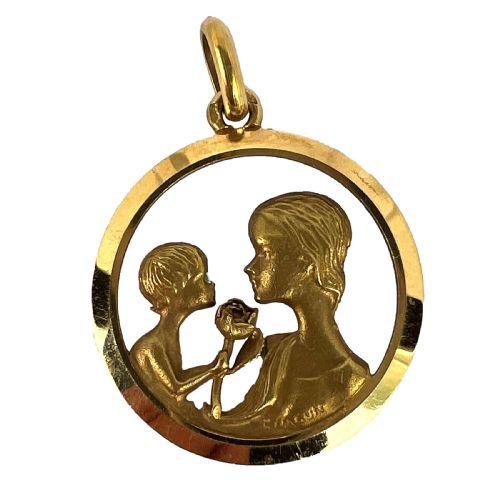


18k Rose Gold Pendant
An 18k rose gold pendant brings a warm, antique glow to the neck, offering miniature religious art, floral motifs and sentimental keepsakes.
18k Rose Gold Pendant
When you search for an 18k rose gold pendant, you encounter delicate French religious medals, floral wreaths and commemorative lockets spanning the Victorian, Edwardian and Art Nouveau periods. These items range from devotional charms depicting the Virgin Mary to intricately engraved monograms and botanical designs.
Collector interest centres on the survival of fine details, whether through engraved initials, blue enamel, or tiny set stones. Each pendant reflects the aesthetic priorities of its decade, shifting from elaborate nineteenth-century symbolism to stylised twentieth-century forms.
How they were made
Goldsmiths worked primarily in 18k gold, often pairing the characteristic warm blush of rose gold with contrasting yellow or white gold sections to highlight specific design elements like flowers or ribbons. Pendants frequently incorporate precious stones such as rose-cut diamonds, natural pearls, rubies, and emeralds set directly into the metal.
Surface decoration relied on meticulous hand-engraving, relief work, and enamelling techniques including plique-à-jour, which allowed light to pass through translucent coloured glass sections. Components like spring rings and jump rings were substantial and hand-finished, securing the pendants to chains or ribbons.
18k Rose Gold Pendant Retail Price Guide 2026
Typical asking prices for 18k rose gold pendant among the pieces listed under this phrase on Sellingantiques today, from the lower quarter to the upper quarter. They describe what is for sale here now, not the wider market.
Common motifs across the inventory include the Virgin Mary, floral wreaths, monograms, chalices, and birds perched on branches.
What varies in quality
The distinction between standard examples and exceptional pieces rests upon the crispness of the hand-engraving and the depth of the relief work on figures and floral wreaths. Softer, worn details indicate heavy polishing or lesser initial craftsmanship, whereas superior items retain sharp edges and clear maker marks.
Material integration also separates the range, with top-tier items featuring well-matched natural pearls, undamaged enamel work, and secure flush-set diamonds rather than simple stamped metal sheets.
The 18k Rose Gold Pendant Glossary
- Rose gold
- An alloy of gold and copper that yields a distinct reddish or pinkish hue. This warm metal became particularly popular in nineteenth-century and Belle Époque jewellery.
- Medal pendant
- A devotional or commemorative medallion fitted with a suspension loop to be worn around the neck. These often depict saints, holy figures, or first communion dates.
- Plique-à-jour
- An enamelling technique where the enamel is applied without a backing, resembling miniature stained glass. It lets light shine through the transparent or translucent coloured cells.
- Rose-cut diamond
- An antique diamond cut featuring a flat base and a domed crown faceted with triangles. This cut produces a soft, starry shimmer rather than modern brilliance.
- Spring ring
- A circular hollow closure featuring a spring-loaded internal bolt, commonly utilised as a connector or clasp on antique charms and pendants.
18k Rose Gold Pendant: Frequently Asked Questions
What is an 18k rose gold pendant?
An 18k rose gold pendant is a small decorative or devotional ornament fashioned from high-carat gold alloyed with copper. These pieces often take the form of antique French medals, floral charms, or lockets.
They reflect historical periods from the late nineteenth to the mid-twentieth century, combining warm metal tones with hand-engraved artistry and occasional gemstones.
How were these pendants worn historically?
Historically, these pendants served personal, devotional, or sentimental functions, worn close to the heart on delicate gold chains, silk cords, or ribbons. Religious medals marked milestones like first communions, while lockets held miniature portraits or locks of hair.
They were often added to chatelaines or charm bracelets alongside other meaningful tokens.
How do I care for antique rose gold jewellery?
Care involves gentle cleaning with warm water, mild soap, and a soft brush to remove everyday oils without disturbing set stones or enamel. Harsh chemical dips should be avoided, particularly on items containing pearls or enamel.
Storage in individual soft pouches prevents scratching between the warm 18k gold surfaces and harder gems.