


French Gold Religious Medal
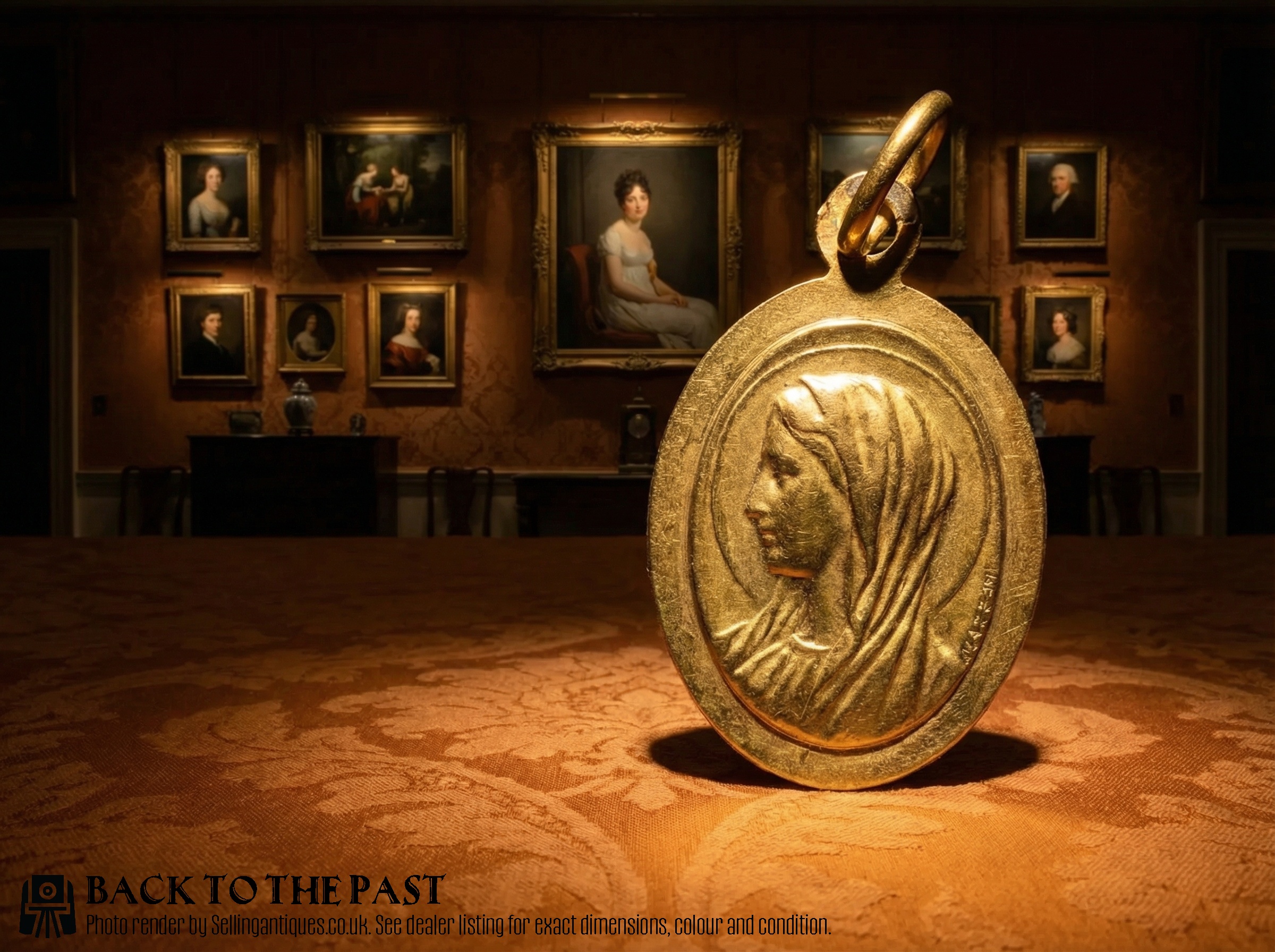
These French gold religious medal pieces are devotional pendants worn close to the heart, prized for their fine metallic work and sacred imagery.
What these pieces are
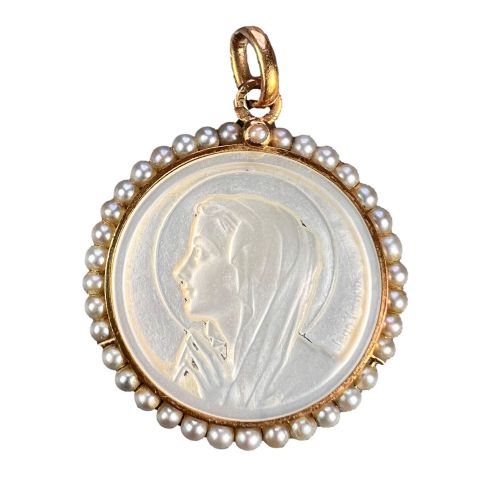
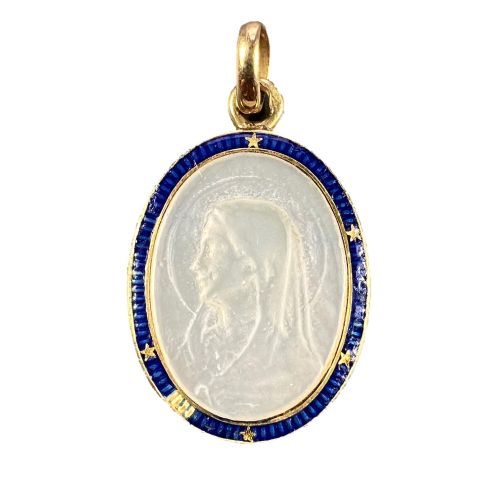
A French gold religious medal is a small devotional pendant created in France to honour sacred figures such as the Virgin Mary, the Madonna and Child, or Jesus Christ. These pieces function primarily as personal talismans of faith, designed to be worn on a chain as a necklace or attached to a charm bracelet. The selection here spans the late nineteenth century through the mid twentieth century, encompassing varied aesthetic movements.
Buyers will most frequently encounter eighteen karat yellow gold examples bearing depictions of the Virgin Mary, often framed by floral motifs or geometric borders. Forms range from simple oval medallions to intricate hinged charms, sometimes incorporating contrasting rose or white gold highlights. The visual language draws heavily upon traditional ecclesiastical iconography interpreted through the prevailing design tastes of each decade.
How they were made
These items rely principally upon eighteen karat yellow, rose, and white gold, shaped through casting, stamping, and delicate hand engraving. Metalworkers utilised traditional French goldsmithing techniques to give high relief to the sacred figures while keeping the reverse smooth for potential inscriptions.
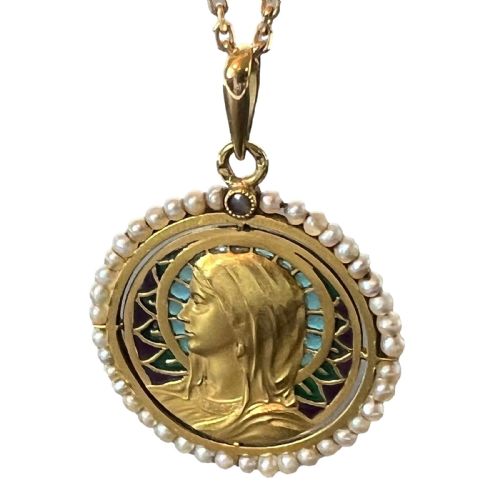
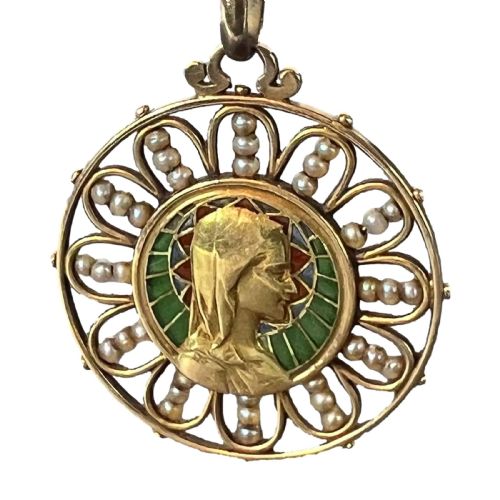
Select examples incorporate specialised decorative methods such as plique-à-jour enamel, which creates a translucent, stained glass effect without a solid backing behind the coloured glass. Framing elements often feature contrasting gold tones, combining yellow and white metals within a single pendant to accentuate borders and floral elements.
Retail Price Guide 2026
Typical UK retail prices for french gold religious medal, calculated from the Sellingantiques database of over a million retail prices indexed since 2003. This retail price guide relies exclusively on Sellingantiques data; no external sources or auction records are used, so the figures do not describe the wider market.
Several medals feature tiny hidden loops designed solely for microscopic prayer beads.
What varies in quality
Material variation also dictates standing, as pieces utilising multi-coloured gold combinations or complex enamel work require advanced bench skills. Signed items attributed to specific Parisian workshops or known medallists demonstrate a higher degree of artistic intent in the overall composition.
Mazzoni·Pageri Perroud·Perriat·Monet·Dropsy
The French Gold Religious Medal Glossary
- Plique-à-jour
- An enamelling technique where the enamel is applied within a cellular framework without a backing metal, allowing light to pass directly through the translucent colour.
- Medal
- A flat piece of metal struck or cast with a commemorative or devotional design, intended to be worn as jewellery or kept as a devotional token.
- Ecclesiastical
- Relating to the Christian Church or its clergy, describing the traditional iconography and formal style found on religious artefacts.
- Sacred Heart
- A devotional image representing the physical heart of Jesus Christ as a symbol of his divine love for humanity, frequently rendered on these pendants.
Frequently Asked Questions
How were these medals originally worn?
These pendants were typically suspended from a fine gold chain around the neck or fastened to a devotional bracelet.
They served as personal items of faith and protection, kept close to the body throughout the day.
What periods do these pieces represent?
The available selection spans from the late nineteenth century through the middle of the twentieth century.
Key design movements represented include Art Nouveau, Art Deco, and traditional French ecclesiastical styles.
What gold purity is standard here?
The vast majority of these pieces are struck in eighteen karat gold, often designated as yellow, rose, or white gold.
This high gold content was standard for French fine jewellery of the period, ensuring durability alongside a rich colour.
How do I identify the maker?
Many pieces bear stamped maker marks or signatures on the outer rim or the reverse of the medal.
Names such as Mazzoni or Dropsy often appear on the metal surface alongside standard French assay hallmarks.