


18ct Gold Religious Medal
An 18ct gold religious medal is a devotional pendant combining precious metalwork with sacred iconography, prized for its craftsmanship and personal significance.
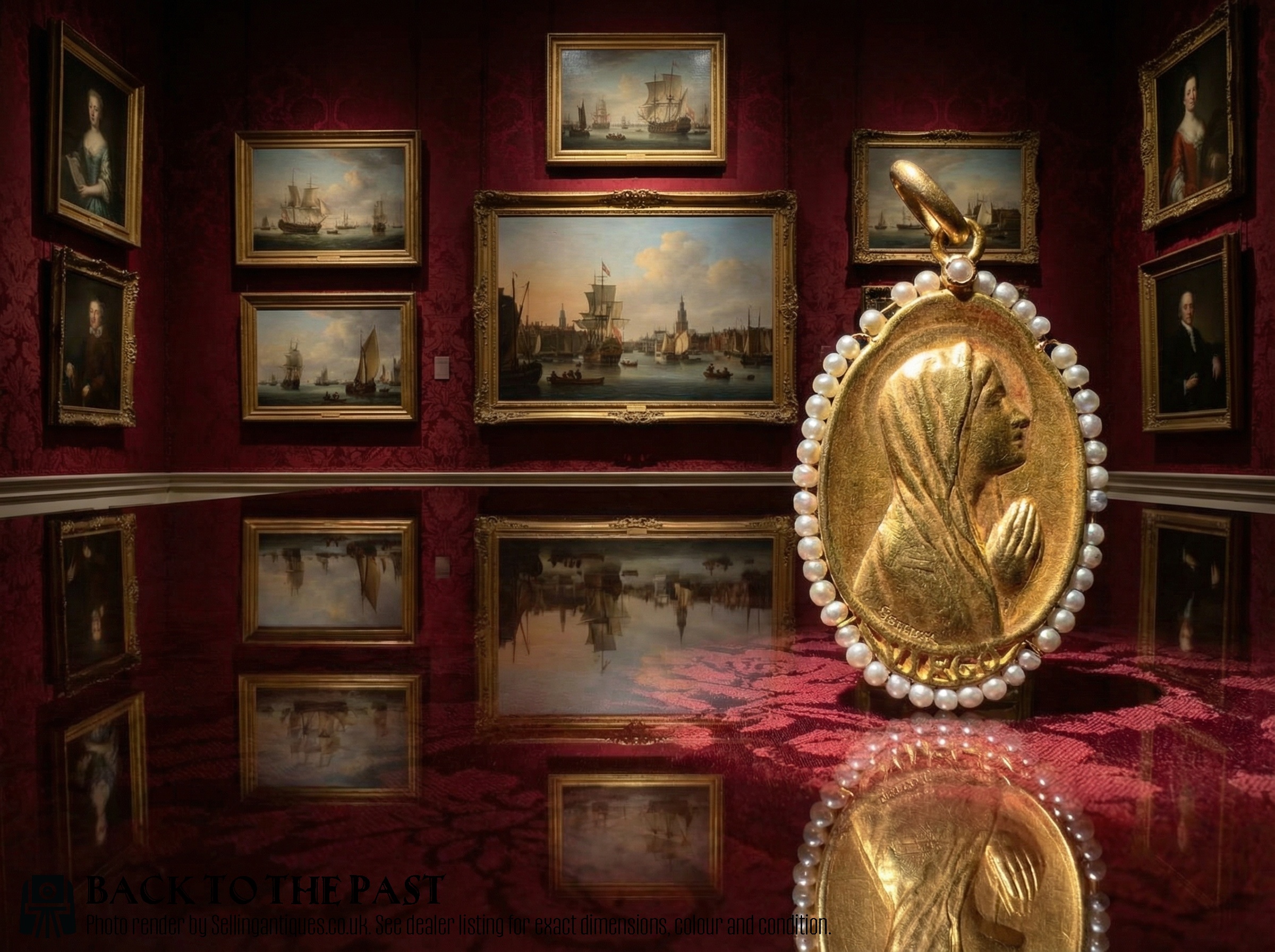
18ct Gold Religious Medal
An 18ct gold religious medal is a small devotional pendant worn to express faith, commemorate sacraments like first communion, or invoke sacred protection. When you examine this selection, you encounter pieces originating primarily from France, spanning the late nineteenth century through to the mid-twentieth century.
The most common forms on this page include depictions of the Virgin Mary, the Madonna and Child, and various saints rendered in yellow gold, white gold, and sometimes rose gold. These pendants frequently appear alongside terms denoting French devotional traditions, reflecting the distinct artistic heritage of their makers.
How they were made
Goldsmiths utilised 18K yellow gold as the primary foundation, often shaping the metal through stamping and casting techniques to achieve crisp relief portraits of sacred figures. These metal elements are occasionally enhanced with contrasting white gold highlights or delicate pierced openwork borders.
Materials recorded across the listings include yellow gold, white gold, rose gold, enamel, mother of pearl, seed pearls, and diamonds.
What varies in quality
The degree of sculptural depth in the central religious relief separates standard production from finer examples. Master medallists achieved subtle facial expressions, intricate drapery folds, and precise lettering that remain sharp even after decades of wear.
The integration of secondary materials such as enamel, seed pearls, and mother of pearl dictates the sophistication of a piece. Well-executed enamelwork and securely flush-set pearls demonstrate superior workshop standards during the manufacturing process.
Monier·Pageli Perriat·Dropsy·Guilbert·Emile Dropsy·Sellier·Ovide Yencesse·Mazzoni·Becker·Charl·Grun·Grün·Arnault·Augis·Serraz·Lasserre
The 18ct Gold Religious Medal Glossary
- Medallion
- A large metal disc struck or cast with pictorial designs, typically worn as a pendant or kept as a devotional object.
- Enamel
- A glassy substance fused to the surface of metal through firing, utilised to add colour and decoration to the medal body.
- Maltese cross
- A cruciform emblem characterised by four arrowhead-shaped arms converging at a central point, often rendered in coloured enamel.
- Relief
- A sculptural technique where the figures project from a background plane, giving depth to the depictions of saints and holy scenes.
- Punch mark
- A small stamped impression applied by the maker or assay office to indicate metal fineness and workshop origin.
18ct Gold Religious Medal: Frequently Asked Questions
What periods do these medals come from?
The pieces available span from the late nineteenth century through the 1890s and across the early decades of the twentieth century up to the 1960s. This era encompasses Art Nouveau and traditional French devotional designs.
Most items date from the interwar period and the decades immediately preceding the First World War, showcasing characteristic French workmanship from those eras.
How were these medals originally worn?
These items were designed primarily as pendants to be suspended from gold chains around the neck for personal devotion. They served as protective talismans or commemorative tokens for significant religious milestones.
Many pieces feature integrated suspension loops or jump rings specifically formed for daily wear against the body.
What materials are used besides gold?
While 18K yellow, white, and rose gold form the core structure of the pendants, several examples incorporate contrasting decorative elements. Mother of pearl provides an iridescent backing for sacred figures, and coloured enamel adds rich hues to crosses and borders.
Natural seed pearls and occasional small diamonds are also set into the gold surface to highlight specific details of the design.
How do I identify a French devotional medal?
French medals typically display distinct stylistic markers such as French inscriptions, specific saintly iconography like the Miraculous Medal design, and characteristic maker signatures on the rim or field. The artistic execution often follows French aesthetic movements including Art Nouveau.
Assay marks and workshop stamps placed on the jump rings or edges provide additional confirmation of their continental origin and metal standard.