

18ct Gold Platinum Ring
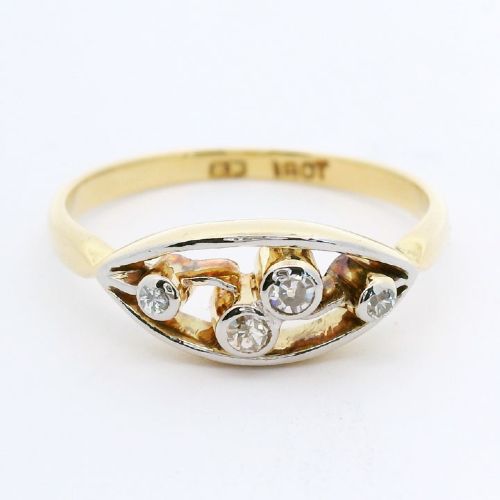
An 18ct gold platinum ring combines warm gold bands with white platinum settings to hold diamonds and coloured gemstones securely.
18ct Gold Platinum Ring
An 18ct gold platinum ring brings together late Victorian, Edwardian, Art Deco and mid twentieth century design. The search phrase covers engagement rings, dress rings and cluster forms made from yellow gold, white gold and platinum.
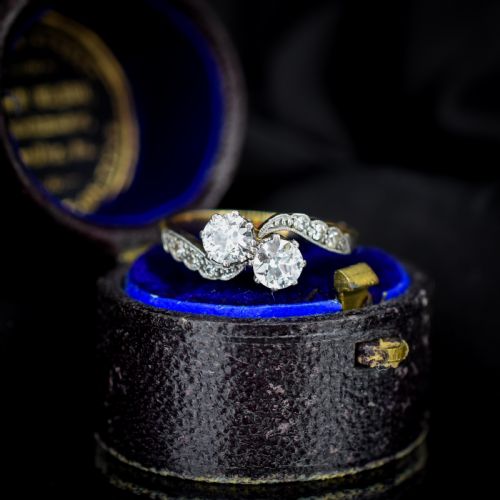
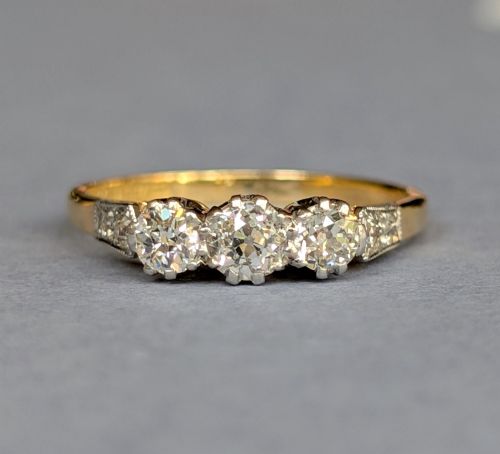
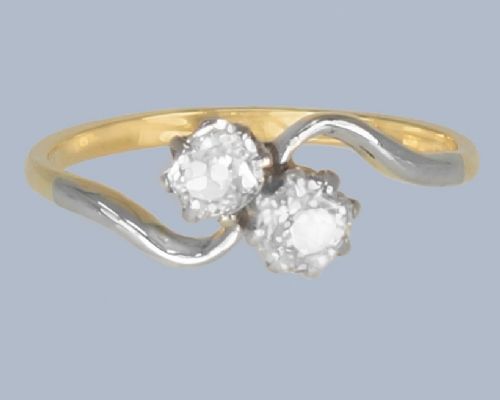
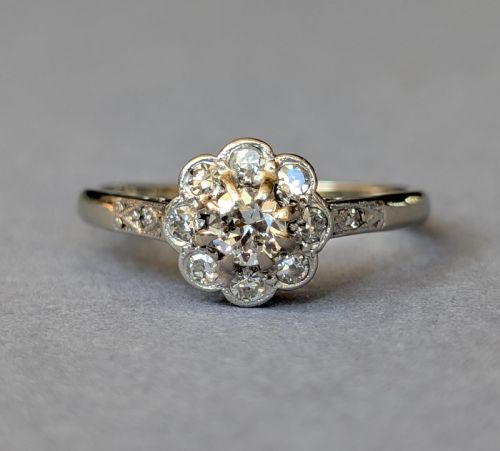
Cluster rings, solitaire stones, multi stone trilogy designs and toi et moi twist rings appear across the periods. Diamond and gemstone combinations span the early decades of the twentieth century up to the 1960s.
Materials and Construction
Maker techniques joined 18ct gold shanks with platinum claw or illusion settings to give white metal strength around stones while keeping the warmth of gold bands.
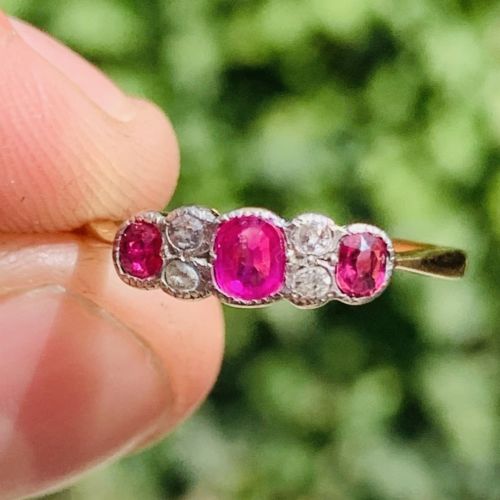
Gems such as old cut diamonds, sapphires, rubies, emeralds and opals were secured using platinum mountings that allowed maximum light reflection.
18ct Gold Platinum Ring Retail Price Guide 2026
Typical asking prices for 18ct gold platinum ring among the pieces listed under this phrase on Sellingantiques today, from the lower quarter to the upper quarter. They describe what is for sale here now, not the wider market.
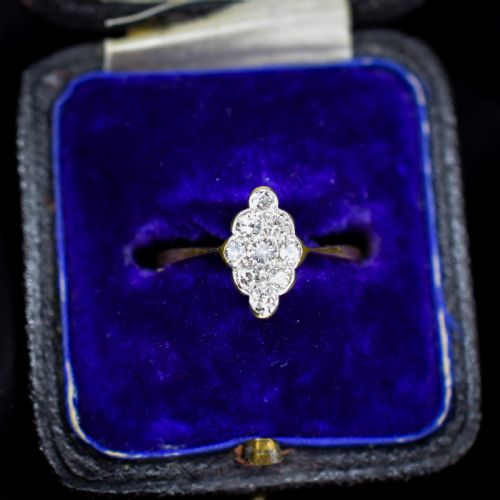
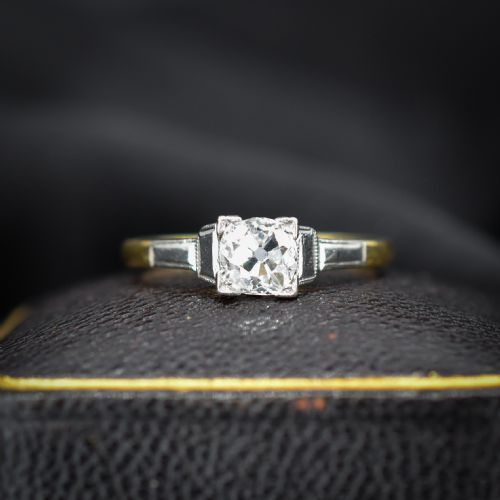
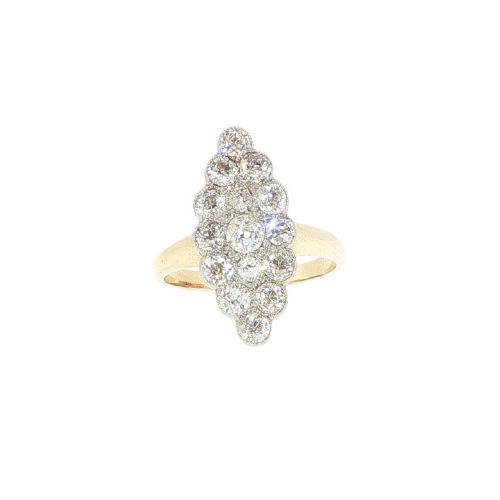
Common configurations include solitaire stones, multi stone trilogy settings, navette clusters and toi et moi twist designs.
Design and Proportion
Quality rests on the crispness of the platinum setting work and how well the stones match in colour, cut and clarity across multi stone pieces.
The harmony between the gold shank and the platinum crown defines the better examples, alongside the preservation of original hand cut facets on diamonds.
The 18ct Gold Platinum Ring Glossary
- Old Cut Diamond
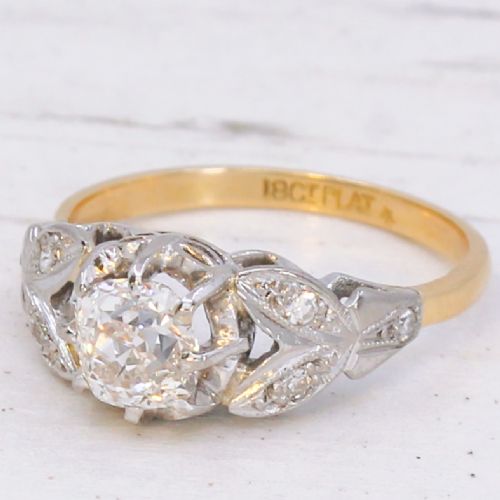
- A stone shaped by hand before modern machinery, featuring a smaller table, higher crown and deep culet. These diamonds catch candlelight and low light with a distinct softer sparkle.
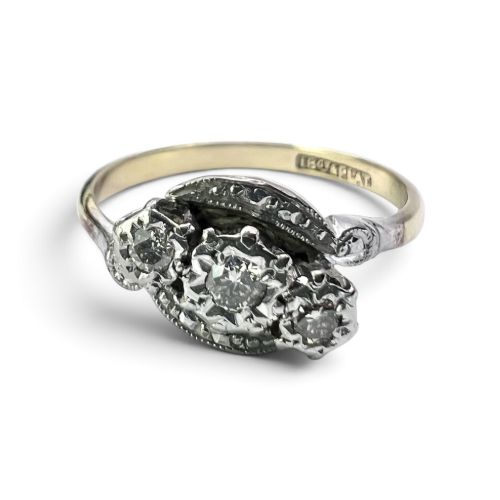
- Toi Et Moi
- A two stone ring style meaning you and me, often designed as a twist where two gems sit side by side. The layout represents two lives meeting.
- Navette
- A boat shaped ring setting that tapers to points at either end. This elongated outline sits flat along the finger.
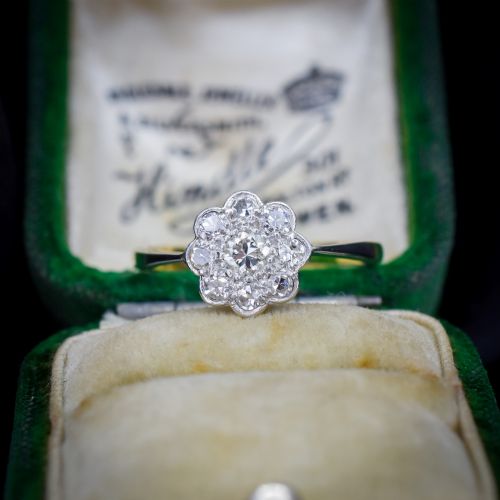
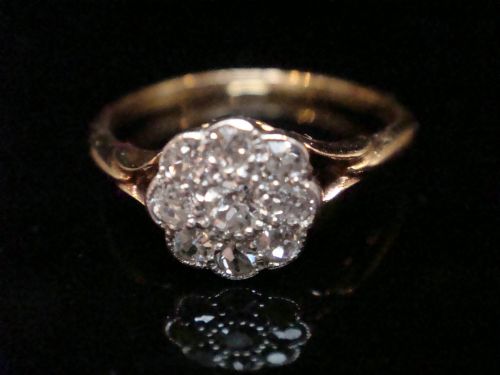
- Daisy Cluster
- A central gemstone surrounded by a ring of smaller stones resembling petals. The arrangement maximises light across multiple smaller facets.
- Trilogy
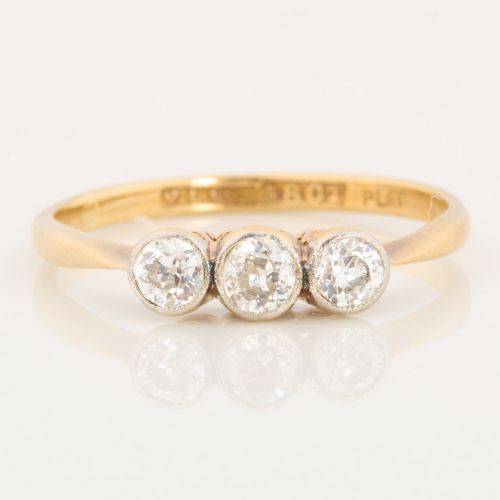
- A three stone arrangement representing past, present and future. The central gem usually stands larger than the flanking stones.
18ct Gold Platinum Ring: Frequently Asked Questions
Why use both gold and platinum?
Jewellers used 18ct gold for the band to provide structural warmth and strength, while soldering platinum to the top surface. Platinum offered a strong white metal that held small claws securely around diamonds without adding yellow tones.
This two metal method became popular during the Edwardian and Art Deco periods because platinum could be worked into finer wire and intricate geometric galleries.
How do I date these rings?
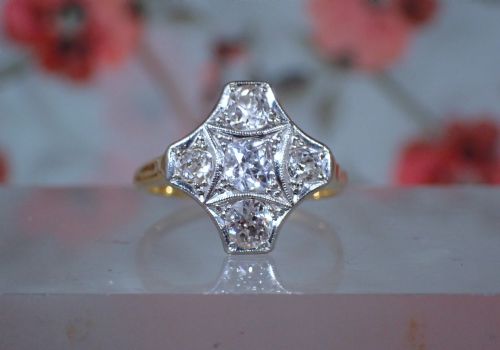
Dating relies on combining the gemstone cuts, the mount style and the metal combinations. Edwardian pieces often feature millegrain edges and delicate openwork, whereas Art Deco examples display geometric lines or platinum topped yellow gold shanks.
Later mid century rings shift towards heavier gold work and different prong arrangements. Comparing the overall silhouette against known design eras clarifies the decade of manufacture.
Are old cut diamonds different?
Old European and old cut diamonds have hand polished facets that differ from modern brilliant cuts. They possess smaller tables and deeper pavilions, producing a broad, gentle flash rather than pinpoint sparkle.
These stones were shaped individually by hand to fit antique settings, meaning no two cut stones are identical in proportion.
Can I wear an antique ring daily?
Daily wear is possible if the ring is checked regularly by a jeweller for claw wear and thin shanks. Platinum top settings hold stones firmly, but the softer 18ct gold band can thin over decades of friction against other jewellery.
Removing the ring during heavy manual tasks protects the original claw work and prevents distortion of the antique metal.