
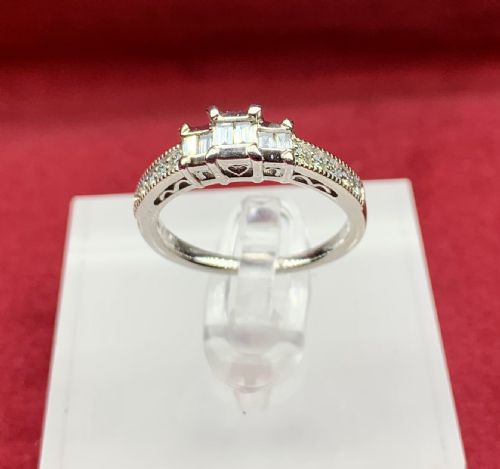
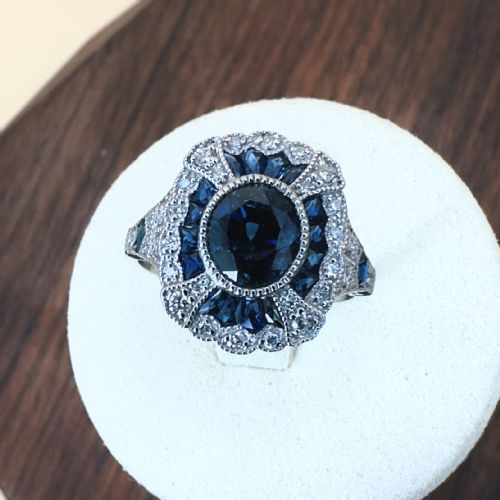


Milgrain Diamond Cluster Ring
A milgrain diamond cluster ring brings together crisp geometric borders and old cut sparkle, offering a distinct piece of vintage character for everyday wear.
Milgrain Diamond Cluster Ring
A milgrain diamond cluster ring centres on a grouped arrangement of stones, framed by tiny beaded metalwork along the edges of the setting. The examples on this page span the Edwardian era and the 1930 and 1940 decades, capturing early twentieth-century design. Most pieces lean heavily into the geometric vocabulary of the Art Deco period.
The layout typically forms a flower or daisy cluster, where a central diamond is surrounded by smaller accent stones. Alongside diamonds, certain pieces incorporate calibrated rubies or sapphires to add contrasting colour to the face of the ring. These configurations showcase the lapidary work and stone-setting methods of the 1930s.
Materials and construction
Metals used across these items include platinum, 18ct gold, white gold, and mixed gold and platinum settings. Platinum provides the strength needed for delicate wirework and secure claw settings without adding excessive bulk to the profile. White gold and yellow gold combinations deliver the contrasting warm and cool tones typical of the period.
Stones are predominantly old cut diamonds, rose cut diamonds, and champagne diamonds, paired occasionally with sapphires and rubies. Jewellers shaped the metal edges into fine, raised beads known as milgrain to frame the central cluster. This meticulous hand-finishing gives the outer perimeter of the setting a soft texture.
Milgrain Diamond Cluster Ring Retail Price Guide 2026
Typical asking prices for milgrain diamond cluster ring among the pieces listed under this phrase on Sellingantiques today, from the lower quarter to the upper quarter. They describe what is for sale here now, not the wider market.
Listings span the Edwardian period, 1930, and 1940, showcasing platinum, white gold, and 18ct gold alongside diamonds, rubies, and sapphires.
Judging quality in cluster rings
Quality rests in the precision of the milgrain work and the symmetry of the central cluster. Sharply defined beaded edges and balanced stone arrangements distinguish the finer items from simpler production. The integration of platinum settings with gold shanks also indicates higher manufacturing ambition.
The choice of stones drives the distinction between standard and exceptional pieces. Selection involves the cut and lively scintillation of the diamonds, alongside the saturated colour of accompanying sapphires or rubies. Original settings that retain their crisp textural detail without heavy wear hold the eye better.
The Milgrain Diamond Cluster Ring Glossary
- Milgrain
- A decorative border of tiny raised metal beads along the edge of a setting. It softens the transition from metal to stone and adds a refined texture.
- Cluster ring
- A ring design featuring a central stone surrounded by a group of smaller stones. This layout maximises visual impact and light return on the hand.
- Old cut diamond
- A diamond cut by hand before modern machinery standardised proportions. These stones display smaller tables and wider facets that catch candle or low light warmly.
- Art Deco
- A design style from the 1920s and 1930s characterised by symmetry, geometric lines, and stylised floral motifs. It heavily influences the architecture of these rings.
- Platinum
- A dense, durable white metal prized in jewellery for its strength. It allows for ultra-fine settings that securely hold small diamonds.
Milgrain Diamond Cluster Ring: Frequently Asked Questions
What is a milgrain edge?
A milgrain edge is a row of tiny, raised metal beads pressed into the bezel or border of a jewellery setting. It frames the stones and provides a subtle, tactile finish.
This technique was especially popular during the Edwardian and Art Deco periods to soften the boundary between the metal and the skin or gemstones.
How do I care for my ring?
Clean your jewellery gently using warm water, mild washing-up liquid, and a soft-bristled toothbrush to remove dust from behind the cluster.
Avoid harsh chemical dips or ultrasonic cleaners, as older settings and delicate milgrain work can be sensitive to aggressive vibration.
Are these rings suitable for daily wear?
Many buyers wear these pieces every day, provided the setting is checked periodically by a professional jeweller for loose claws.
Platinum and 18ct gold offer good durability, though care should be taken during manual tasks to protect the older stones.
How do I identify Art Deco style?
Art Deco pieces display strict geometric shapes, straight lines, and symmetrical arrangements rather than flowing, organic curves. Look for stepped shoulders and precise, angular stone layouts.
Contrasting materials, such as platinum paired with yellow gold or calibrated sapphires, often point to this design era.