
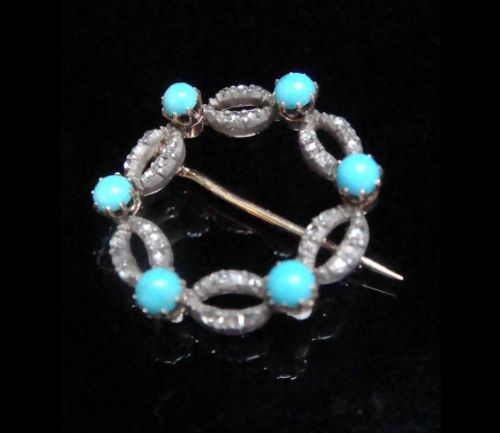


18ct Gold Pin Brooch
An 18ct gold pin brooch brings together fine metalwork and precious gems in wearable miniature forms spanning the Victorian era to the mid-century.
18ct Gold Pin Brooch
When searching for an 18ct gold pin brooch, collectors encounter a diverse array of wearable ornaments that span several distinct historical periods, including the Victorian, Edwardian, and Art Deco eras. These jewels serve both decorative and functional purposes, often doubling as pendants or securing garments with pins and safety catches.
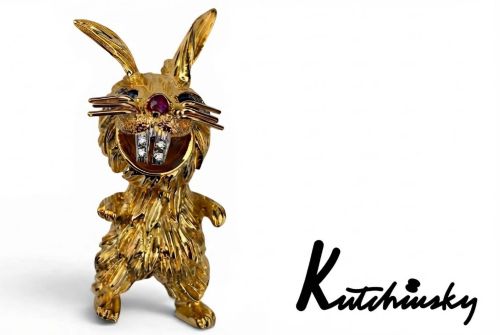
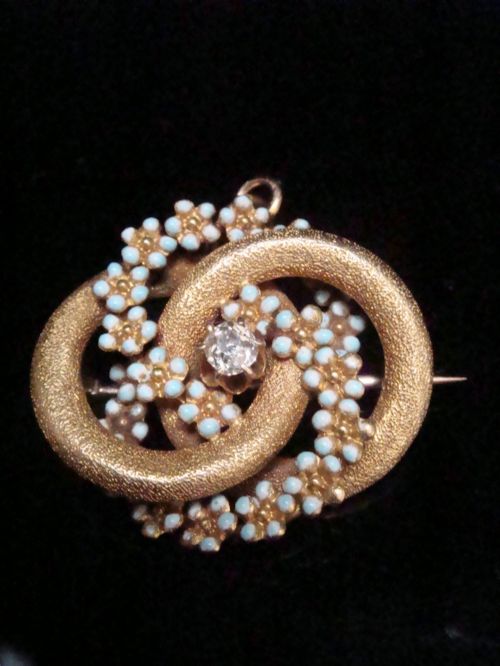
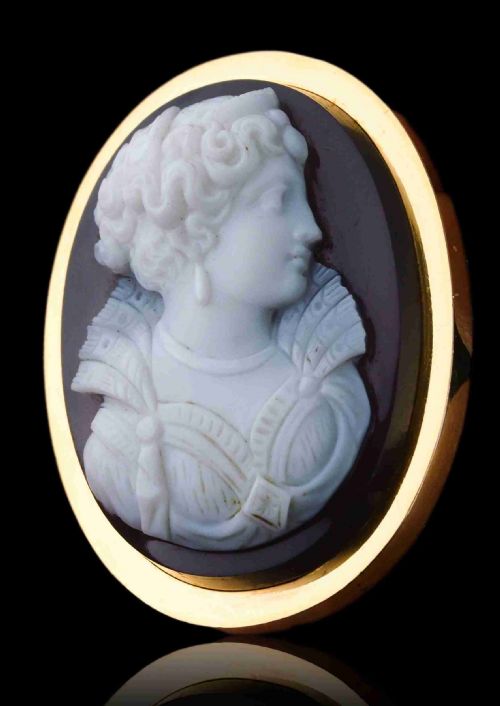
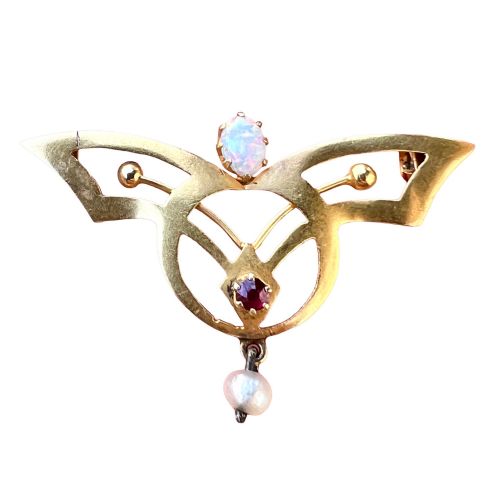
The pieces on this page appear in numerous forms, from delicate bar brooches and sunbursts to figurative animal designs and hardstone cameos set in rich yellow, white, or rose gold. Victorian iterations frequently incorporate sentimental motifs like lovers' knots and winged cherubs, while later twentieth-century examples embrace geometric patterns and bolder gemstone groupings.
Materials and Construction
Master jewellers utilised 18ct yellow and white gold as the primary structural foundation for these pieces, frequently combining the metal with silver settings for diamond-set sections to enhance the sparkle of old-cut stones. Plique-à-jour enamel, hardstone cameos, and intricate cannetille wirework display the advanced technical skill required to shape precious metals into elaborate floral sprays and cartouche designs.
Gemstones such as diamonds, rubies, sapphires, pearls, turquoise, and garnets are meticulously mounted using claw, bezel, or flush settings tailored to the specific demands of each design period. Artisans incorporated platinum in later Edwardian and Art Deco pieces to achieve finer, stronger wirework for intricate lace-like motifs.
Listings feature 18ct yellow gold, white gold, and platinum alongside decorative stones including malachite, sodalite, and fire opal across multiple design eras.
Distinctions in Execution
Subtleties in the preservation of original components, such as intact pin stems, secure catches, and unblemished enamel work, heavily influence the standing of an item. Superior craftsmanship reveals itself in the seamless integration of convertible mechanisms, allowing a brooch to transition into a pendant without disrupting the symmetry of the design.
Kutchinsky·Ben Rosenfeld·Gubelin
The 18ct Gold Pin Brooch Glossary
- Cannetille
- A delicate nineteenth-century goldwork technique resembling fine embroidery or filigree, created by soldering twisted wire threads onto a gold base. This style is particularly characteristic of mid-Victorian romantic jewellery.
- Plique-à-jour
- An enamelling technique where the enamel is applied without a backing, resembling miniature stained glass that allows light to pass through the translucent coloured cells. It is frequently seen on Art Nouveau floral and insect motifs.
- Old-cut diamond
- A hand-faceted diamond cut before the standardisation of modern brilliant facets, typically featuring a smaller table, higher crown, and open culet. These stones catch candlelight with a softer, broader flash than modern stones.
- Bar brooch
- A slender horizontal rod of precious metal, often embellished with centrally clustered gems or motifs. They were widely worn across necklines and lapels throughout the Victorian and Edwardian periods.
- Hardstone cameo
- A relief carving produced by working on layered stones such as agate or onyx, where the contrasting strata create a natural background colour for the raised subject. Portrait profiles and mythological figures are common subjects.
18ct Gold Pin Brooch: Frequently Asked Questions
How do I wear an antique brooch today?
These pieces adapt easily to modern wardrobes by securing them to coat lapels, heavy knit jumpers, or silk scarves. Many examples include integrated loops that allow the piece to be suspended from a chain as a pendant.
Heavier items require a sturdy fabric to support the weight without sagging. Using a backing disc or anchoring the pin through an inner layer helps keep the brooch displayed upright.
Can I convert a brooch into a pendant?
Many historical pieces were constructed with dual functionality in mind, featuring folding loops or hidden bails at the reverse. A jeweller can also attach a removable converter without altering the original metalwork.
Inspecting the reverse side reveals whether original attachment points exist. Convertible pieces offer greater versatility for everyday styling.
What is the difference between Victorian and Edwardian styles?
Victorian designs tend to feature heavier yellow gold settings, romantic motifs, and rich-coloured gemstones like garnets and seed pearls. The aesthetic prioritises sentimental storytelling and intricate hand-carved details.
Edwardian pieces shift towards lighter platinum and white gold work, incorporating lace-like motifs and higher concentrations of diamonds. This later period favours an airy, delicate appearance inspired by garlands and ribbons.
How should I store my gold brooch?
Store each piece individually in a lined jewellery box or a soft pouch to prevent the metal from scratching adjacent items. Keeping them separate also protects delicate elements like enamel and pearls from accidental impacts.
Avoid exposing gemstone pieces to household chemicals or ultrasonic cleaners, particularly turquoise and pearls which are porous. Gentle cleaning with a soft cloth preserves the original polish of the gold.