


18ct Gold Pearl Pendant
An 18ct gold pearl pendant combines high-karat gold with lustrous pearls, offering a refined piece of antique jewellery to wear daily.
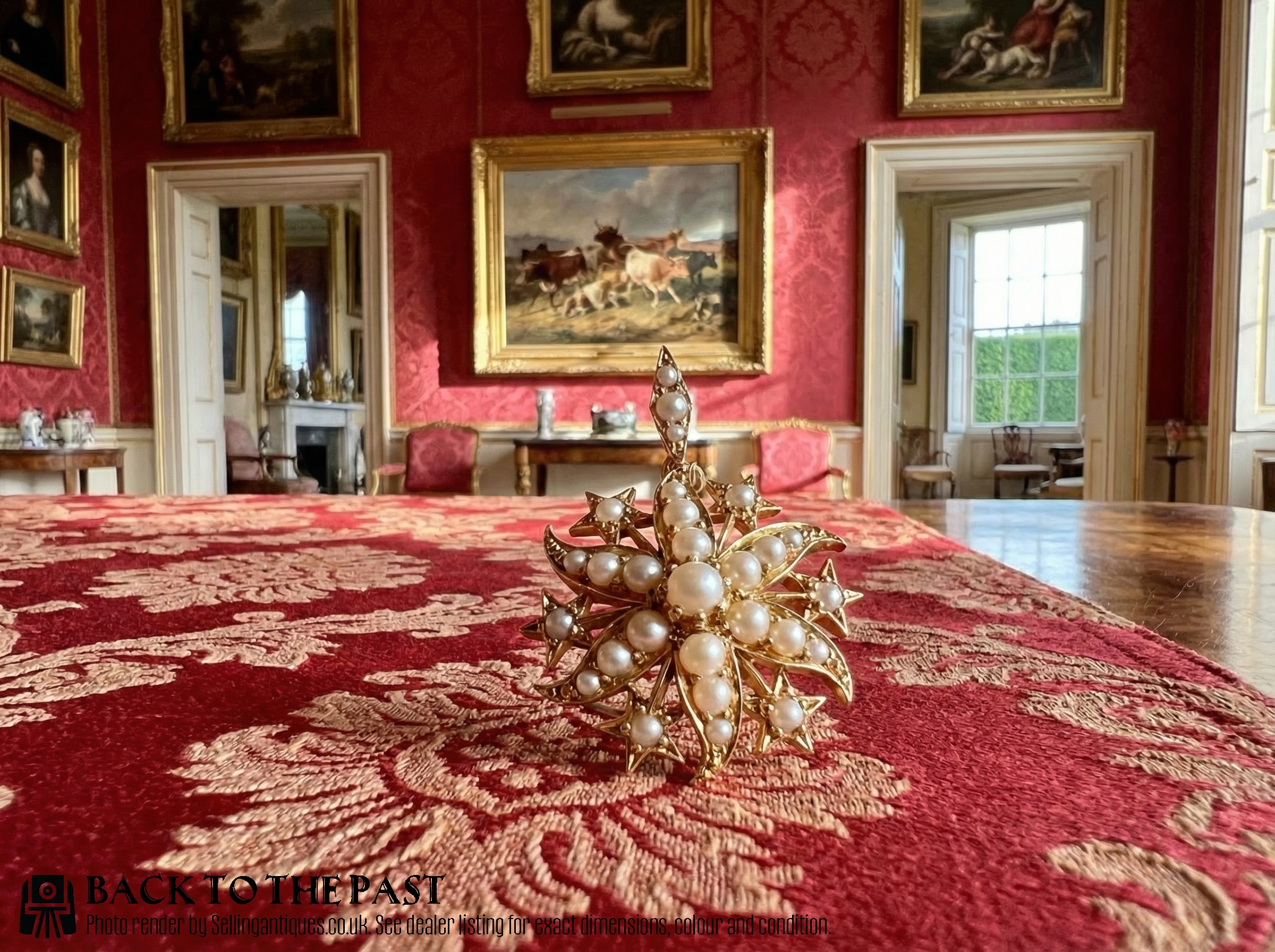
18ct Gold Pearl Pendant
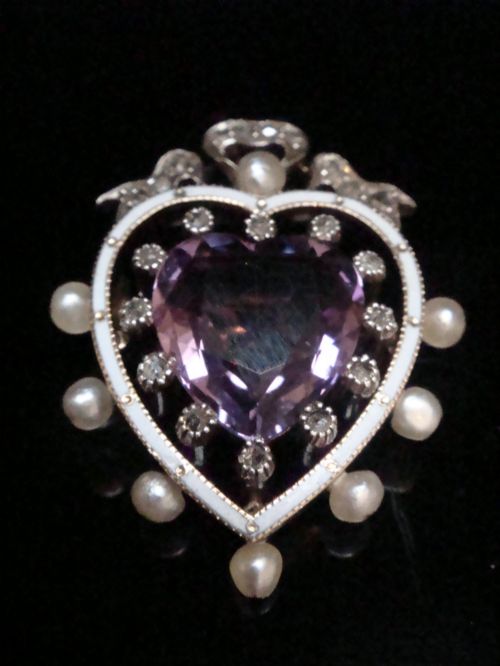
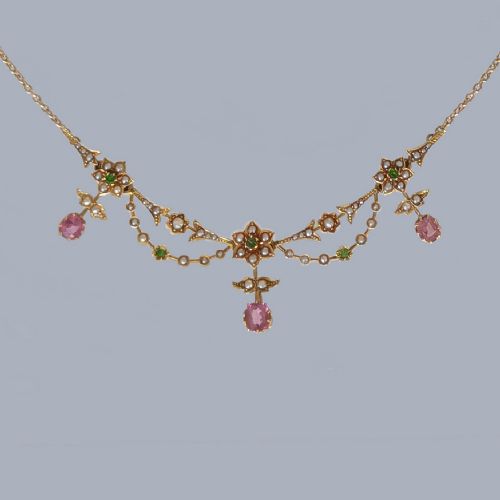
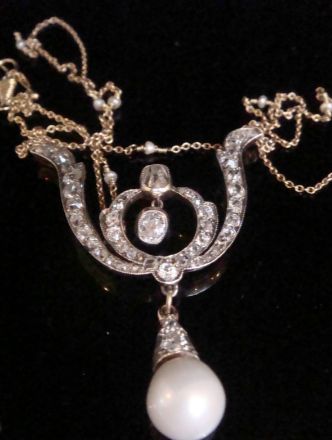
An 18ct gold pearl pendant spans several distinct eras, appearing most frequently in Victorian and Edwardian iterations alongside later 1930s designs. These pieces range from delicate seed pearl lavaliere necklaces to substantial diamond and pearl starbursts that double as brooches.
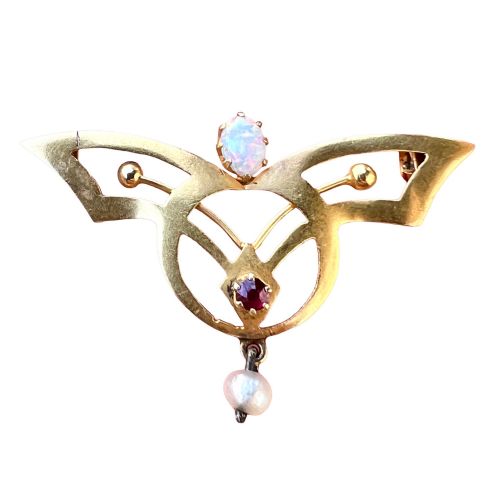
Makers often shaped these items into hearts, sunbursts, or devotional medals, utilising French Belle Epoque and Art Nouveau motifs. The selection includes multi-stone configurations incorporating garnets, sapphires, rubies, and enamel work set against high-karat yellow or rose gold.
Materials and Construction
Goldsmiths utilised 18ct yellow and rose gold as the structural foundation, often pairing the metal with silver settings for diamond-strewn clusters. Pearls were selected for their natural lustre, ranging from tiny seed pearls arranged in intricate floral wreaths to central saltwater or baroque pearls.
Techniques relied upon meticulous hand-wirework, guilloche enamel, and fine claw or bead settings to secure gemstones such as old-cut diamonds and cabochon rubies. Many examples also served dual functions, incorporating hinged bails and hidden pin stems to convert easily between pendants and brooches.
Listings feature 18ct gold alongside seed pearls, diamonds, and enamel across Victorian, Edwardian, and 1930s periods.
Assessing Quality and Execution
The standard of an 18ct gold pearl pendant rests upon the precision of the metalwork and the original matching of the pearls. Superior items display tight seed pearl placement without exposed adhesive, alongside clean piercing and engraving on the gold chassis.
Artisanal execution distinguishes finer examples, particularly where enamel work remains intact without chipping and secondary stones like diamonds or sapphires show careful colour grading and secure mounting.
Becker
The 18ct Gold Pearl Pendant Glossary
- Seed Pearl
- Very small, naturally occurring pearls often drilled and strung together or used in tight clusters to form floral and geometric motifs. They were widely utilised in Victorian and Edwardian cluster work.
- Guilloche Enamel
- A decorative technique where the metal surface is machined with an intricate repetitive pattern beneath a translucent enamel coating. This method imparts depth and rich colour to Edwardian pendants.
- Lavaliere
- A pendant necklace featuring a central drop stone or ornament suspended from a smaller link or chain section. This style gained immense popularity during the Edwardian era.
- Starburst
- A radiating design motif popular in Victorian jewellery, mimicking the twinkle of a star with stones set along outward-pointing rays. These pieces frequently double as brooches.
- Cabochon
- A gemstone shaped and polished with a smooth, convex domed surface rather than being faceted. Sapphires and opals of this cut appear frequently in these pieces.
18ct Gold Pearl Pendant: Frequently Asked Questions
How do I care for antique pearl jewellery?
Pearls are organic gems that require gentle handling, away from harsh chemicals, perfumes, or ultrasonic cleaners. Wipe them softly with a damp cloth after wearing to preserve their natural lustre.
Store them separately in a fabric-lined box to prevent the 18ct gold or harder gemstones from scratching the delicate surface of the pearls.
Can these pendants be worn every day?
While 18ct gold is durable, antique pieces containing seed pearls or enamel demand mindful wear to protect fragile settings and historical materials. Removing the pendant during strenuous activities prevents accidental impact.
Checking the security of the jump rings and bails periodically ensures the piece remains safely fastened to your chain.
How do I distinguish Victorian from Edwardian styles?
Victorian pendants tend to feature heavier gold work, romantic motifs like heart lockets, and deeper coloured gems such as garnet and turquoise. They often incorporate multi-functional brooch-pendant fittings.
Edwardian pieces lean towards lighter, airier designs in yellow gold and platinum, frequently showcasing delicate seed pearls, diamonds, and flowing Art Nouveau curves.
What is a conversion piece?
A conversion piece is an antique item, such as an earring or a broken brooch, adapted into a pendant by adding a modern loop or bail. This practice gives older components a new functional life.
Examining the suspension loop closely helps determine whether the attachment is original to the period or a later addition.