


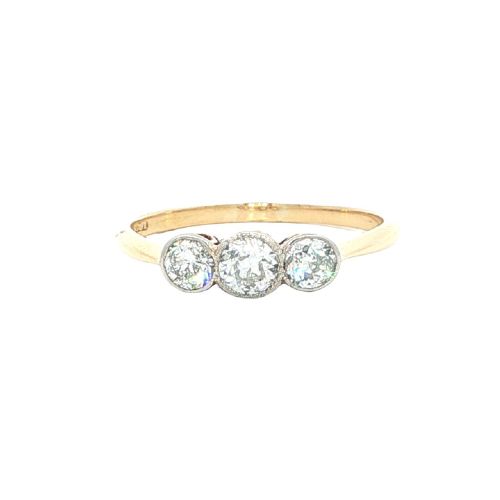
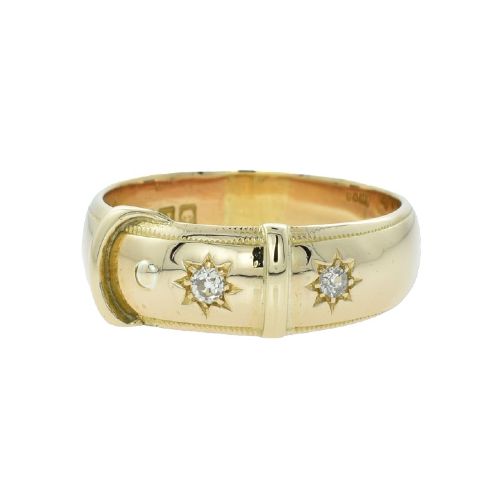
18ct Gold Diamond Band
An 18ct gold diamond band combines durable high-carat gold with enduring gemstones, offering a wearable piece of jewellery spanning Victorian, Edwardian, and mid-century eras.
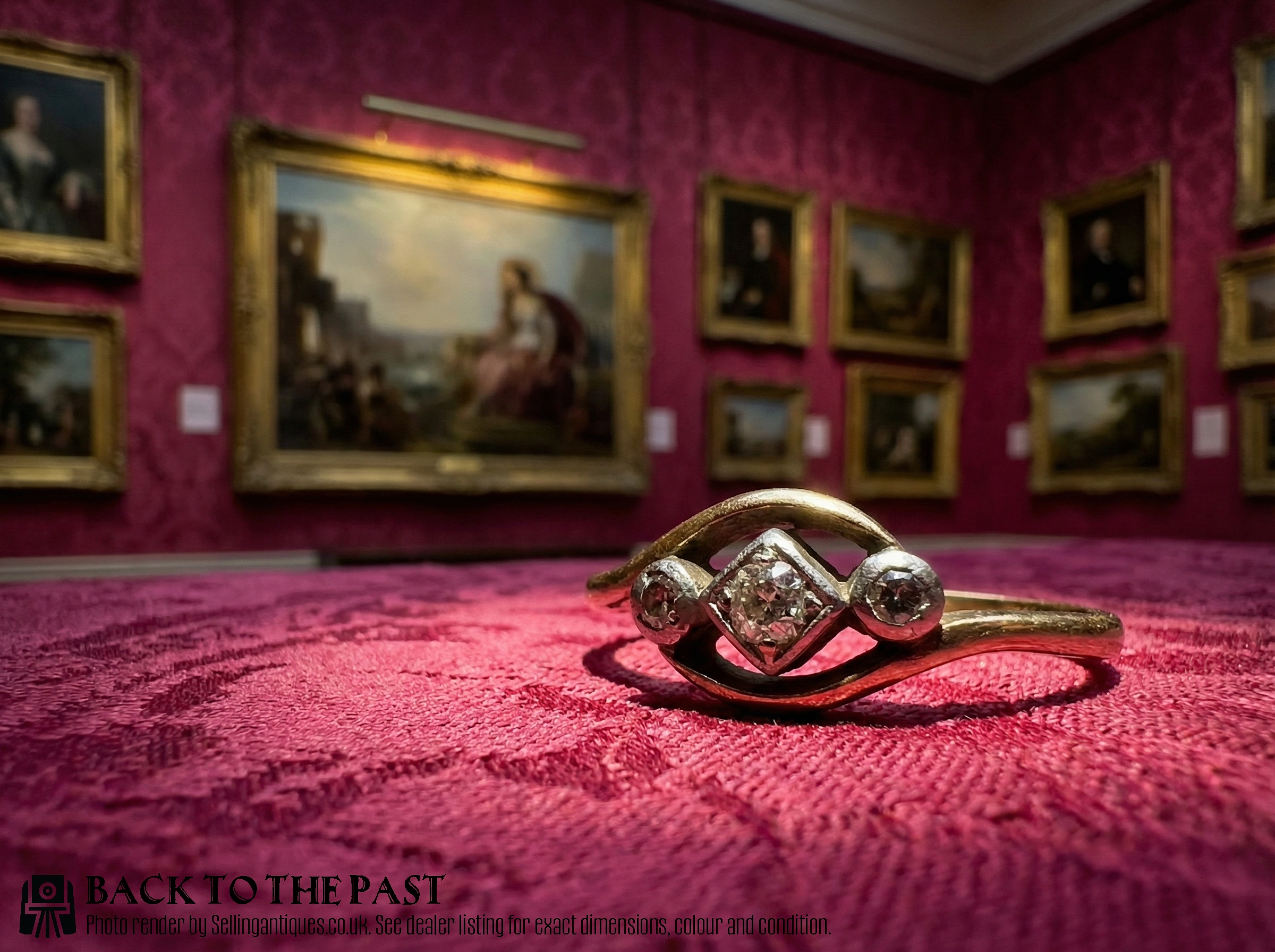
18ct Gold Diamond Band
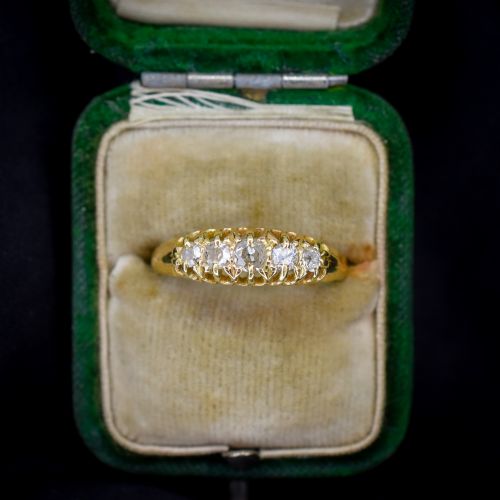
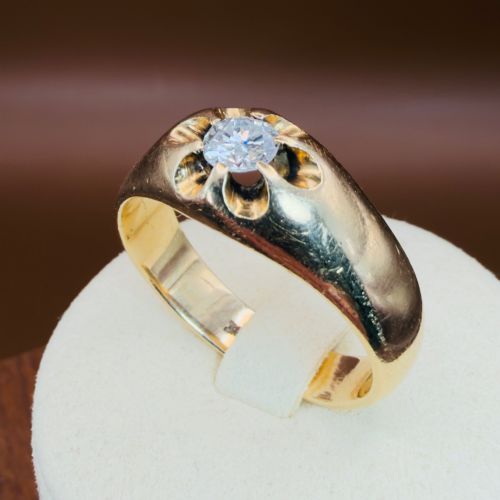
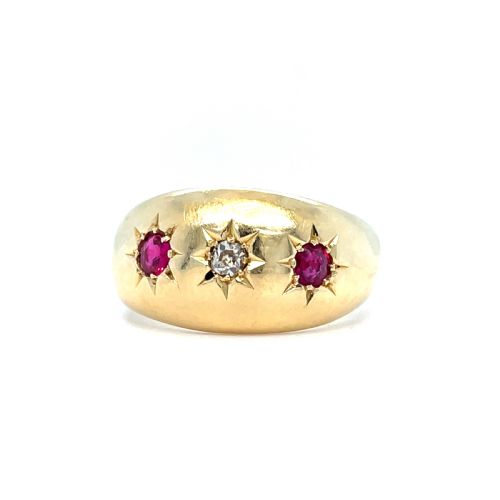
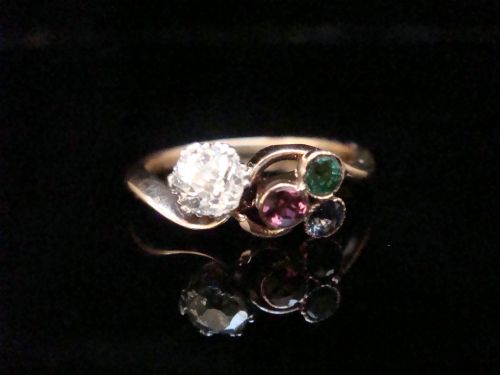
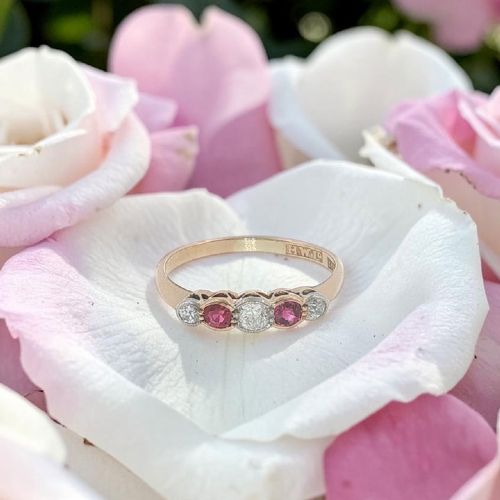
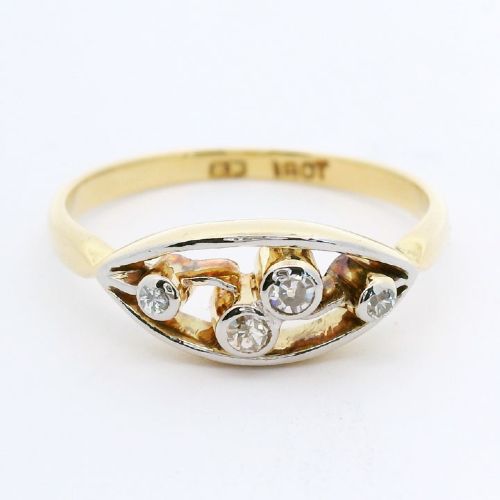
An 18ct gold diamond band encompasses rings created across the late nineteenth, twentieth, and modern periods, taking forms such as traditional five-stone settings, gypsy bands, and cluster arrangements.
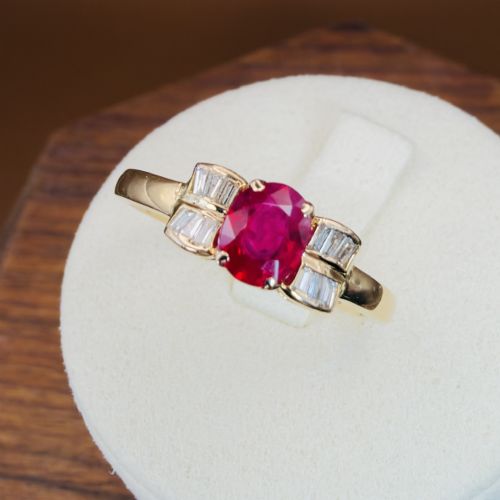
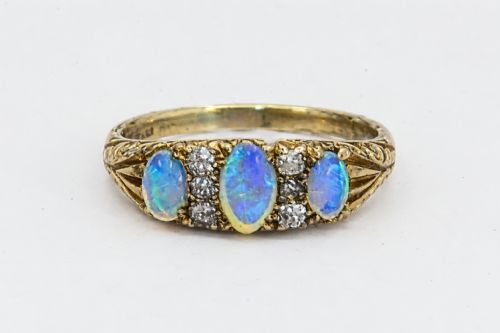
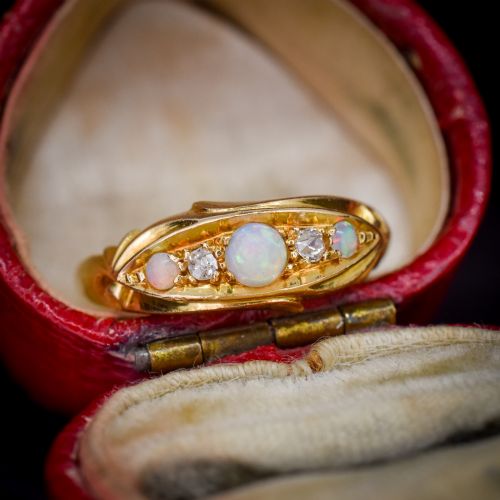
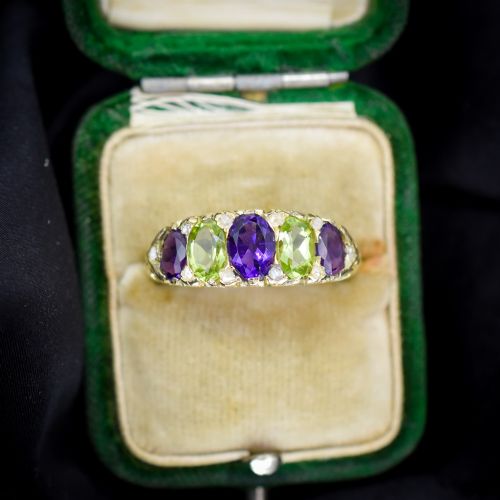
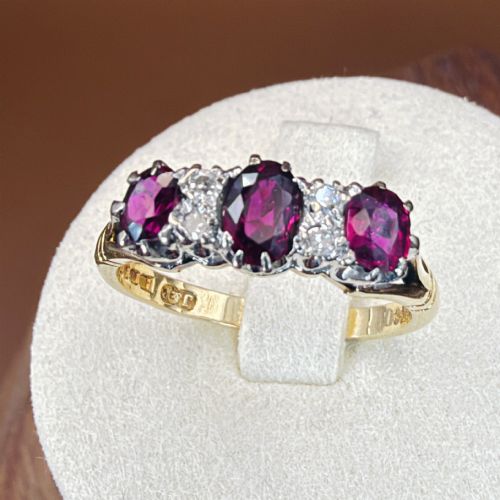
Beyond plain bands with flush stones, many incorporate rubies, sapphires, opals, or pearls alongside the diamonds, functioning as dress rings, engagement rings, or historical keepsake bands.
How they were made
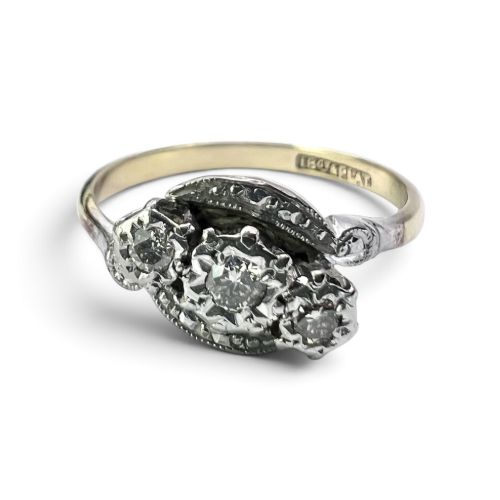
Maker workshops utilised 18ct yellow and white gold for structural stability, frequently pairing these with platinum settings during the Edwardian and Art Deco eras to securely mount old-cut diamonds.
Gemstone integration relied on traditional techniques, including star settings flush to gypsy bands, claw-set clusters, and boat-shaped mountings designed to display multiple stones in a linear arrangement.
Surface decoration often involved hand-carved shoulders, engraved buckle motifs, or ornate gallery work executed by regional assay offices across Britain.
18ct Gold Diamond Band Retail Price Guide 2026
Typical asking prices for 18ct gold diamond band among the pieces listed under this phrase on Sellingantiques today, from the lower quarter to the upper quarter. They describe what is for sale here now, not the wider market.
Listings feature 18ct yellow gold, 18ct white gold, and platinum combinations set with diamonds, rubies, sapphires, and opals.
What varies in quality
Quality rests upon the proportion and calibre of the precious metals used, with heavier solid bands and substantial gold weight indicating robust historical manufacture.
The choice and cutting style of the diamonds heavily influence the character of each piece, distinguishing hand-faceted old cut and old mine stones from later brilliant cuts.
The integrity of the setting work, the matching of secondary gems such as rubies or opals, and the crispness of surviving hallmarks establish the distinction between standard production and finer workshop output.
Kutchinsky
The 18ct Gold Diamond Band Glossary
- Old Cut
- A precursor to the modern brilliant cut, featuring a smaller table, higher crown, and open culet designed to catch candlelight.
- Gypsy Band
- A style of ring where stones are flush-set directly into the thick metal band, popular in the Victorian and Edwardian periods.
- Boat Ring
- A boat-shaped mounting that curves across the finger, typically holding a cluster or graduating row of stones.
- Star Setting
- A geometric star-shaped engraving pressed around a flush-set diamond to enhance its visual presence on the metal surface.
- Trilogy Ring
- A three-stone ring traditionally symbolising the past, present, and future, often combining diamonds with rubies or sapphires.
18ct Gold Diamond Band: Frequently Asked Questions
How do I care for an antique gold band?
Clean these rings gently using warm soapy water and a soft brush, avoiding harsh chemical dips that might harm softer gems like opals or pearls.
Store them separately in lined boxes to prevent the harder diamonds from scratching the surrounding 18ct gold.
Can these rings be easily resized?
Many solid 18ct gold bands can be adjusted by a skilled jeweller, though ornate engraved shoulders or continuous gypsy settings require careful handling to preserve the pattern.
Consult a specialist who understands historical mounting techniques before attempting any alterations.
What is the difference between old cut and modern diamonds?
Old cut stones were shaped by hand, resulting in charming irregularities, deeper pavilions, and broader facets that glow softly under ambient light.
Modern brilliant cuts are mathematically optimised for maximum light return and sharp brilliance.
How do I identify the period of my ring?
Examine the hallmarks for assay office stamps and date letters, which provide official confirmation of the year of creation.
Stylistic markers such as platinum-topped Edwardian filigree or heavy Victorian gypsy bands also point directly to specific eras of manufacture.