


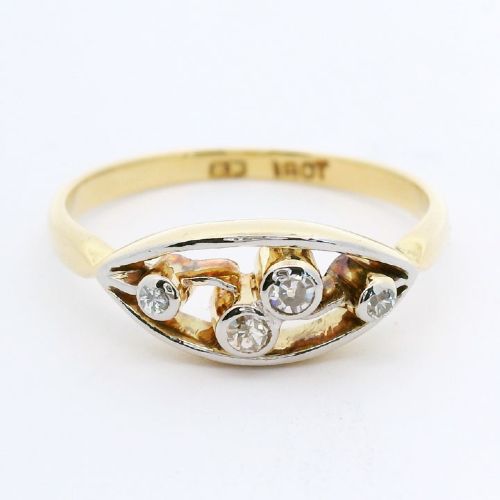
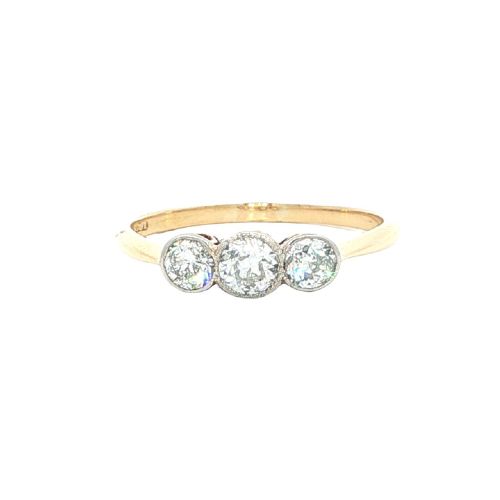
18ct Gold Band Ring
When you search for an 18ct gold band ring, you enter a diverse field of antique and vintage jewellery spanning from the nineteenth century to the mid-twentieth century.
18ct Gold Band Ring
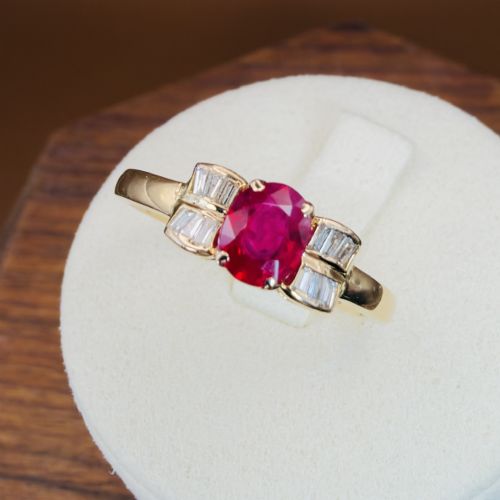
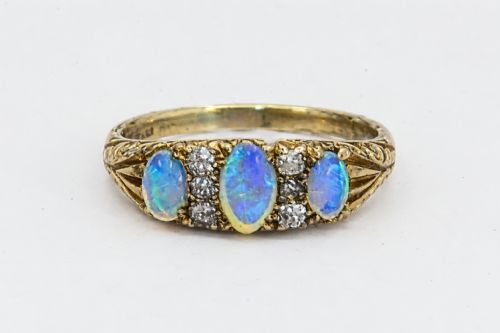
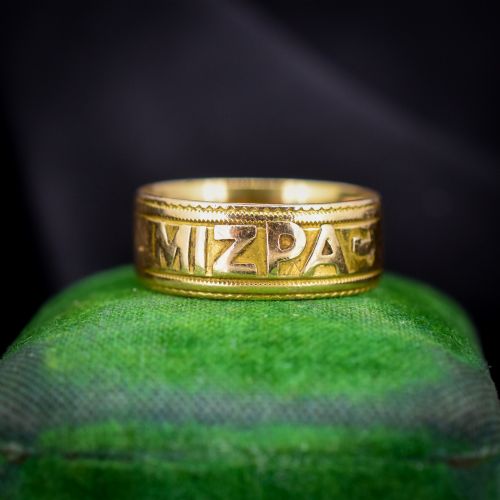
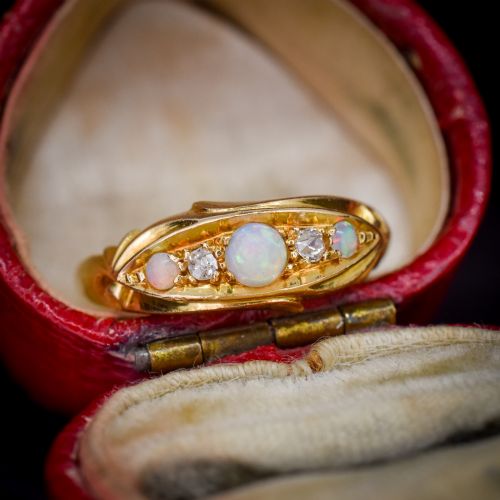
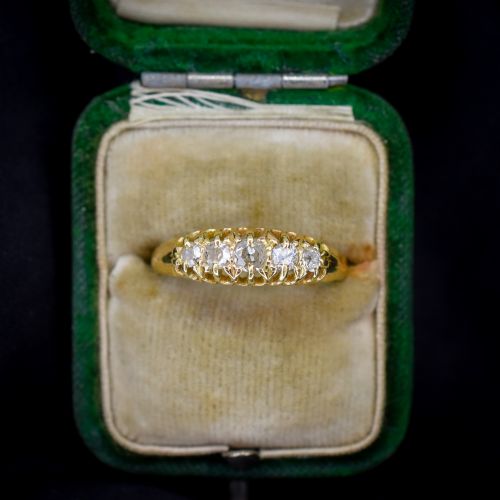
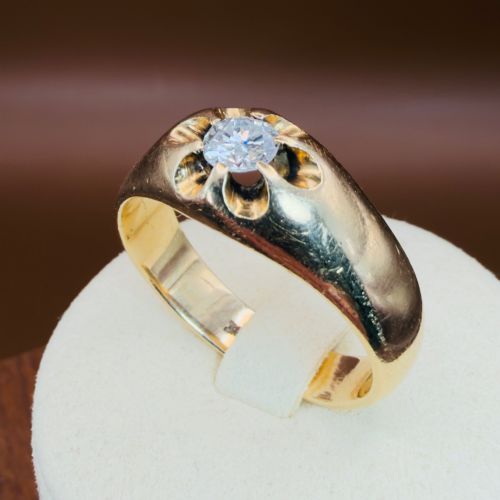
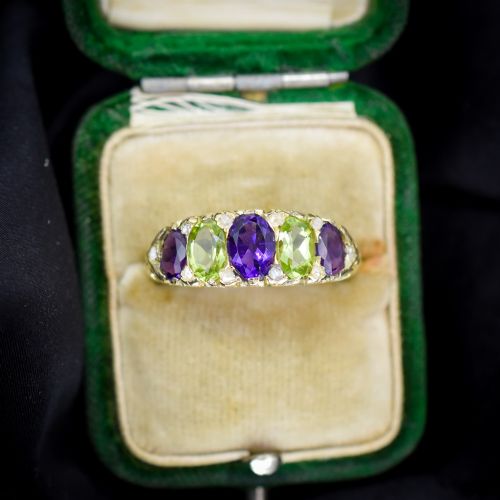
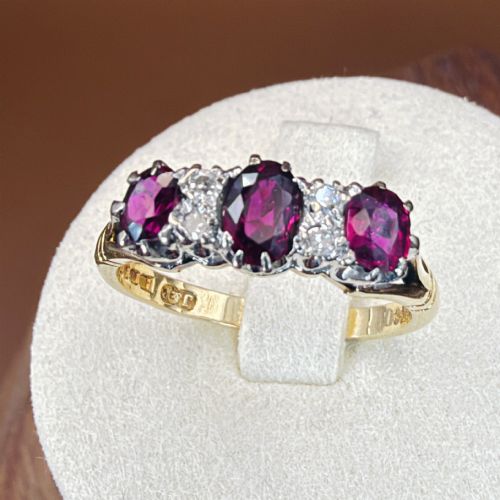
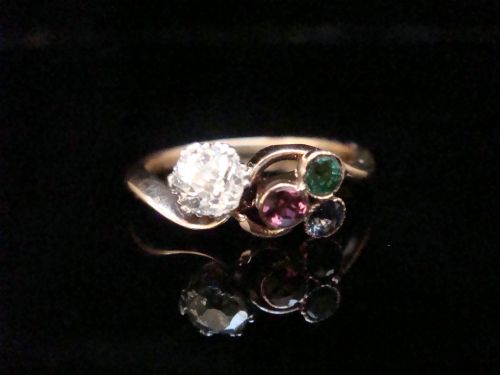
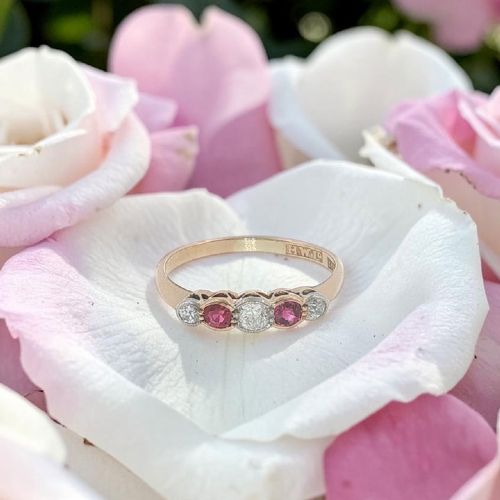
An 18ct gold band ring encompasses simple wedding bands, engraved mofifs like the Mizpah or buckle designs, and gem-set pieces incorporating diamonds, rubies, opals, and sapphires. You will encounter plain metal hoops alongside richly detailed settings from the Victorian and Edwardian eras.
Origins trace through British assay offices including Birmingham and Chester, alongside broader periods spanning the Art Nouveau, Art Deco, and later twentieth-century decades. Buyers encounter both slender stacking bands and heavier men's or statement rings.
Materials and Techniques
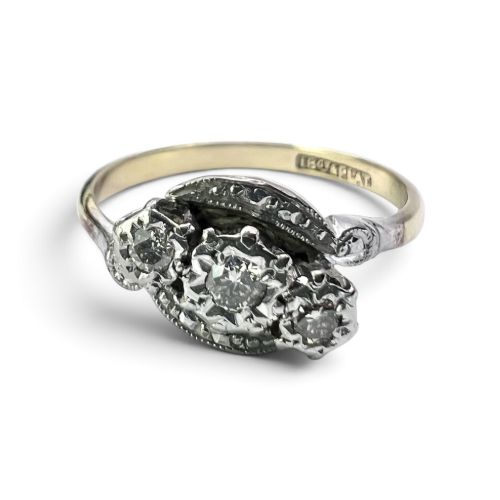
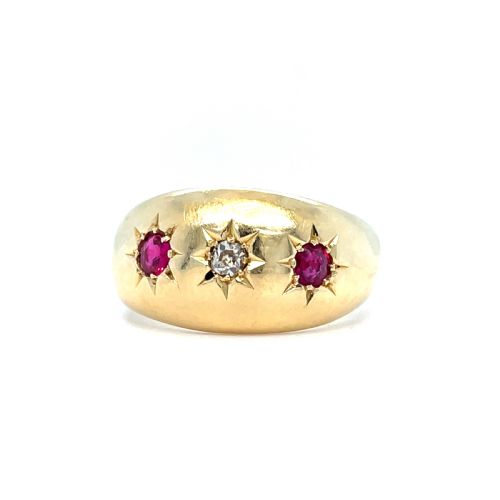
Goldsmiths utilised 18ct yellow and white gold alloyed with other metals to achieve durability and colour variation, frequently pairing the gold with platinum settings for secure diamond retention. Gemstones including old-cut diamonds, rubies, sapphires, and opals were hand-set into boat, starburst, and cluster arrangements.
Traditional construction methods involved hand-fabricating heavy bands, engraving intricate motifs such as lovers' knots and buckles, and mounting stones using claw, gypsy, or flush settings. Assay office hallmarks stamped into the metal provide verifiable markers of British origin and purity.
Factors of Quality
The standard of an 18ct gold band ring rests upon the crispness of its hand-engraved details, the symmetry of its stone settings, and the structural integrity of the metal band over decades of wear. Finer examples maintain sharp relief on buckle or Mizpah motifs without softening from historical polishing.
Gemstone selection dictates distinction at the upper end, where well-matched natural stones, particularly old-cut diamonds and Burmese rubies with lively light return, elevate a piece above standard commercial output. The integration of platinum heads on yellow gold shanks also demonstrates thoughtful period craftsmanship.
Kutchinsky
The 18ct Gold Band Ring Glossary
- Assay Office
- An official body that tests the purity of precious metals and stamps them with hallmarks. British offices like Birmingham and Chester verified the 18ct gold standard.
- Old-Cut Diamond
- A diamond cut by hand before modern machinery, characterised by a smaller table, higher crown, and distinctively deep culet that catches candlelight.
- Gypsy Setting
- A style where stones are flush-set directly into the thick metal band, sloping smoothly into the shank. This technique was popular in Victorian and Edwardian jewellery.
- Boat Ring
- A ring featuring a navette or boat-shaped setting that curves across the finger, typically holding a row of graduated gemstones.
- Navette
- A French term meaning little ship, describing a pointed, ovoid-shaped ring setting or motif. It creates a flattering elongated silhouette on the hand.
- Trilogy Ring
- A ring set with three stones, often symbolising the past, present, and future. They frequently combine diamonds and coloured gemstones in 18ct gold.
18ct Gold Band Ring: Frequently Asked Questions
How do I style an antique band ring?
These bands layer comfortably alongside modern minimalist jewellery or stack with other vintage textured rings. Their varied widths allow them to function as standalone statement pieces or complement an existing engagement ring.
Mixing yellow gold and white gold varieties adds depth to a stacked hand. The low profile of gypsy and flush-set rings makes them practical for daily wear.
What periods do these rings come from?
The selection spans the late Victorian and Edwardian eras, through the Art Deco period, into mid-century modern designs. Victorian examples often feature sentimental motifs or gypsy settings, while Edwardian pieces lean towards delicate platinum and gold work.
Later pieces from the mid-twentieth century introduce heavier weights and bolder diamond solitaires. Hallmarks and stylistic traits help pinpoint the era of manufacture.
Are these rings suitable for daily wear?
Constructed from 18ct gold, these rings offer durability suitable for regular use when chosen thoughtfully. Plain solid bands and low-set gypsy styles handle daily activity particularly well.
Gemstone rings with delicate stones like opals require more mindful care to avoid impact. Checking the security of the claws ensures longevity for multi-stone configurations.
How can I tell the age of a ring?
British hallmarks stamped inside the band provide definitive clues, including assay office marks and date letters that correspond to specific years. Design characteristics, such as old-cut diamonds or specific Victorian motifs like snakes and buckles, also indicate the period.
Stylistic shifts from ornate Victorian engraving to geometric Art Deco lines help narrow down the decade. Examining the construction techniques reveals whether a piece is antique or vintage.