



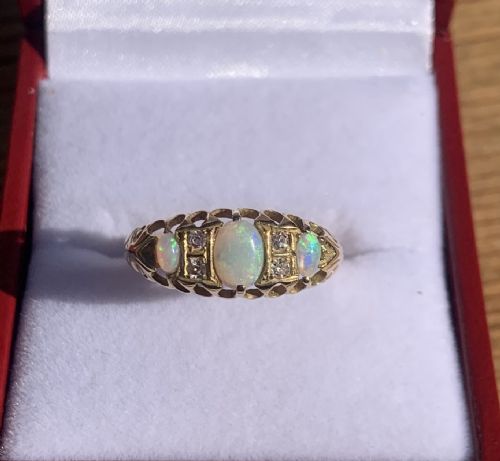
18ct Diamond Trilogy Ring
An 18ct diamond trilogy ring brings together three stones representing past, present and future in durable gold.
18ct Diamond Trilogy Ring
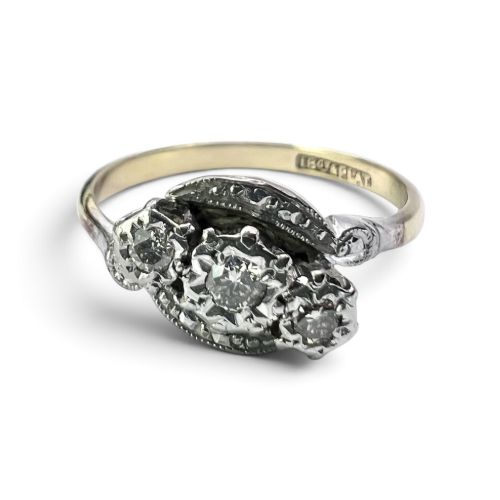
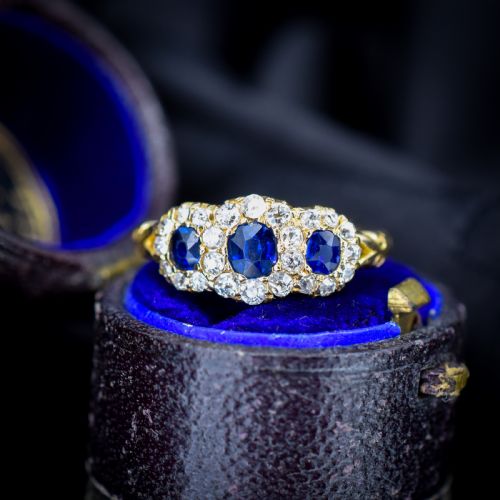
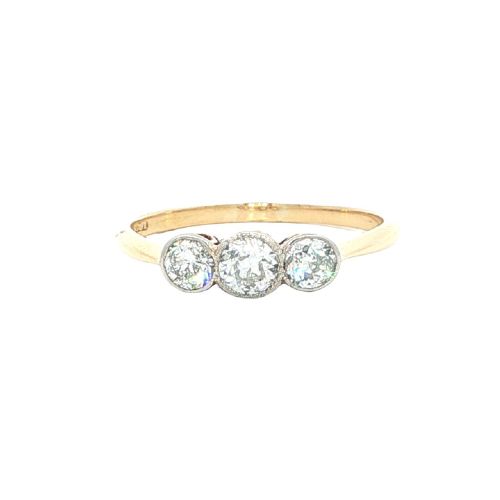
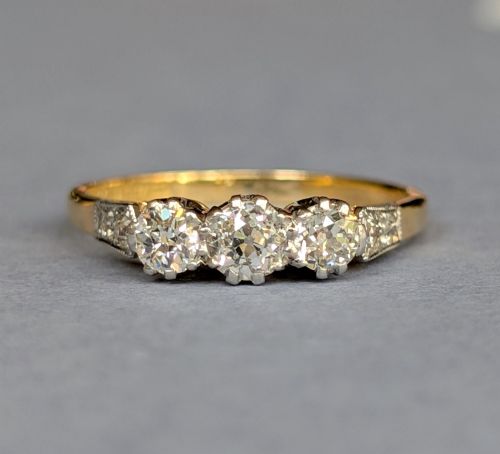
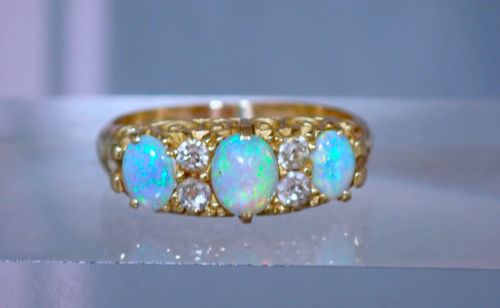
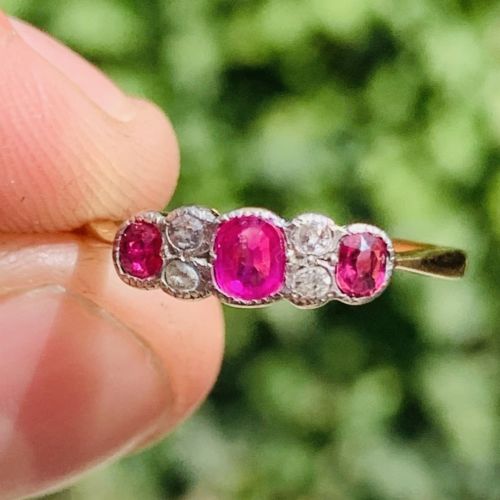
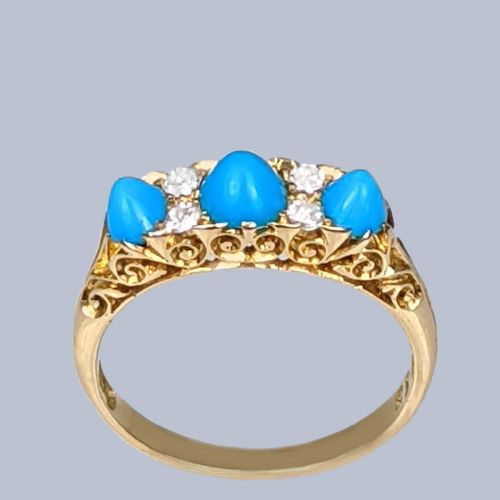
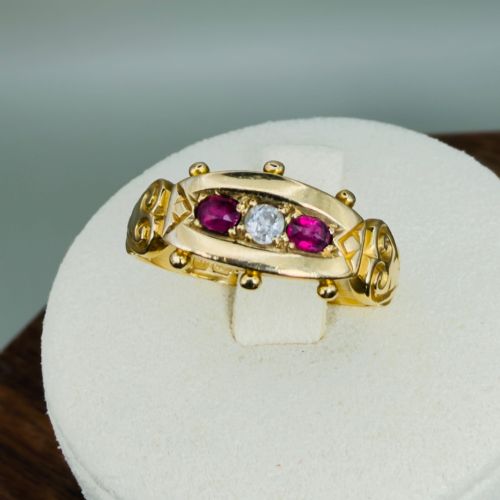
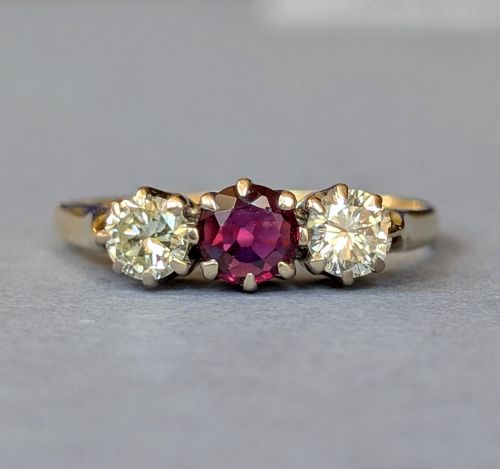
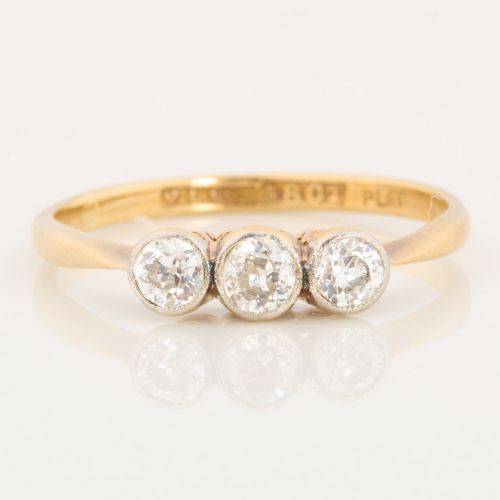
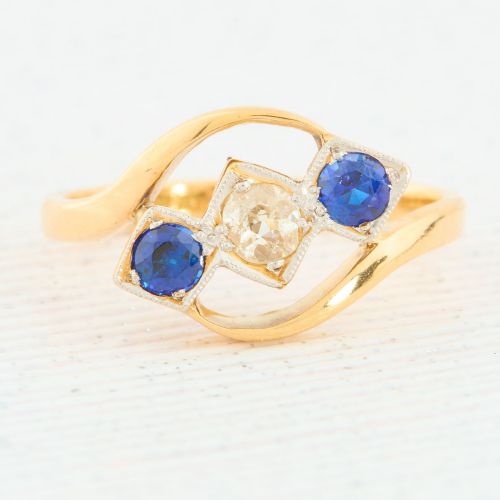
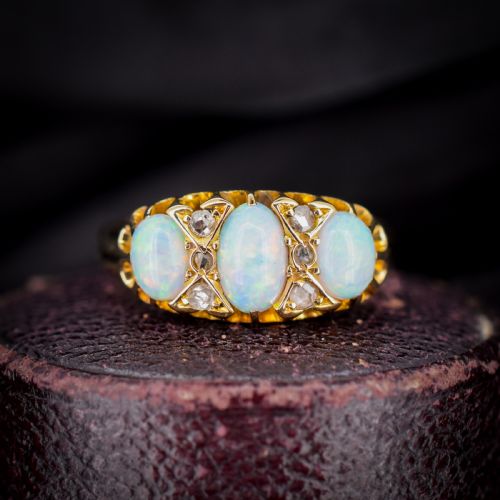
The most common configurations on this page pair central diamonds with side stones of sapphire, ruby, or opal, or present a pure three-stone diamond layout. These rings appear in traditional yellow gold, white gold, and combinations incorporating platinum settings.
How They Were Made
Goldsmiths constructed these rings primarily using 18ct yellow or white gold for the bands, frequently combining them with platinum claws or illusion settings to securely hold the stones and enhance their perceived brilliance. Many Victorian and Edwardian examples utilise gypsy or starburst settings where stones are flush-mounted directly into the heavy gold band.
Diamonds in these pieces are predominantly old cut, such as old European or old mine cuts, hand-faceted by period artisans. Side gemstones like sapphires, rubies, and opals are shaped to complement the central diamond, often secured via traditional claw or bezel techniques.
Materials span 18ct yellow gold, white gold, diamonds, sapphires, rubies, and opals.
What Varies in Quality
The overall standard of an 18ct diamond trilogy ring depends heavily on the carat weight, colour, and clarity of the primary diamonds, alongside the matching quality of any flanking coloured gemstones. Old cut diamonds display distinctive hand-cut facets that influence their light return and individual character.
Craftsmanship in the metalwork further dictates value, visible in the precision of the setting technique, the weight and durability of the 18ct gold shank, and the preservation of original hallmarks and engravings. Pieces combining platinum top settings with gold bands often reflect higher tiers of period manufacturing.
The 18ct Diamond Trilogy Ring Glossary
- Trilogy ring
- A ring featuring three main gemstones set in a row on the band. This design traditionally carries sentimental meaning regarding time and relationships.
- Old cut
- A diamond cut by hand before modern mechanical standards were established in the twentieth century. These stones typically feature higher crowns and smaller tables.
- Gypsy setting
- A mounting style where the gemstone is sunk flush into the solid metal of the ring band. This technique was widely favored during the Victorian period for daily wear.
- Illusion setting
- A metal mounting technique designed to make a central gemstone appear larger by reflecting light around its perimeter. This method gained popularity during the Art Deco era.
- Hallmark
- An official stamp applied to precious metals indicating purity, origin, and sometimes the year of assay. These marks assist in dating antique jewellery accurately.
18ct Diamond Trilogy Ring: Frequently Asked Questions
What does a trilogy ring symbolise?
A trilogy ring traditionally represents the three stages of a relationship, specifically the past, present, and future together. This sentimental meaning made the three-stone configuration a popular choice for engagement and anniversary jewellery.
Over the decades, makers adapted this symbolism across various design movements, from Victorian cluster arrangements to sleek Art Deco twists.
How do I identify a Victorian trilogy ring?
Victorian examples often feature heavy 18ct yellow or rose gold bands, frequently utilising gypsy or starburst settings alongside hand-cut old European or old mine diamonds. Many of these pieces incorporate coloured stones like rubies, sapphires, or opals.
Assay office hallmarks stamped inside the band provide definitive proof of period origin, often revealing exact decades of manufacture.
Can I wear an antique diamond ring daily?
Gold and platinum provide a durable foundation for daily wear, though antique and vintage pieces require sensible care. The 18ct gold bands offer good structural integrity, but older claw settings benefit from periodic professional inspection.
Removing the ring during manual labour or heavy household tasks helps preserve delicate antique settings and softer side stones like opals.
What is an old cut diamond?
An old cut diamond is a stone shaped by hand prior to the invention of modern automated cutting machinery. These diamonds feature smaller tables, higher crowns, and larger culets that produce a distinct, warmer sparkle under candlelight.
Each old cut stone is entirely unique due to the manual shaping methods employed by historical lapidaries.