

17th Century Walnut Chest
A 17th century walnut chest carries the weight of Restoration craftsmanship, offering deep timber figures and practical storage that anchor any period interior.
17th Century Walnut Chest
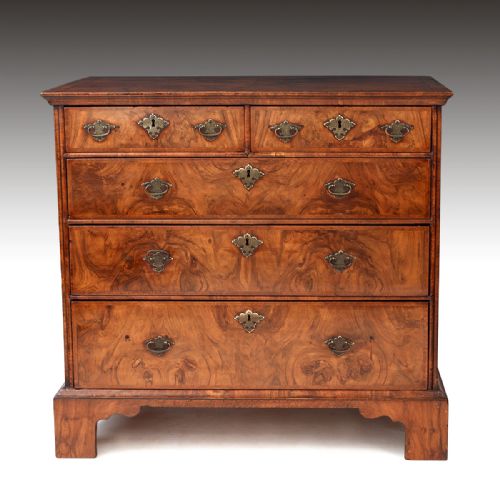
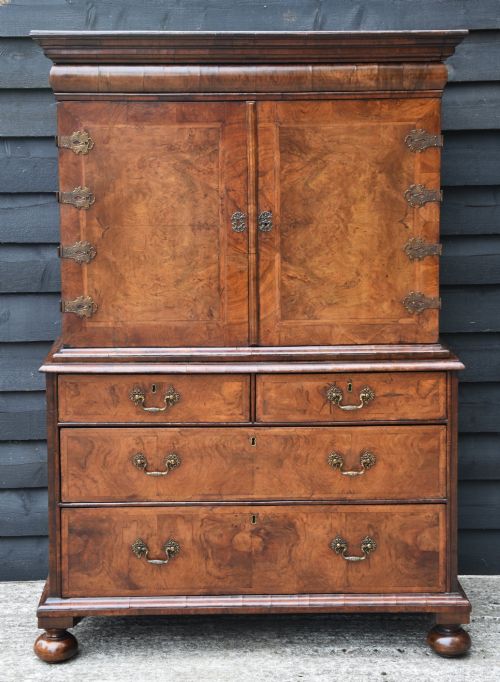
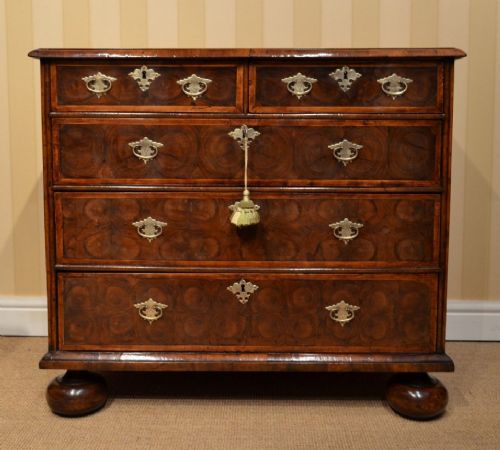
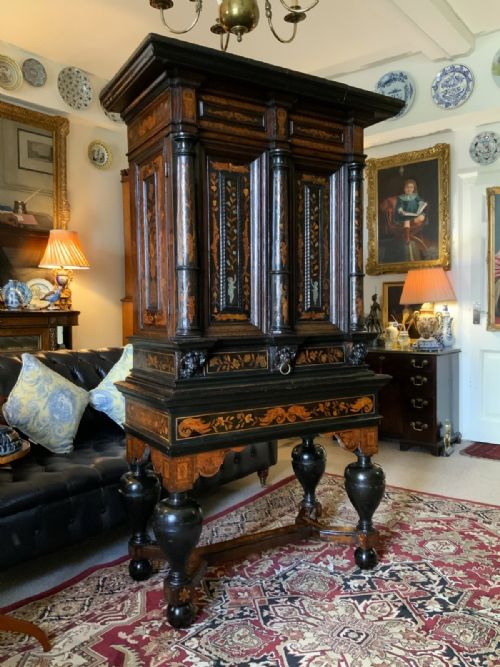
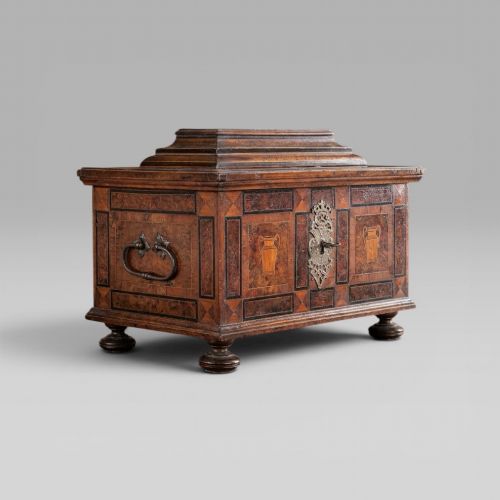
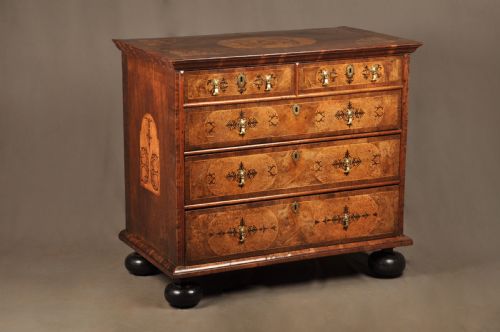
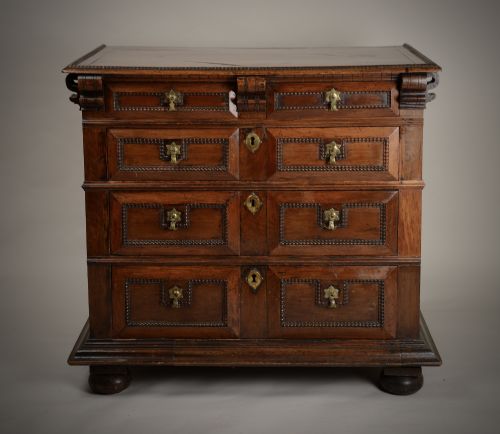
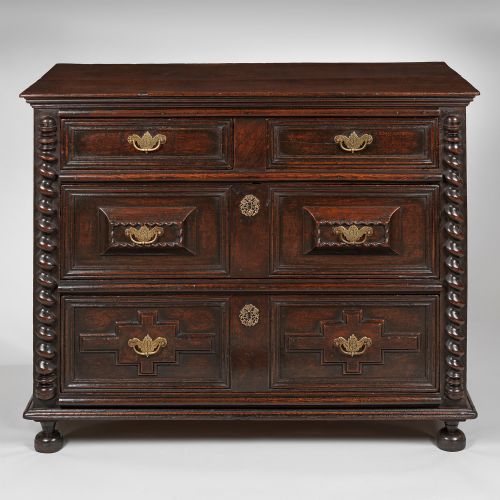
A 17th century walnut chest encompasses practical drawer units, raised cabinets on stands, and substantial coffers designed for household storage during the Charles II and William and Mary eras.
The pieces appearing on this page originate predominantly from the late seventeenth century, showcasing Baroque stylistic influences across English, Dutch, German, Spanish, and Italian workshops.
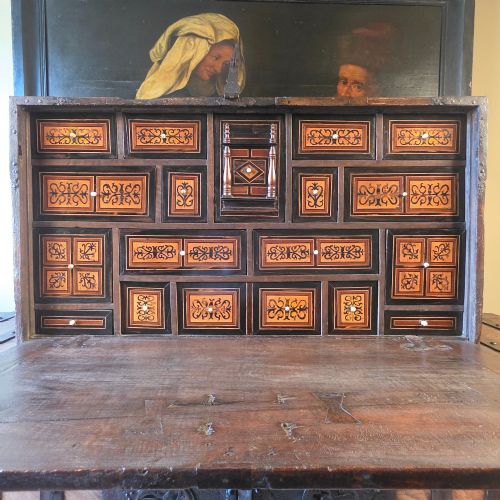
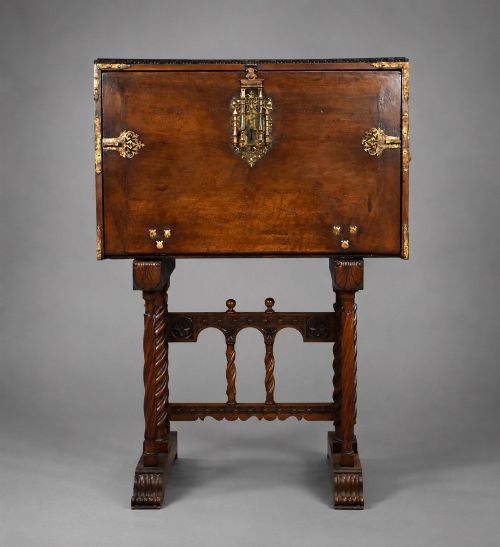
Buyers encounter standard chests of drawers alongside more complex forms like escritoires, bargueños, and collectors cabinets mounted on dedicated stands.
Materials and Construction
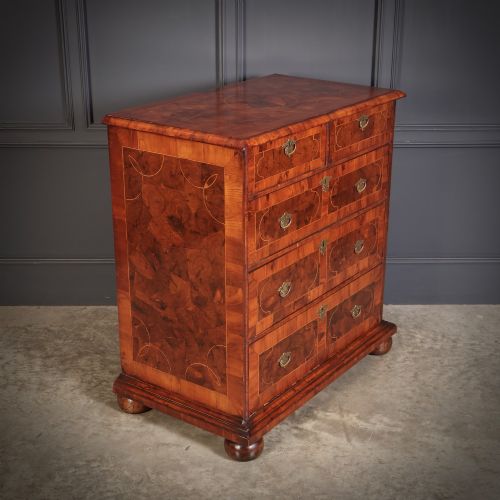
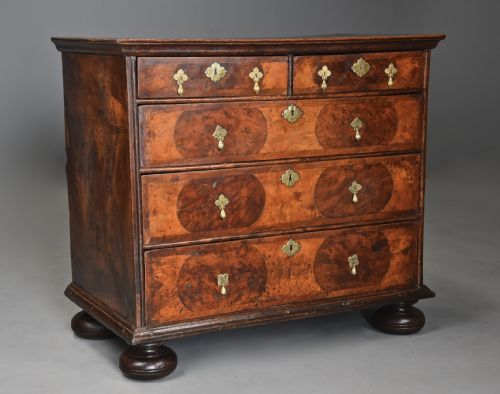
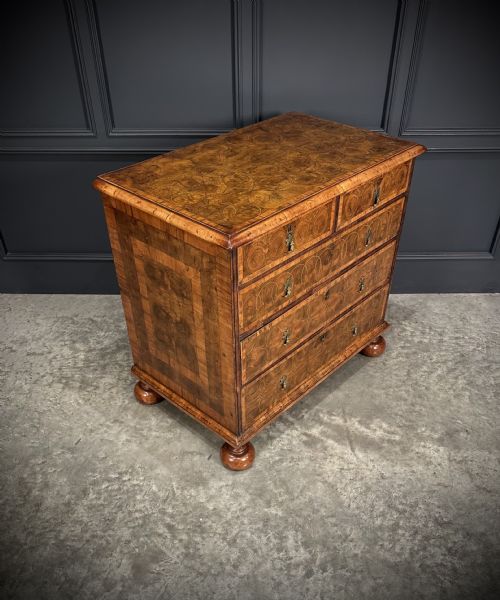
Cabinetmakers utilised primary frames of oak or pine, applying thin cross-grain veneers of walnut, olive, and laburnum to create patterned surfaces.
Decorative detailing relies on intricate marquetry in floral or seaweed designs, alongside geometric mouldings built from contrasting boxwood and fruitwood inlays.
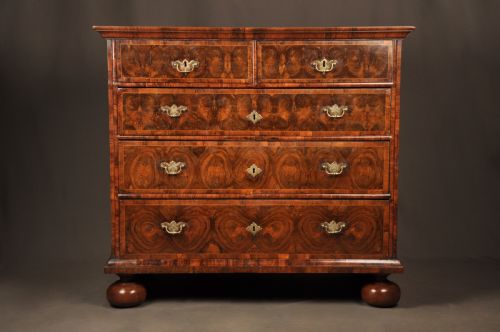
Hardware consists of brass drop handles and escutcheons, secured to the carcase alongside iron locks and strap hinges on coffer forms.
The inventory records regional variations spanning English, Dutch, German, Spanish, and Italian Baroque styles.
Assessing the Standard
The sophistication of the veneer work dictates the standing of a piece, distinguishing simple planked constructions from complex oyster-cut or intricate marquetry patterns.
The integrity of the timber surfaces and the survival of original patination separate untouched historic examples from heavily restored or replaced elements.
The complexity of the form influences desirability, with multi-tiered cabinets on stands and specialised escritoires demanding higher levels of joinery skill than standard drawer units.
The 17th Century Walnut Chest Glossary
- Oyster veneering
- Cutting small branches obliquely to produce circular or oval motifs resembling oyster shells. This technique defined late seventeenth-century surface decoration.
- Marquetry
- Inlaying various coloured woods into a veneer ground to form pictorial or abstract patterns. Floral and seaweed motifs are common examples.
- Bargueño
- A type of cabinet originating in Spain featuring a drop front that conceals numerous small drawers. They typically rest on matching support stands.
- Escritoire
- A writing cabinet featuring a fall-front flap that opens to reveal an arrangement of internal compartments. These pieces emerged during the William and Mary period.
- Cassone
- A large decorated chest used historically for storing household linens and valuables. Italian Renaissance and Baroque examples often incorporate elaborate carvings.
17th Century Walnut Chest: Frequently Asked Questions
How do I care for a walnut surface?
Keep wooden furniture away from direct heat sources and sudden humidity changes to prevent the timber from splitting or warping.
Apply traditional beeswax periodically to nourish the grain and maintain a natural, protective sheen without using modern silicone sprays.
Were these chests used for clothes?
Earlier coffer forms served general household storage for textiles, valuables, and documents before dedicated drawer units became standard.
As drawer configurations evolved through the seventeenth century, owners utilised them specifically for garments, linens, and personal items.
How do I distinguish William and Mary style?
William and Mary pieces often feature seaweed marquetry, oyster veneering, and elevated stands with intricate leg turnings. Cabinetwork from this era frequently incorporates Dutch Baroque influences and polished brass drop handles.
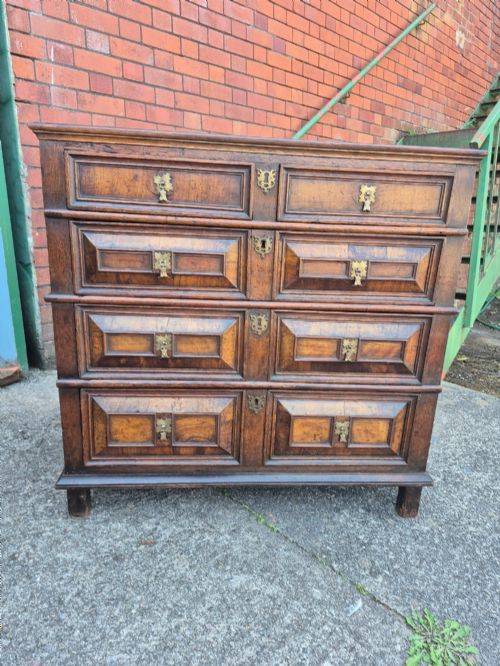
Earlier Charles II examples lean toward geometric moulded drawer fronts, utilising oak carcases combined with walnut panels and fruitwood stringing.
Can I place one in a modern room?
The rich tones and dark patination of seventeenth-century timber contrast effectively against neutral walls and contemporary minimalist interiors.
Their compact proportions allow them to function successfully as focal storage units in hallways, living spaces, and bedrooms alike.