


17th Century Walnut Chairs
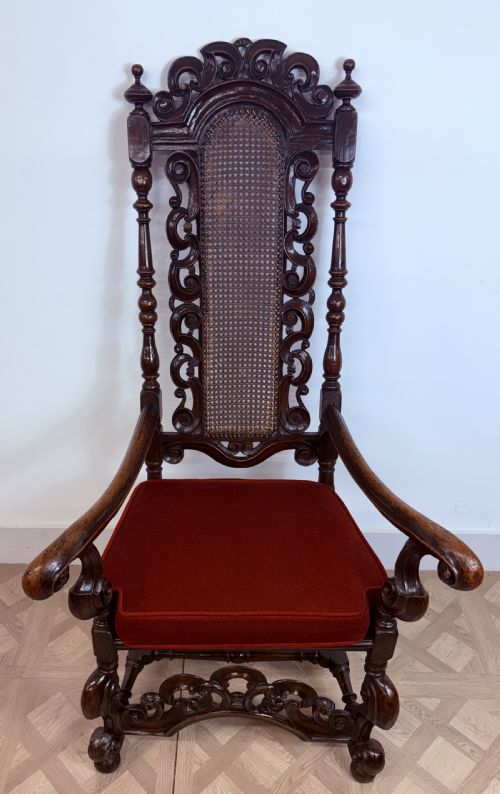
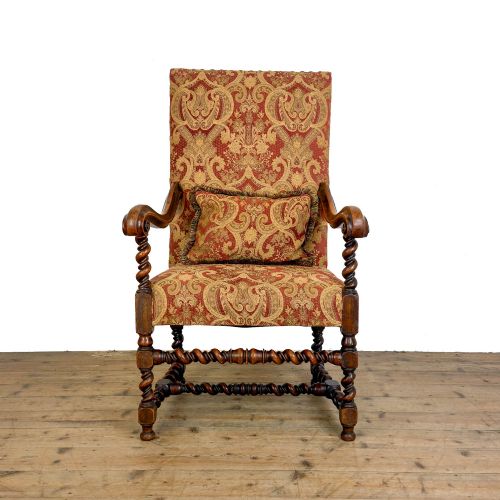
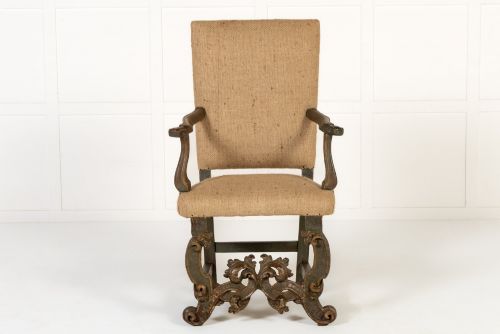
These 17th century walnut chairs bring heavy carved frames, rich grain and deep historical presence into a room.
17th Century Walnut Chairs
Armchairs, elbow chairs, and high-back dining chairs dominate the selection, often accompanied by side chairs and occasional settees. Origins stretch across English, French, Italian, Spanish, and Dutch workshops.
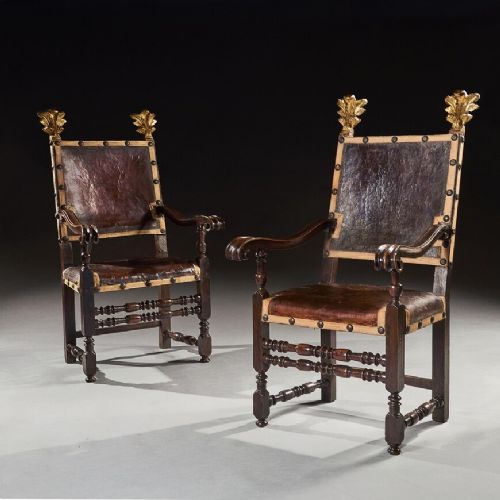
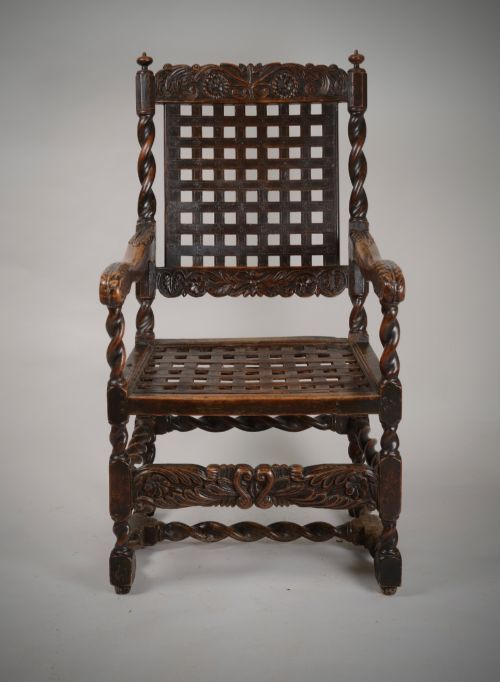
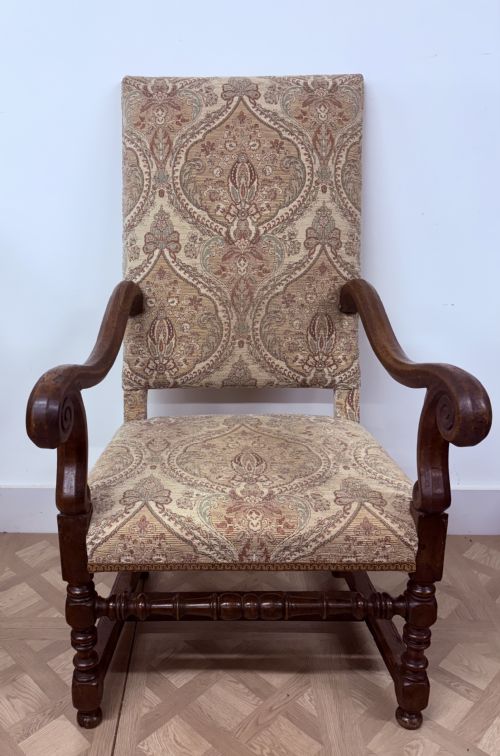
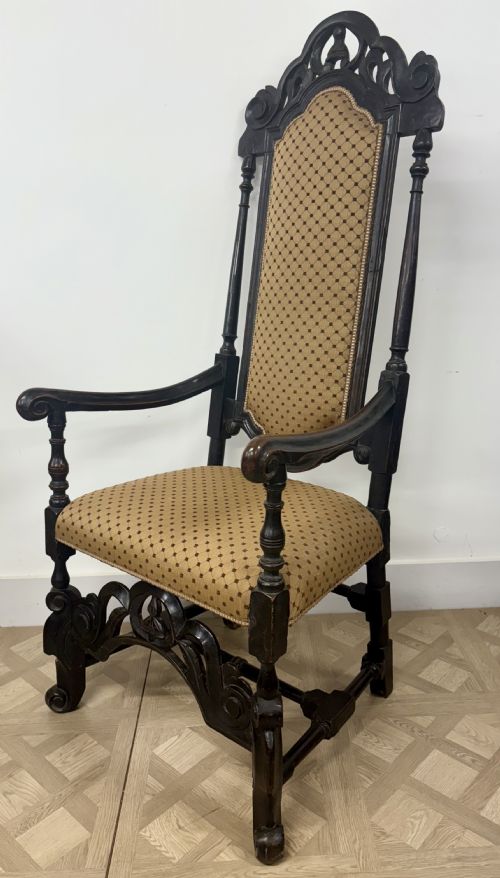
The assortment includes examples with caned panels, carved scrollwork, and upholstered seats covered in leather, velvet, or fabric. Buyers find single pieces alongside matched pairs and larger sets.
How they were made
Carpenters utilised solid walnut for structural frames, turning legs and stretchers on a lathe and shaping high backs with intricate hand-carved motifs. Joinery relied on traditional mortise and tenon construction secured with wooden pegs.
Seating areas frequently incorporated cane work woven directly into the wooden frame or utilised drop-in pads upholstered in leather, textile, or velvet. Decorative elements often included parcel-gilt highlights and brass fittings.
Listings feature walnut, cane, brass, fabric, and velvet across English, French, Italian, Spanish, and Dutch origins.
What varies in quality
The crispness of the hand-carving distinguishes superior examples from simpler work, where deeper undercut relief and well-defined scrollwork indicate skilled craftsmanship. Original surfaces and patination on the timber carry significant weight among collectors.
Integrity of the timber frame and the survival of period elements such as cane panels or early upholstery dictate desirability. Pieces retaining their original proportions and structural rigidity command greater attention than heavily altered examples.
Daniel Marot
The 17th Century Walnut Chairs Glossary
- Carolean
- A style spanning the reign of Charles II, characterised by rich carving, scrolling foliage, and tall cane backs. This aesthetic defines much of the English output from the later seventeenth century.
- Caning
- Woven rattan material used for seat panels and chair backs. It provides a lightweight yet supportive surface that adds textural contrast to heavy walnut frames.
- Parcel-gilt
- A decorative technique applying thin gold leaf to specific carved details on a walnut surface. This method highlights particular motifs against the dark grain of the wood.
- Stretcher
- A horizontal wooden brace connecting the legs of a chair for added stability. These components often feature elaborate turning or carved scrollwork in seventeenth-century designs.
17th Century Walnut Chairs: Frequently Asked Questions
How do I spot a reproduction?
Examine the timber colour, tool marks, and joint construction under natural light. Seventeenth-century surfaces show authentic wear patterns and oxidation that modern replicas struggle to replicate convincingly.
Check for machine-cut components or inconsistent wood shrinkage. Period pieces display hand-cut joinery and individual tool signatures unique to early workshop production.
Can I use these chairs daily?
Many solid walnut examples remain structurally sound for regular use, provided the frame joints and stretchers stay secure. Professional conservation helps stabilise antique timber before daily placement.
Delicate caning and antique upholstery require more care than modern seating. Rotating pieces and avoiding direct sunlight protects the materials from excessive strain.
Why choose walnut over oak?
Walnut replaced oak as the preferred cabinet timber during the seventeenth century because it accepted finer carved detail and took a smoother polish. The dense grain allowed makers to create lighter, more elegant structural forms.
Its rich brown tones developed a deep patination over centuries of handling. This visual warmth distinguishes walnut seating from earlier oak furniture.