

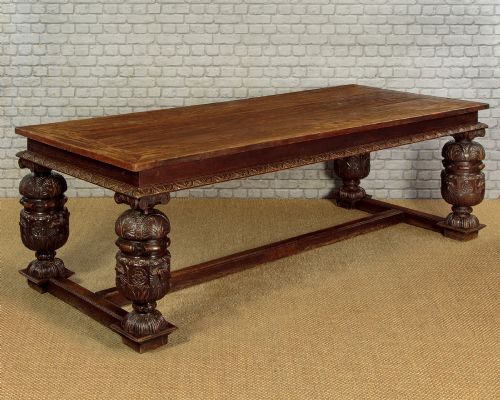


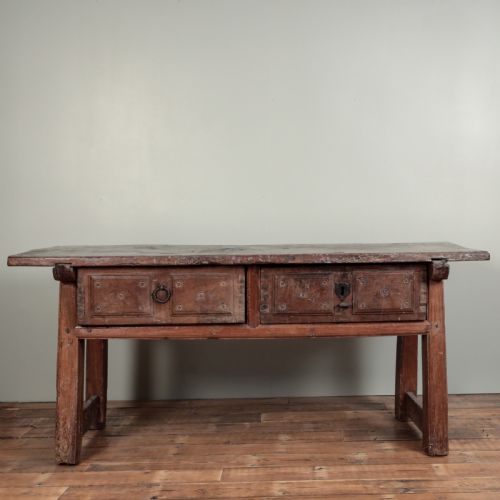


17th Century Trestle Table
These 17th century trestle table pieces bring heavy oak and walnut timbers into modern dining rooms with genuine historical presence.
17th Century Trestle Table
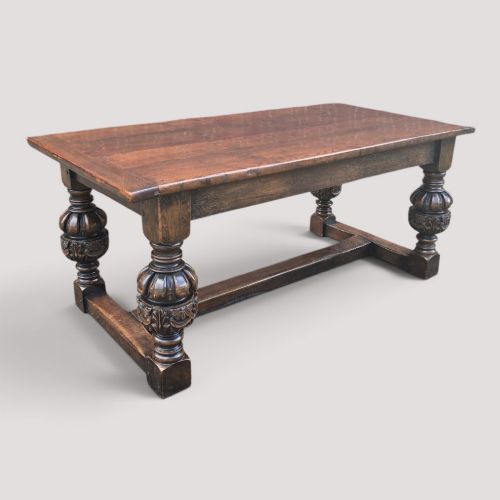
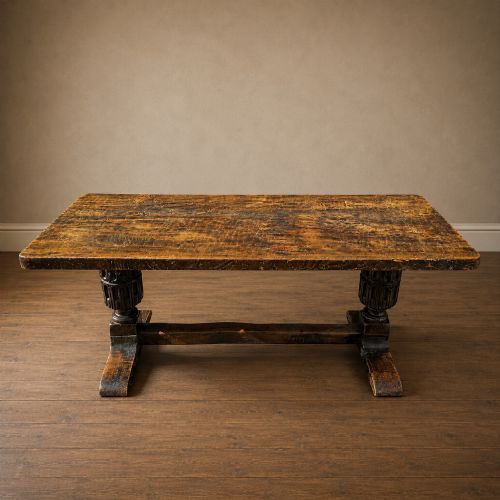
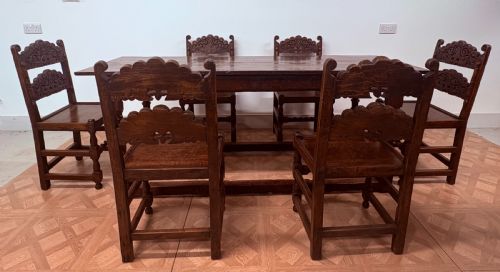
A 17th century trestle table serves primarily as a refectory or dining table, utilising long plank tops supported by sturdy trestle bases. You will encounter dining tables, side tables, and console tables designed for domestic use.
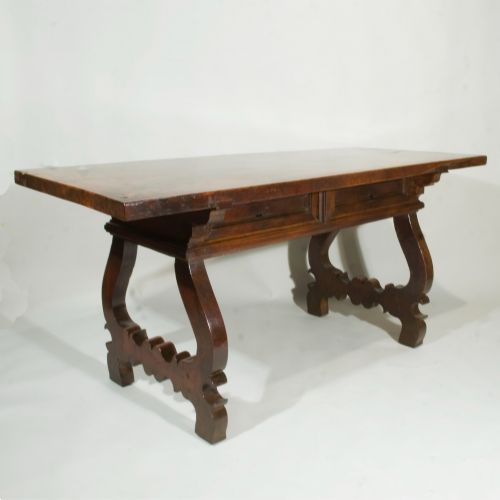
The selection ranges from authentic 17th century pieces originating in England and Spain to later revivals from the nineteenth and early twentieth centuries. These later interpretations capture the robust forms of the Tudor, Elizabethan, and Charles II periods.
Elm and oak predominate among the English examples, whilst walnut appears frequently in Spanish variants. Single plank tops and multi-plank configurations both feature across the available dining sets and single tables.
How they were made
Joinery relied on heavy solid timbers of oak, elm, and walnut shaped by hand into thick boards and supporting trestle structures. Iron and wrought iron components also appear in structural bracing.
Surfaces developed their character through centuries of use, retaining original patinas on timber tops and bases. Master carpenters joined single or multiple planks together to form expansive dining surfaces.
Listings span multiple eras from the late sixteenth century through to revival pieces made around nineteen thirty, utilising oak, elm, and walnut.
What varies in quality
The integrity of the timber top relative to its base distinguishes superior examples, particularly where original tops remain paired with their base structures. Single plank elm or oak surfaces command particular attention.
The depth of the original patina and the crispness of Spanish Baroque or Jacobean Revival carving indicate the level of craftsmanship. Age alone matters less than the preservation of original material integrity.
The 17th Century Trestle Table Glossary
- Refectory table
- A long dining table traditionally used in monastic refectories and large domestic halls. These forms dominate the current selection of dining furniture.
- Trestle base
- A structural support system where horizontal beams rest on vertical feet or uprights. This design allows maximum legroom along the length of the table.
- Patina
- The surface sheen and colour developed by wood over years of handling and exposure. Good patinas reflect genuine age and regular maintenance.
- Plank top
- A table surface constructed from joining several boards of timber side by side. Single plank versions represent a more substantial use of large trees.
17th Century Trestle Table: Frequently Asked Questions
How do I clean an old oak table?
Dust regularly with a soft dry cloth to prevent dirt accumulation in the grain. Avoid modern chemical polishes that can damage the historical surface.
Apply traditional beeswax occasionally to nourish the dry timber. Buff gently to maintain the natural sheen without creating an artificial gloss.
Can I use these for daily dining?
These tables were built for heavy daily use centuries ago and remain structurally robust. Ensure hot dishes use protective mats to shield the aged wood.
Position the table away from direct heat sources and radiators to prevent timber splitting. Room humidity stability keeps the old joints secure.
Are revival pieces as good as period ones?
Revival items from later centuries employ similar traditional carpentry techniques and solid materials. They offer the aesthetic presence of earlier eras with robust construction.
Period pieces carry direct historical provenance from the seventeenth century. Your choice depends on whether you prefer historical age or later craftsmanship.
What is the difference between oak and walnut tables?
Oak tables typically originate from English workshops displaying Jacobean or Elizabethan styles. The timber has a pronounced grain and sturdy pale brown tone.
Walnut tables more often trace back to Spanish Baroque origins. The wood yields a darker, richer hue with smoother grain patterns.