





17th Century Textile Art
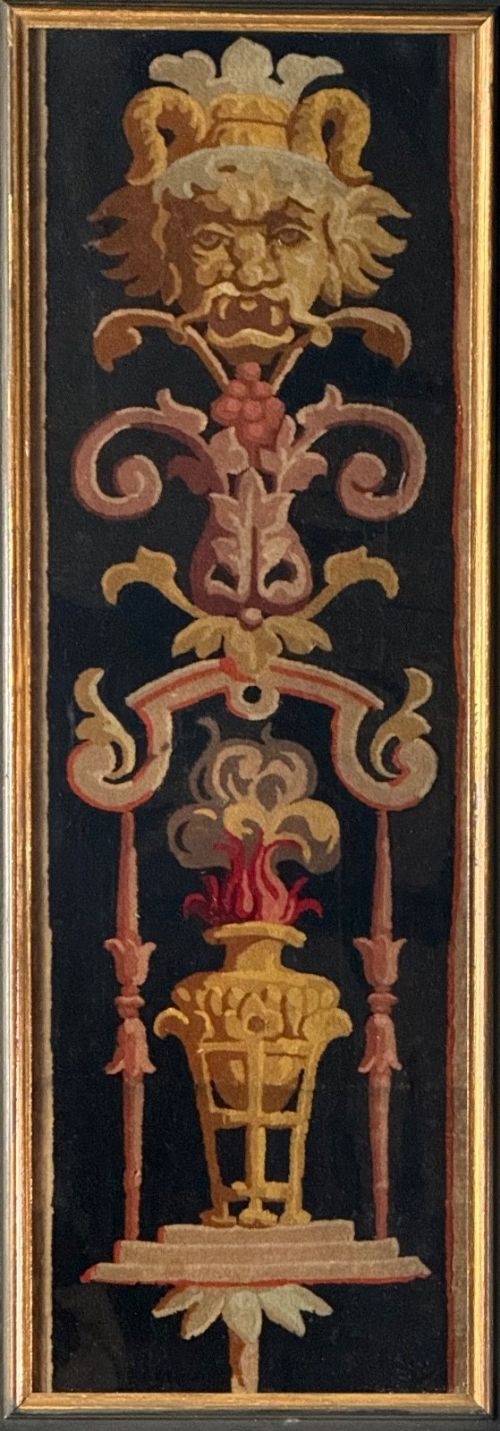
These pieces of 17th century textile art bring centuries of hand-worked silk, wool and metallic thread into a modern room.
17th Century Textile Art
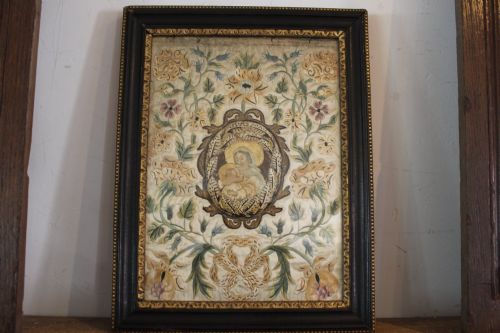
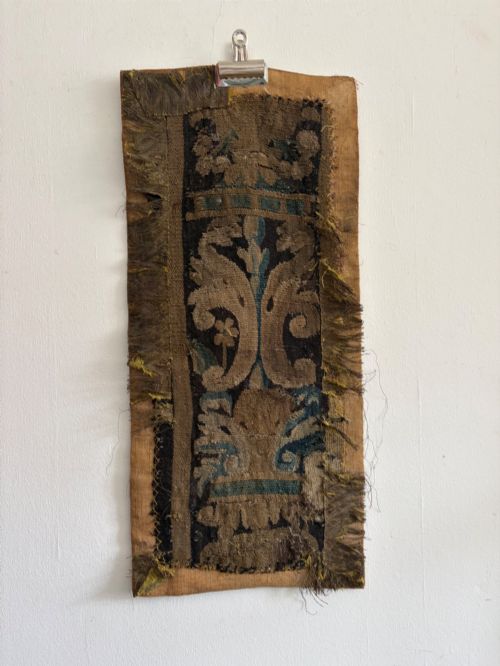
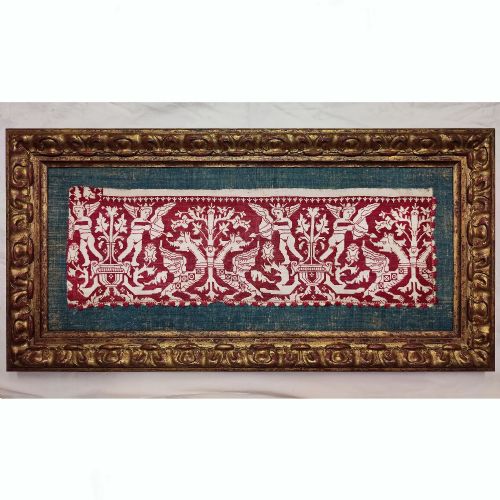
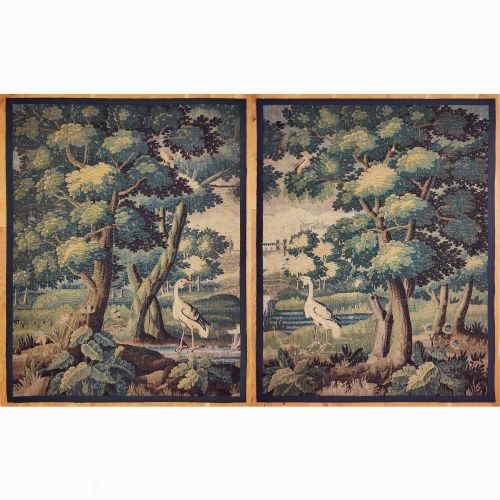
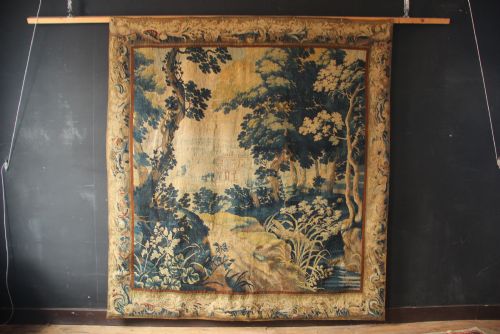
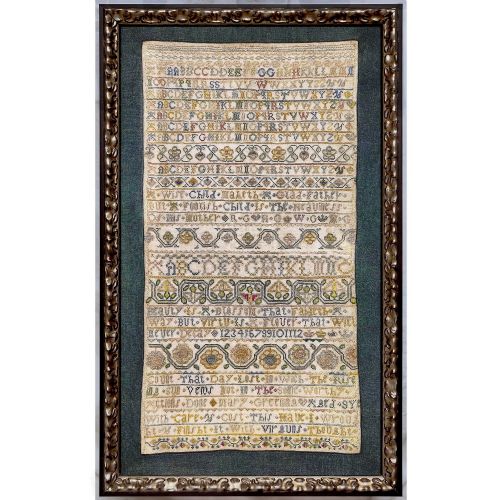
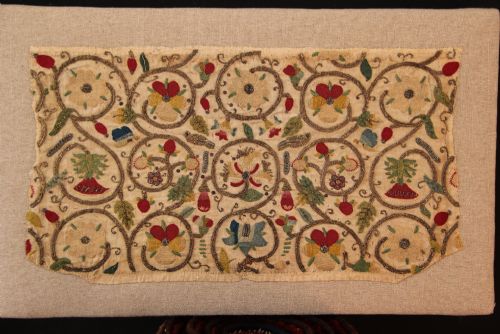
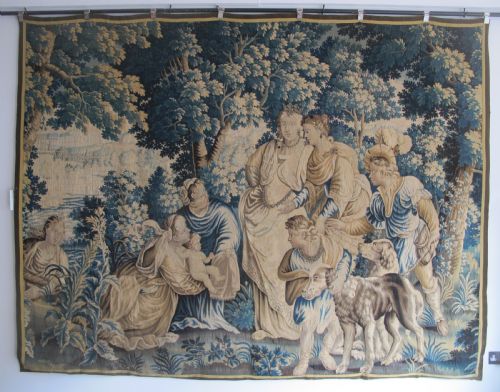
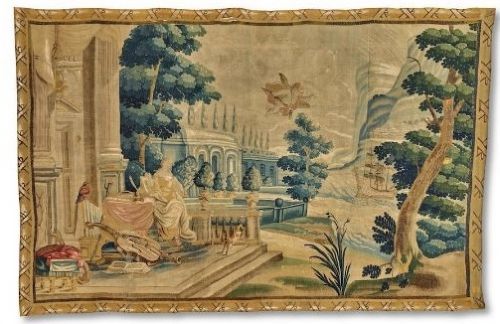
When you search for 17th century textile art, you encounter a range of hand-worked hangings, panels, and fragments. The selections on this page span large Flemish and French verdure tapestries alongside smaller framed embroideries, beadwork panels, and band samplers.
The most common forms you meet here are verdure tapestries depicting foliage, game parks, and mythological scenes, alongside detailed Stuart stumpwork panels and embroidered borders.
These works originate from English, French, Flemish, Italian, and German workshops, representing periods from the late sixteenth century through the eighteenth century.
Materials and construction methods
These works rely on combinations of wool, silk, and metallic thread, often mounted to linen or backed with wood frames. Glass beads and gilded wood elements appear in specific framed needlework and beadwork fragments.
Tapestries are woven on looms using wool and silk yarns to build complex pastoral or mythological scenes, while needlework panels utilise raised stumpwork embroidery techniques with padded silk figures.
Listings feature works from the 16th, 17th, and 18th centuries, utilising silk, wool, linen, glass, and metallic thread across tapestries and needlework.
Judging the quality of early textiles
Quality rests upon the fineness of the stitchwork, the complexity of the narrative or verdure design, and the survival rate of the original silk and metallic threads. Tapestries with dense foliage and clear mythological figures demand greater technical skill.
Condition dictates much of the character, as fragments mounted to linen show the careful preservation of original borders and panels against the losses expected from age.
The 17th Century Textile Art Glossary
- Verdure tapestry
- A wall hanging or panel dominated by landscape, foliage, trees, and game animals. These compositions often feature green and earthy tones.
- Stumpwork
- A raised embroidery style popular in the Stuart period, using padding and wire to create three-dimensional figures and costumes.
- Band sampler
- A long narrow strip of linen worked with various embroidery stitches and patterns, used by makers to practice or record designs.
- Coif
- A close-fitting cap worn in the early seventeenth century, frequently decorated with delicate floral or geometric embroidery in silk and metal thread.
17th Century Textile Art: Frequently Asked Questions
How do I hang a tapestry?
Large wall tapestries are typically hung using a discreet fabric sleeve sewn to the top reverse, through which a flat metal or wooden rod is slid. This distributes the weight evenly across the textile without puncturing the historic weave.
Smaller framed panels and textile fragments can be hung directly from standard picture hooks using their existing wood frames or professional linen mounts.
What is stumpwork embroidery?
Stumpwork is a form of raised embroidery prominent during the Stuart period, featuring padded elements that stand proud of the background linen. Makers used techniques like wood moulds, felt padding, and wire foundations to create three-dimensional faces, clothing, and animals.
These panels frequently depicted royalty, biblical scenes, or allegorical figures using fine silk and metallic threads.
How do I date a tapestry?
Dating requires examining the weave density, the palette of the wool and silk yarns, and the stylistic conventions of the figures or borders. Comparative analysis with known museum pieces helps place verdure and mythological scenes within specific decades.
Documentation, fragment sizes, and mounting techniques also offer clues to the period of manufacture.