


17th Century Style Cupboard
These 17th century style cupboards bring heavy timber, deep carving, and centuries of domestic history straight into a modern room.
17th Century Style Cupboard
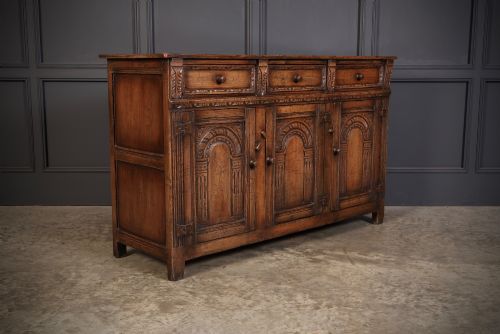
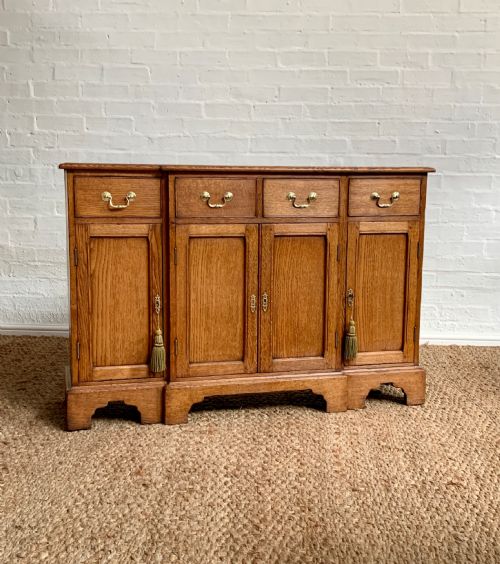
A 17th century style cupboard is a substantial storage piece rooted in early vernacular forms, taking shapes such as court cupboards, livery cabinets, and dresser bases. These items serve as practical furniture while displaying the architectural motifs of their originating eras.
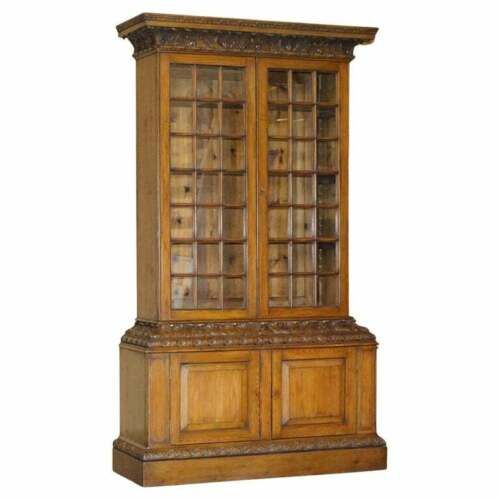
You will frequently encounter revival interpretations dating from the Victorian and Edwardian periods alongside pieces originating directly in the seventeenth, eighteenth, and early nineteenth centuries. The selection ranges from compact hall cabinets to large library bookcases and panelled sideboards.
The form encompasses regional British and European traditions, incorporating Flemish Baroque influences and Jacobean styles. Each variation reflects the evolving domestic needs for enclosed shelving and display surfaces.
How they were made
Construction relies heavily on solid timber framing, predominantly oak alongside walnut and kingwood veneers on select formal items. Joinery utilises traditional pegged mortise and tenon joints to build rigid carcasses that endure generations of use.
Surface ornamentation involves hand carving, parquetry veneers, and applied moulding details. Metalwork fixtures in brass and iron provide operational hinges and lock plates that anchor the heavy doors.
Livery cupboards originally featured slatted doors to let the cheese breathe.
What varies in quality
The standard of timber selection and the depth of the hand carving dictate the hierarchy among these pieces. Pieces built from dense, figured oak with crisp, deep relief panels stand apart from later, simpler revival iterations.
Construction integrity also separates examples, where original brass hardware, tight joinery, and well-balanced door proportions reflect superior workshop execution.
The 17th Century Style Cupboard Glossary
- Court cupboard
- A formal, two-stage storage piece with an upper recessed section supported by pillars, traditionally used for displaying plate. It serves as a principal focal point in panelled dining rooms.
- Livery cupboard
- A compact ventilation cabinet used in earlier households for storing food and candles before general domestic refrigeration. These units often feature pierced splat panels for air circulation.
- Jacobean style
- An English design aesthetic spanning the early seventeenth century, characterised by rigid symmetry, geometric mouldings, and strapwork carving. It re-emerged strongly in nineteenth-century revival furniture.
- Parquetry
- A mosaic woodwork technique using geometric wood veneers to create decorative patterns on cabinet doors and tabletops. It requires precise cutting of contrasting timbers.
- Flemish Baroque
- A flamboyant continental style featuring exaggerated scrolls, heavy fruit garlands, and muscular figural carving. It adds a dramatic architectural weight to side cabinets.
17th Century Style Cupboard: Frequently Asked Questions
What is a court cupboard?
A court cupboard is a sturdy two-tier storage unit featuring an enclosed lower section and a recessed upper stage supported by turned columns. They were traditionally used to store and display household provisions and valuables.
In modern rooms, these pieces function well as prominent sideboards or statement storage in dining spaces and hallways.
How do I care for antique oak?
Antique oak benefits from consistent indoor humidity levels and protection from direct heat sources that can dry out the ancient timber. Regular dusting with a dry cloth keeps the surface clean without damaging the finish.
Applying a traditional beeswax occasionally helps nourish the wood and maintains a soft natural sheen on carved panels.
Are these pieces genuinely seventeenth century?
The selection includes genuine seventeenth-century survivals alongside later revival pieces made during the Victorian, Edwardian, and 1920s periods. Each listing details the specific era of manufacture to identify its exact age.
Revival pieces often replicate earlier construction methods while utilising the woodworking standards of their own time.
Where should I place a large cupboard?
Large cupboards require substantial wall space and stable flooring to support their heavy timber construction safely. Hallways, dining rooms, and large living spaces accommodate their visual weight effectively.
Ensure you measure both ceiling height and floor clearance before positioning these deep cabinets in your home.