





17th Century Royal Art
Seventeenth century royal art offers a direct look into court life through portraits of monarchs, princes and pivotal historical figures.
17th Century Royal Art
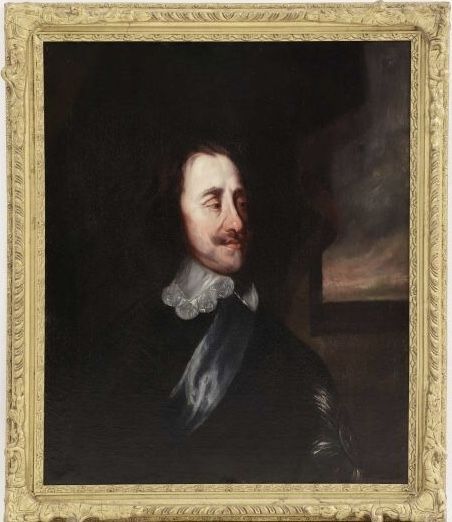
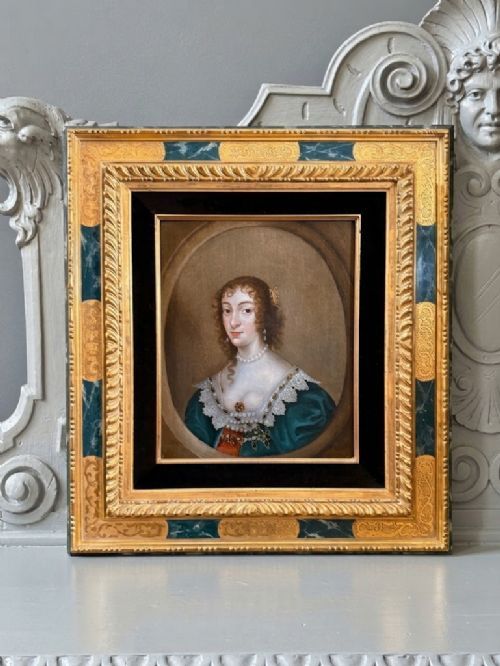
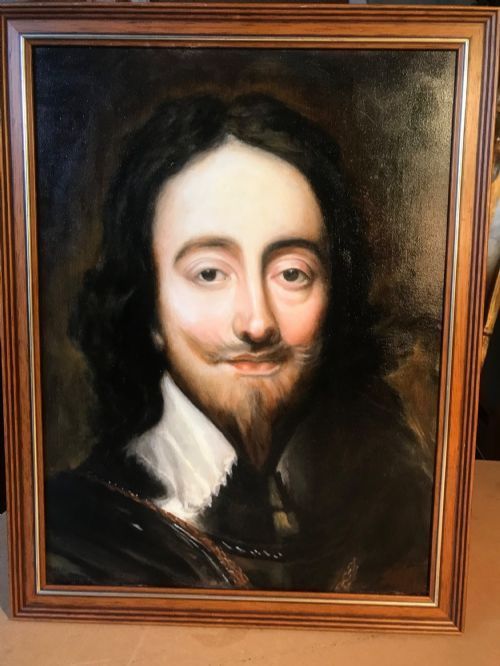
When searching for 17th century royal art, you encounter oil paintings, mezzotints, engravings and framed textile art depicting sovereigns and nobility. These works capture the likenesses and political alignments of figures such as King Charles I, Queen Henrietta Maria and King William III.
The pieces on this page span the seventeenth century itself alongside later Victorian, 1900 and 1960 interpretations. You will find original oils on panel and canvas alongside historic mezzotints after prominent painters.
Portraits dominate the selection, portraying monarchs in armour, robes or formal court attire. Alongside paintings, beadwork fragments depict royal hunting scenes, showing courtly interests rendered in textile form.
How They Were Made
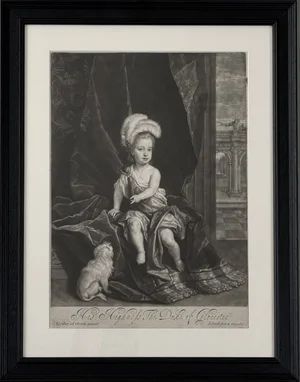
Printmaking techniques such as mezzotint and historic engraving allowed popular royal portraits to be reproduced on paper. These works rely on fine tonal gradations to translate painted compositions into inked impressions.
Textile works employ intricate beadwork on canvas or fabric supports to construct detailed figurative scenes. These pieces combine needlework skill with durable materials to preserve historical iconography.
17th Century Royal Art Retail Price Guide 2026
Typical asking prices for 17th century royal art among the pieces listed under this phrase on Sellingantiques today, from the lower quarter to the upper quarter. They describe what is for sale here now, not the wider market.
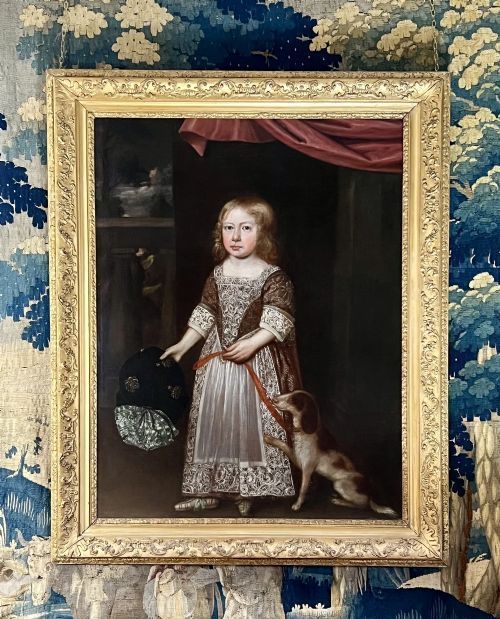
Princes can be spotted in armour, as boys, and wearing the Order of the Garter.
What Varies in Quality
Quality in these works rests upon the fidelity of the draughtsmanship and the strength of the lineage to known portrait traditions. Pieces originating from studio circles or closely following masters such as Sir Anthony van Dyck exhibit superior handling of anatomy and costume detail.
The preservation of the medium significantly influences the character of each piece. Well-maintained oil surfaces and clear, crisp mezzotint impressions retain the intended depth and contrast of the original compositions.
Sir Peter Lely·Van Dyck·John Smith·Sir Godfrey Kneller·Henry Stone
The 17th Century Royal Art Glossary
- Mezzotint
- A printmaking process where the copper plate is roughened to achieve dark tones and smoothed areas create highlights. This technique produces rich, velvety portraits with subtle tonal gradations.
- Baroque
- An artistic style of the seventeenth century characterised by drama, exuberant detail and grandeur. It appears in the theatrical poses and opulent dress of royal subjects.
- Stuart
- Pertaining to the royal house that ruled England and Scotland during much of the seventeenth century. Portraits from this era record the fashion and political turbulence of the dynasty.
- Panel
- A rigid wooden support used by painters before canvas became dominant. Artists prepared these boards with gesso before applying oil paint.
- Engraving
- A printmaking method where lines are cut directly into a metal plate with a burin. The resulting prints offer sharp, precise definitions ideal for reproducing historic portraits.
17th Century Royal Art: Frequently Asked Questions
What subjects appear in 17th century royal art?
The works primarily depict monarchs, princes and notable historical figures associated with the British court. Subjects include King Charles I, Queen Henrietta Maria and King William III.
Alongside formal royal portraits, you will find narrative scenes such as framed beadwork depicting royal hunts. These images served to project authority and record the lineage of ruling dynasties.
How do period oils differ from later reproductions?
Period oil paintings date from the seventeenth century and reflect the materials, pigments and studio practices of that era. They often connect directly to the circles of master portraitists.
Later interpretations, including Victorian and twentieth-century works, demonstrate the enduring appeal of seventeenth-century court aesthetics. These later pieces utilise the techniques of their respective times while engaging with historic royal iconography.
What is a mezzotint portrait?
A mezzotint is a print created by roughening a metal plate to produce rich, dark tones and scraping it back to create lighter areas. This method allows for smooth transitions of light and shadow.
In this collection, mezzotints record the likenesses of royal figures after paintings by artists like Sir Godfrey Kneller and Thomas Murray. They made sophisticated portraiture accessible beyond the original canvas.
How should I display framed textile art?
Framed textile art, such as beadwork fragments, requires protection from direct sunlight to prevent the fading of threads and fabrics. Keeping pieces in stable environmental conditions preserves the integrity of the materials.
Ensure the framing allows the textile to breathe without pressing directly against the glass. This simple precaution protects delicate historical needlework for years to come.