


17th Century Religious Sculpture
These 17th century religious sculpture pieces carry centuries of devotion in carved wood and polychrome.
17th Century Religious Sculpture
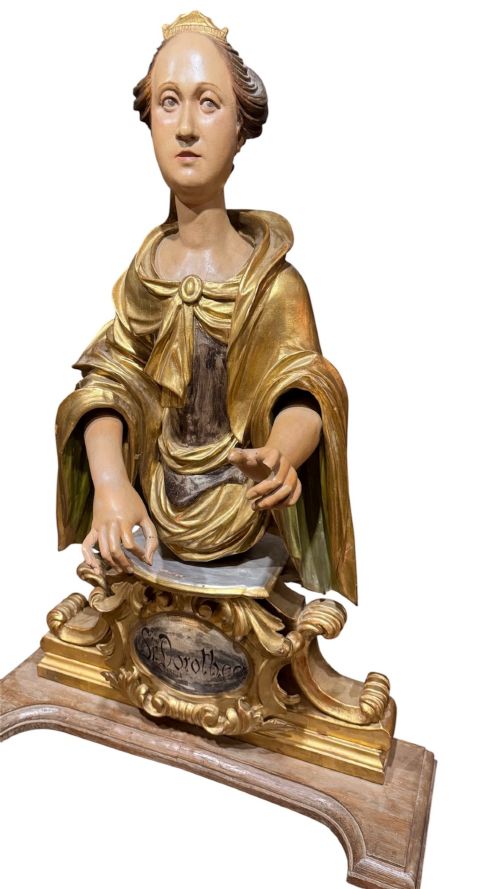
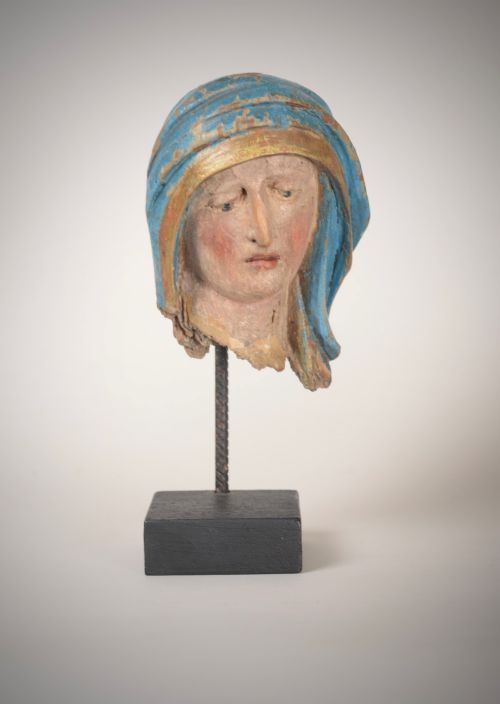
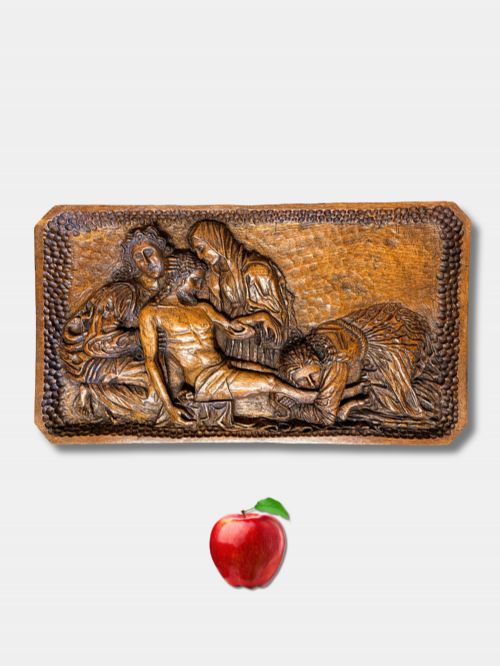
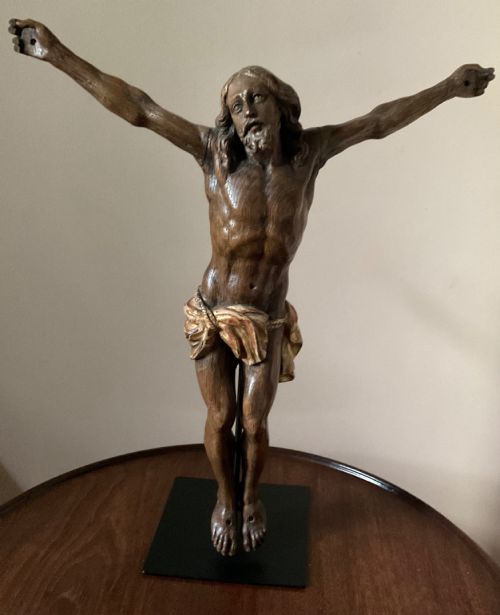
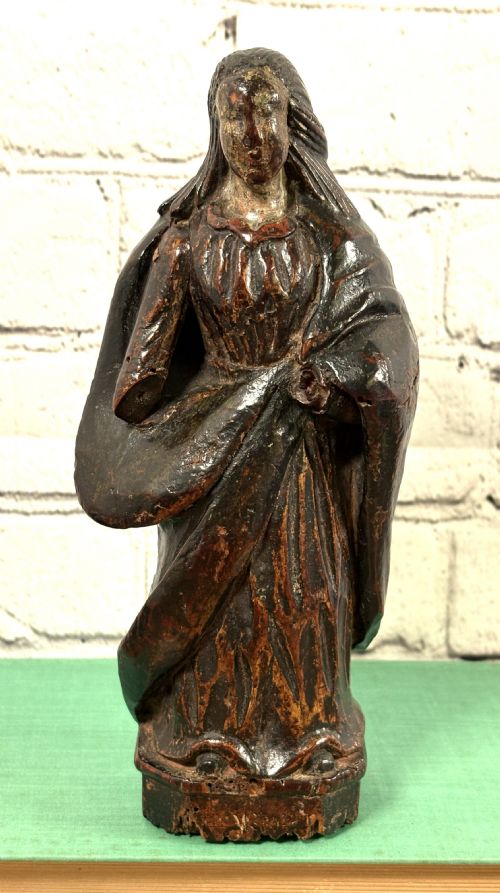
When you search for 17th century religious sculpture, you encounter devotional figures, wall reliefs, and corpus Christi crosses originating from diverse European and continental traditions. The pieces on this page span oak, limewood, walnut, and boxwood, alongside mixed media examples featuring gesso and polychrome paint.
You are most likely to meet figures of saints, cherub heads, and depictions of Christ from Spanish, French, Italian, and Flemish workshops. These works vary from small personal devotional objects to architectural wall panels and standing figures created for ecclesiastical settings.
Materials and construction methods
Many surfaces received a gesso ground before receiving polychrome paint and gilding, combining sculptural form with painterly finish. Others rely entirely on the natural grain and warm patina of the exposed timber.
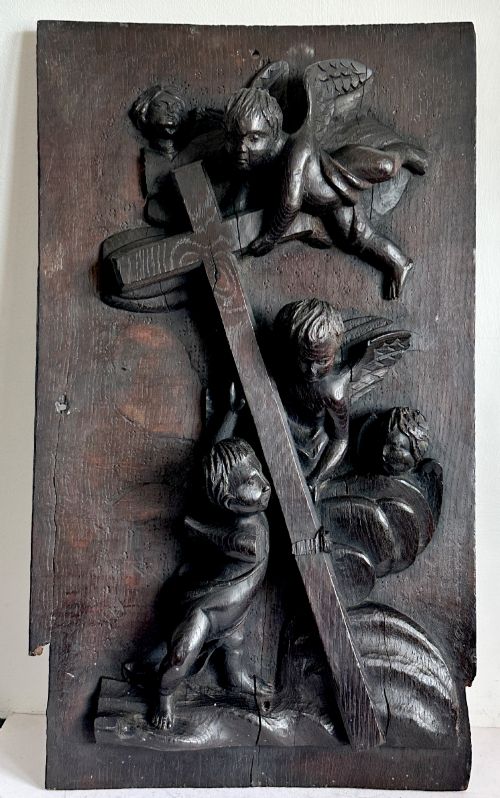
Angels carved on clouds occasionally retain traces of golden pigment tucked deep within their wooden curls.
Distinctions in craftsmanship
Quality rests in the anatomical precision of the carving, particularly in the rendering of hands, hair, and facial expressions. Master carvers achieved a sense of movement and psychological depth that lesser workshops missed.
The survival of original polychrome paint and gilt surfaces elevates a piece, as does the crispness of detail in high-relief elements like clouds and drapery.
The 17th Century Religious Sculpture Glossary
- Polychrome
- Painted in several colours. This term describes wooden sculptures finished with pigments over a gesso ground.
- Corpus Christi
- The figure of Jesus Christ on a cross. These anatomical carvings range from small boxwood figures to substantial wooden sculptures.
- Gesso
- A plaster mix applied to a wooden substrate. Artisans used this material as a smooth base for subsequent gilding and painting.
- Putto
- A figure of a small chubby infant, often winged. These sculptural motifs appear frequently in baroque church decoration and architectural panels.
- Wall Relief
- A sculptural technique where elements remain attached to a solid background of the same material. These panels often depict narrative biblical scenes or allegorical figures.
17th Century Religious Sculpture: Frequently Asked Questions
How do I care for wooden religious sculptures?
Keep wooden sculptures away from direct sunlight and sudden temperature shifts to prevent the timber from splitting.
Dust them gently with a dry, soft brush rather than using liquid polishes that might damage aged finishes or polychrome layers.
Were these pieces made for churches?
Many larger figures and wall panels originated in ecclesiastical settings, adorning altars, choir stalls, and church walls.
Smaller boxwood and ivory-toned carvings were often produced for private devotional use in domestic chapels or homes.
How can I tell regions apart?
Spanish and Italian works frequently employ dramatic polychrome and gesso techniques to emphasise emotional intensity and theatrical baroque movement.
Northern European pieces in oak and limewood often showcase the natural grain of the timber with restrained or absent paint.
What is the difference between high and continental baroque?
Continental baroque encompasses various regional European interpretations of the exuberant, dynamic style that dominated the seventeenth century.
High baroque represents the most intense, theatrical manifestation of this artistic movement, marked by sweeping drapery and dramatic gestures.