


17th Century Desk Box
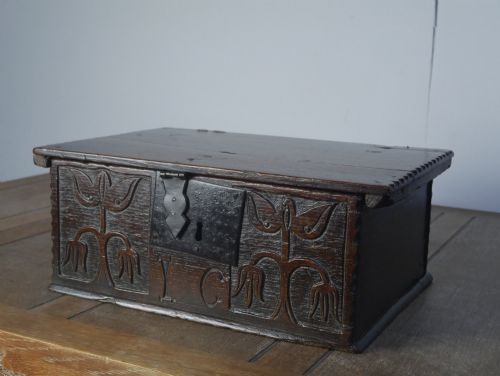
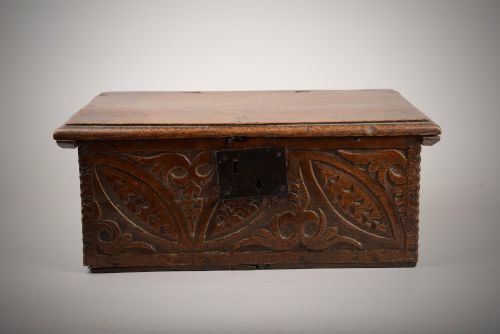
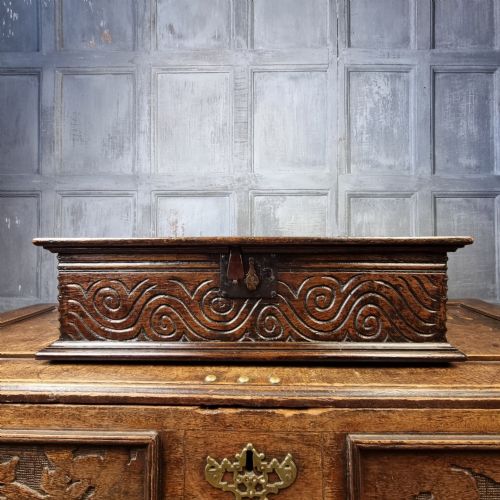
These 17th century desk boxes are portable oak repositories built to hold writing materials and personal documents securely in a smaller domestic space.
What a 17th century desk box is
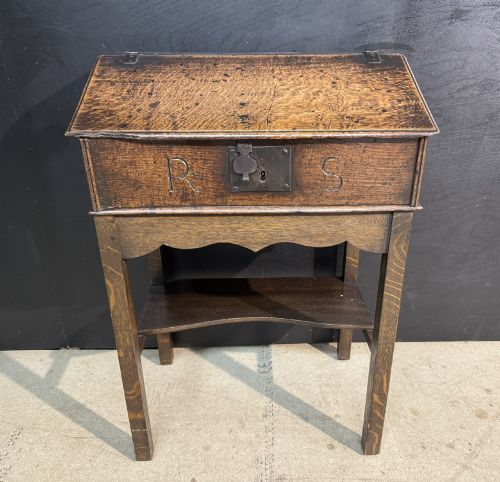
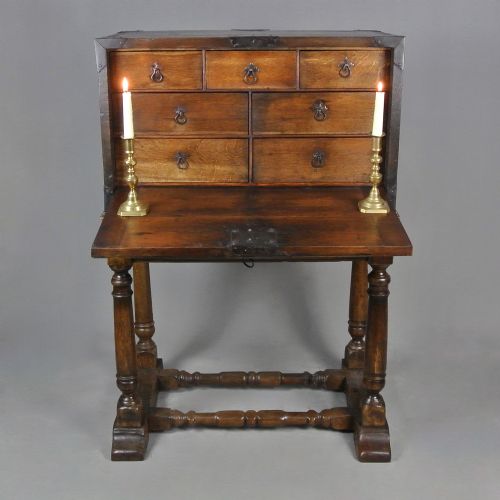
A 17th century desk box provides a compact and secure resting place for paper, quills, and important documents before the widespread adoption of full-sized writing furniture. These portable containers appear in forms such as writing slope boxes, table top desks, and standard oak boxes.
The pieces on this page span the 17th century and the 18th century, reflecting the longevity of traditional vernacular forms. Styles range from Jacobean and William III periods through to regional pieces like Welsh oak writing boxes.
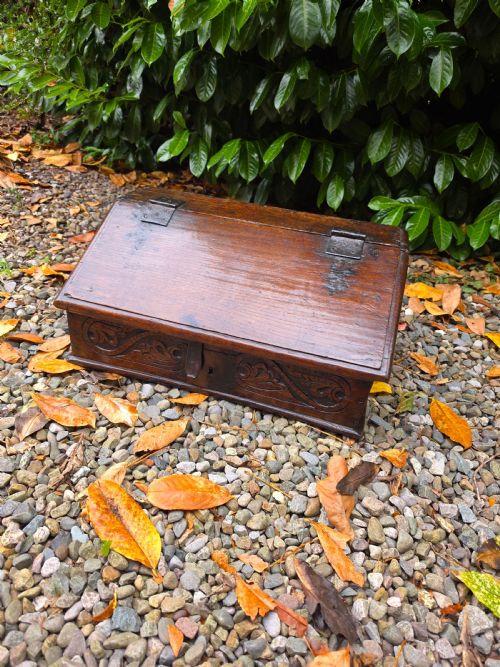
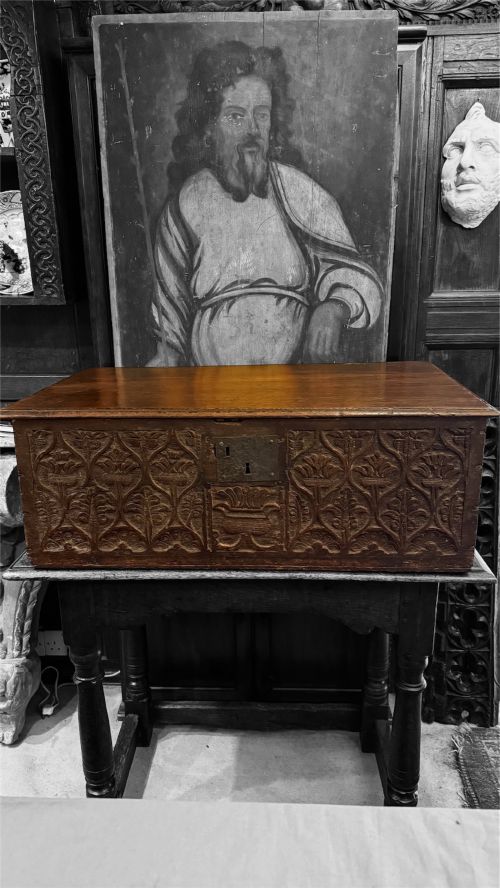
Most examples function as table top writing desks or bible boxes designed to sit on a larger surface. Their sloping lids provide a convenient angle for handwriting in eras when writing materials were scarce and valuable.
How they were made
Makers constructed these boxes primarily from solid oak using traditional joining techniques suited to domestic timber. The structural panels rely on pegged frames and standard carpentry methods of the era.
Metalwork provides both security and structural reinforcement through iron hinges, latches, and brass fittings. These functional mounts secure the sloping or flat lids while adding durability to heavy use.
Retail Price Guide 2026
Typical UK retail prices for 17th century desk box, calculated from the Sellingantiques database of over a million retail prices indexed since 2003. This retail price guide relies exclusively on Sellingantiques data; no external sources or auction records are used, so the figures do not describe the wider market.
The inventory includes specialised regional examples such as Welsh oak writing boxes alongside ecclesiastical table top desks.
What varies in quality
The distinction between standard utility boxes and superior examples rests on the crispness of the carpentry and the integration of original iron or brass hardware. Finer boxes display thoughtful proportions and careful timber selection rather than purely utilitarian construction.
Surface patination and the survival of original structural elements define the character of better specimens. Boxes that retain their early hinges and locks command greater appreciation from collectors of period woodwork.
The 17th Century Desk Box Glossary
- Desk box
- A portable wooden container with a flat or sloping lid used to store writing equipment and documents.
- Writing slope
- A box featuring an angled top designed to provide a comfortable writing surface.
- Bible box
- A term often applied to small 17th century oak boxes traditionally used for holding family scriptures.
- Jacobean
- The style of English furniture and architecture prevalent during the reign of James I, characterised by sturdy construction and geometric ornament.
- Patina
- The surface sheen and colour developed by aged timber through decades of handling, polishing, and exposure to light.
Frequently Asked Questions
What is a 17th century desk box?
A 17th century desk box is a portable wooden container designed to hold writing materials, ink, and important documents safely in a domestic setting.
These pieces feature hinged lids, often slanted to serve as a writing surface when placed upon a table or chest.
How were desk boxes used historically?
People used these boxes to store loose paper, quills, and valuable papers securely before dedicated writing desks became common.
The portable nature of the box allowed owners to move their writing station between rooms or carry documents while travelling.
How do you date an oak desk box?
Dating relies on examining the construction methods, timber species, hinge types, and stylistic details associated with periods like the 17th century or William III era.
Original ironwork and pegged joinery provide key indicators for establishing the approximate age of vernacular woodwork.
Where were desk boxes placed in a home?
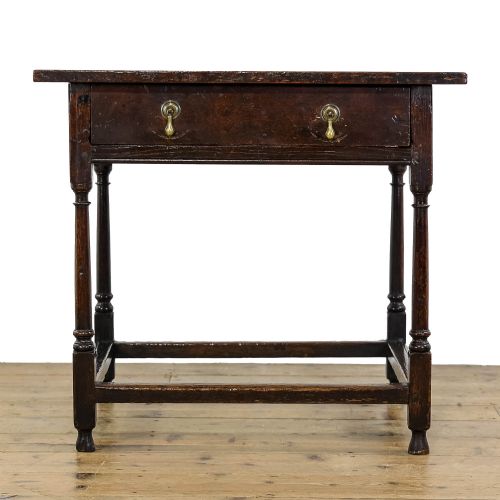
Owners placed desk boxes on top of heavy tables, joint stools, or chests where the sloping lid could be accessed easily for writing.
They served as versatile furniture that could be stored away or moved when floor space was required for other household tasks.