26,034  PAGES BROWSED TODAY PAGES TODAY • 49 ANTIQUES UPLOADED TODAYNEW ARRIVALS
GIFTS
49 ITEMS ADDED TODAY
Sort Order
Items Per Page
Antiques dealer?
Join as a Seller
Browse Categories
Sort order
Items per page
sold SA762473
Sorry, but this item has been sold.
Regent Antiques

Regent Antiques

Sellingantiques Verified Since Sep 2016
Browse dealers 639 items
  • About Us
    We specialise in english and continental furniture, silver, porcelain and decorative items.
  • Trade Associations
    Regent Antiques is a registered member of LAPADA  CINOA
Id #SA762473
SHARE
SAVE

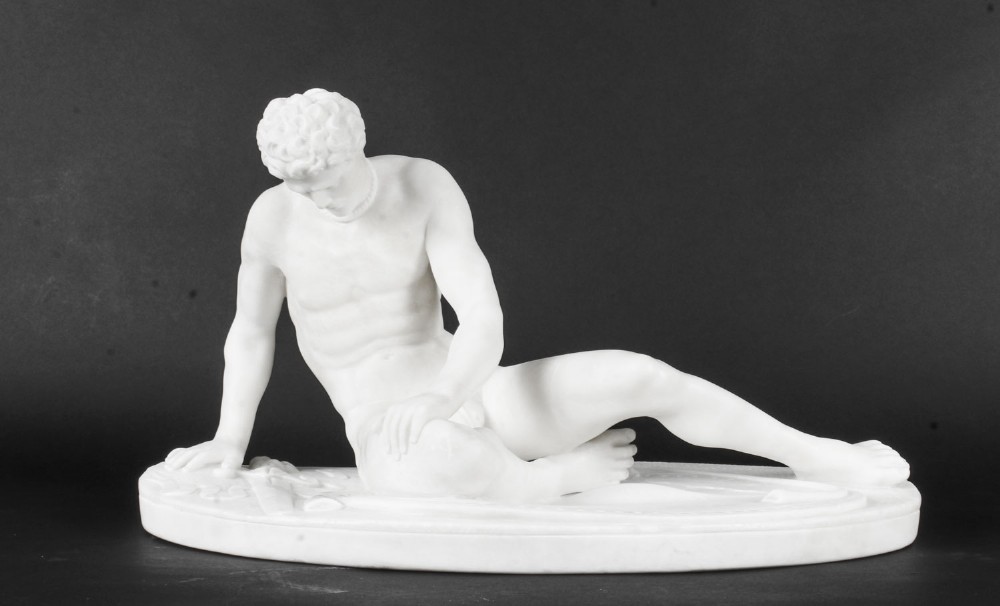
Antique Italian Grand Tour Alabaster Sculpture of the Dying Gaul Ca 1860 19th C

19th century
Sold 12 January 2022 · Regent Antiques
This “Antique Italian Grand Tour Alabaster Sculpture of the Dying Gaul Ca 1860 19th C ” found a buyer.

It was listed by Regent Antiques. Sold pieces stay on Sellingantiques as a record of what has passed through, and the next one is rarely far away.

Description

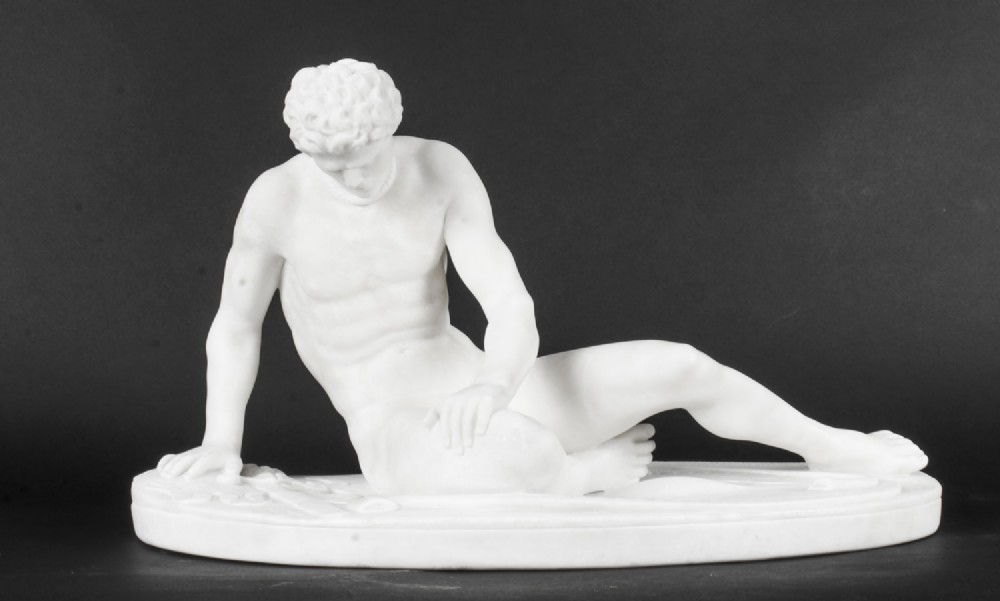
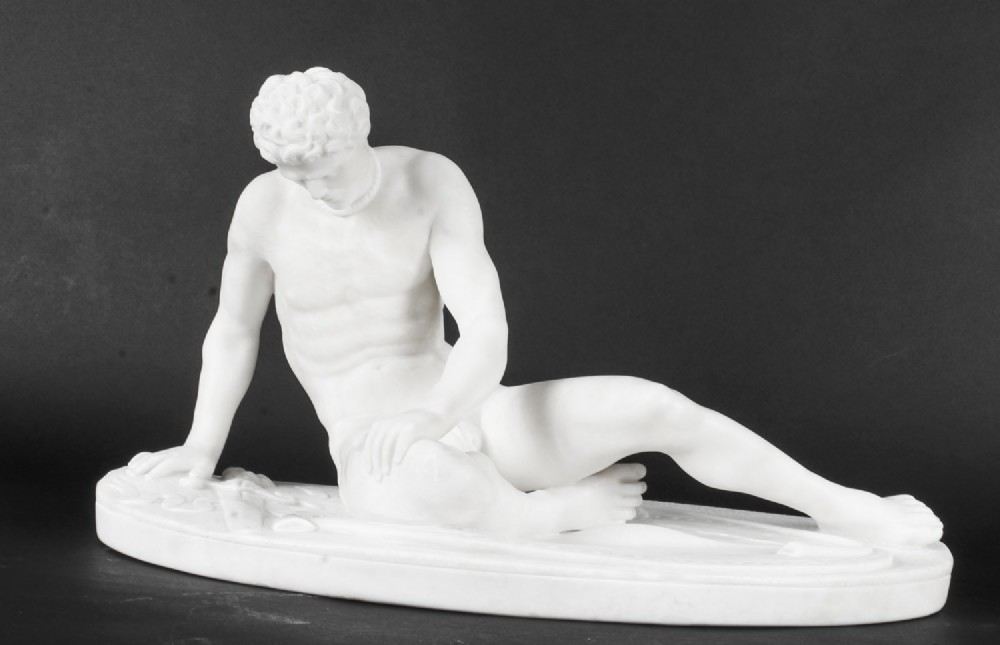
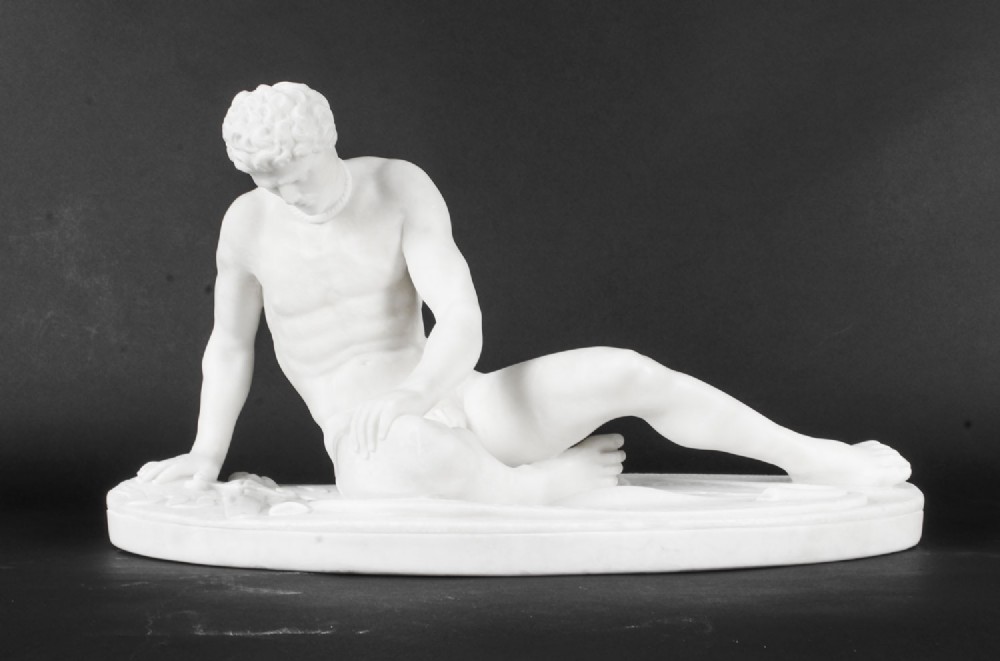
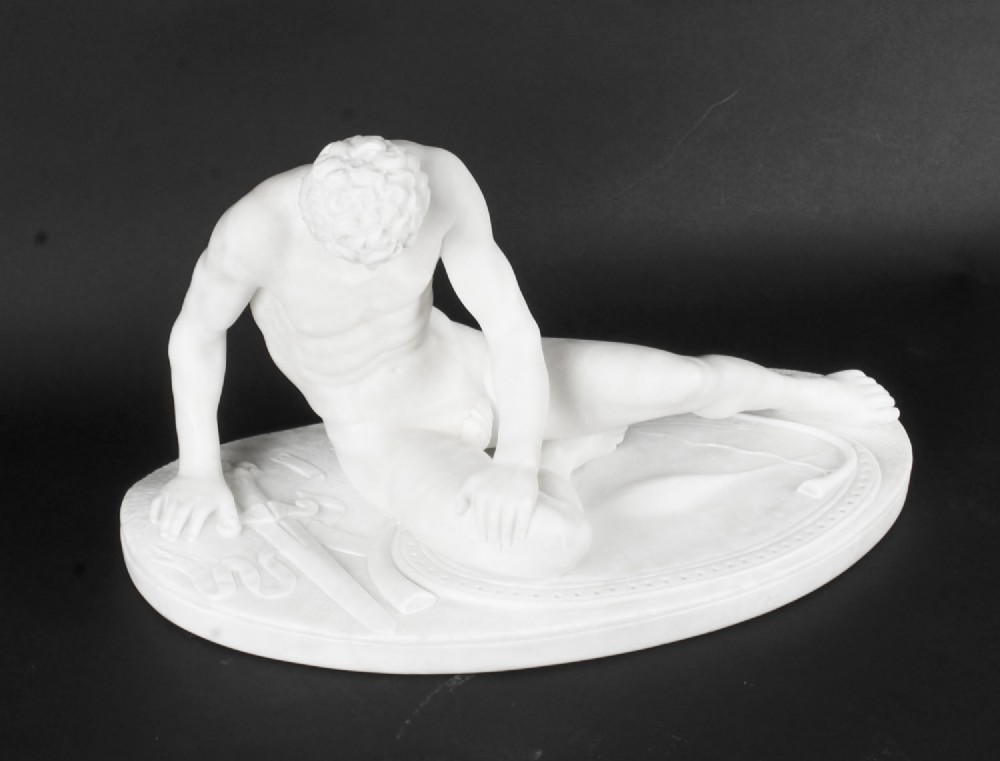
This is a truly magnificent antique Italian Grand Tour white alabaster sculpture of the Dying Gaul, circa 1860 in date.

This striking classical sculpture is after the original antique Roman marble sculpture found in the Capitoline Museum in the early 17th Century, which is itself a copy of an ancient Hellenistic bronze sculpture commissioned by Attalus of Pergamon in 230-220 BC to celebrate his victory over the Galatians.

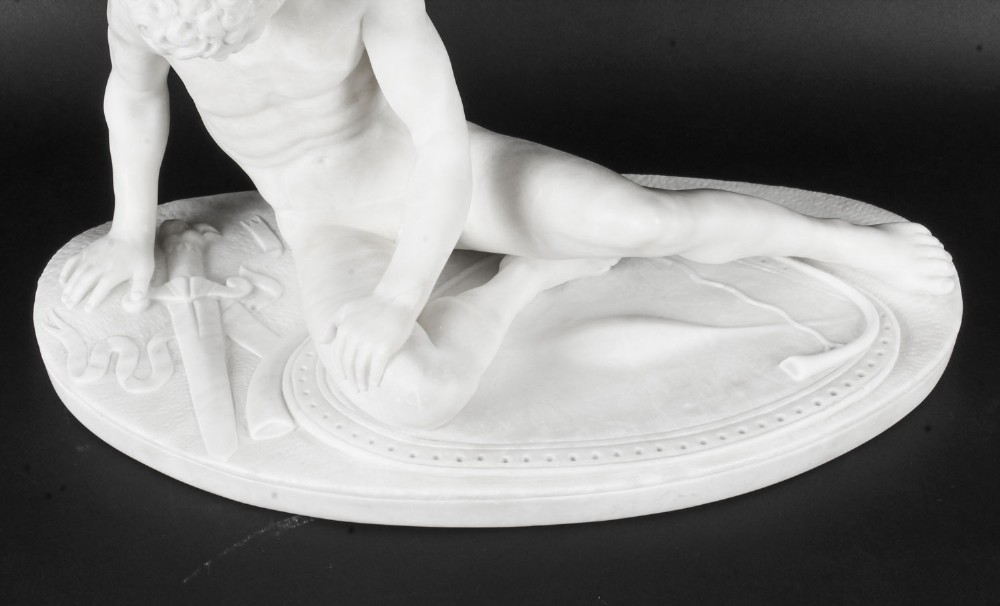
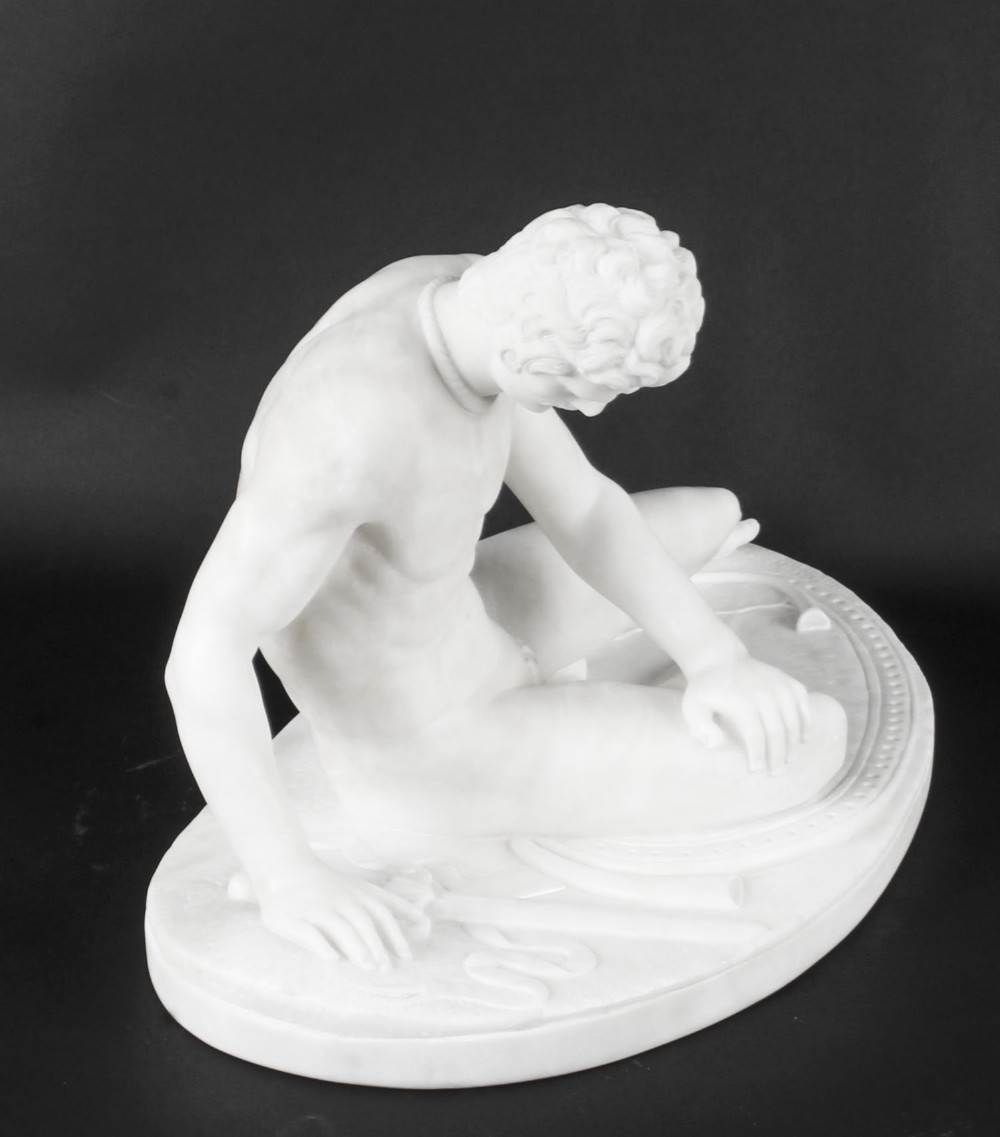
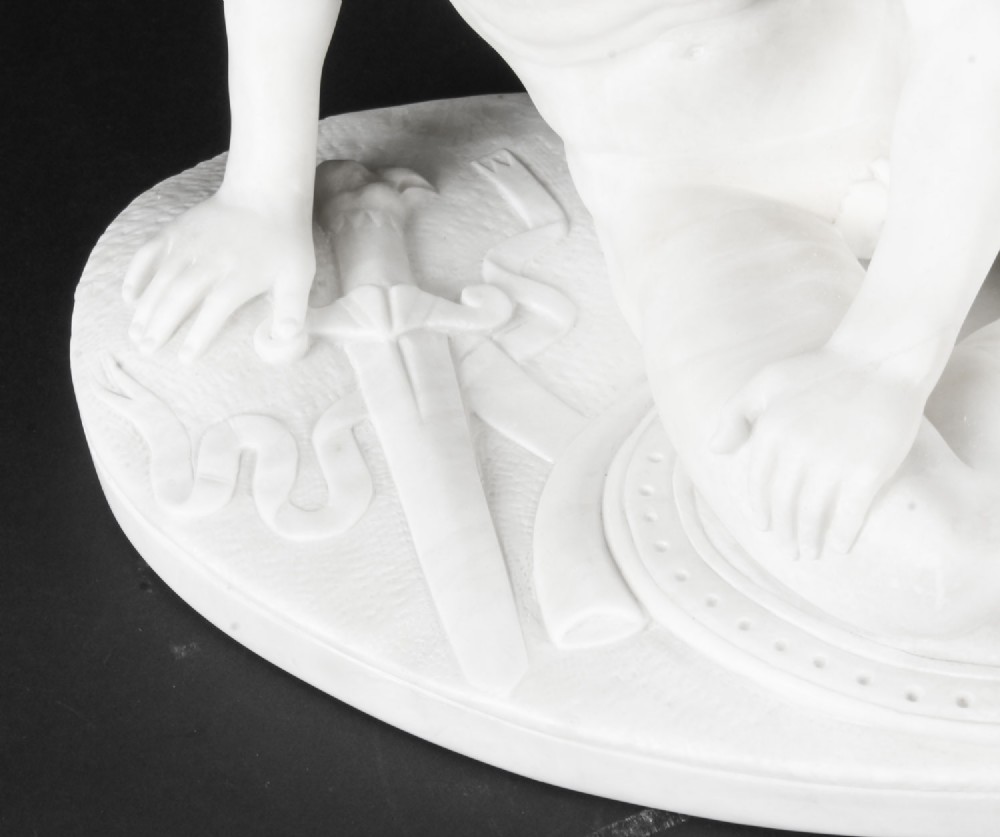
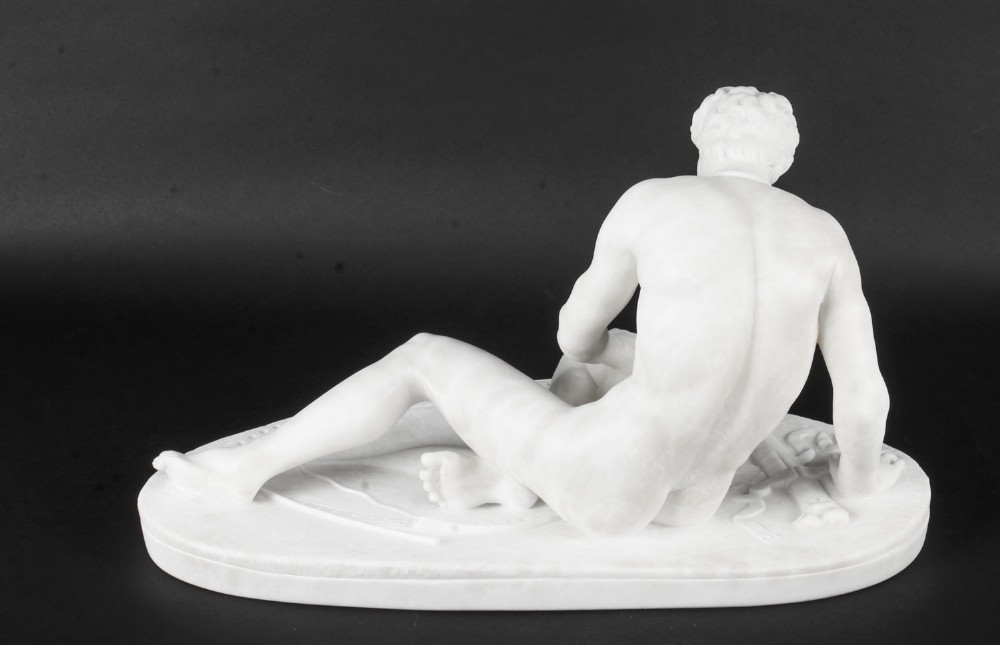
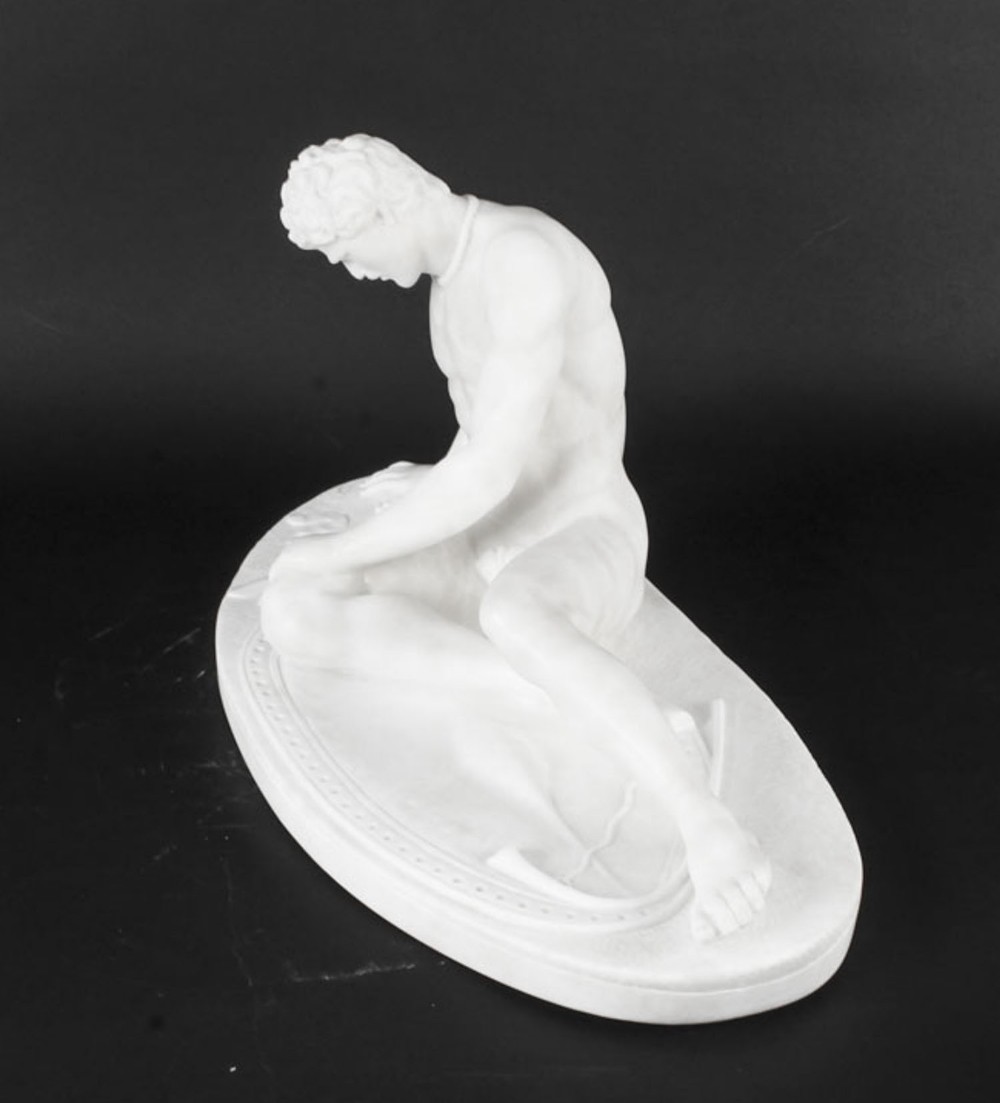
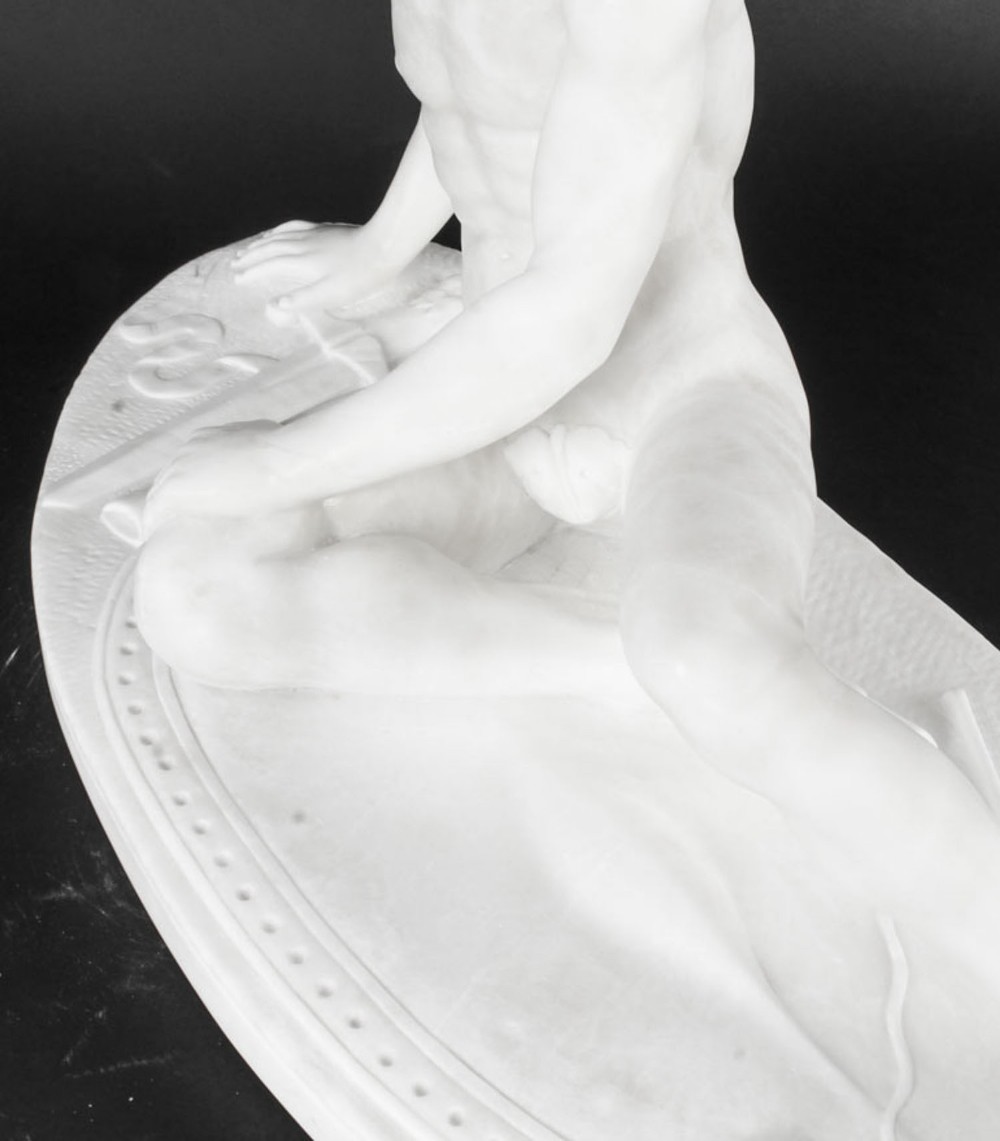
This exquisitely executed carved sculpture depicts the wounded naked dying gladiator with remarkable realism and pathos. He is beautifully featured as a Celtic warrior with curly hairstyle and has a characteristic band of twisted metal around his neck. He lies on his fallen shield while his sword lies beside him on the right-hand side and his head is looking downward in dignified sorrow.

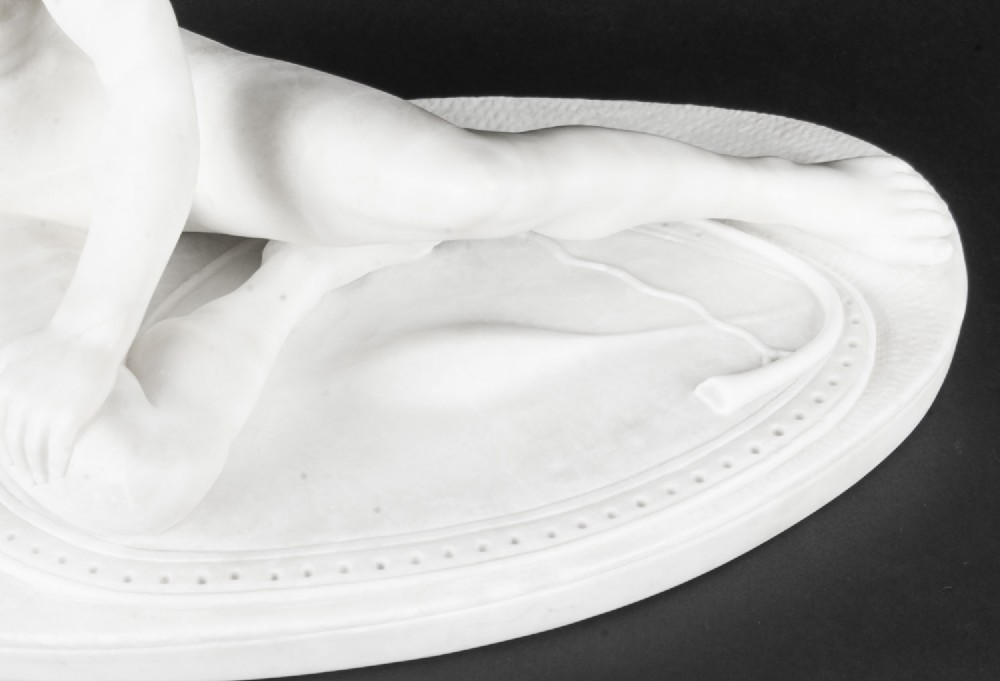
Like the original antique Roman sculpture, it is raised on a beautiful oval white alabaster base, which is very appropriate to highlight the figure.

The attention to detail throughout this piece is second to none.

Add a classical dimension to your home with this captivating Italian Grand Tour sculpture.

Condition:

In excellent condition.

Please refer to pictures.

Dimensions in cm:

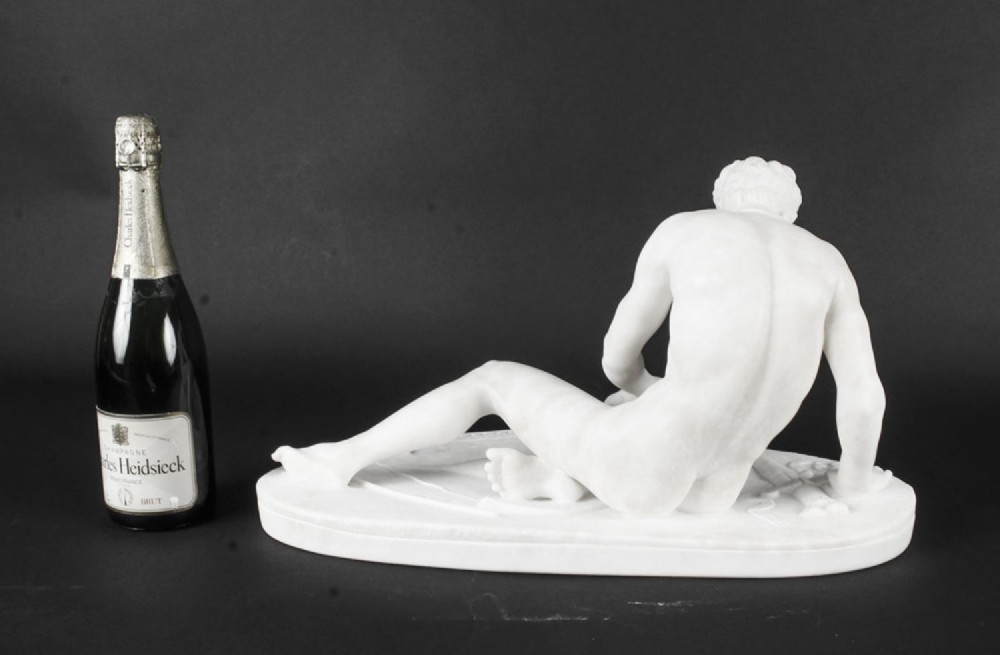
Height 28 x Width 49 x Depth 26

Dimensions in inches:

Height 11.0 x Width 19.3 x Depth 10.2

The Dying Gaul (in Italian: Galata Morente), formerly known as the Dying Gladiator, is an ancient Roman marble copy of a lost Hellenistic sculpture that is thought to have been executed in bronze, which was commissioned some time between 230 BC and 220 BC by Attalus I ofPergamon to celebrate his victory over the Celtic Galatians in Anatolia.

The present base was added after its rediscovery. The identity of the sculptor of the original is unknown, but it has been suggested that Epigonus, the court sculptor of the Attalid dynasty of Pergamon, may have been its sculptor.

The statue depicts a dying Celt with remarkable realism, particularly in the face, and may have been painted. He is represented as a Gallic warrior with a typically Gallic hairstyle and moustache. He lies on his fallen shield while his sword and other objects lie beside him.

The statue was most commonly known as the Dying Gladiator until the twentieth century, on the assumption that it depicted a wounded gladiator in the Roman amphitheatre. Scholars had identified it as a Gaul by the mid nineteenth century, but it took many decades for the new label to become the norm.

The Grand Tour was the traditional trip of Europe undertaken by mainly upper-class European young men of means. The custom flourished from about 1660 until the advent of large-scale rail transit in the 1840s, and was associated with a standard itinerary.

It served as an educational rite of passage. Though primarily associated with the British nobility and wealthy landed gentry, similar trips were made by wealthy young men of Protestant Northern European nations on the Continent, and from the second half of the 18th century some South American, U.S., and other overseas youth joined in. The tradition was extended to include more of the middle class after rail and steamship travel made the journey less of a burden.

The primary value of the Grand Tour, it was believed, lay in the exposure both to the cultural legacy of classical antiquity and the Renaissance, and to the aristocratic and fashionably polite society of the European continent. In addition, it provided the only opportunity to view specific works of art, and possibly the only chance to hear certain music. A grand tour could last from several months to several years. It was commonly undertaken in the company of a knowledgeable guide or tutor.

The Grand Tour not only provided a liberal education but allowed those who could afford it the opportunity to buy things otherwise unavailable at home, and it

Date of Manufacture

Regent Antiques has dated this piece to the 1860s.

Physical Dimensions
Height
28cm (11.02")
Width
49cm (19.29")
Depth
26cm (10.24")
Reference Numbers
Sellingantiques Reference
SA762473
Dealers Internal Reference
09984
Antique Italian Grand Tour Alabaster Sculpture of The Dying Gaul Ca 1860 19th C
Detail view 1Detail view 2Detail view 3Detail view 4Detail view 5Detail view 6Detail view 7Detail view 8Detail view 9Detail view 10Detail view 11Detail view 12
SOLD6+ MONTHS AGO
1 / 13
1860s · SA762473
Antique Italian Grand Tour Alabaster Sculpture of the Dying Gaul Ca 1860 19th C
Sorry, but this item has been sold.
Description
This is a truly magnificent antique Italian Grand Tour white alabaster sculpture of the Dying Gaul, circa 1860 in date.

This striking classical sculpture is after the original antique Roman marble sculpture found in the Capitoline Museum in the early 17th Century, which is itself a copy of an ancient Hellenistic bronze sculpture commissioned by Attalus of Pergamon in 230-220 BC to celebrate his victory over the Galatians.

This exquisitely executed carved sculpture depicts the wounded naked dying gladiator with remarkable realism and pathos. He is beautifully featured as a Celtic warrior with curly hairstyle and has a characteristic band of twisted metal around his neck. He lies on his fallen shield while his sword lies beside him on the right-hand side and his head is looking downward in dignified sorrow.

Like the original antique Roman sculpture, it is raised on a beautiful oval white alabaster base, which is very appropriate to highlight the figure.

The attention to detail throughout this piece is second to none.

Add a classical dimension to your home with this captivating Italian Grand Tour sculpture.

Condition:

In excellent condition.

Please refer to pictures.

Dimensions in cm:

Height 28 x Width 49 x Depth 26

Dimensions in inches:

Height 11.0 x Width 19.3 x Depth 10.2

The Dying Gaul (in Italian: Galata Morente), formerly known as the Dying Gladiator, is an ancient Roman marble copy of a lost Hellenistic sculpture that is thought to have been executed in bronze, which was commissioned some time between 230 BC and 220 BC by Attalus I ofPergamon to celebrate his victory over the Celtic Galatians in Anatolia.

The present base was added after its rediscovery. The identity of the sculptor of the original is unknown, but it has been suggested that Epigonus, the court sculptor of the Attalid dynasty of Pergamon, may have been its sculptor.

The statue depicts a dying Celt with remarkable realism, particularly in the face, and may have been painted. He is represented as a Gallic warrior with a typically Gallic hairstyle and moustache. He lies on his fallen shield while his sword and other objects lie beside him.

The statue was most commonly known as the Dying Gladiator until the twentieth century, on the assumption that it depicted a wounded gladiator in the Roman amphitheatre. Scholars had identified it as a Gaul by the mid nineteenth century, but it took many decades for the new label to become the norm.

The Grand Tour was the traditional trip of Europe undertaken by mainly upper-class European young men of means. The custom flourished from about 1660 until the advent of large-scale rail transit in the 1840s, and was associated with a standard itinerary.

It served as an educational rite of passage. Though primarily associated with the British nobility and wealthy landed gentry, similar trips were made by wealthy young men of Protestant Northern European nations on the Continent, and from the second half of the 18th century some South American, U.S., and other overseas youth joined in. The tradition was extended to include more of the middle class after rail and steamship travel made the journey less of a burden.

The primary value of the Grand Tour, it was believed, lay in the exposure both to the cultural legacy of classical antiquity and the Renaissance, and to the aristocratic and fashionably polite society of the European continent. In addition, it provided the only opportunity to view specific works of art, and possibly the only chance to hear certain music. A grand tour could last from several months to several years. It was commonly undertaken in the company of a knowledgeable guide or tutor.

The Grand Tour not only provided a liberal education but allowed those who could afford it the opportunity to buy things otherwise unavailable at home, and it
Date1860s
Height28cm (11.02")
Width49cm (19.29")
Depth26cm (10.24")
ReferenceSA762473
Dealer's reference09984
Regent Antiques
Regent AntiquesSellingantiques verified since Sep 2016

We specialise in english and continental furniture, silver, porcelain and decorative items.

Member of LAPADA CINOA

SHARE
SAVE
Archive I Antique Italian Grand Tour Alabaster Sculpture of The Dying Gaul Ca 1860 19th C
SOLD6+ MONTHS AGO

Antique Italian Grand Tour Alabaster Sculpture of the Dying Gaul Ca 1860 19th C

Archive II Antique Italian Grand Tour Alabaster Sculpture of The Dying Gaul Ca 1860 19th C
 View II
Archive III Antique Italian Grand Tour Alabaster Sculpture of The Dying Gaul Ca 1860 19th C
 View III
Archive IV Antique Italian Grand Tour Alabaster Sculpture of The Dying Gaul Ca 1860 19th C
 View IV
Archive V Antique Italian Grand Tour Alabaster Sculpture of The Dying Gaul Ca 1860 19th C
 View V
Archive VI Antique Italian Grand Tour Alabaster Sculpture of The Dying Gaul Ca 1860 19th C
 View VI
Archive VII Antique Italian Grand Tour Alabaster Sculpture of The Dying Gaul Ca 1860 19th C
 View VII
Archive VIII Antique Italian Grand Tour Alabaster Sculpture of The Dying Gaul Ca 1860 19th C
 View VIII
Archive IX Antique Italian Grand Tour Alabaster Sculpture of The Dying Gaul Ca 1860 19th C
 View IX
Archive X Antique Italian Grand Tour Alabaster Sculpture of The Dying Gaul Ca 1860 19th C
 View X
Archive XI Antique Italian Grand Tour Alabaster Sculpture of The Dying Gaul Ca 1860 19th C
 View XI
Archive XII Antique Italian Grand Tour Alabaster Sculpture of The Dying Gaul Ca 1860 19th C
 View XII
Archive XIII Antique Italian Grand Tour Alabaster Sculpture of The Dying Gaul Ca 1860 19th C
 View XIII
Enlarged Archival View
Location
Manor Warehouse
318 Green Lanes
London
N4 1BX
United Kingdom
Verified Since Sep 2016
Items For Sale 639
Items Sold 2,756
Regent Antiques
Regent Antiques
Verified Since Sep 2016
View Dealer Info
Location: Manor Warehouse, 318 Green Lanes, London, N4 1BX, United Kingdom
Verified
Sep 2016
For Sale
639
Sold
2,756
Antique Italian Grand Tour Alabaster Sculpture of The Dying Gaul Ca 1860 19th C
Ref: SA762473
Antique Italian Grand Tour Alabaster Sculpture of The Dying Gaul Ca 1860 19th C
Detail View 1
Detail View 2
Detail View 3
Detail View 4
Detail View 5
Detail View 6
Detail View 7
Detail View 8
Detail View 9
Detail View 10
Detail View 11
Detail View 12
Archival Detail
Every single antique dealer on our platform is individually approved by our internal team. We verify their professional trade history, ethical standards, and photographic quality to ensure a secure, high-standard buying environment. Upon joining, every dealer agrees to a strict 9-point code of conduct. While issues can occasionally arise, our dealers typically resolve them swiftly and directly with the buyer. In fact, since our founding in 2002, Sellingantiques has only had to step in to help resolve an issue on roughly five occasions—a true testament to the quality of our dealers and their dedication to your happiness.
Our dealers are highly experienced in packing and shipping fragile, high-value antiques. Because you are in direct contact with the dealer, you will be able to easily go through all available shipping and insurance options together to ensure your item arrives safely.
Antiques are the ultimate green purchase. By choosing historical pieces over newly manufactured goods, you completely eliminate the carbon footprint of modern mass production while preserving exceptional, timeless craftsmanship.
Written by Sellingantiques from the dealer’s photographs and listing
  • Period19th century
  • SizeH 28 cm (11 in) x W 49 cm (19 in) x D 26 cm (10 in)
items
Add keywords to the filter
Price
£100
£250000
Era
Period
Style
Material
Origin
Stock Location
Recently Added
Online Payments
Categories