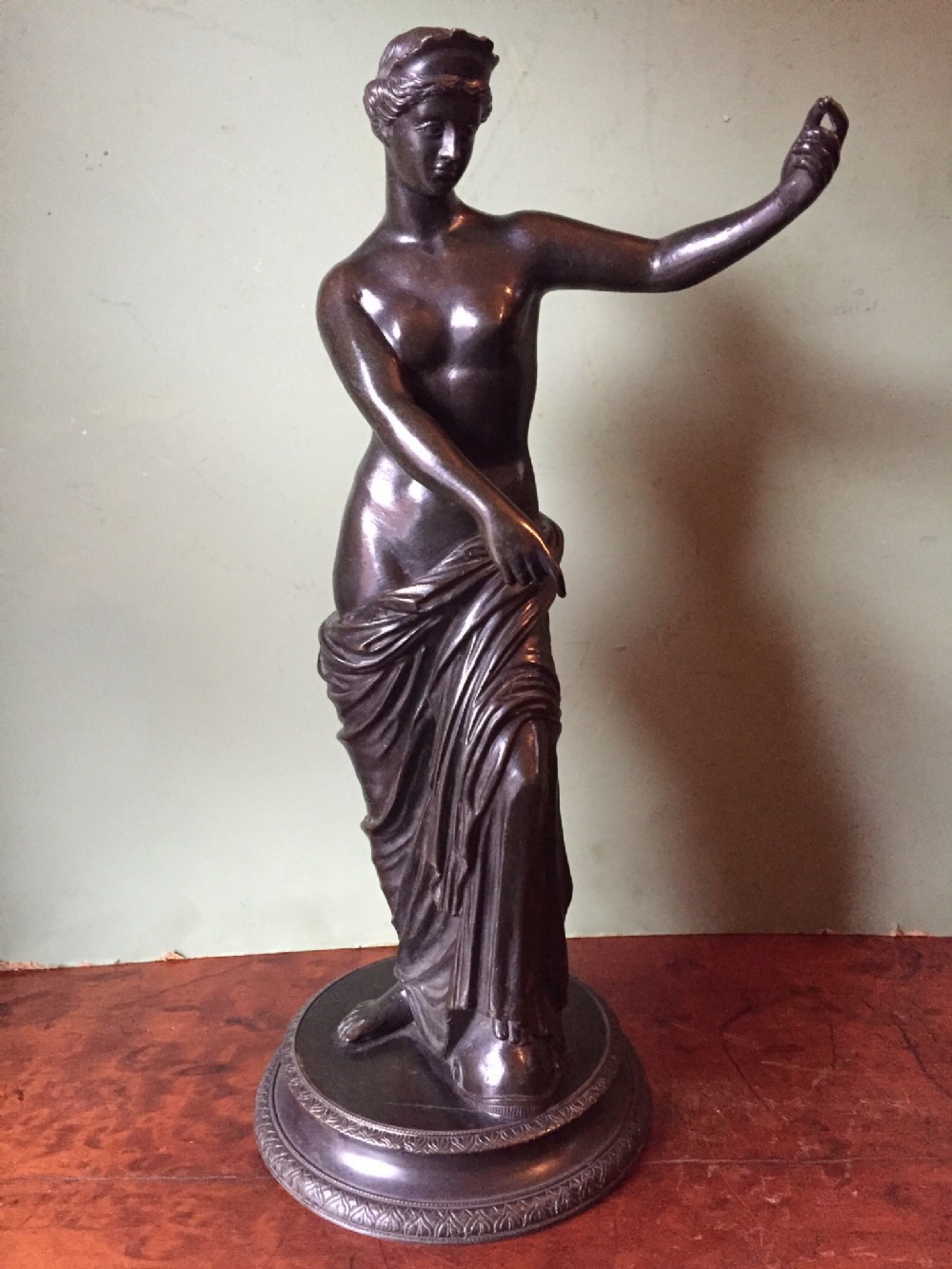
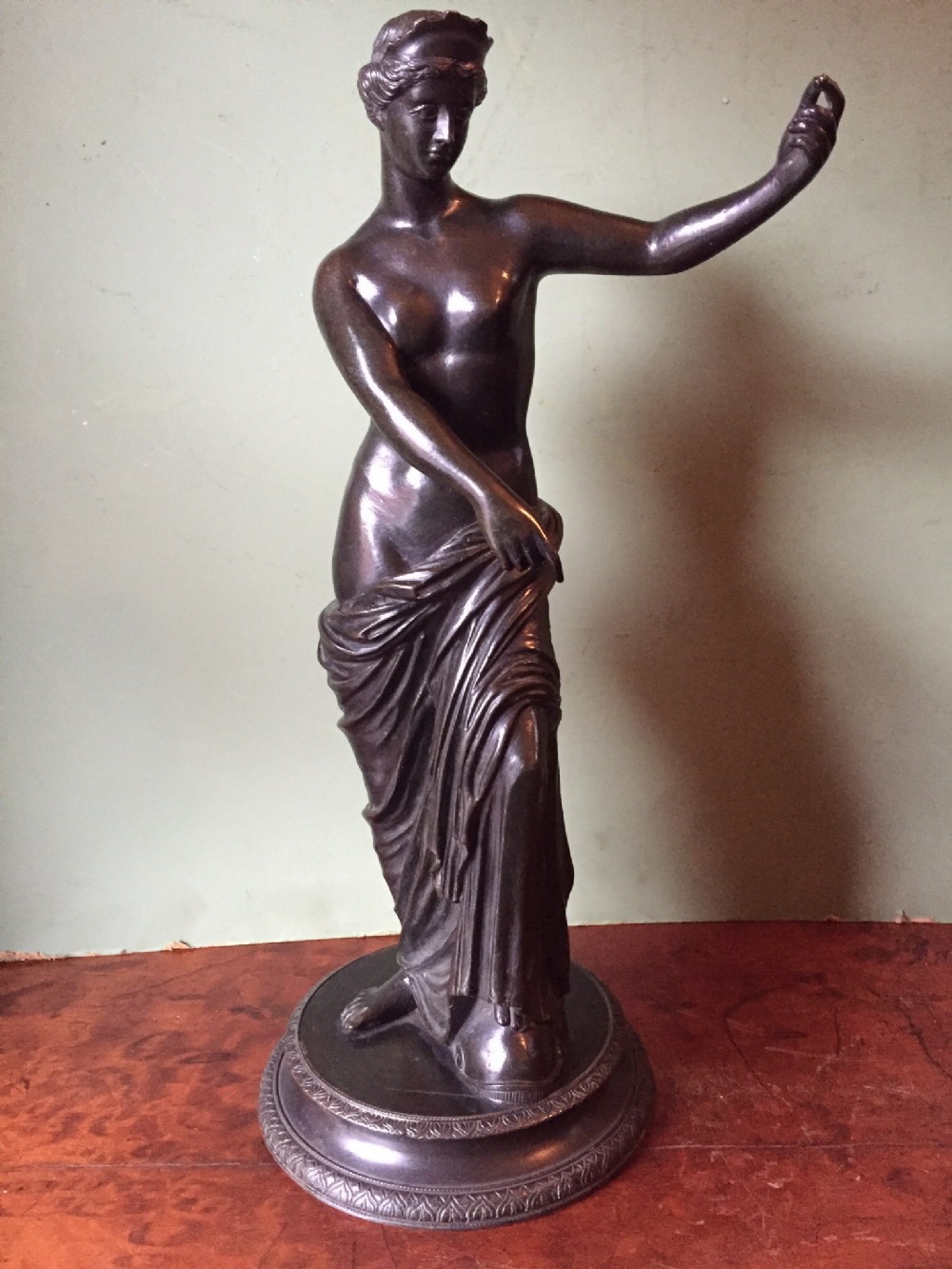
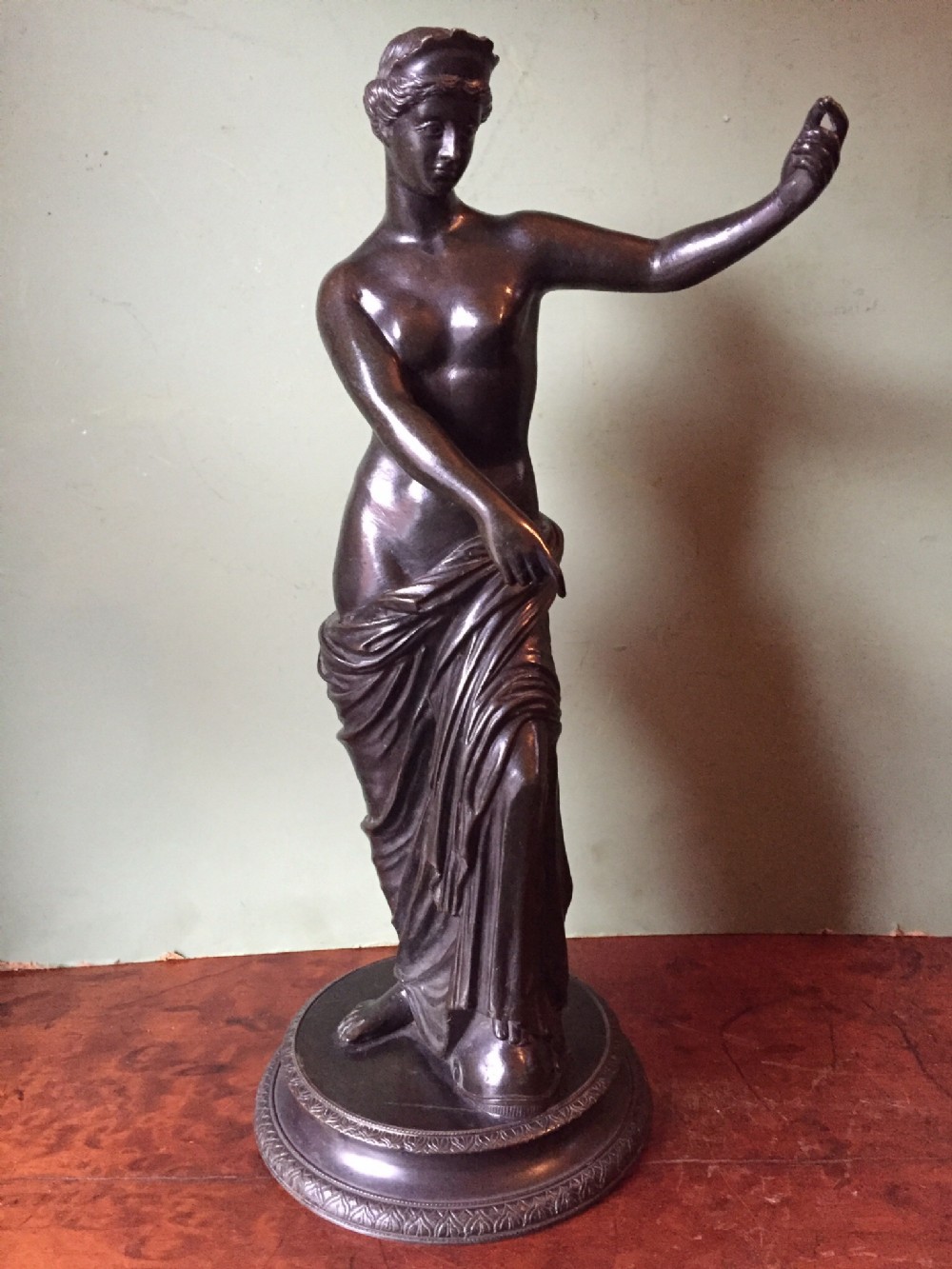
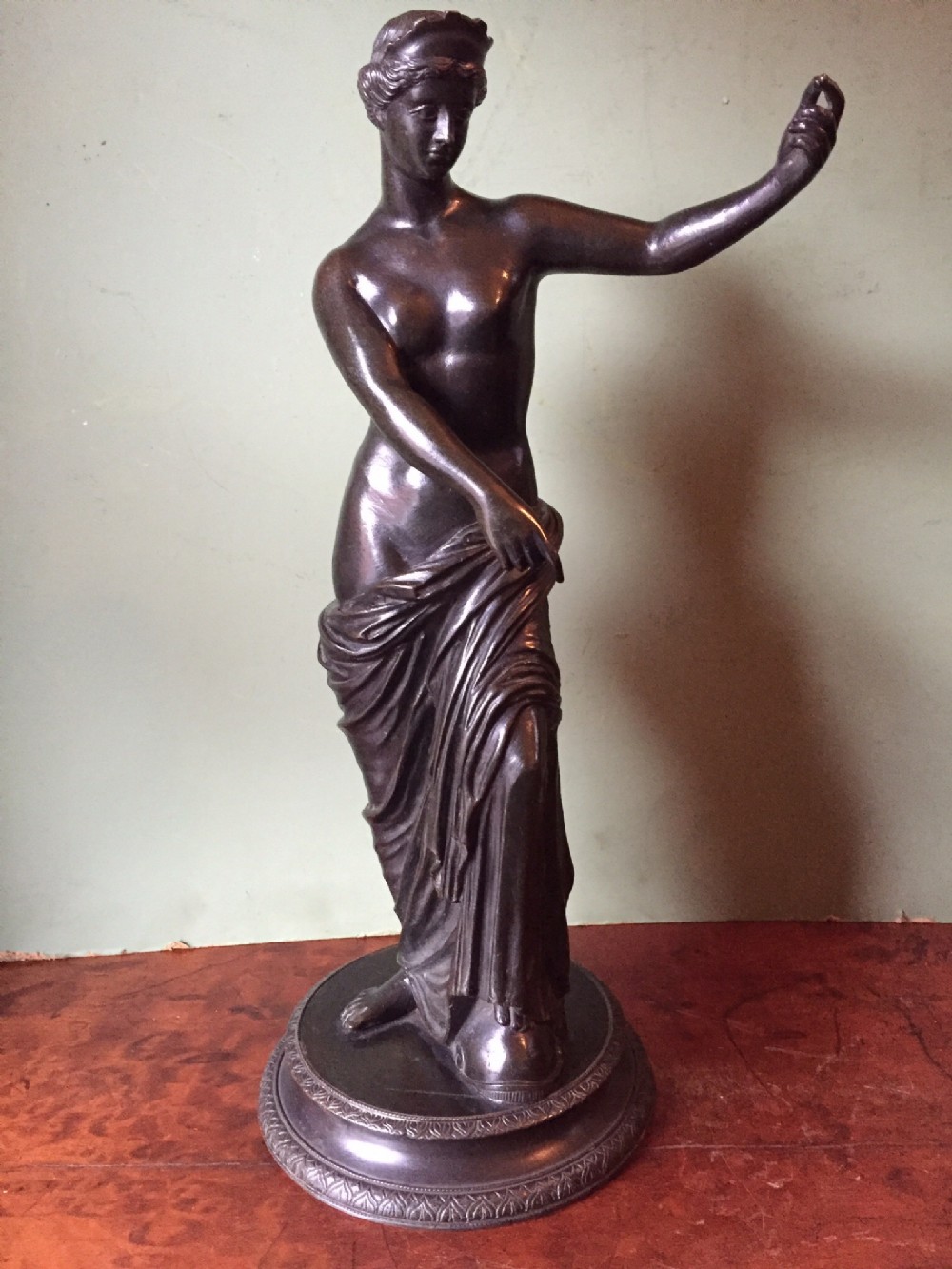
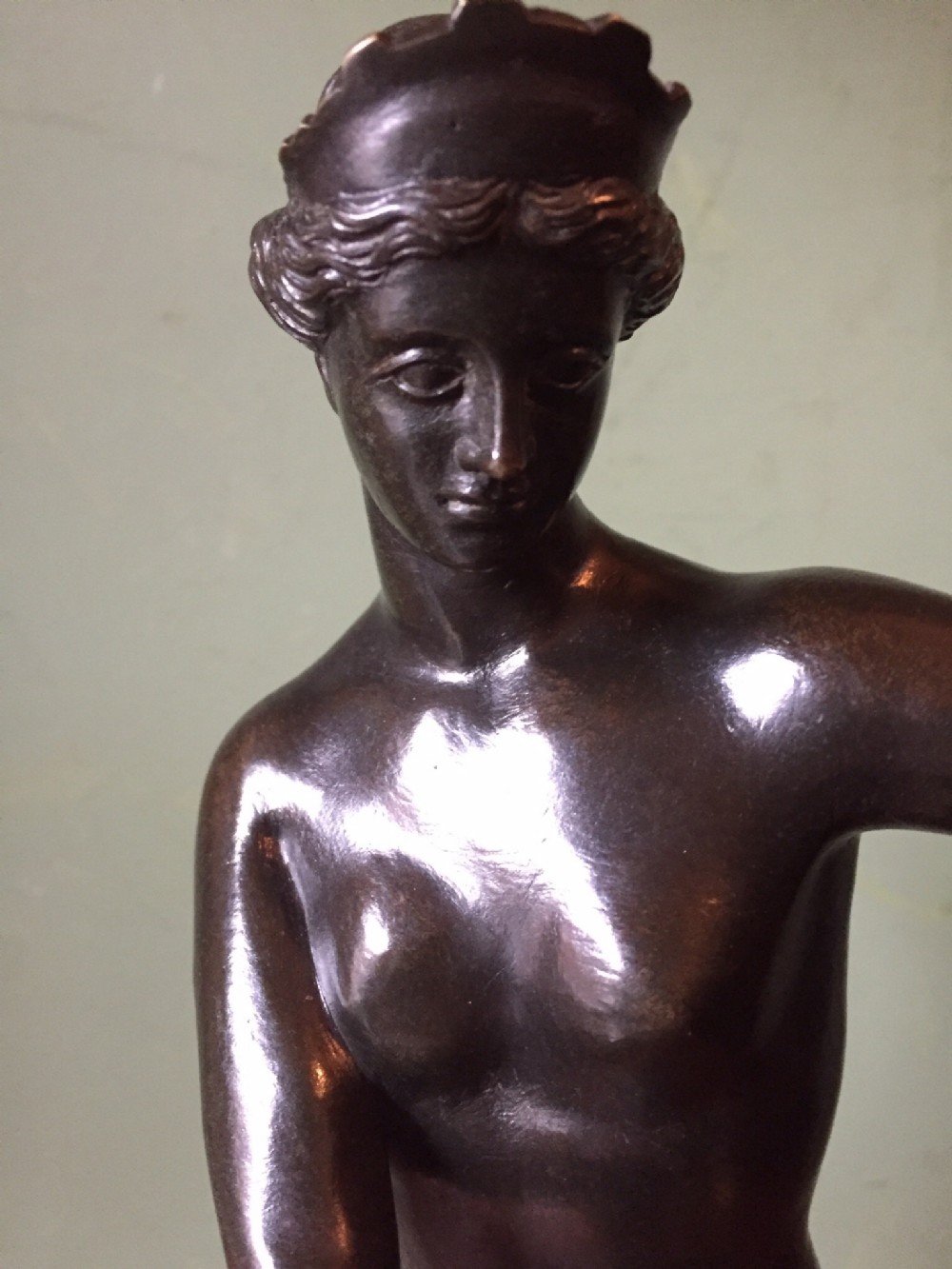
Late C19th 'Grand Tour' souvenir bronze statue after the antique, "Venus of Capua".
The original marble Capuan Venus statue represents a semi-naked Aphrodite, named after its place of rediscovery at the ruins of the ancient Roman amphitheatre at Capua in the Campania region of southern Italy .
The statue being an earlier version of the type of the Venus de Milo and close in conception to the Venus of Arles. This Roman version of an Ancient Greek figure , depicts the Goddess probably admiring her reflection in the shiny surface of her lover Ares' shield , which she previously held.
Combining both sexual allure and martial symbolism , the Venus of Capua evokes the Greek past, yet also bears new resonances in its Roman civic context. Worship of ,and the cult of Aphrodite continued throughout the Roman period , where she was known as Venus and symbolised Rome's imperial power. Roman temples were built to solicite her assistance in battle.
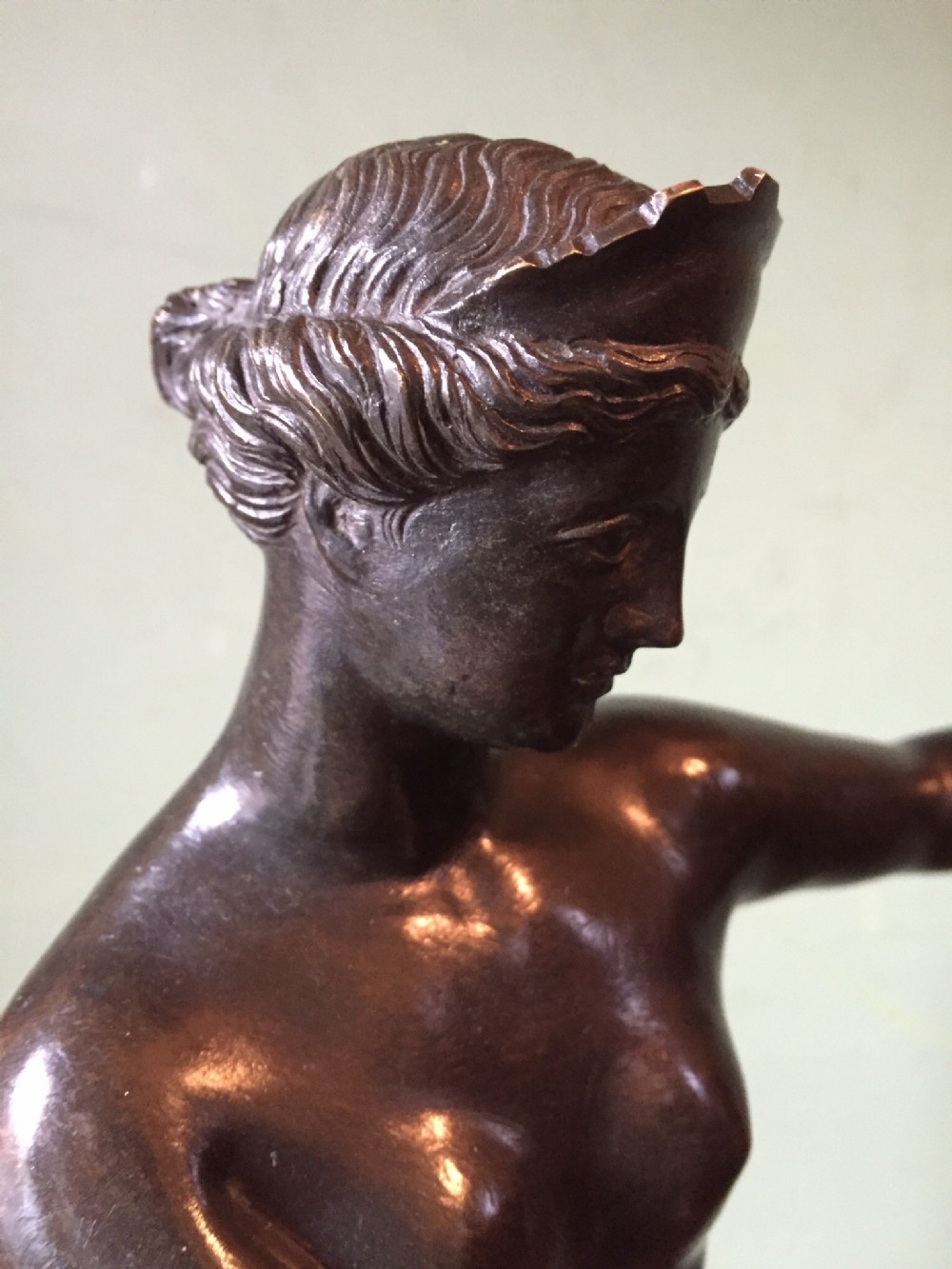
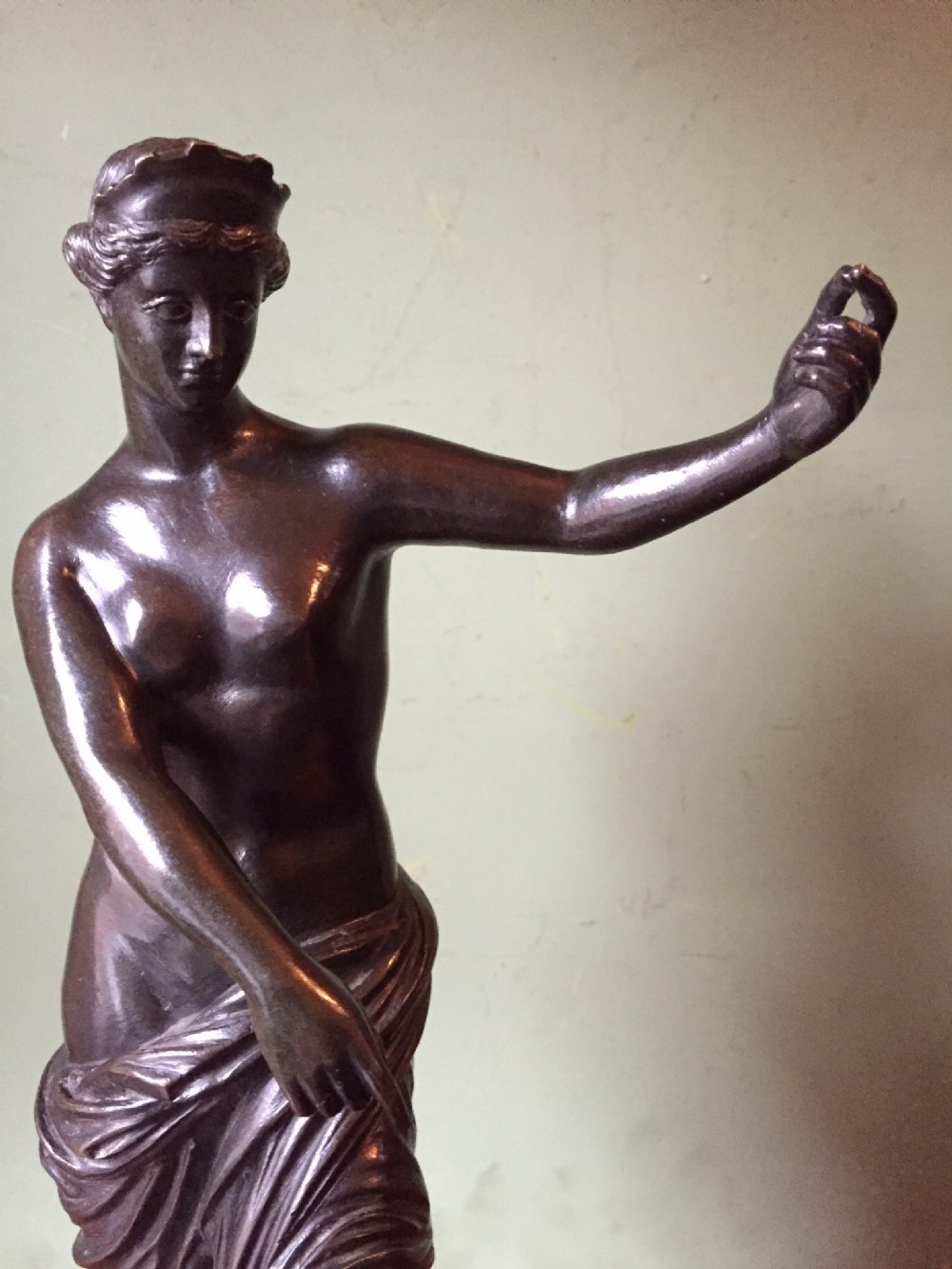
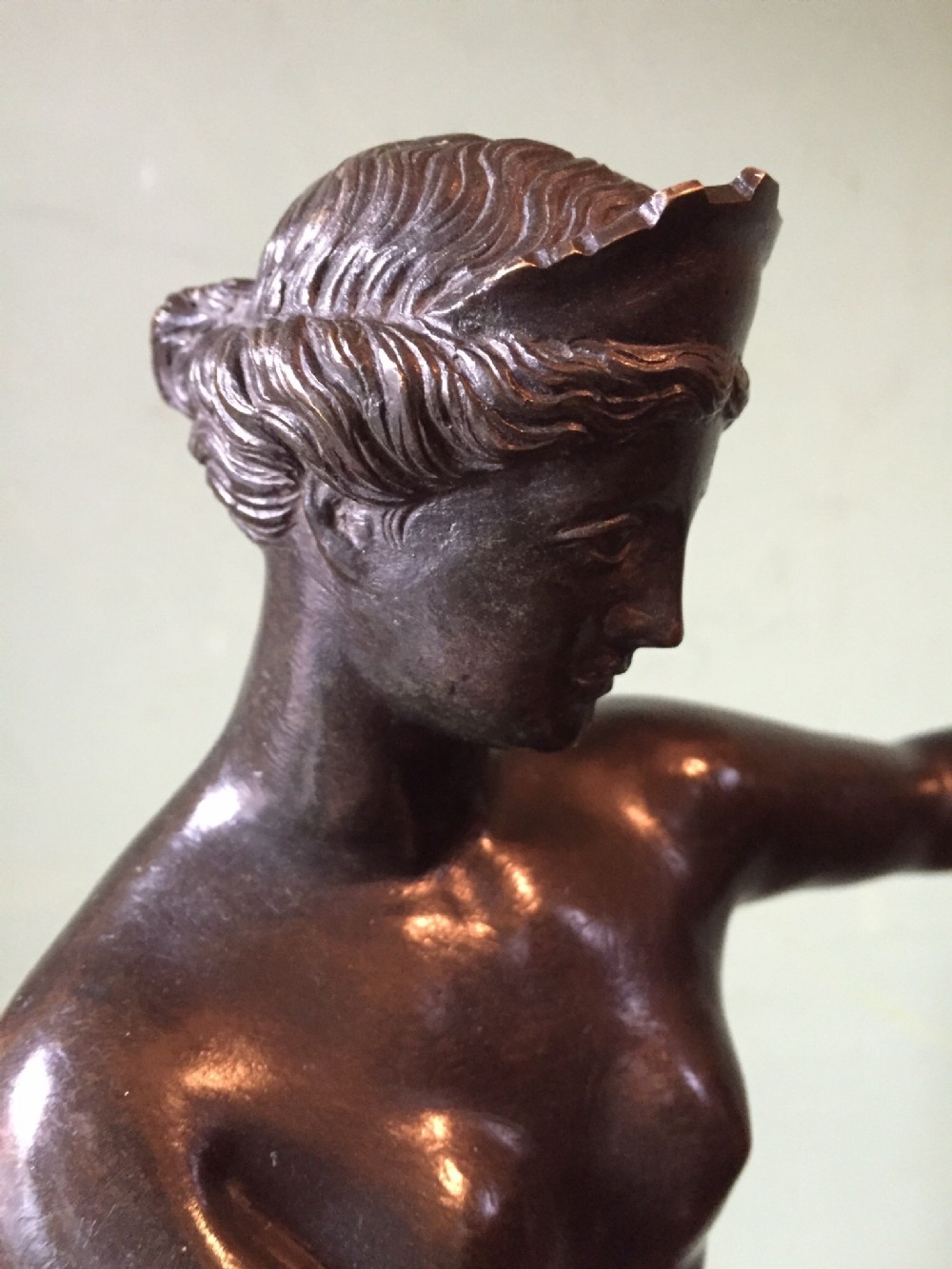
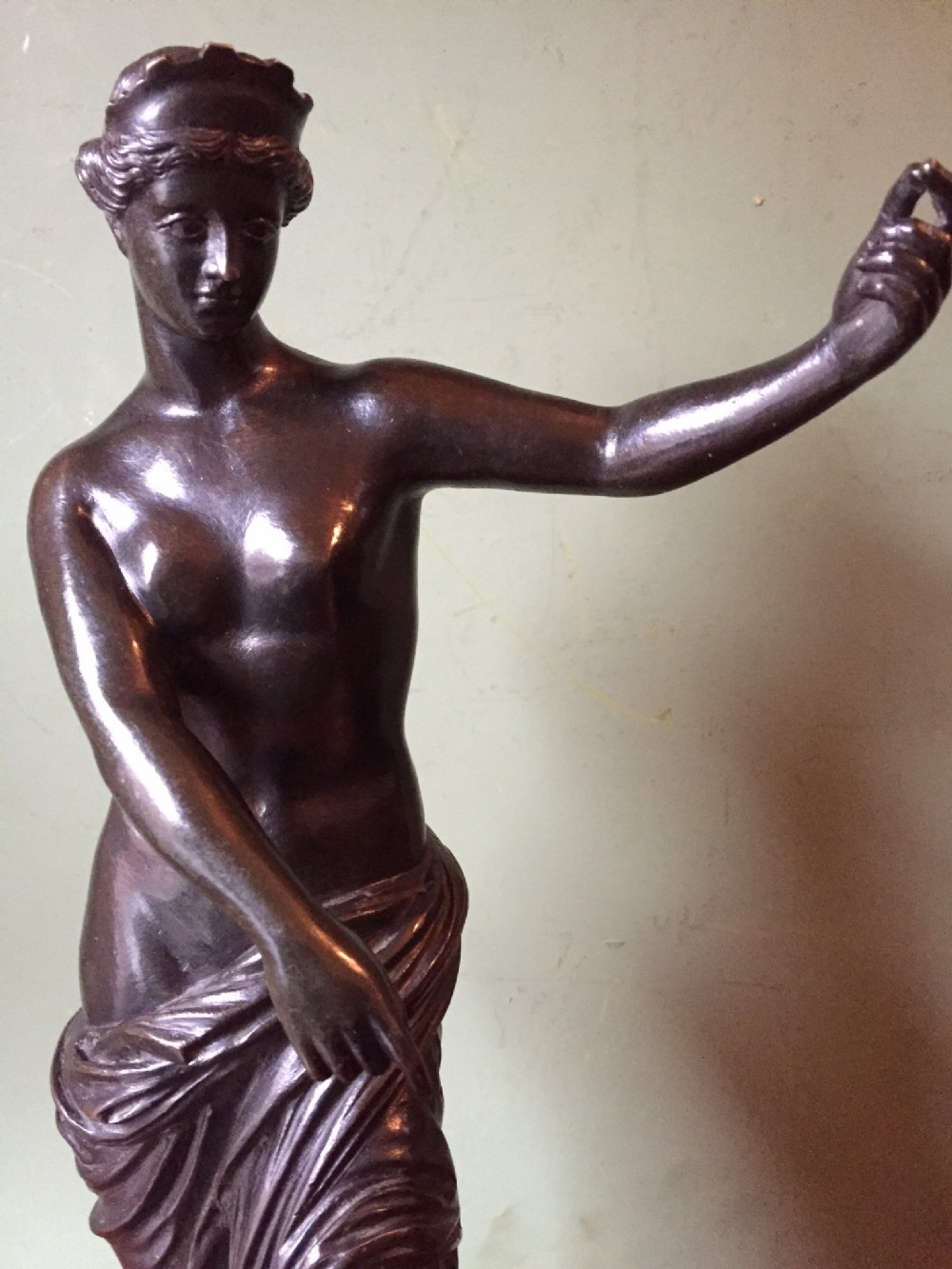
The goddess is depicted here semi-naked ,partially clad in a richly draped himation, with her left foot on the helmet of Ares (Mars to the Romans) the God of War. In her hair she wears a diadem , symbolic of her status as a Goddess.
The marble original now exhibited in the Museo Nazionale , Naples.
This fine bronze reduction has a good, deep ,consistent patina with dark green tinge and has crisp well-cast detail throughout. The figure raised on a finely-decorated circular base . Inscribed on the base by the foundry "E. Pollice, Napoli".
Copies of this statue can be found in the great museums and private collections of the world , for example a large casting is featured in the Water Terraces garden of Blenheim Palace , Oxfordshire ,England, seat of the Duke of Marlborough.
H 16"
W 6"
D 6"
Naples ,Italy c. 1900.