You can contact us with the problem you are having and we will investigate.
Stripe Online Payments
Sellingantiques have now partnered with Stripe card processing to give you a seamless purchase experience of antiques on sellingantiques.
Millions of companies of all sizes use Stripe online to accept payments and is the worlds No.1 payment gateway.
So how does it work: Look for the button in the antique details page to instantly purchase antiques from dealers who have activated Stripe online payments.
You can now easily filter and show antiques that only have this option enabled.
Using this button notifies us immediately that you have purchased this item. Once you have made the payment we will instantly mark it as sold to ensure that no one else can buy it.
Discounts can also be made available.
We are always improving the purchase experience for both buyer and seller and more and more dealers are enabling this option each week.
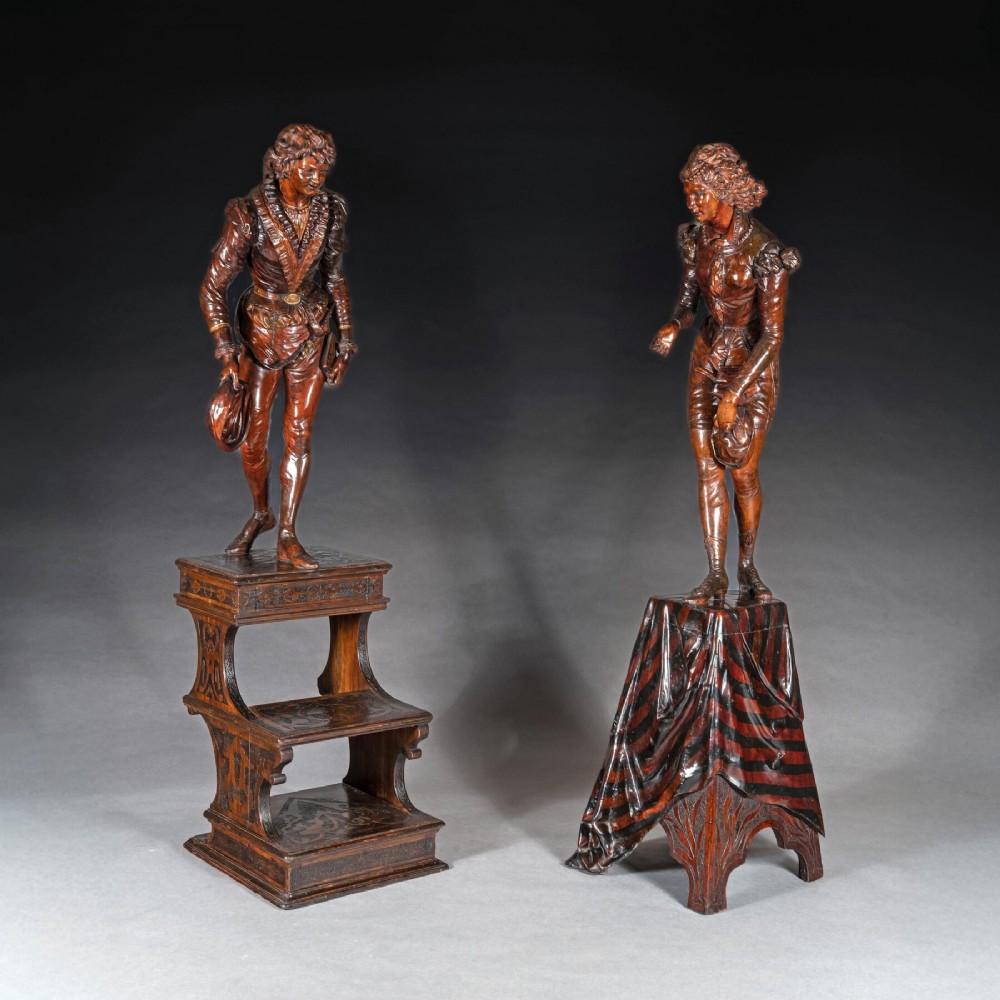
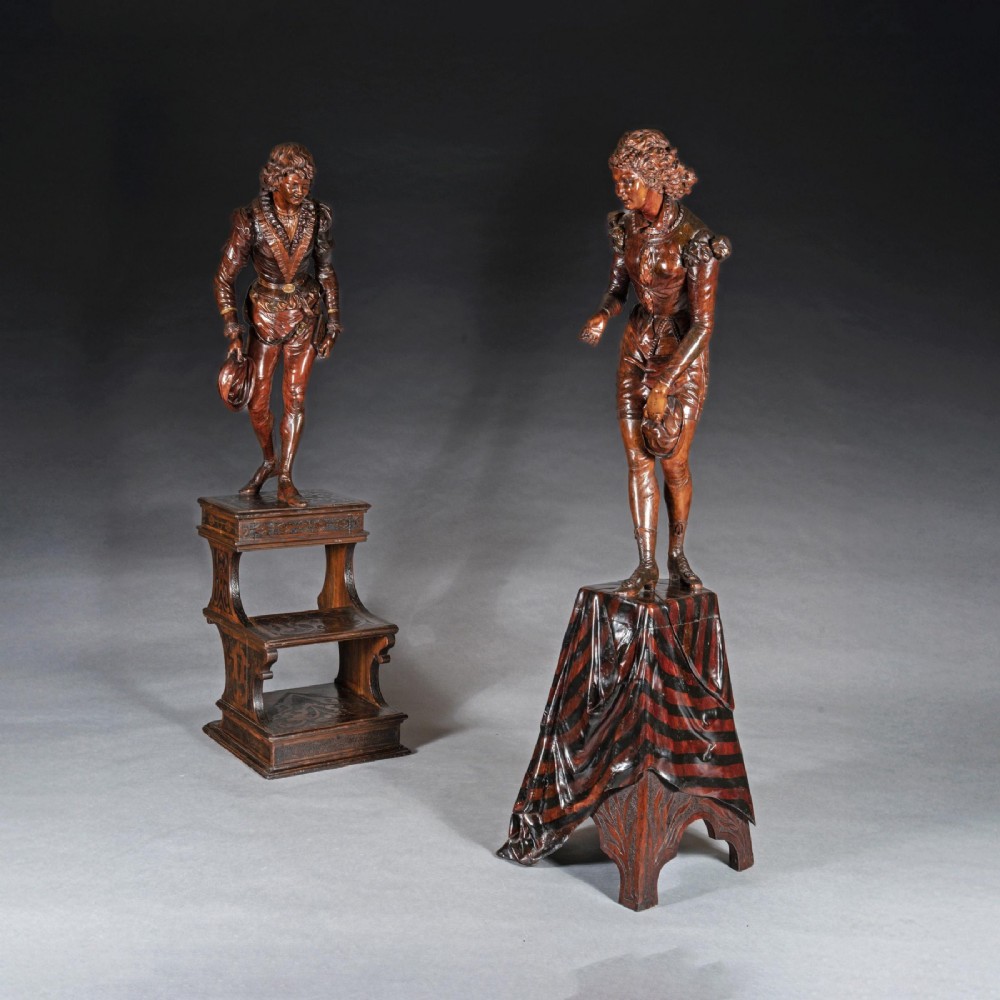
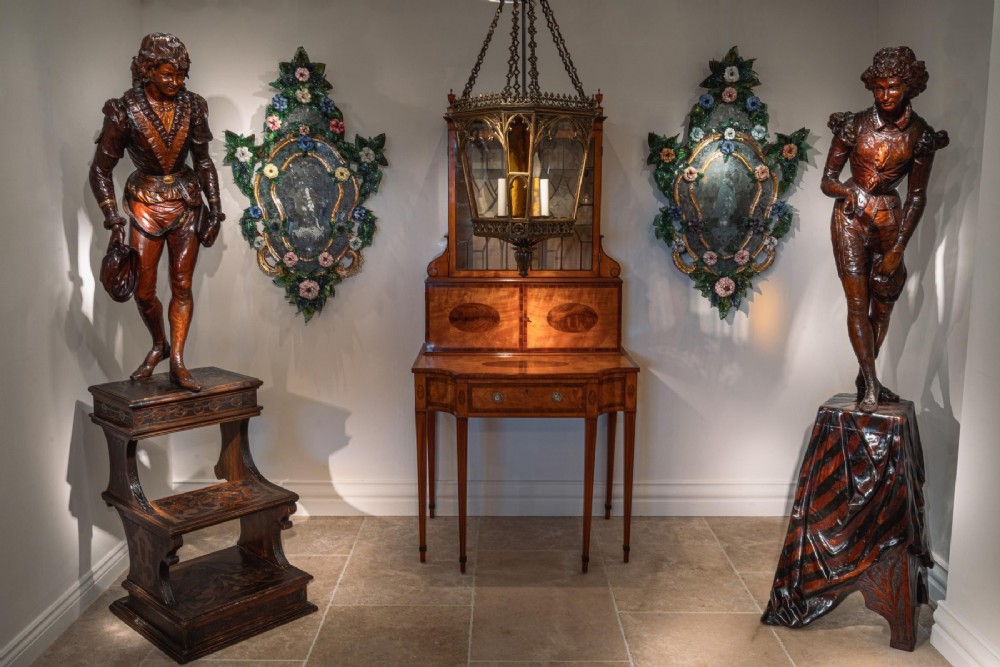
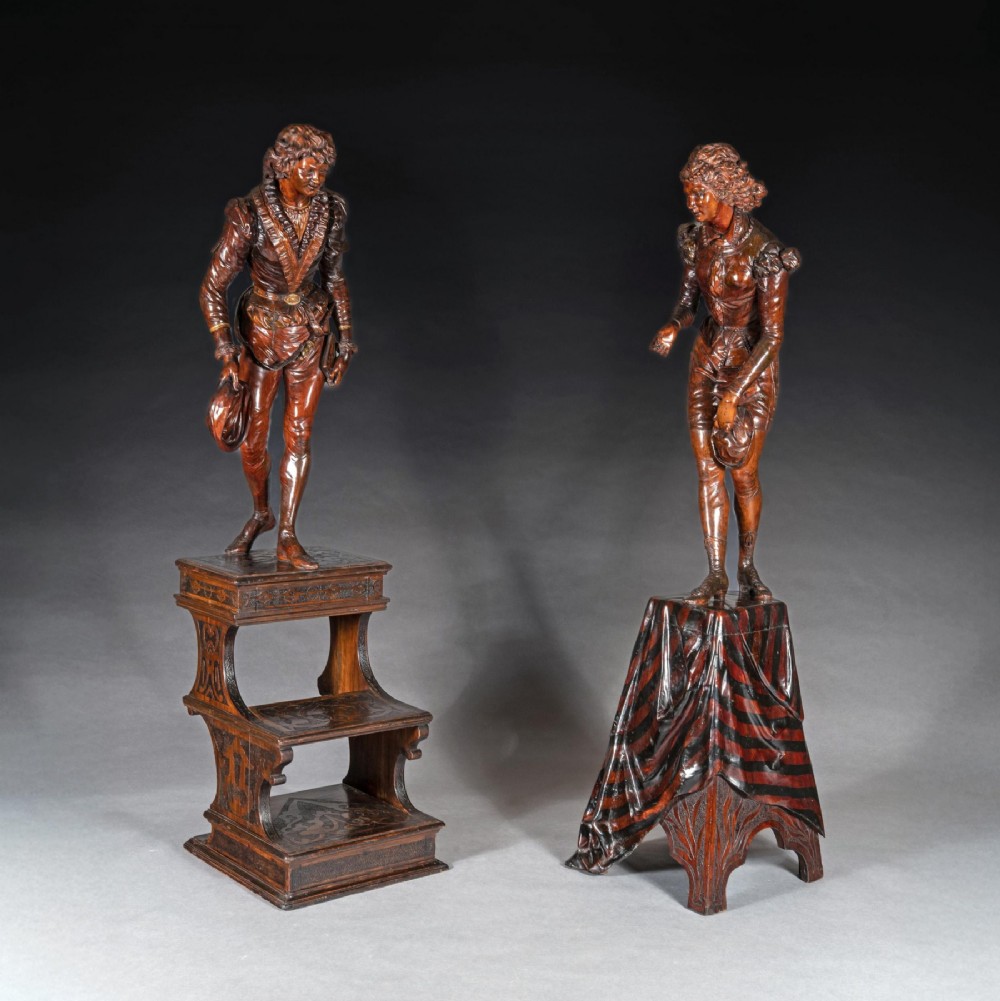
Valentino Besarel Pair Of Carved Italian Venetian Figures
£38,700 $51,866 €45,333
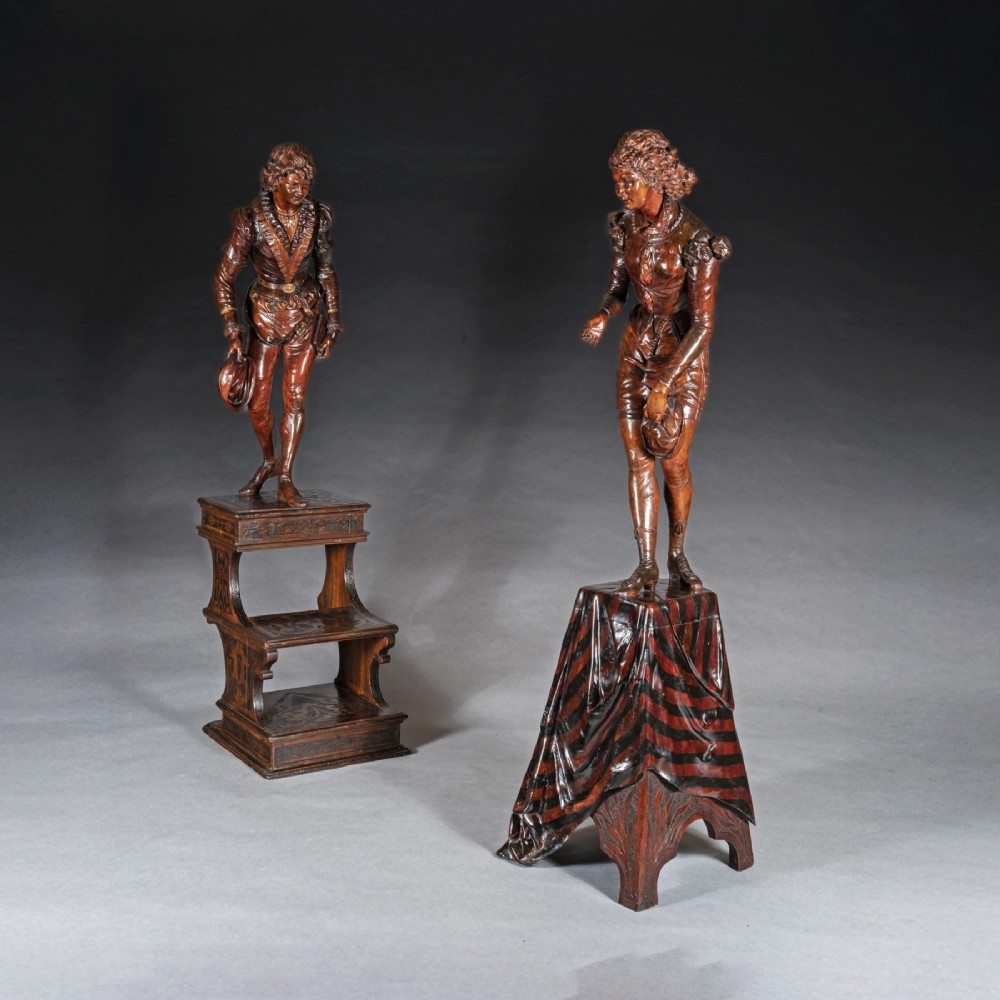
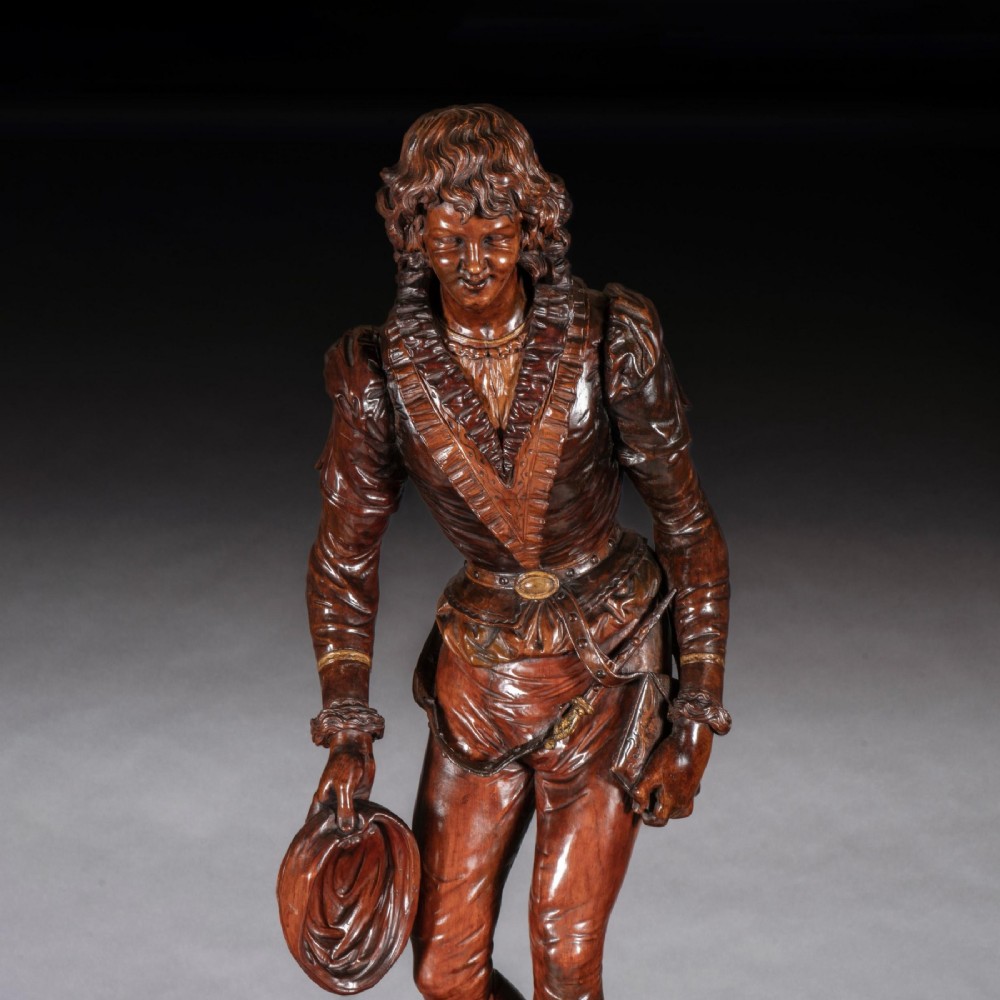
A Fine and Imposing Pair of Large-Scale Carved Walnut Venetian Figures in Elaborate Costume by Valentino Besarel (1829-1902)
Provenance
By repute the collection of Harvey c. Wheeler, owner of the Initial Towel Supply Company in Boston, who died in 1947
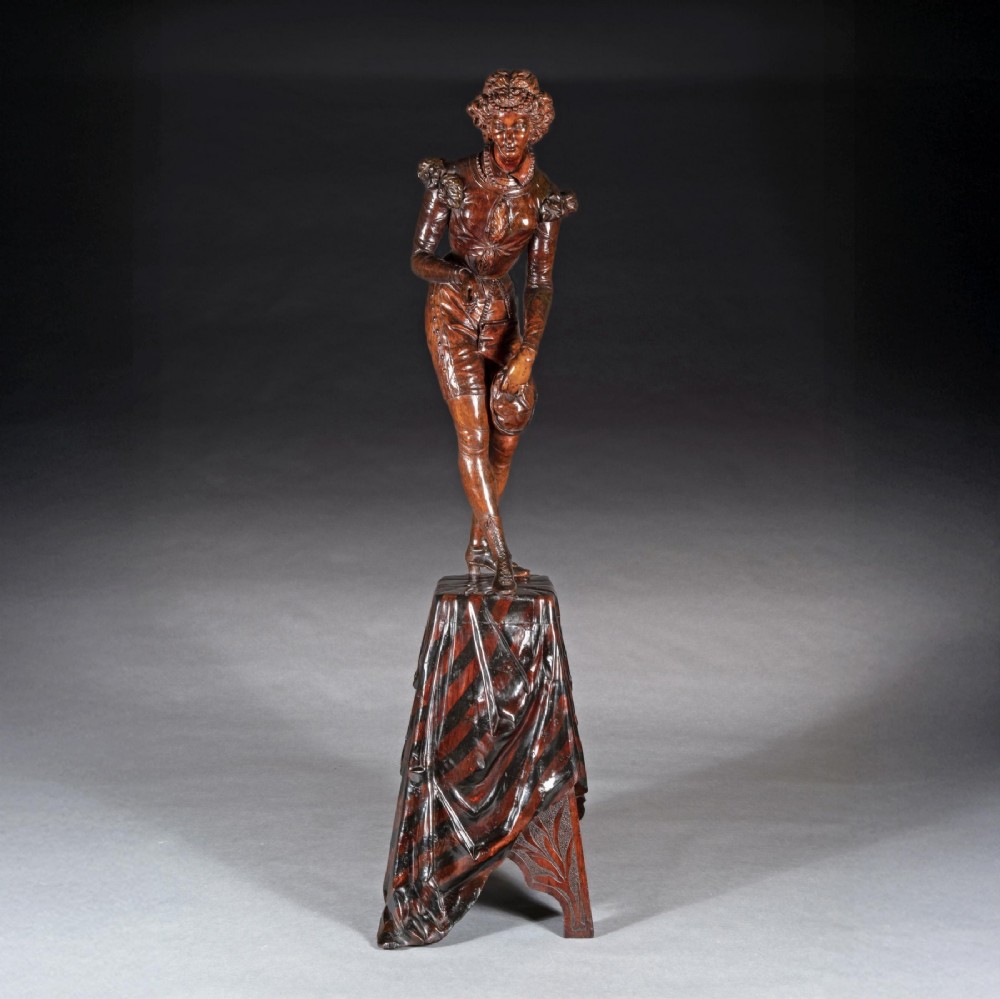
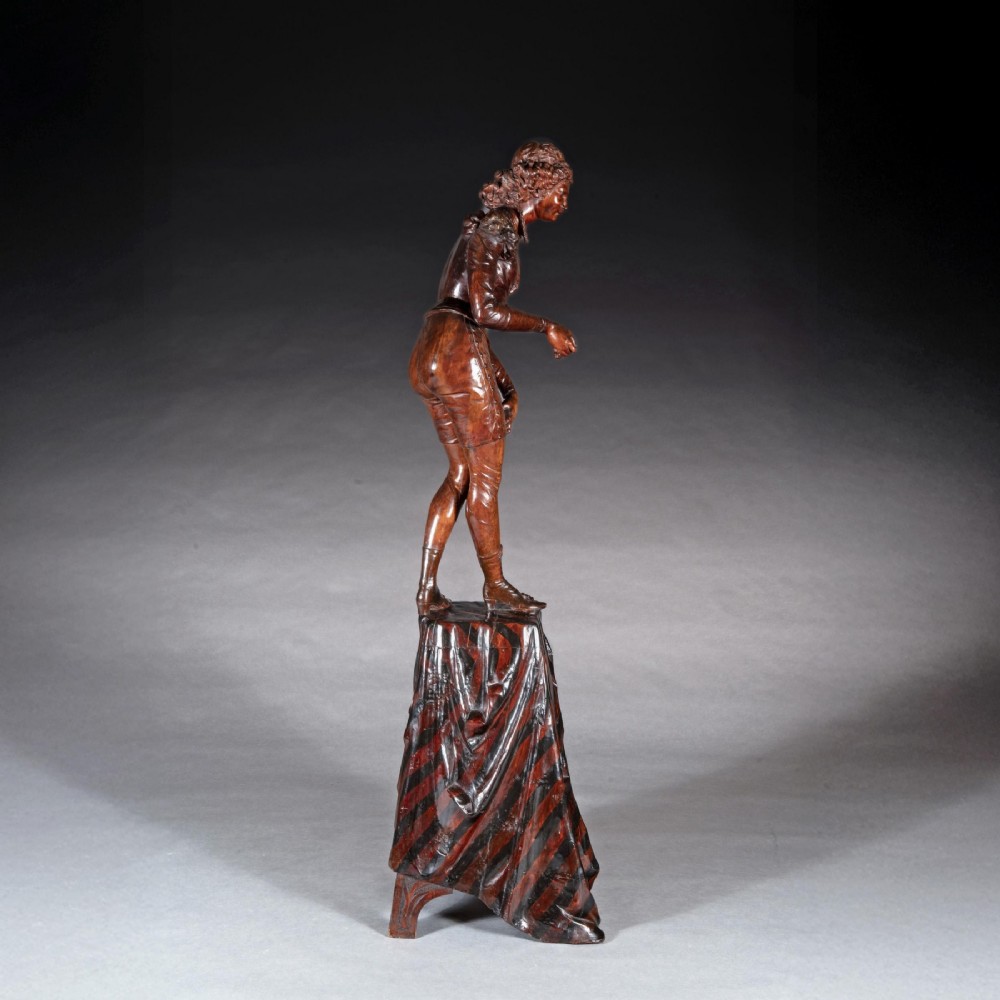
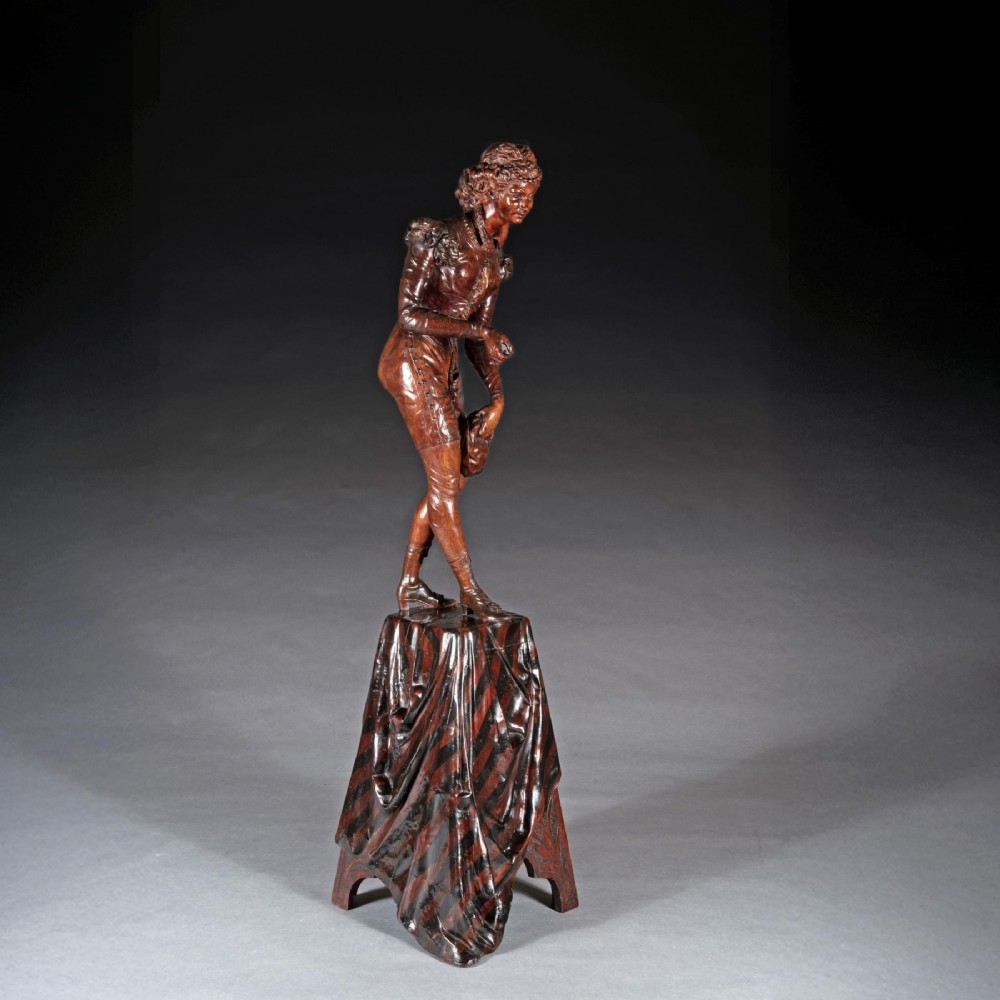
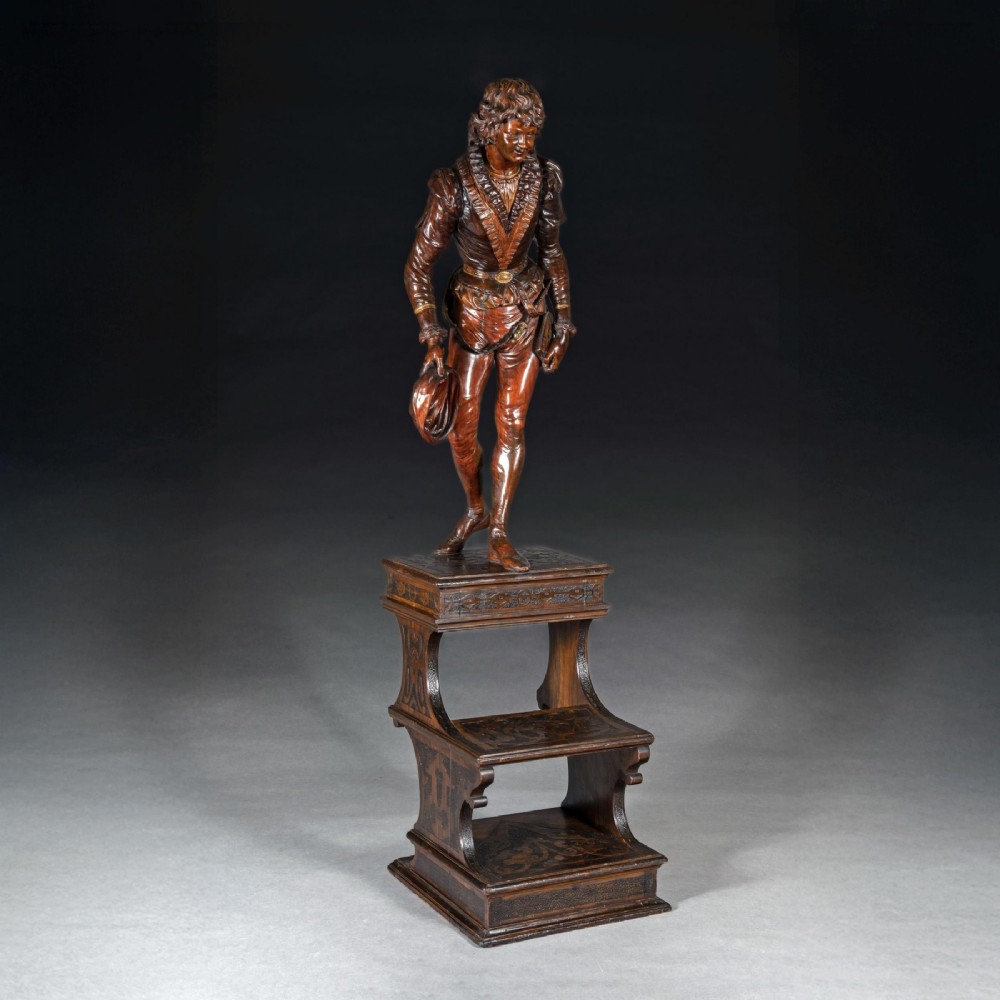
Two carved figures, one female and one male, carrying matching caps in their hands and clearly produced as a pendant pair.
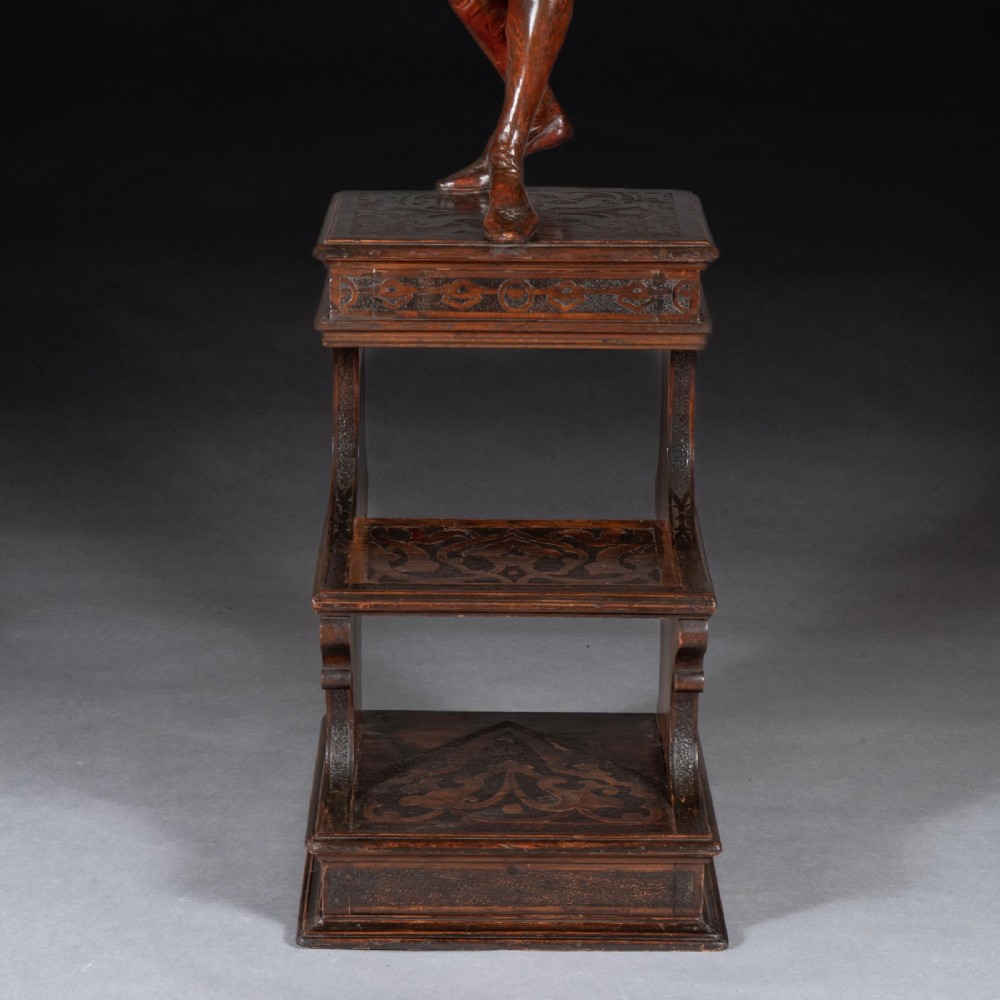
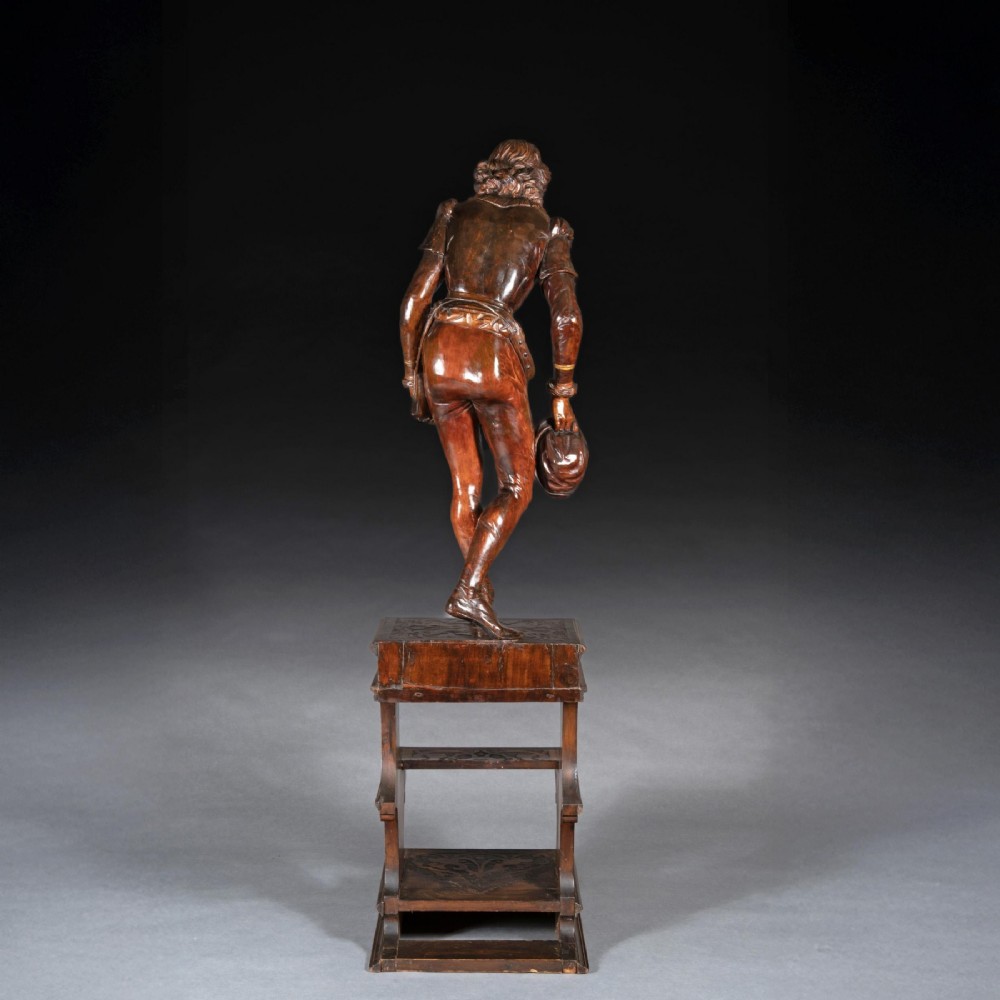
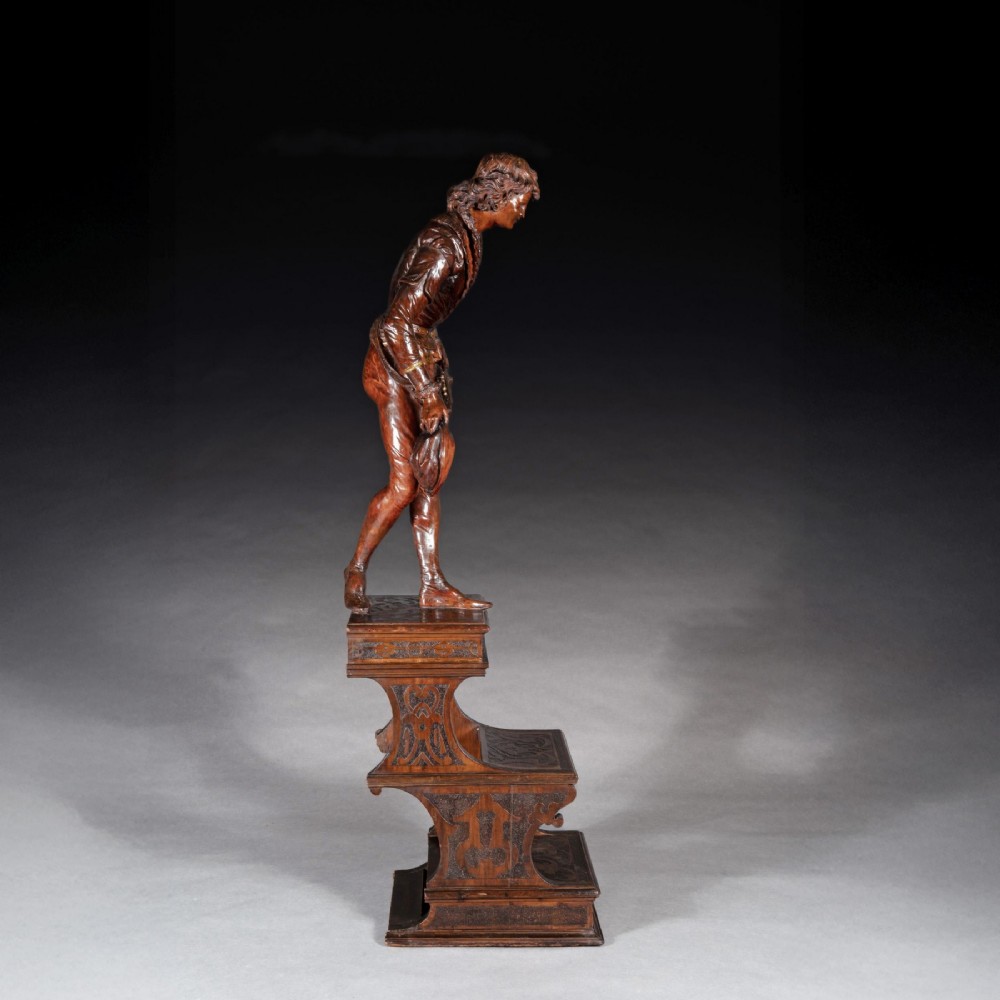
The male figure stands upon a set of three stairs with beautifully carved strapwork designs on the sides and the treads against a stippled ground. He carries a book in one hand and wears a short sword or dagger around his waist. The folds of his costume are beautifully carved with remarkable realism and certain parcel gilt highlights are used to suggest gold bands on his arms and a belt buckle on his waist. His ruffled collar is superbly carved but perhaps the most impressive of all the details might be the way the tongue of the belt drapes down over and around the sword, the pose being incredibly true to... life and difficult to achieve in a carving.
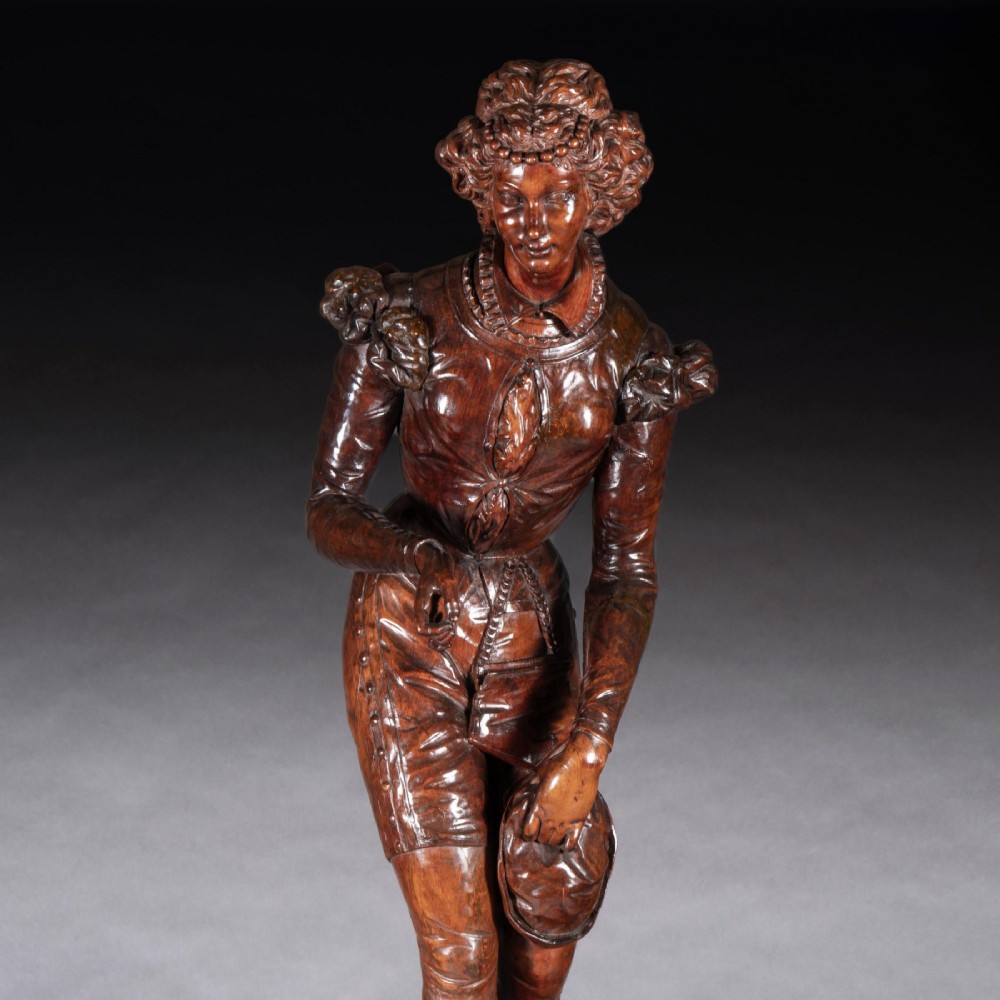
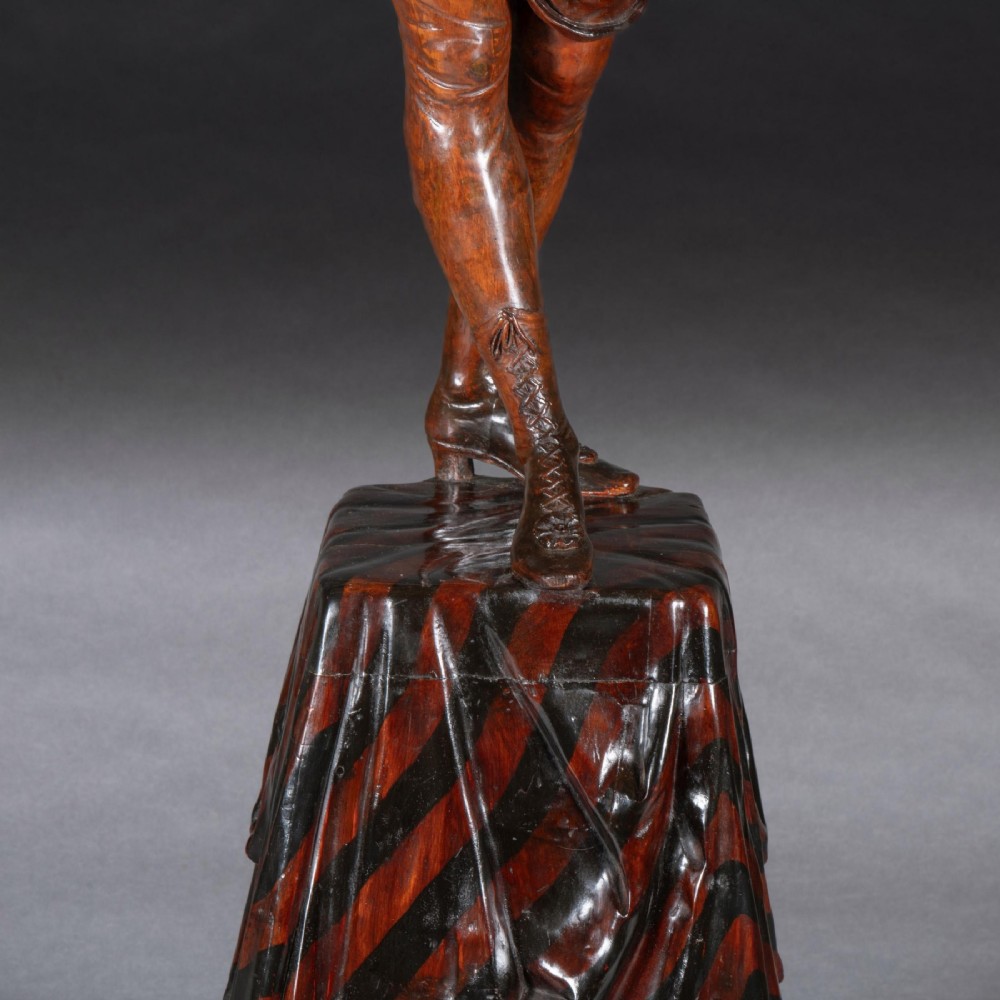
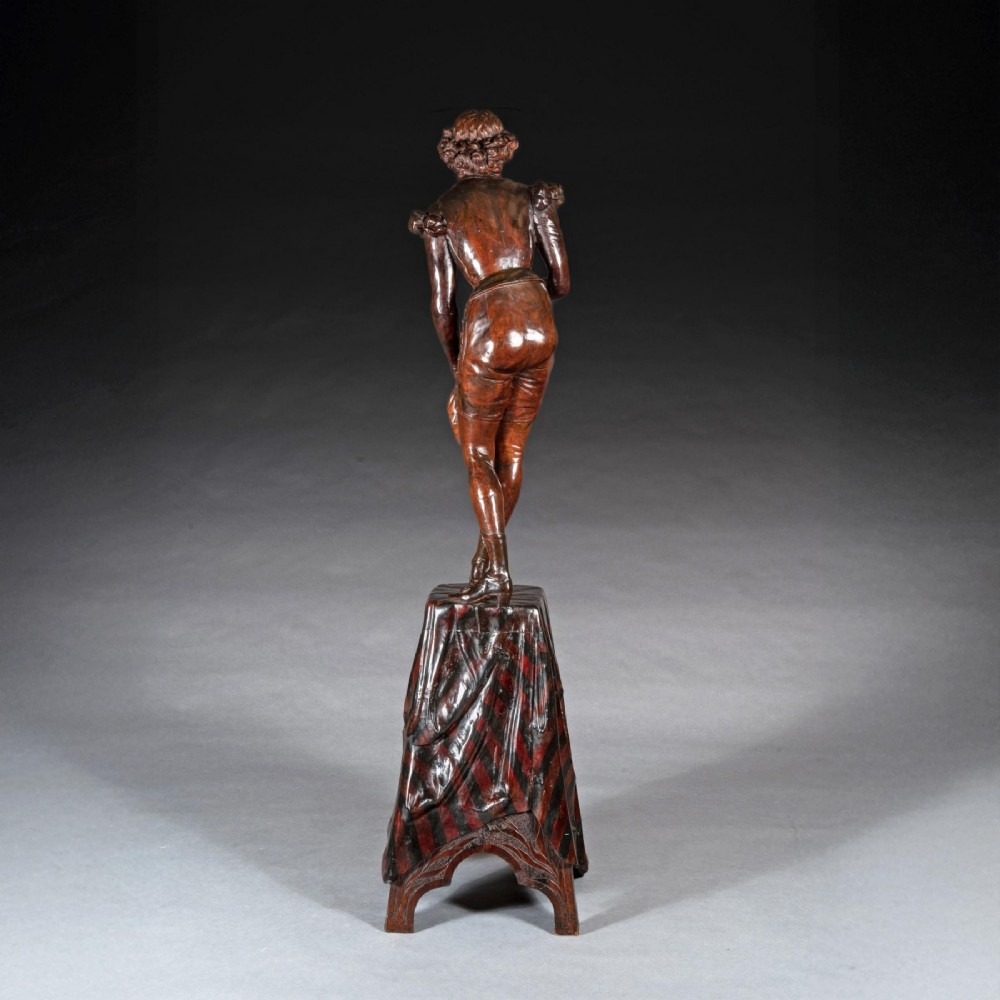
The female figure seems to wear more modern clothing than her male counterpart, her style of dress seemingly echoing some of the outfits worn by the likes of the great Parisian actress Sarah Bernhardt and her contemporaries. She wears high laced boots with platform heals and stands upon a carved pedestal which has been ''covered'' by a carved, draped textile, such as a silk throw, with an all-over striped pattern. The way the pattern flows across the numerous creases and folds created by the sculptor is endlessly interesting to the viewer. The lady''s costume is cinched in at the waist with a belt from which a purse on a chain is suspended. She wears a pearl necklace and further pearls are perched on the front of her magnificent coiffure. The ruffled shoulders of her outfit are particularly finely sculpted and carved.
These figures may be seen as part of the fashion for page figures, often either acting as torcheres or holding platters and acting as dumb waiters, a style of interior decoration that seems to have originated in Italy, the Venetian Moorish figures being particularly famous. Also in this tradition are dummy boards, two dimensional painted boards in the form of figures which, according to some, were designed to scare off burglars but are now believed by most sources to have been a form of amusing household decoration. The present figures fall somewhat between these two traditions but their extraordinarily fine quality is due to their having been produced by a sculptor rather than simply a decorative carver.
It is likely that the two figures depicted here are intended to be theatrical characters but, regardless, they certainly add an air of theatricality to any interior, making it playful and intriguing at the same time.
Although unsigned, we are certain that these figures originate from the workshop of Valentino Panciera Besarel (1829-1902). A 2002 exhibition, ''Valentino Panciera Besarel (1829-1902): storia e arte di una bottega d’intaglio in Veneto” (Belluno), explored the artist''s mastery of form and carving. Part of a dynasty of carvers and sculptors stretching back centuries. Besarel was famous enough to earn mentions in the English newspapers and magazines of the day. An article in Life, 27th of October 1881, reads as follows:
''Valentino Besarel is conspicuous for his beautifully carved furniture. He exhibited at the Milan Exhibition a frame bought by H. R. H. the Prince of Wales. Besarel is an artist whose talent has been transmitted to him from many a generation, for this family of sculptors dates from the middle of the 17th century''.
In his 1891 guide to Venice, Augustus John Cuthbert Hare recommended:
''Travellers should visit the Atelier (2795 Canal Grande) of Valentino Besarel. It is only in Italy that you find this interesting type
Loveday Antiques is a family run business originally established since 1969 in London.
Now in its second generation, Loveday Antiques specialises in an eclectic mix of 18th to 20th Century European furniture and works of art, with a strong emphasis on quality, uniqueness and colour.
As proud members of BADA & LAPADA, the largest association for professional art and antique dealers in the United Kingdom and members of CINOA, the worldwide association for antique dealers you can buy from us with 100% confidence and reassurance as we are committed to upholding and abiding by the strict standards of each association.
Our clients can rest assured that each item is as described and photographed.
All Items are sold with 100% satisfaction 14 day money back guarantee, return delivery will be charged for.
We deliver within the UK for usually between £60-£80 and ship worldwide with professional bespoke crating via air to almost all locations. Please contact us at Loveday Antiques with your full postal address for a very competitive quote.
Delivery within the mainland UK will usually be with 7 to 14 days but please allow up to 28 days. We also ship worldwide with a professional bespoke crating service and large International couriers via air and sea to almost all locations. Please contact us at Loveday Antiques with your full postal address for a very competitive quote.
GOODS
All items listed are in excellent condition having been restored using traditional methods by experienced cabinet makers and polishers keeping the original colour and patina wherever possible.
Please bear in mind you may find the usual markings with antique furniture that are commensurate with age which all add to beauty and uniqueness of the item.
VIEWINGS
We have a reputation for being long established antique dealers in London having had showrooms concurrently running in Islington, Chelsea and Ascot. We have relocated our new showroom, due to London overheads, easily reached between A1 or A10 to just outside of Hertford, Hertfordshire.
We will happily arrange for clients to be collected travelling via train. Local stations being Hertford North, Stevenage and Ware, all being a 10 minute drive from us.
Please contact us for location and appointments.
Telephone: 01438 869 819
Payments accepted are Bank Transfer, Cheque, Major Credit Cards or Cash.
Opening Times
Monday to Saturday 9.00am - 5.30pm Please email or call beforehand to make an appointment.
If outside of these times again please call to make an appointment
We have more than 40 years experience in supplying Antique furniture to the trade, public and interior designers from all parts of the world so please buy with confidence as we have passed the test of time.
Internal Reference: 3093
Antique ID Number (AIDN): SA1217873
Dateline of this antique is 19th Century
Height is 192cm (75.6inches)Width is 51cm (20.1inches)Depth is 62cm (24.4inches)
Antique SA1217873 shown on this page was made in the 19th Century. For historical context, the timeline below highlights the period when it was created:
19th Century
ANTIQUE SA1217873
CONTACT DETAILS OF SELLER:
Loveday Antiques
Specialist Furniture Dealers 18th-20th Century
Loveday Antiques is also an antique trade association member of LAPADA BADA CINOA
Hertfordshire
United Kingdom
Tel: 01438 869819
EMAIL SELLER
Send direct to seller
EXTRA RESOURCES
Thank you.
Your comment has been sent to Sellingantiques.
Thank you.
Your rating and comment have been sent to Sellingantiques.
Thank you.
Your score has been recieved.
Thanks. But what can we do better?
SEND COMMENT
If you would like to be contacted to discuss your feedback then please leave a phone number or email address in your message.
Thanks for your great feedback!
We love it when our wonderful visitors are happy with us!
SEND COMMENT
Live daily database information for 27 July 2026
Antiques approved in last 24 hours
109
Antiques awaiting approval
66
Antiques rejected in last 24 hours
1
Unique visitors today
7447
Total antique impressions today
1321708
Total antiques for sale
66974
Total value of antiques for sale
£138851413
Antiques uploaded so far in July 2026
3513
Unique visitors to Sellingantiques so far in July 2026
361156
Unique visitors to Sellingantiques so far in 2026
3922696
Item saved
The Valentino Besarel Pair of Carved Italian Venetian Figures has been added to your saved items.
Sending email ...
... please wait
Sending Email...
... please wait
Problem with this page?
You can contact us with the problem you are having and we will investigate.
Sending an email to: Loveday Antiques
Item: #SA1217873 Valentino Besarel Pair of Carved Italia...




Thank you.
Your comment has been sent to Sellingantiques.