Cheshire Antiques Consultant Ltd has dated this piece to the 19th Century.
Subject & Medium:
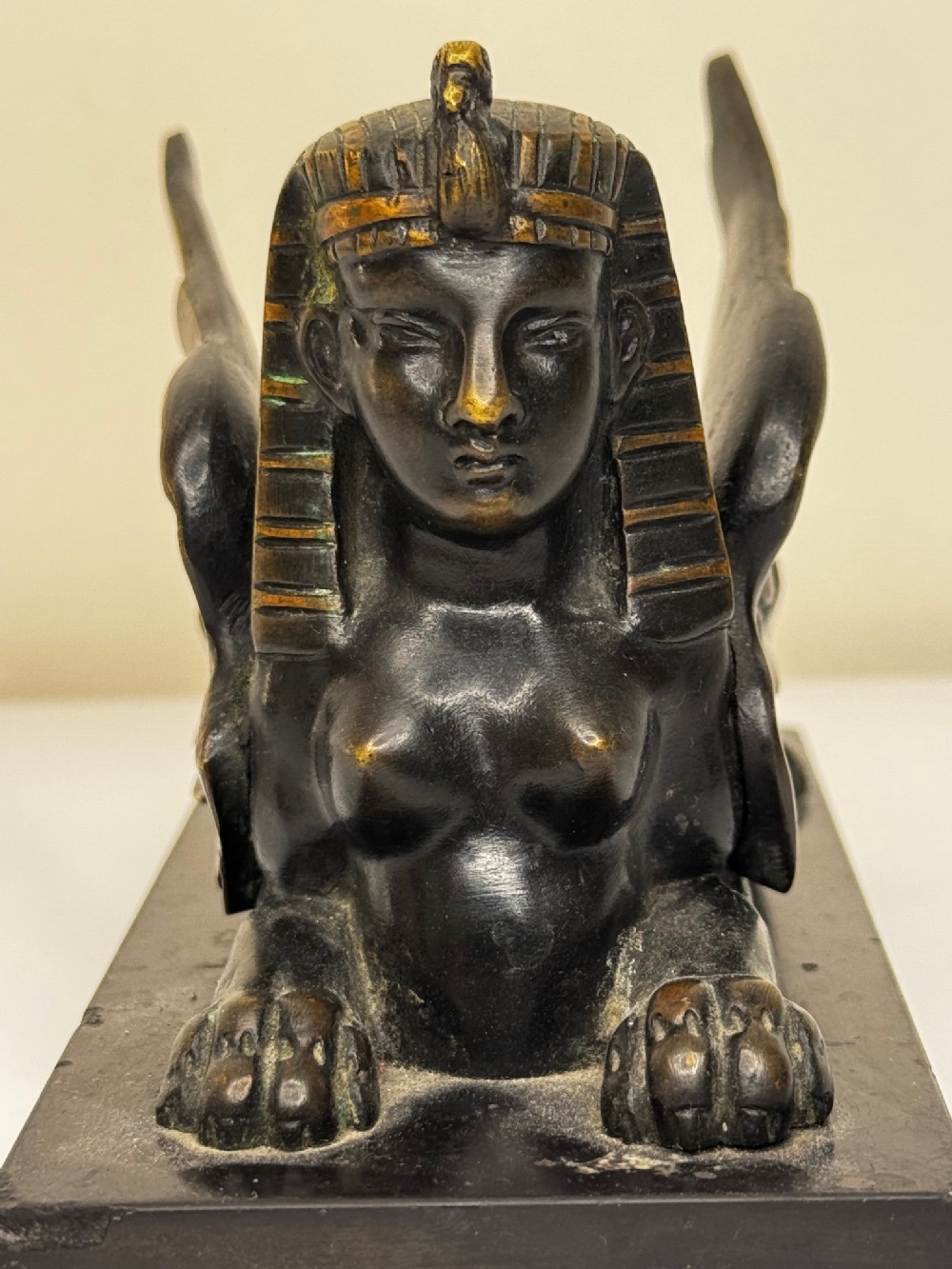
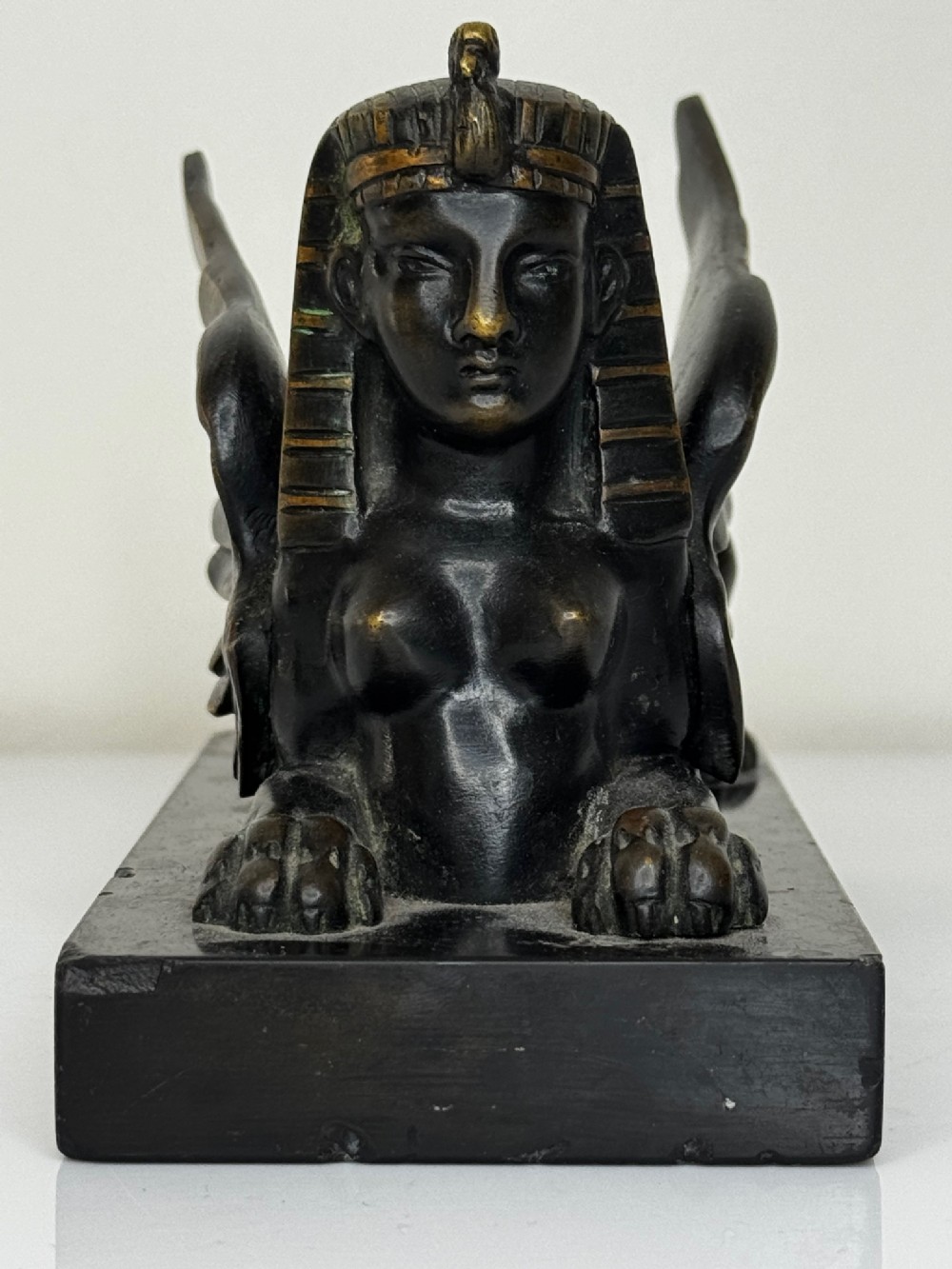
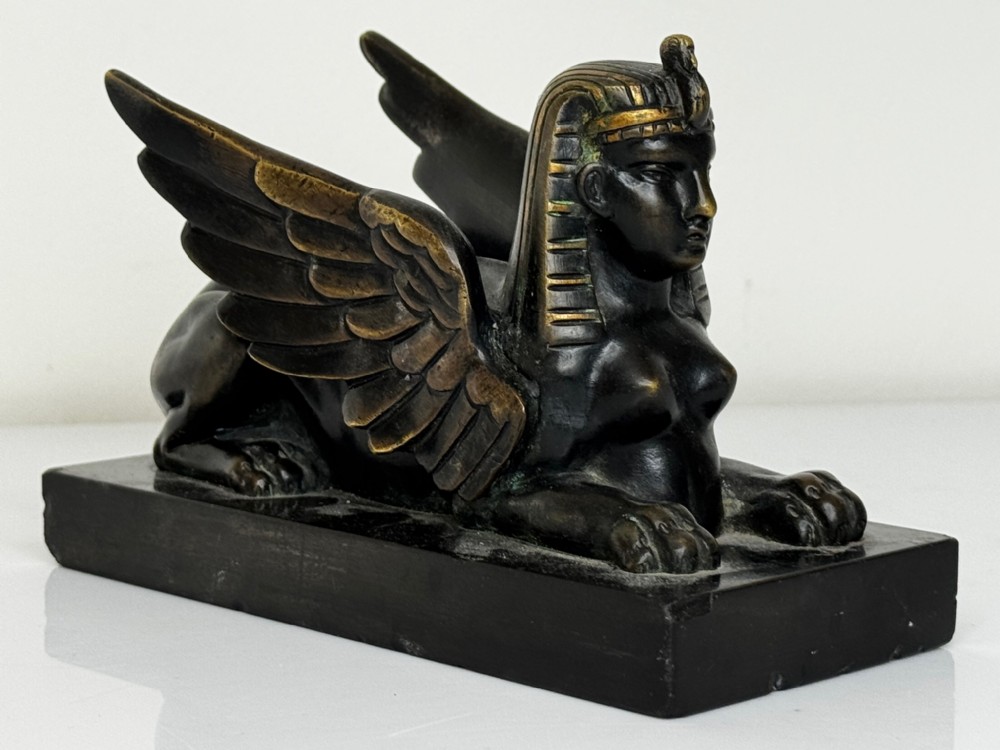
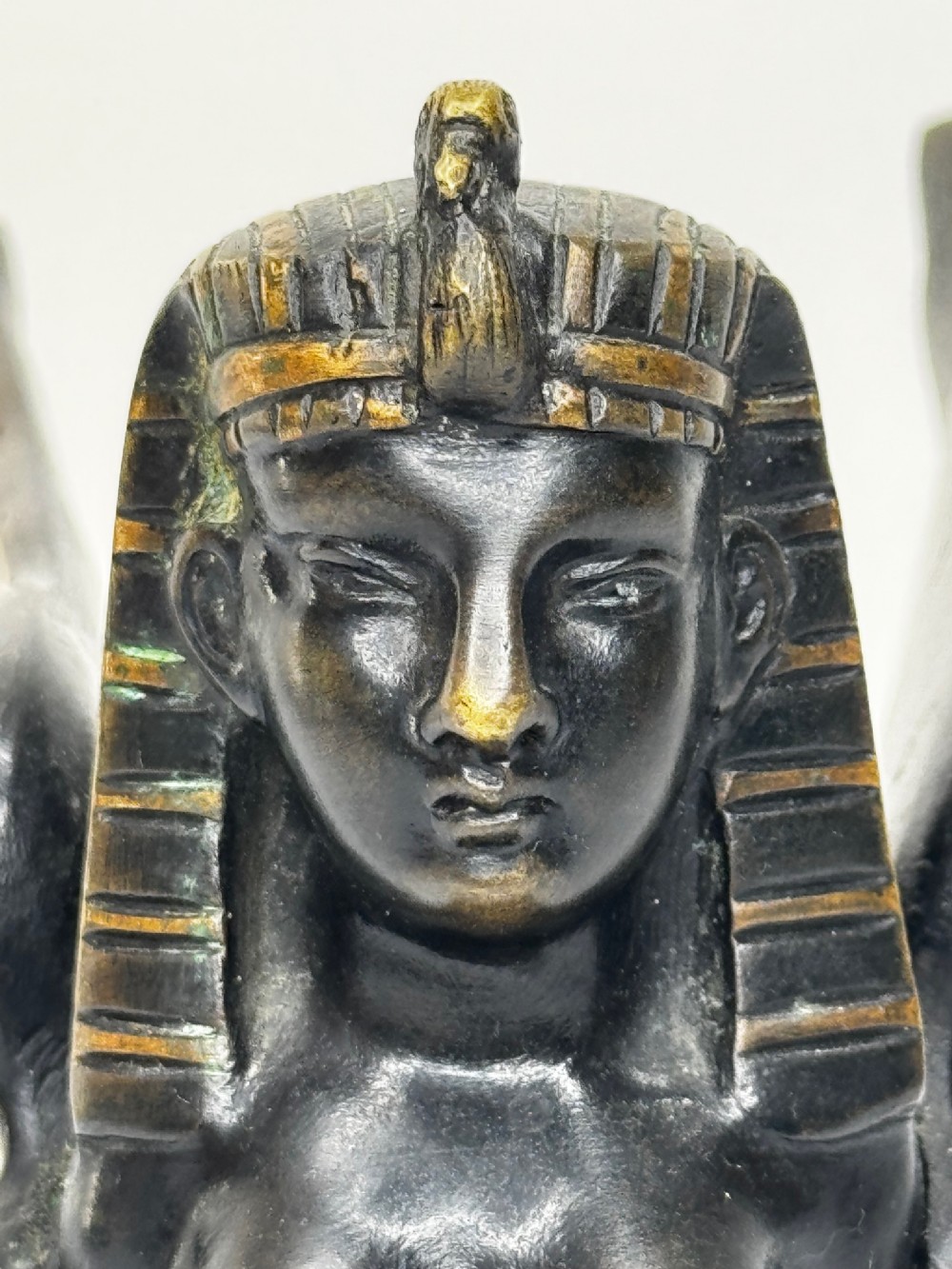
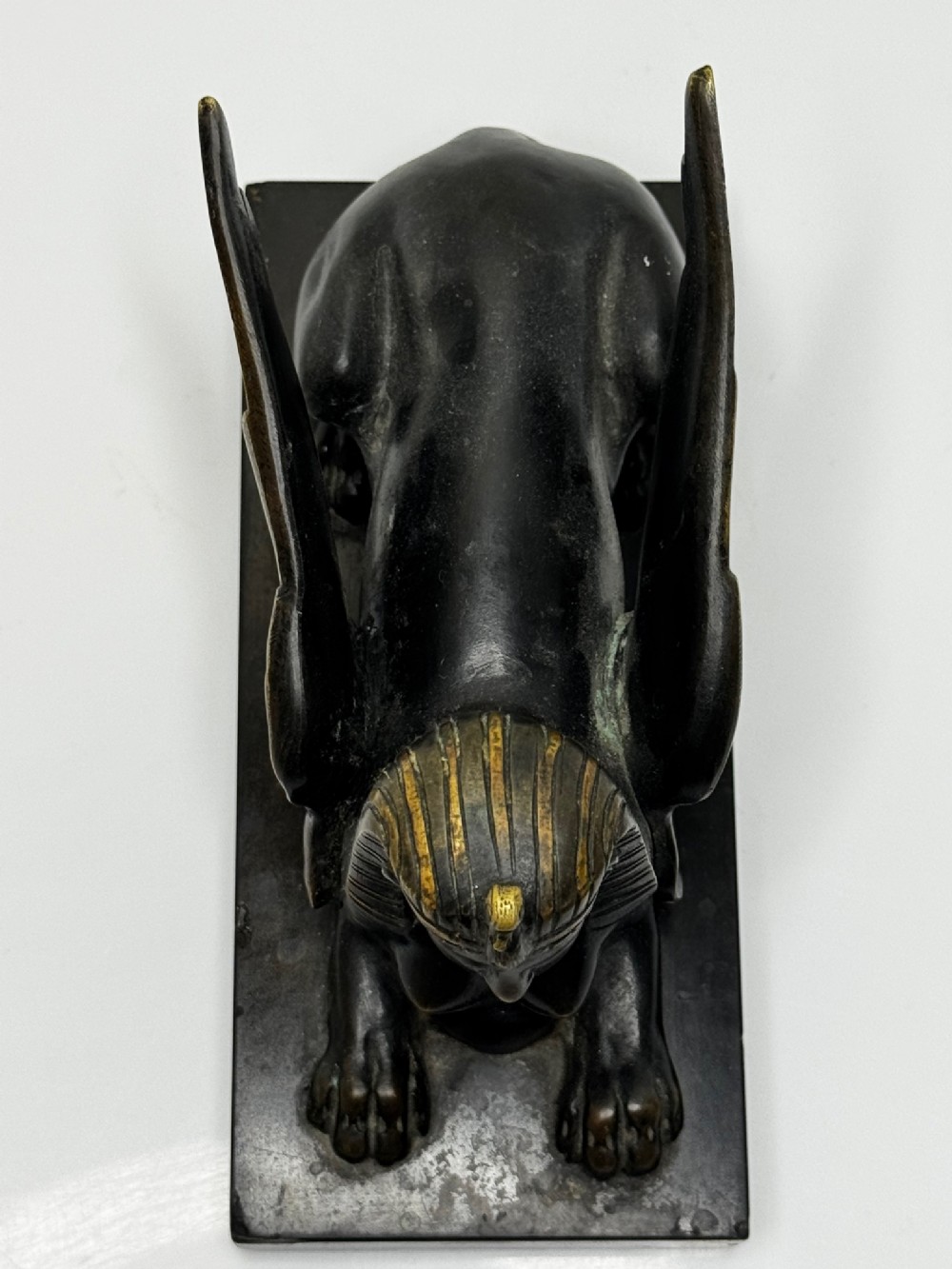
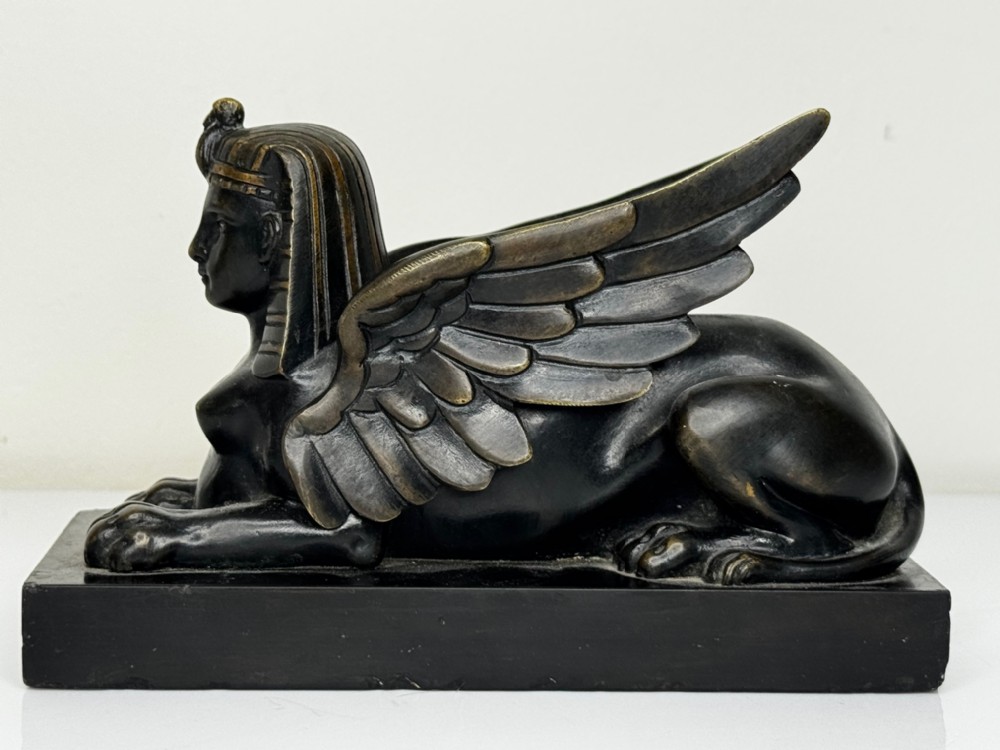
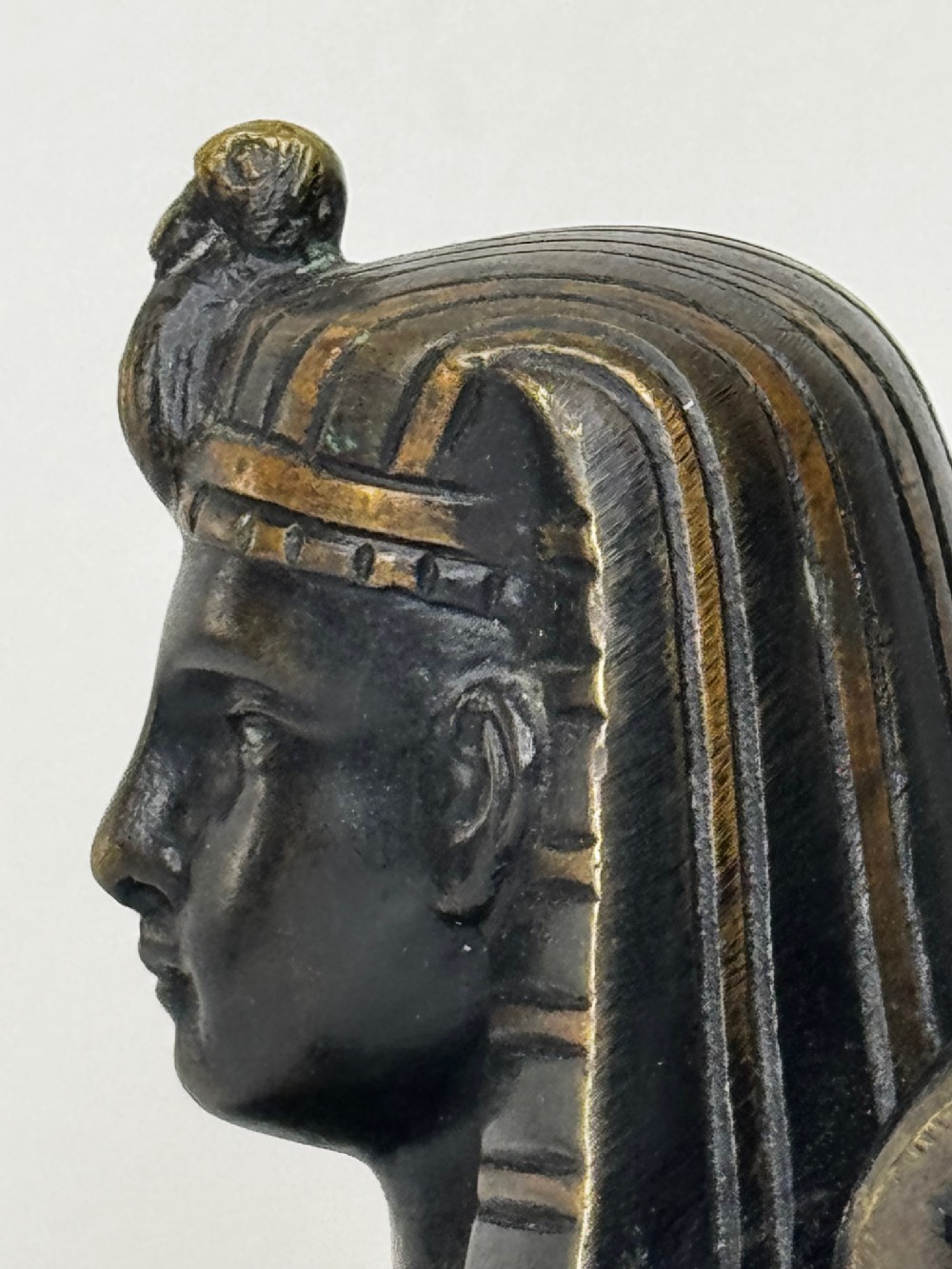
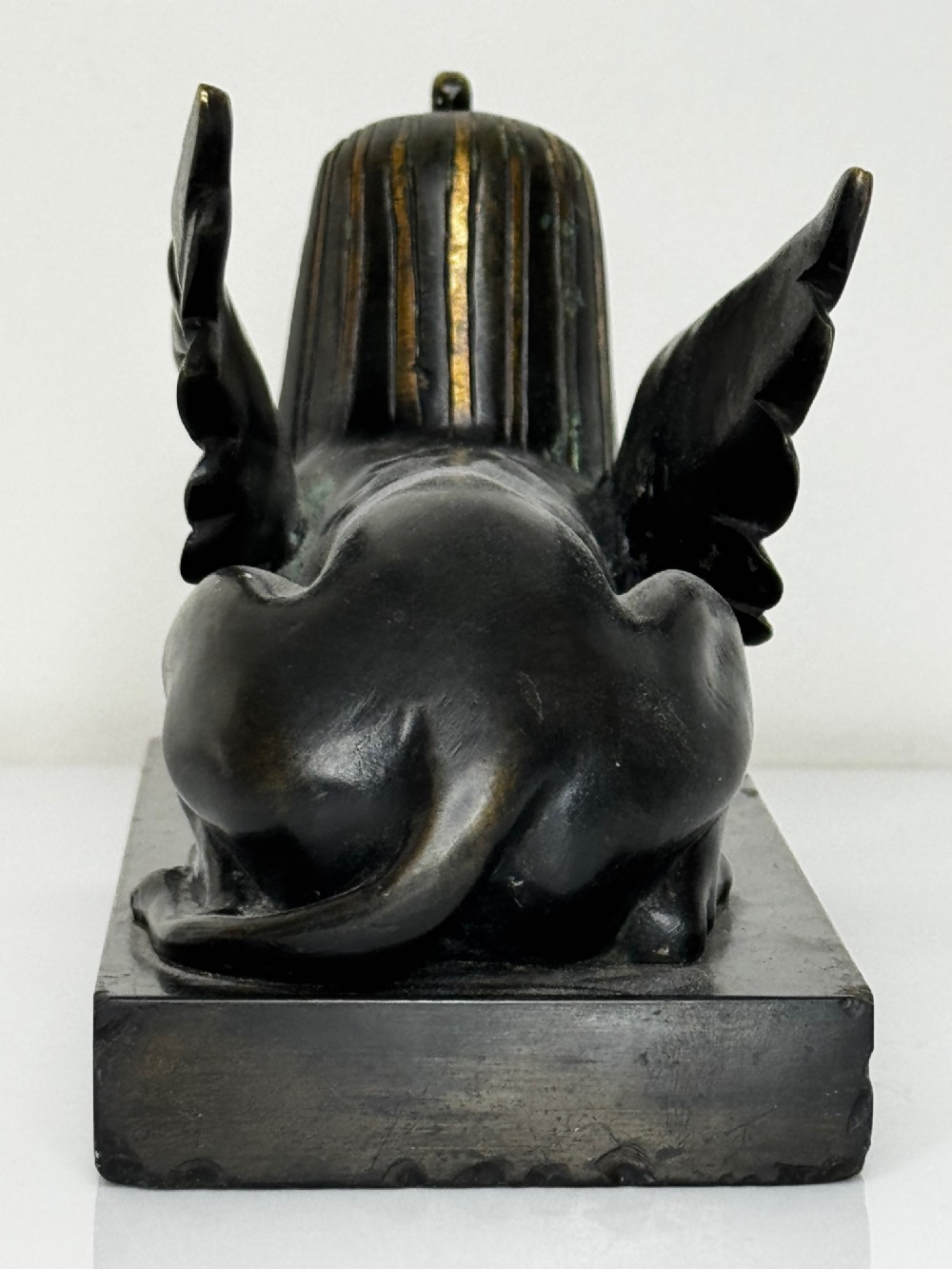
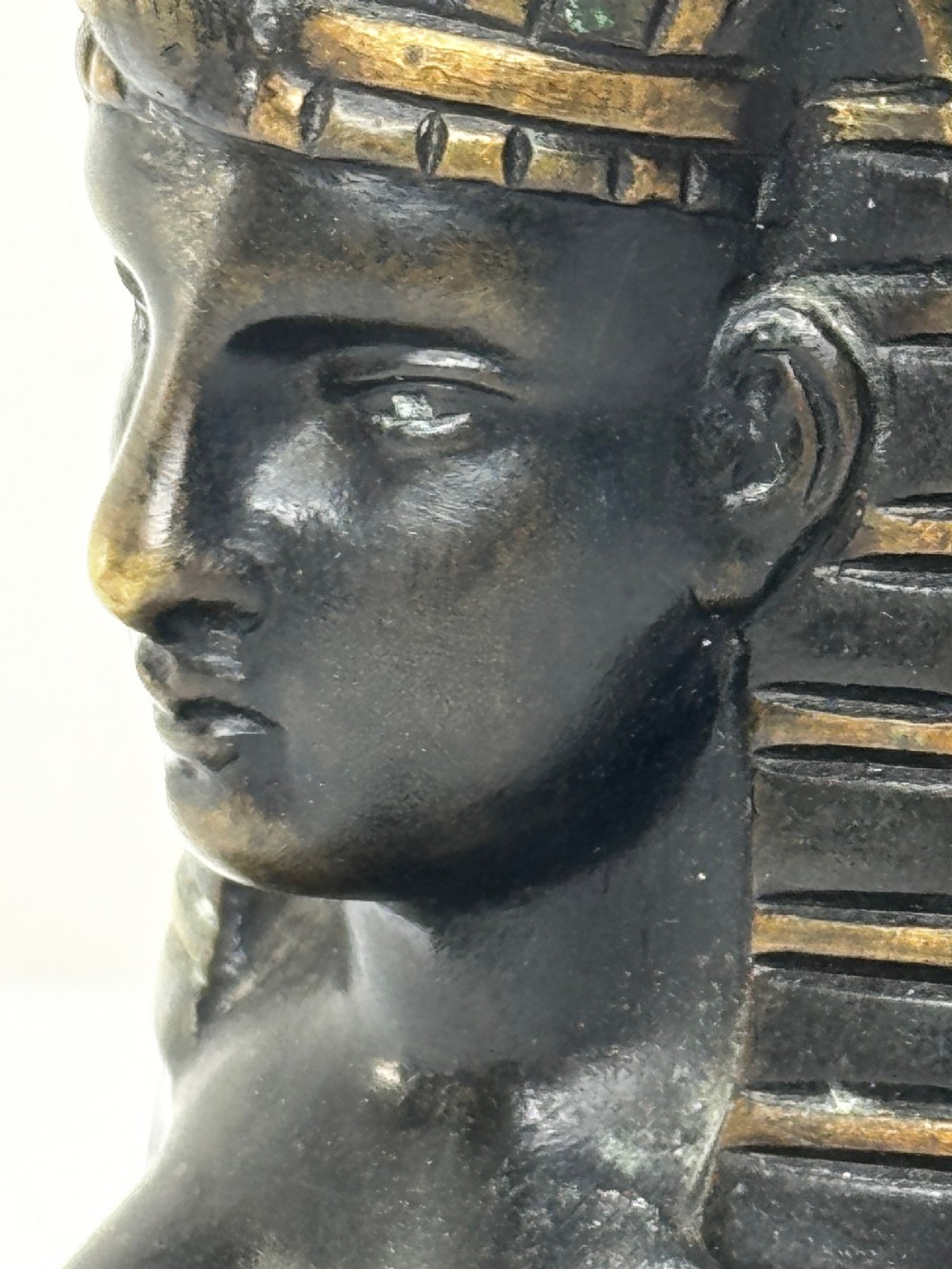
C1820 from Italy.A composite creature with the body of a lion and the face of a serene woman, the Sphinx bridges ancient Egyptian, Greek, and Roman traditions. Revered as a guardian of sacred spaces and riddler of fate, the Sphinx was believed to possess immense wisdom and the power to ward off evil.
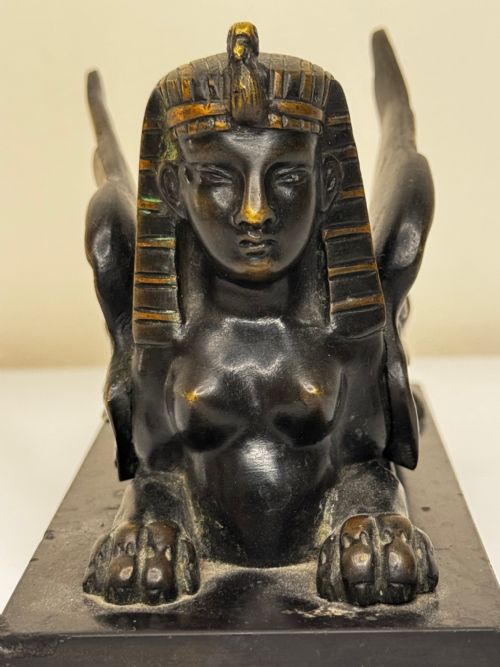
During the 18th and early 19th centuries, fascination with the classical world reached new heights. Aristocratic travellers on the Grand Tour collected bronze miniatures like this as tangible links to the mythologies and ruins they encountered. This sculpture embodies that cultural moment — a finely crafted tribute to the enduring allure of ancient myth, filtered through neoclassical ideals of symmetry, order, and allegorical meaning.
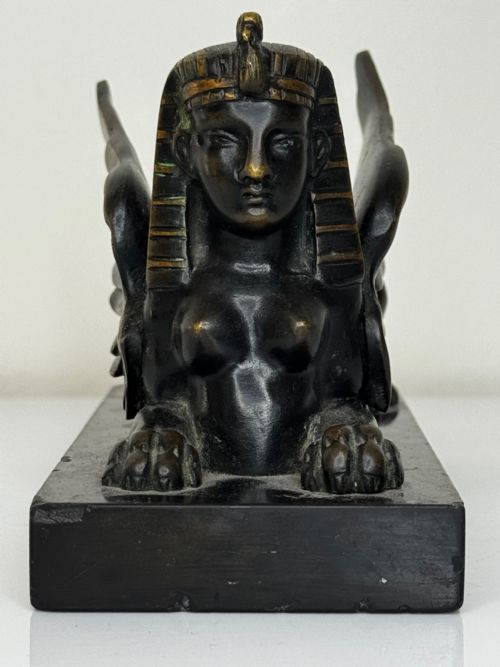
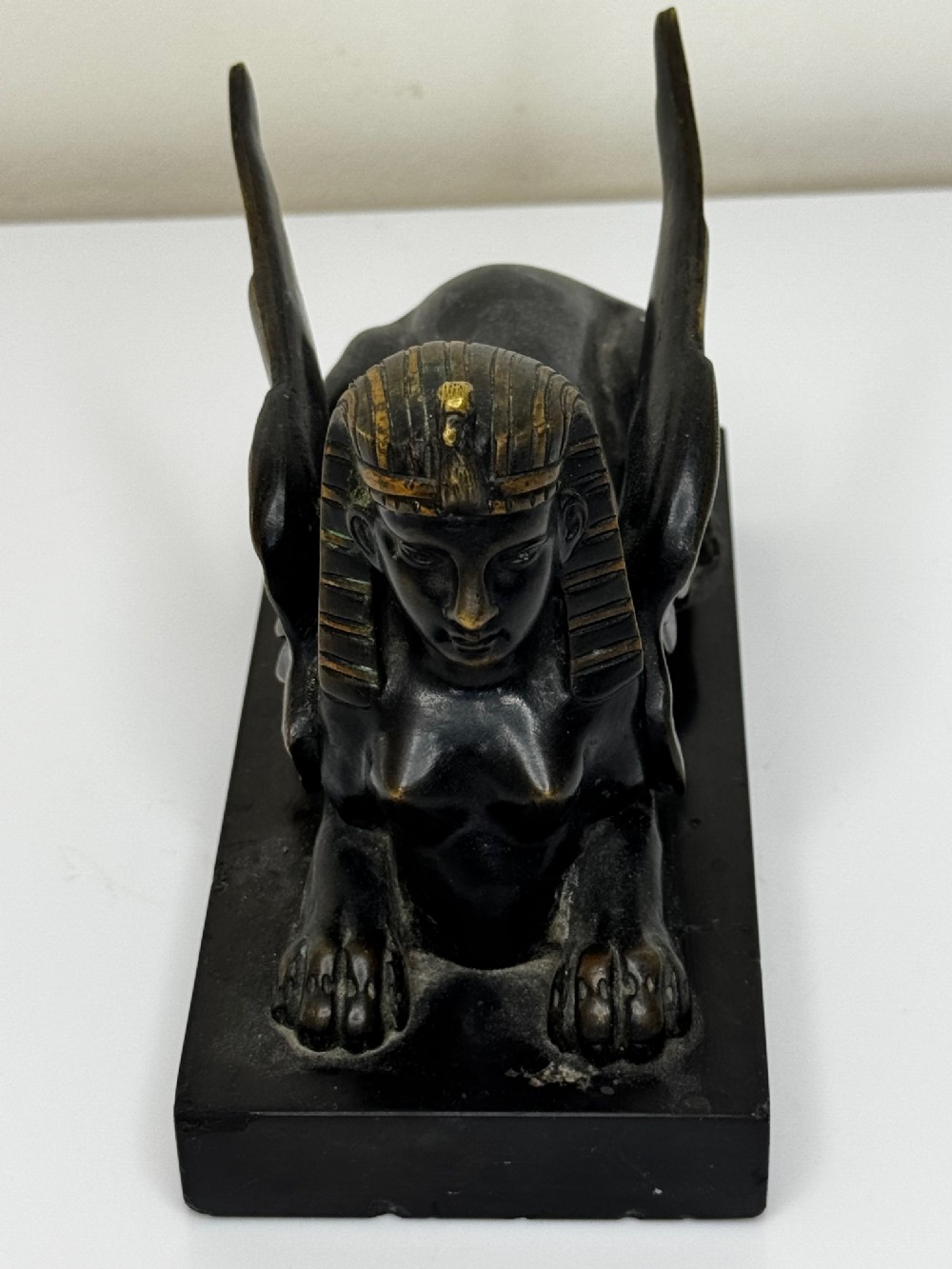
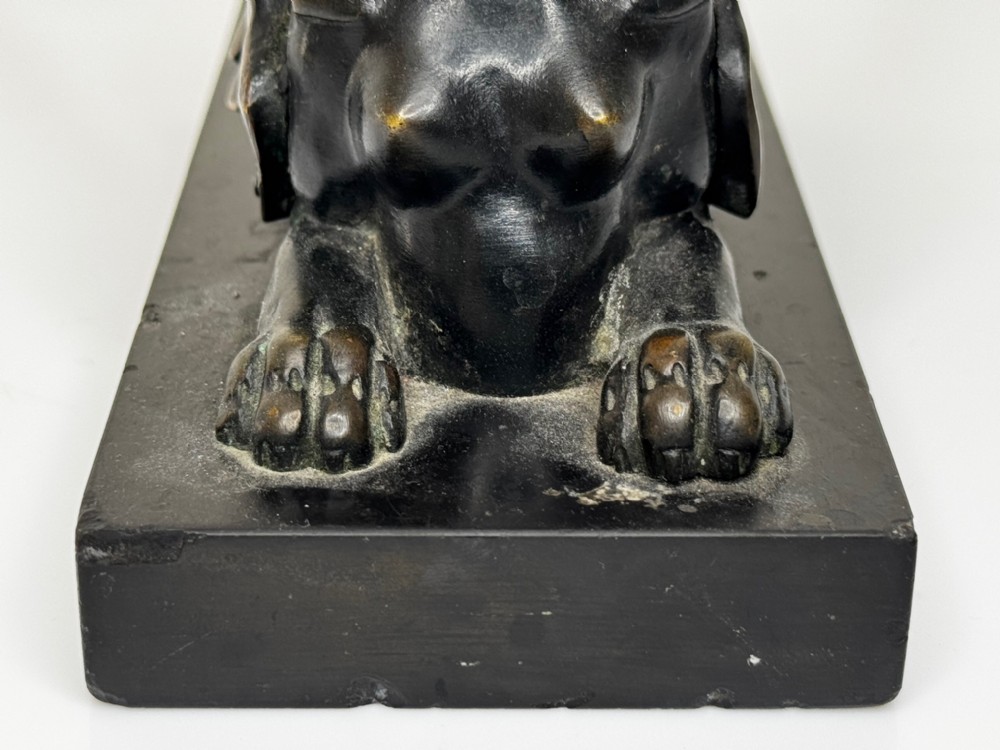
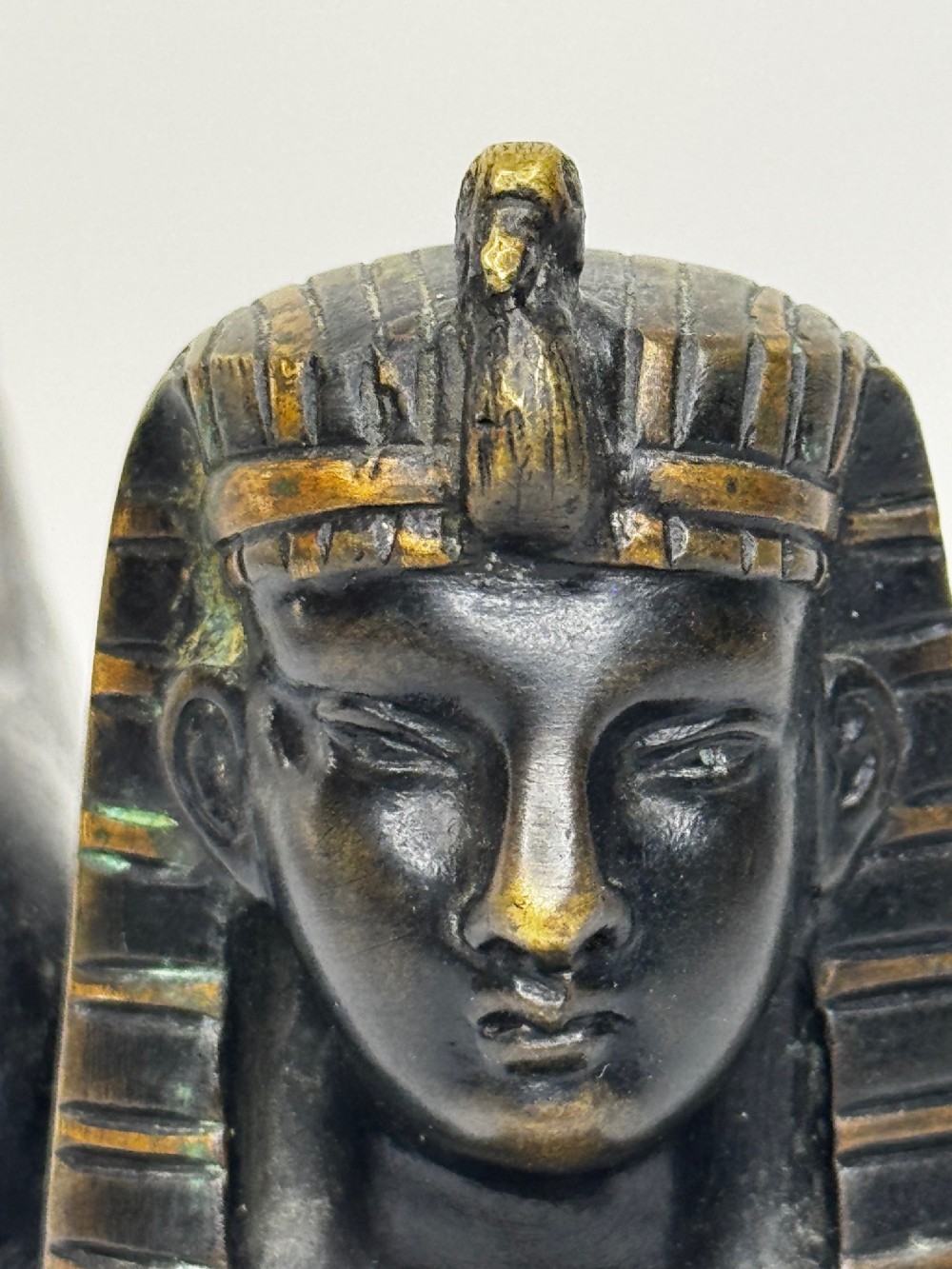
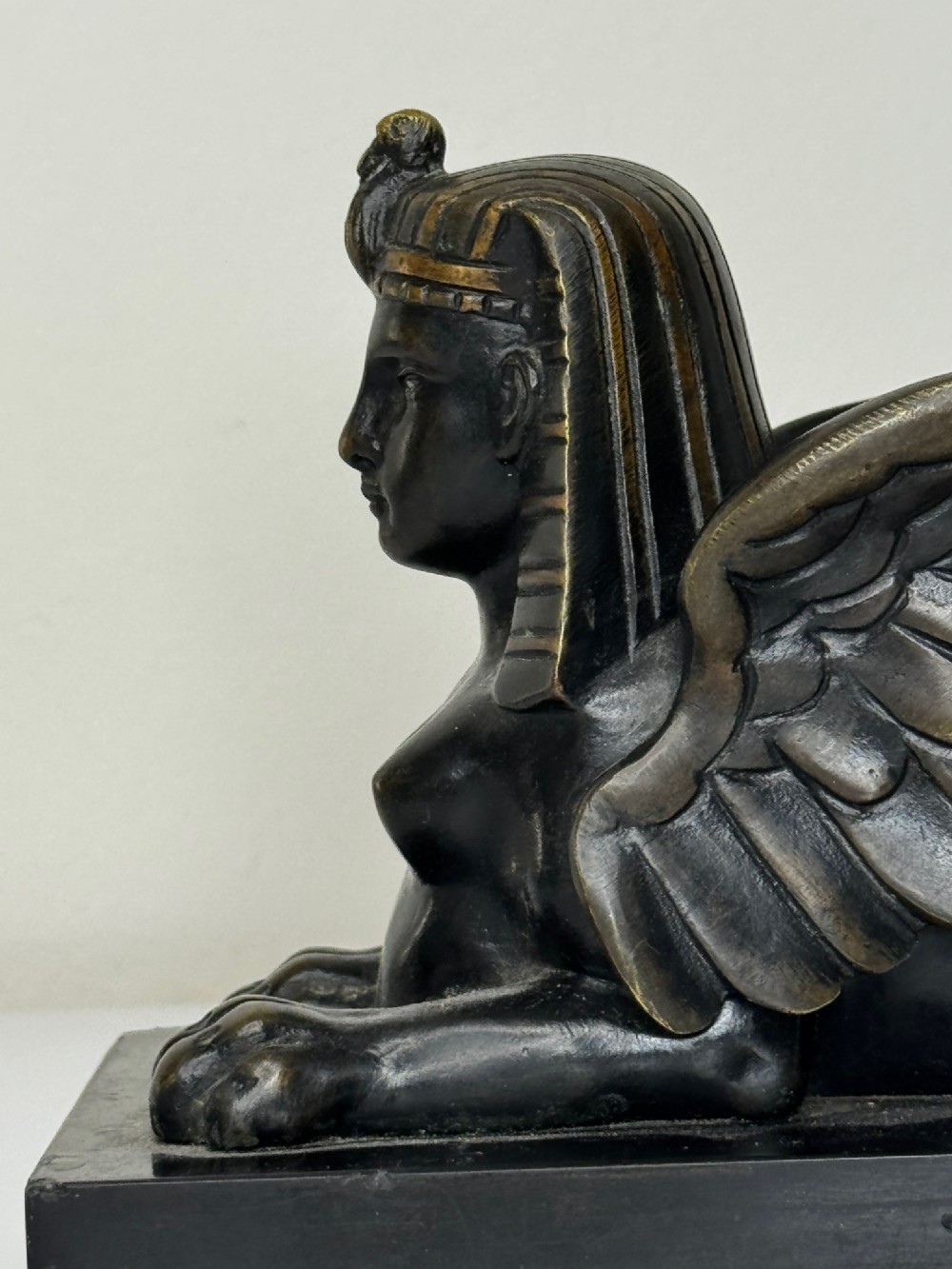
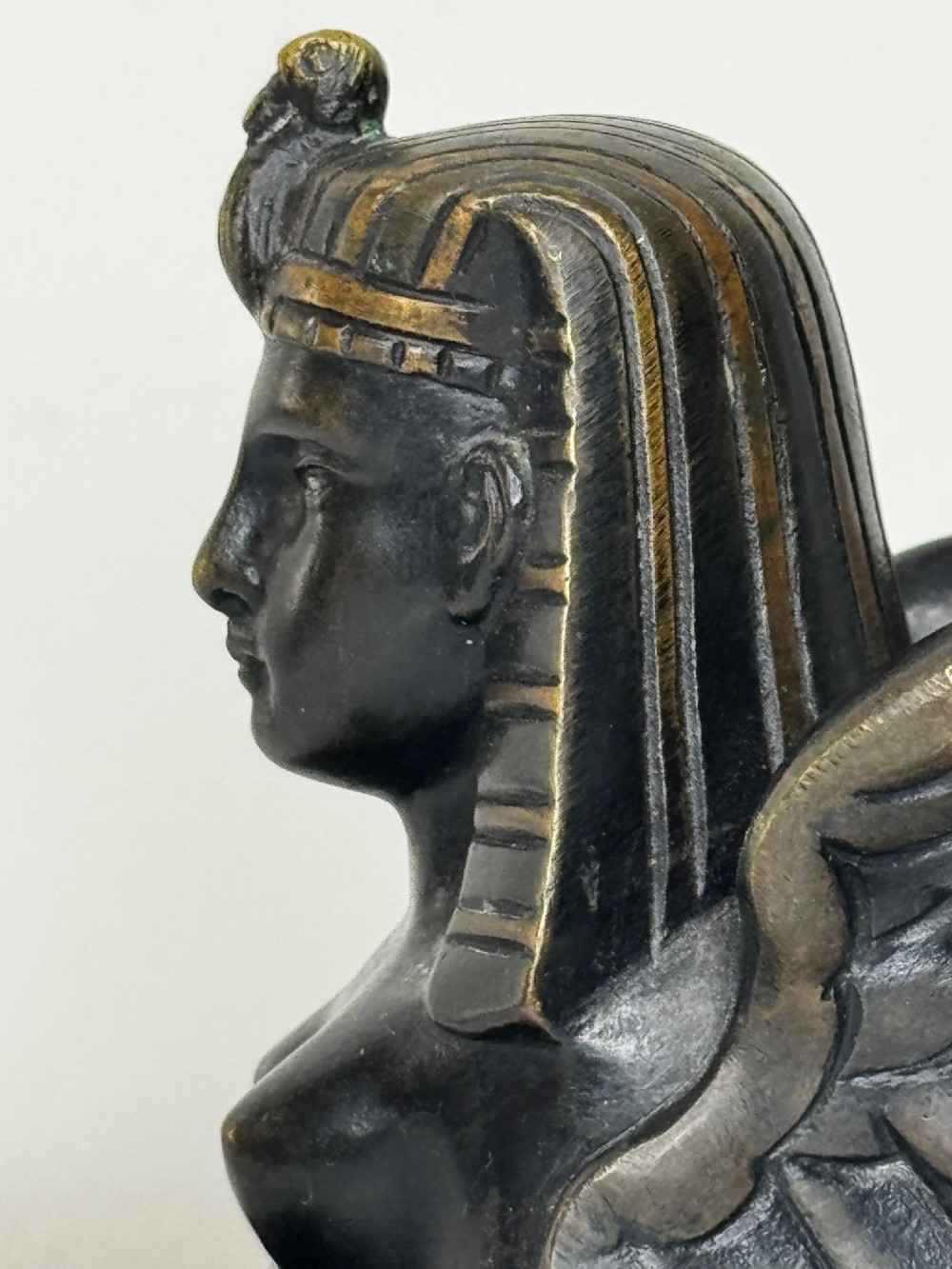
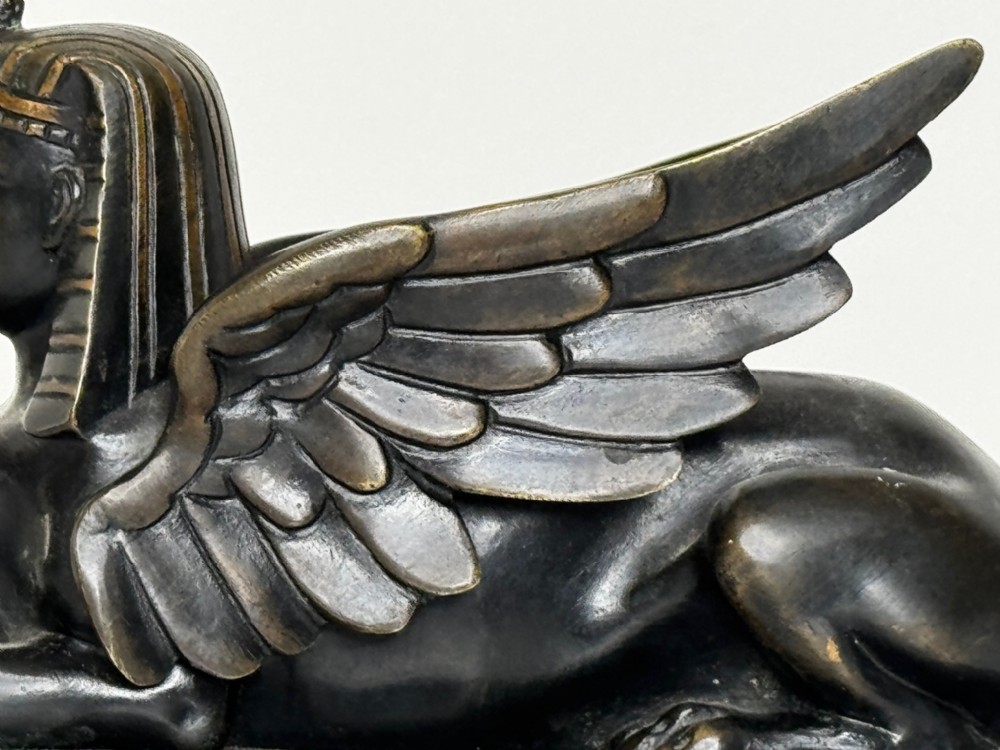
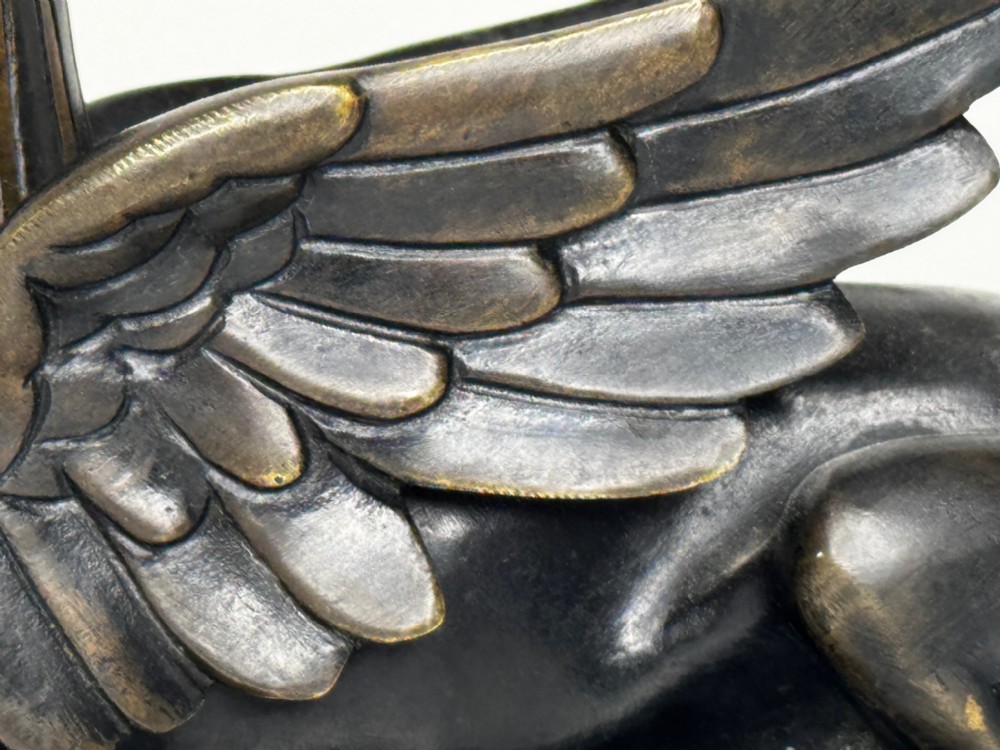
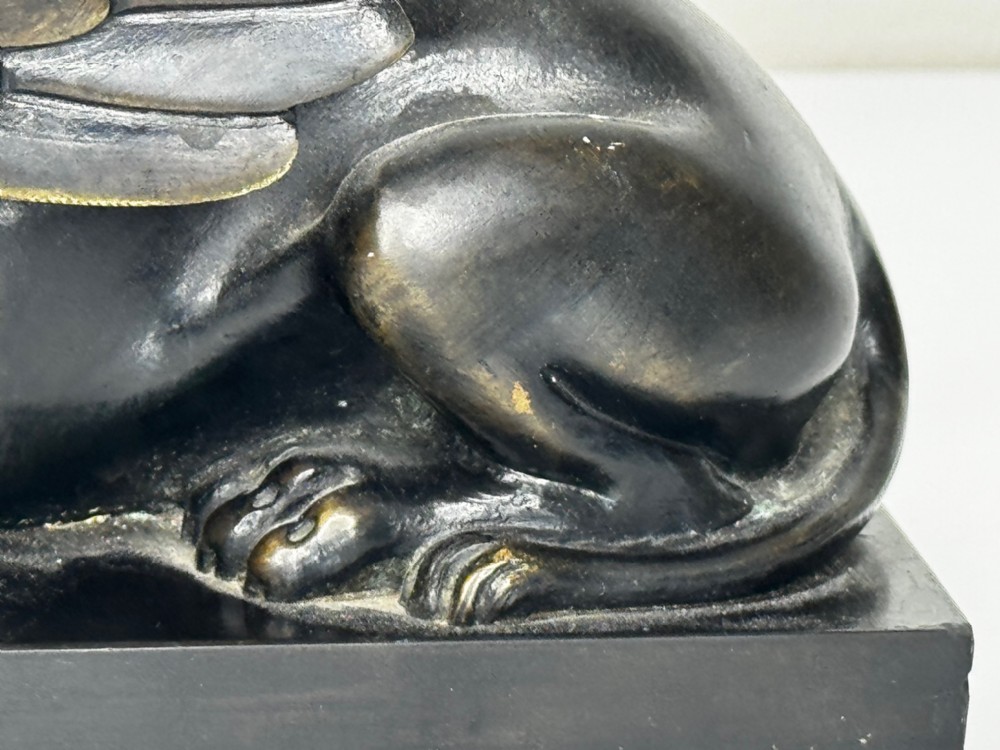
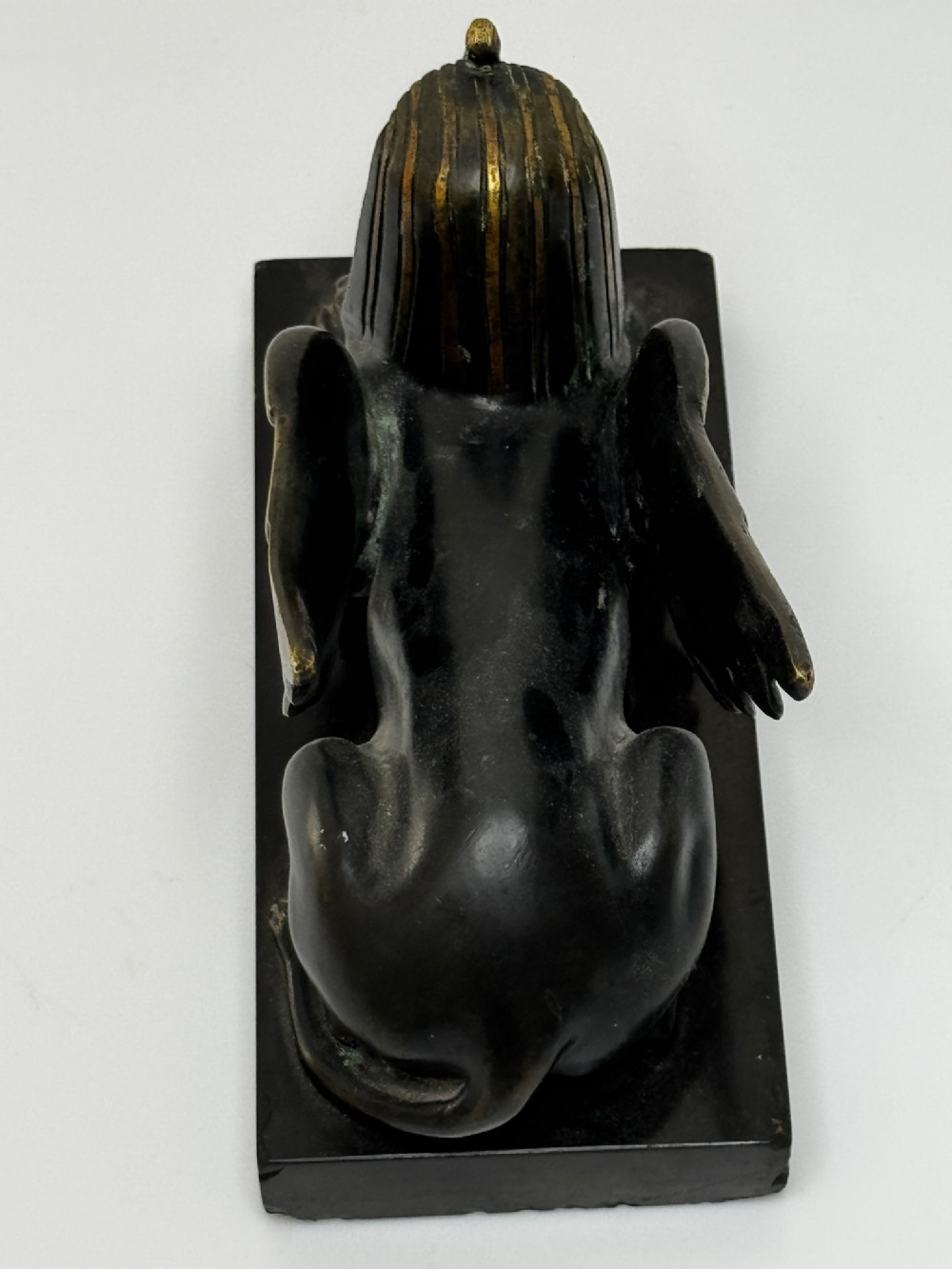
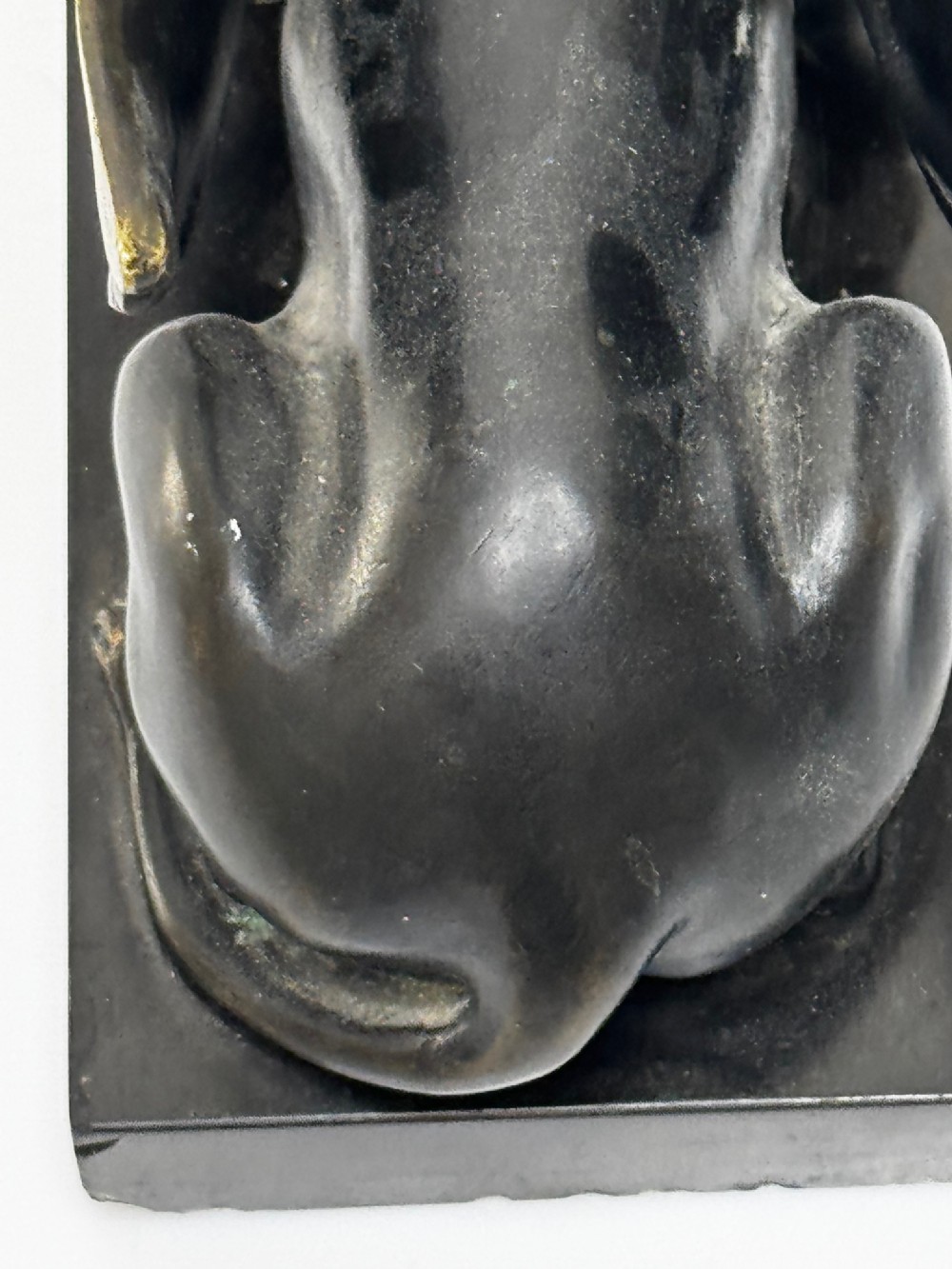
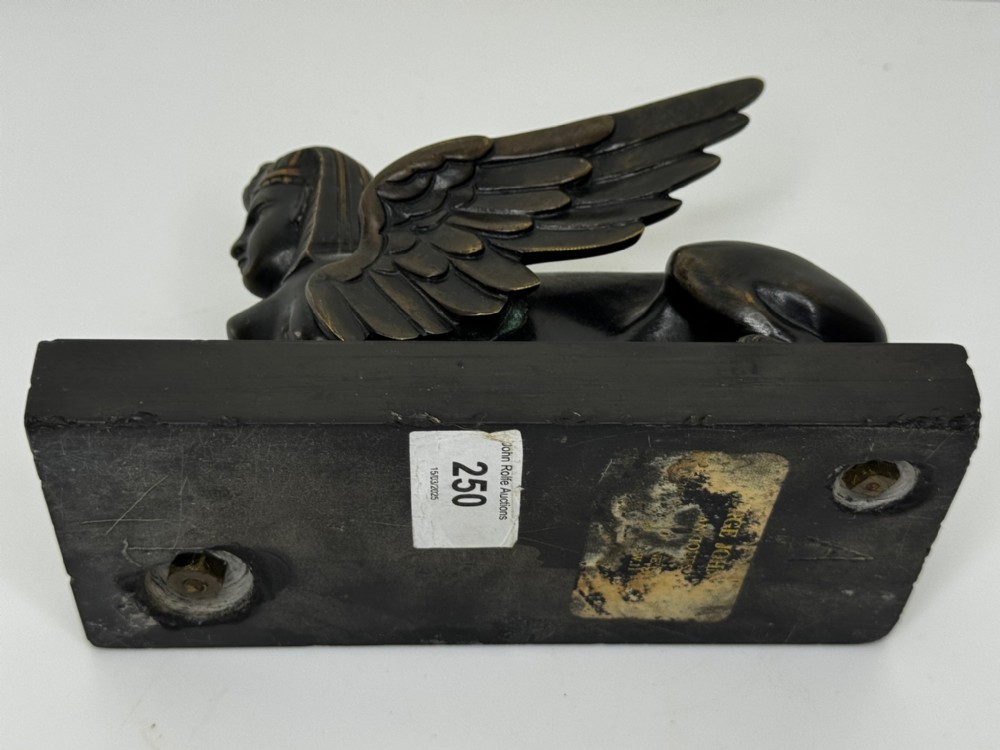
The sculpture is made from bronze, with gilt highlights resting elegantly on a black marble plinth, creating a visual dialogue between myth and refinement. Its patina — a rich, naturally aged bronze tone — enhances its sense of antiquity and authenticity.
Composition & Technique:
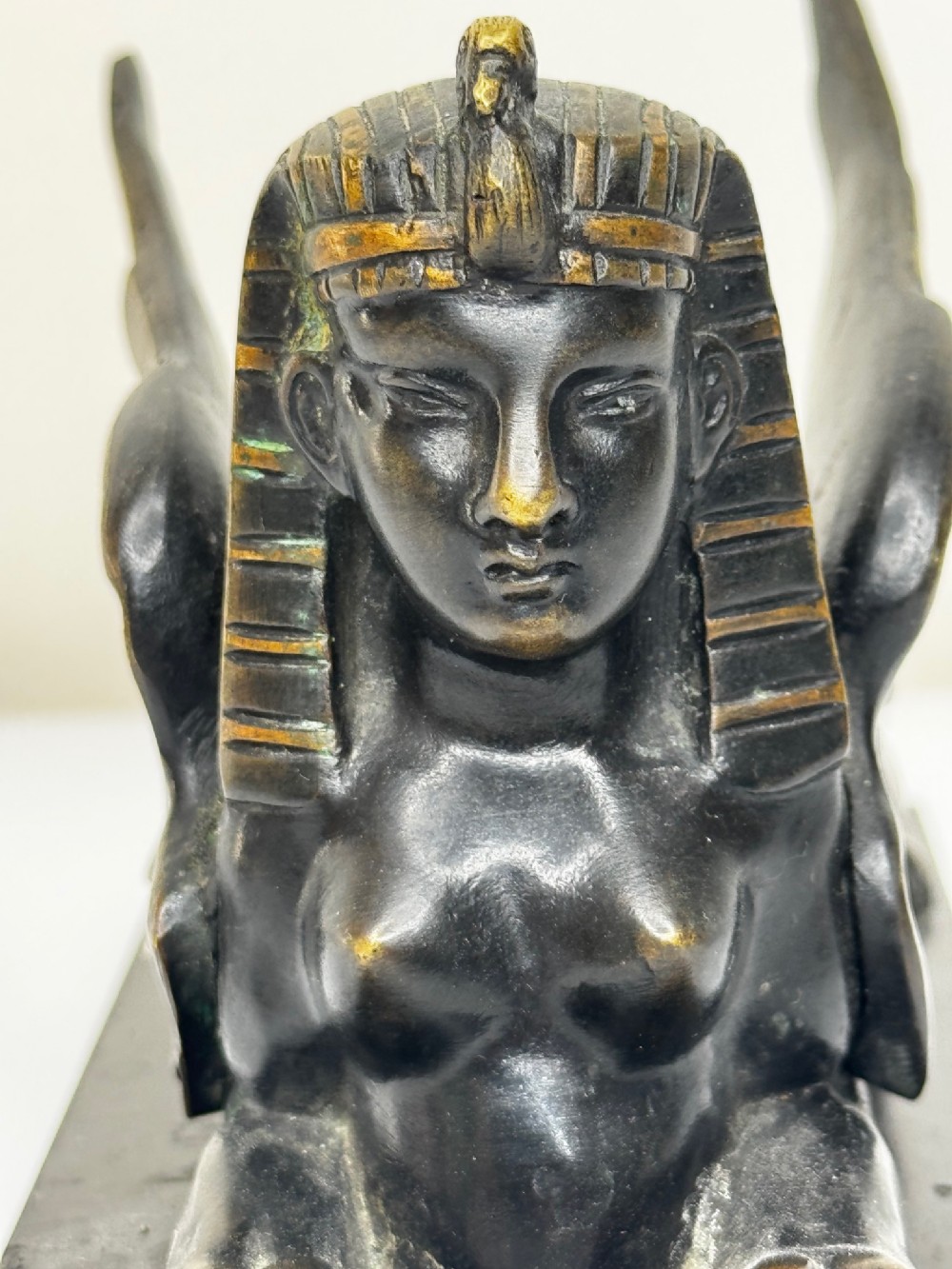
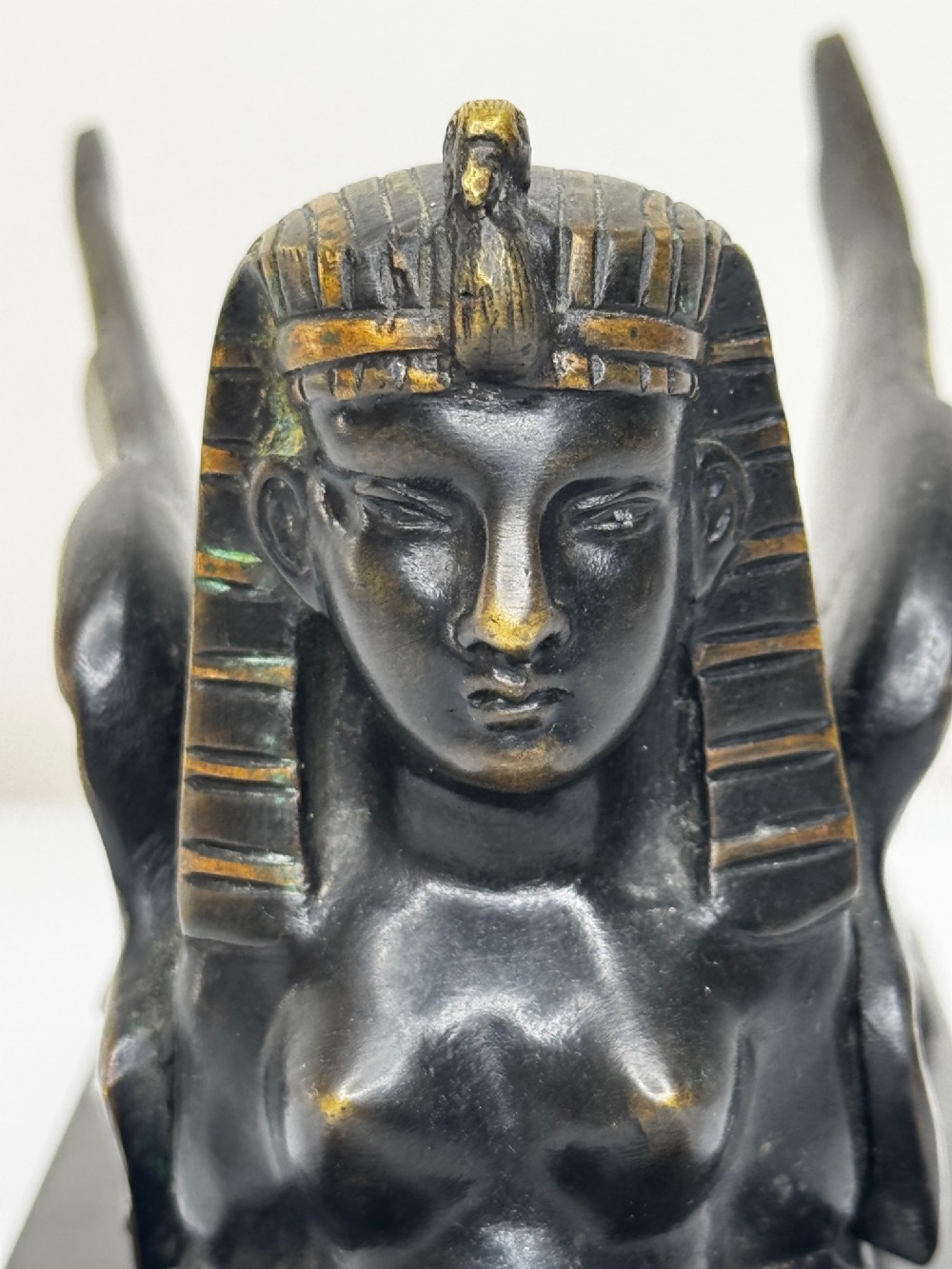
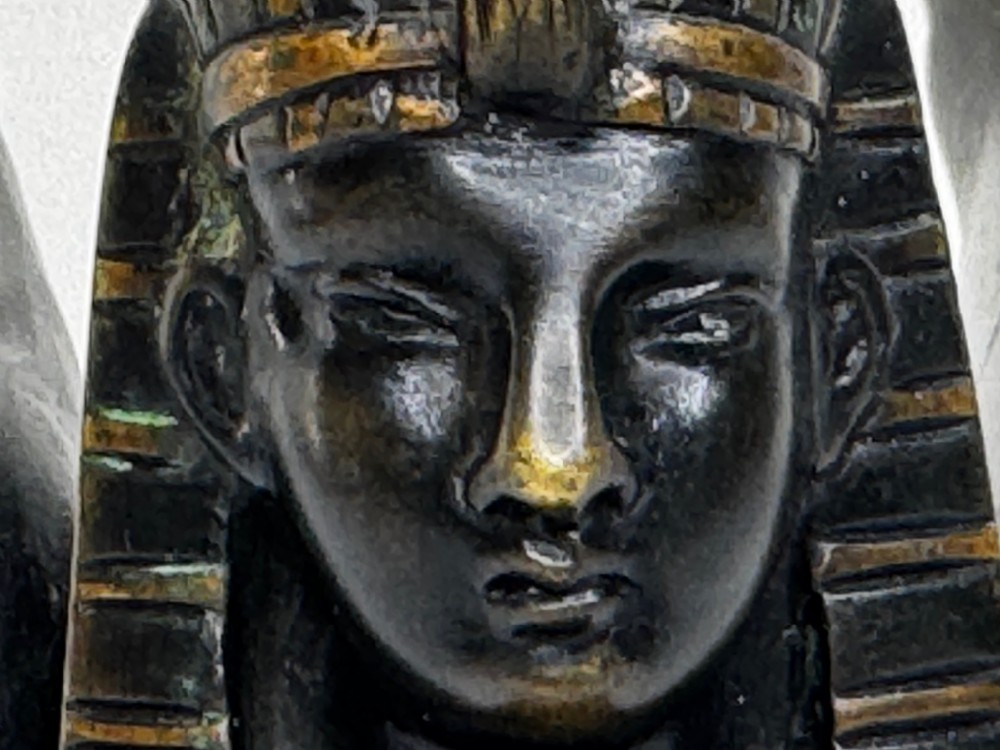
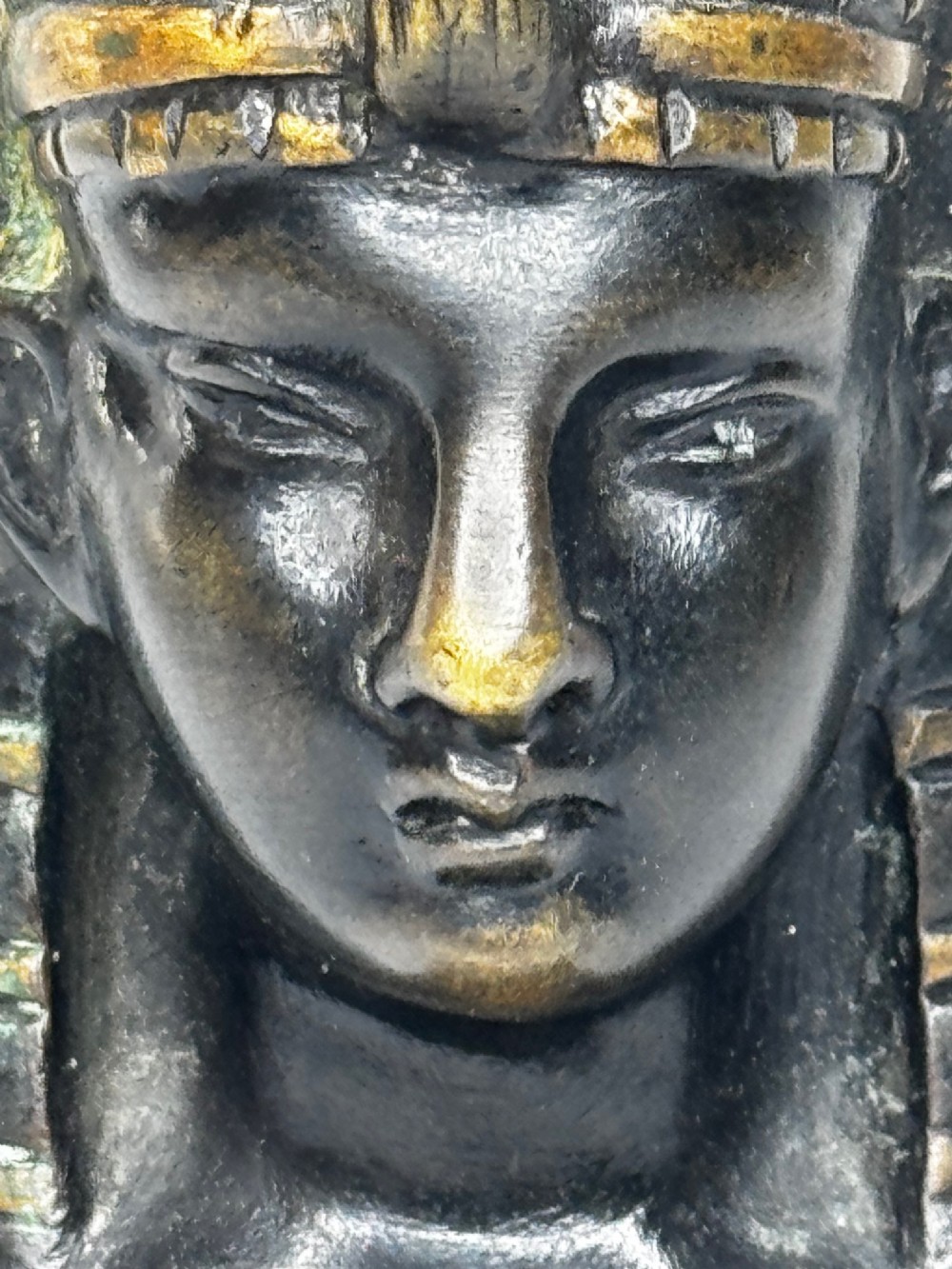
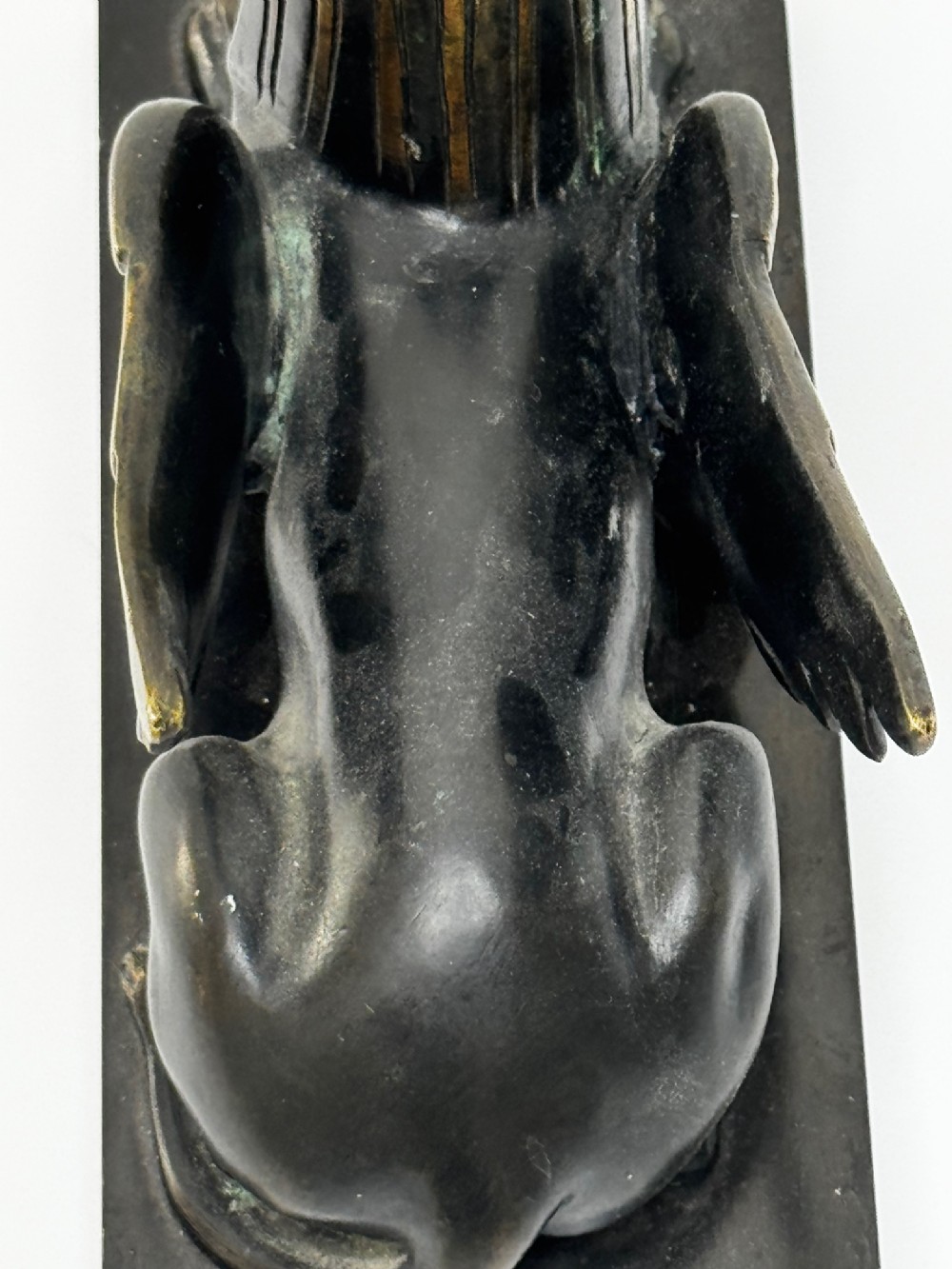
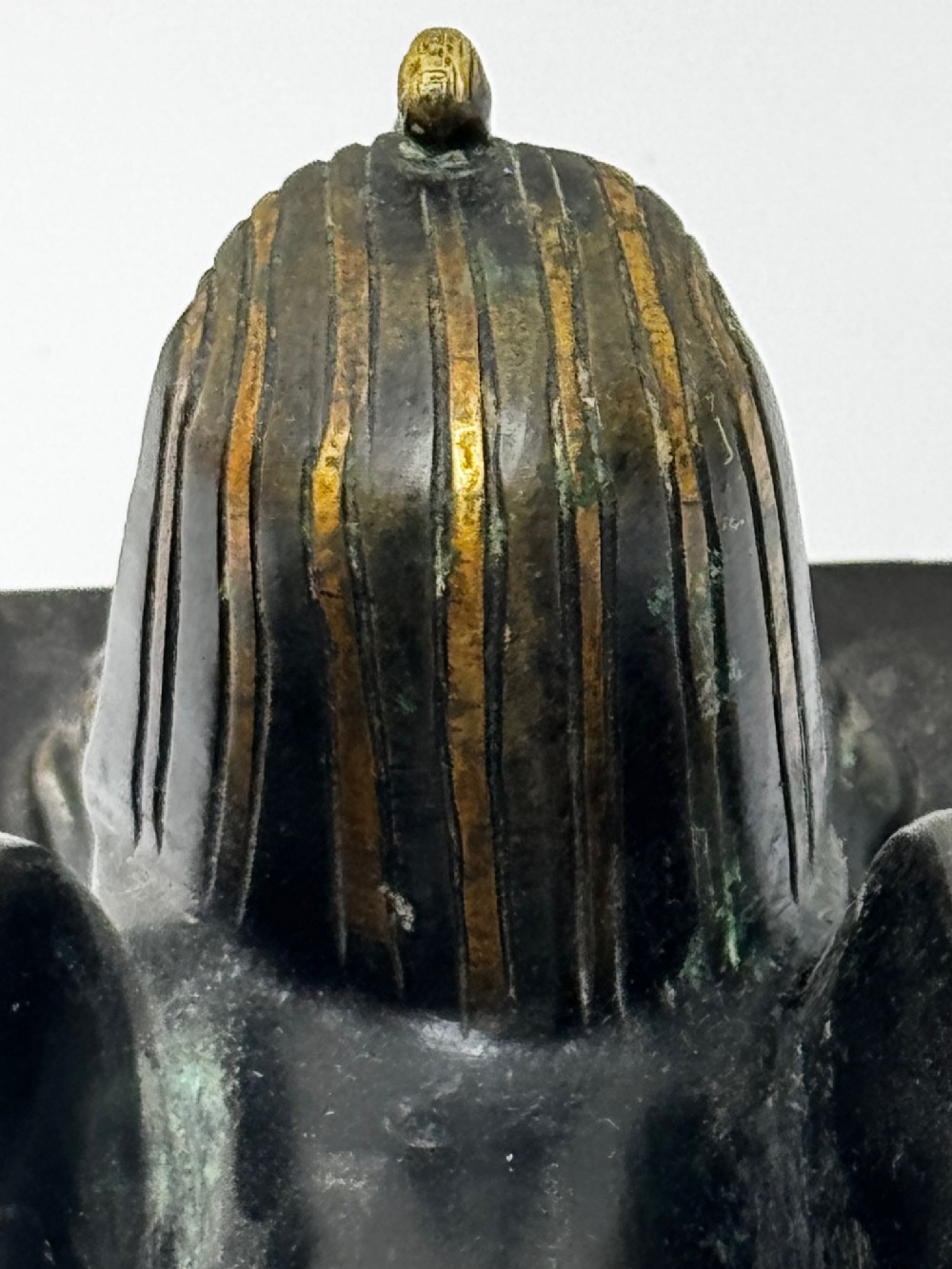
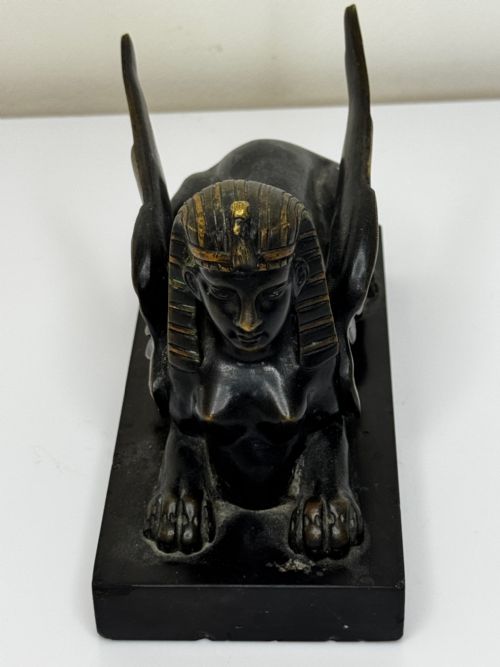
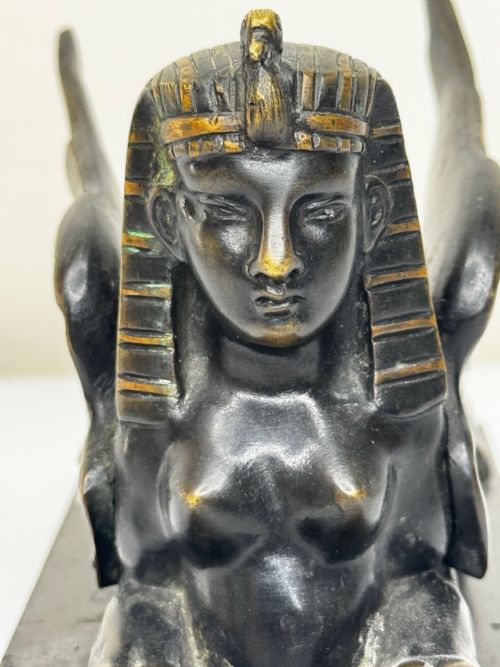
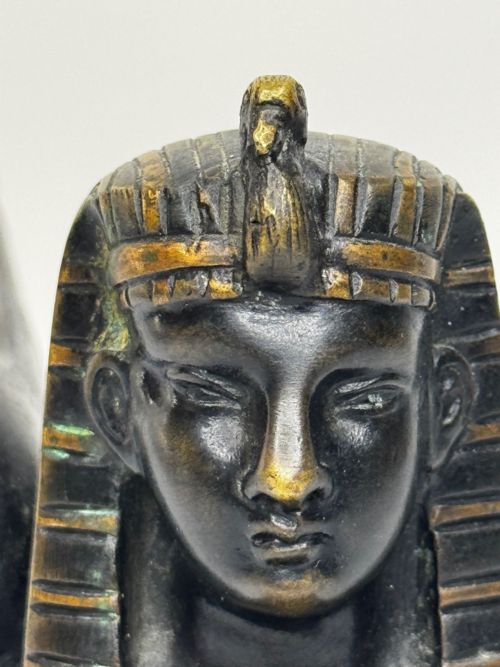
Executed in the neoclassical style typical of early 19th-century Grand Tour bronzes, this Sphinx is both stylized and idealized. Her body is depicted in a poised, symmetrical repose — a calm yet alert stance that suggests quiet strength. The feminine face, framed by stylized hair and a modest headdress, bears a classical serenity drawn more from Greco-Roman ideals than the harsher depictions found in ancient Egyptian sculpture.
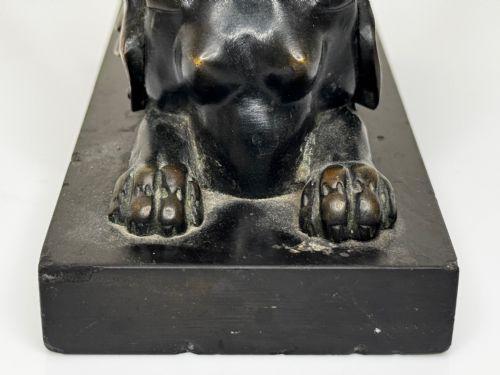
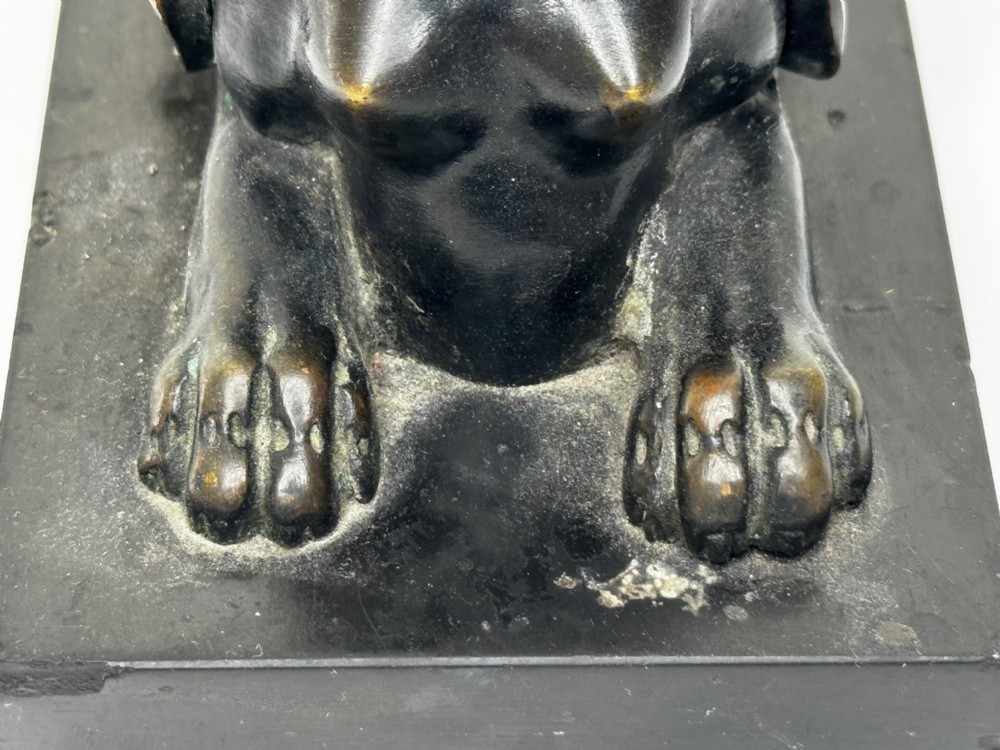
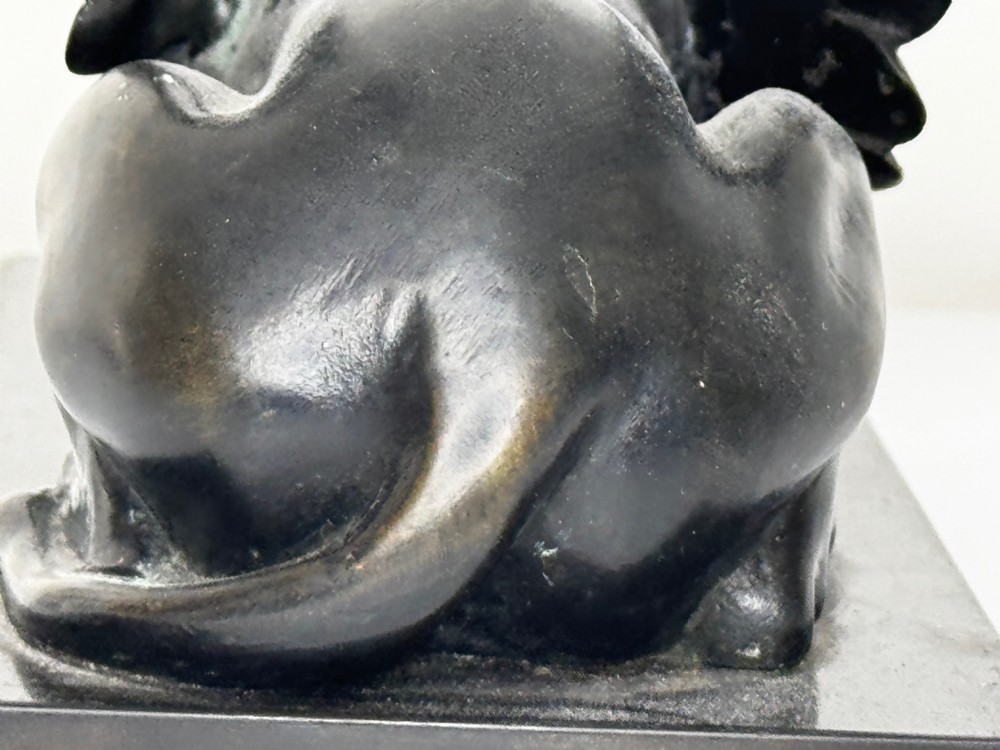
The surface texture of the bronze is finely grained and matte, not overly polished — reflecting a sculptural vocabulary that emphasizes age and timelessness over flashy detail. Subtle variations in tone and depth are visible across the figure, where the patina has developed gently over two centuries. These details catch light softly and lend the piece an organic warmth.
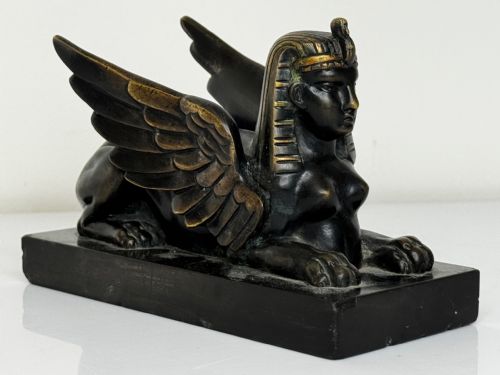
The lion’s musculature is subtly defined, suggesting latent power beneath stillness. The sculptor has chosen restraint over flamboyance, achieving a quiet dignity appropriate to the Sphinx’s symbolic role as protector and enigma.
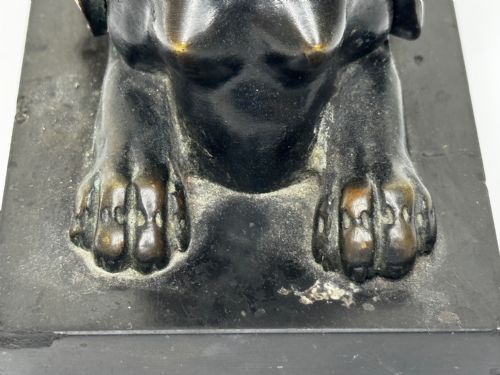
The marble base, smooth and rectilinear, offers a strong architectural counterpoint to the organic form above — a common technique in Grand Tour sculpture to suggest classical ideals of balance and harmony.
Attribution & Craftsmanship:
This piece is unsigned, which is typical of Grand Tour bronzes from the early 1800s. Such sculptures were often produced in specialized foundries in Rome, Florence, or Paris, where skilled artisans recreated classical motifs based on ancient fragments and statuary.
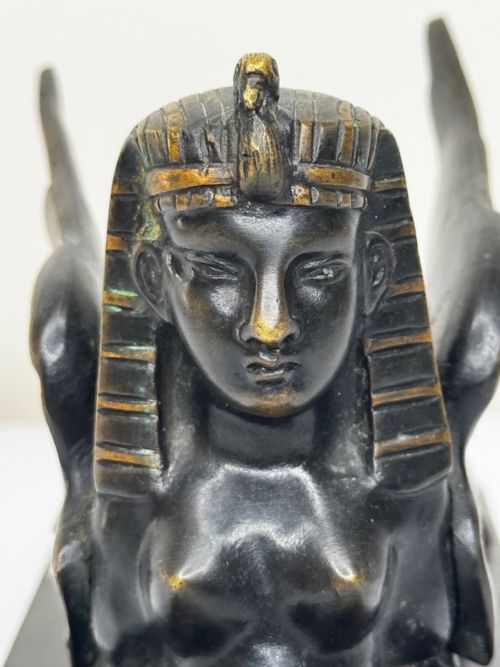
Rather than being the work of a single sculptor, these pieces were the result of collaborative craftsmanship, drawing on the talents of mold makers, bronze casters, and patina specialists. The precision and quality of this Sphinx reflect the high standards of those early workshops, where demand for mythological bronzes was driven by educated elites and aristocratic travelers seeking cultural souvenirs of enduring beauty and significance.
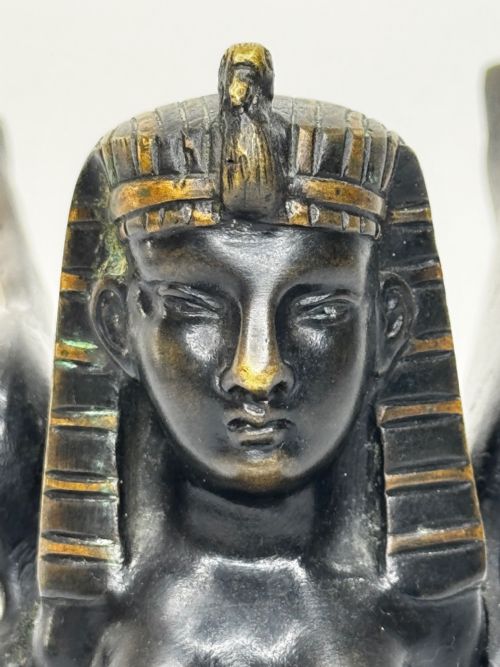
Though the individual artist remains unknown, the refinement of the casting, symmetry of the form, and elegant detailing suggest the hand of an accomplished neoclassical workshop familiar with both antiquity and modern tastes.
Provenance:
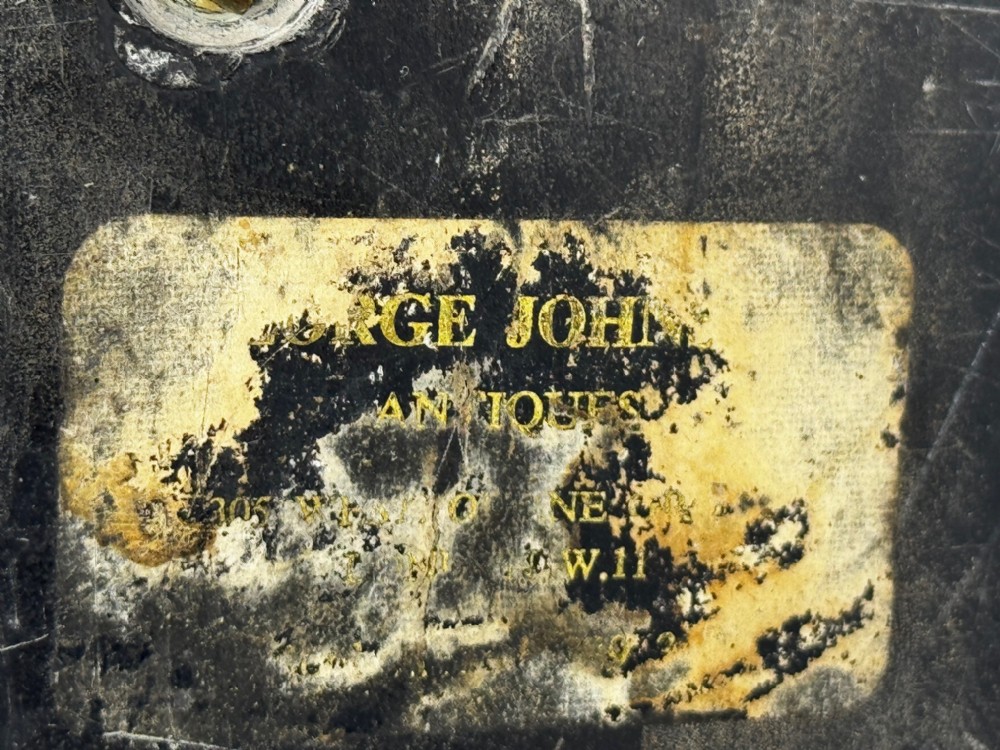
This sculpture was sourced from the respected George Johnson Antiques, formerly located on Westbourne Grove, London — a dealer known for offering museum-quality classical and Grand Tour pieces his partial label shown underneath the base. Their long-standing reputation in the London antiques trade adds a layer of credibility and prestige to this already remarkable work
Cheshire Antiques Consultant Ltd has dated this piece to the 19th Century.
Source the historic in 17th, 18th, 19th & 20th century fine arts, painting, sculptures & collectibles
You can view the stock and full dealer information on the Cheshire Antiques Consultant Ltd Profile Page
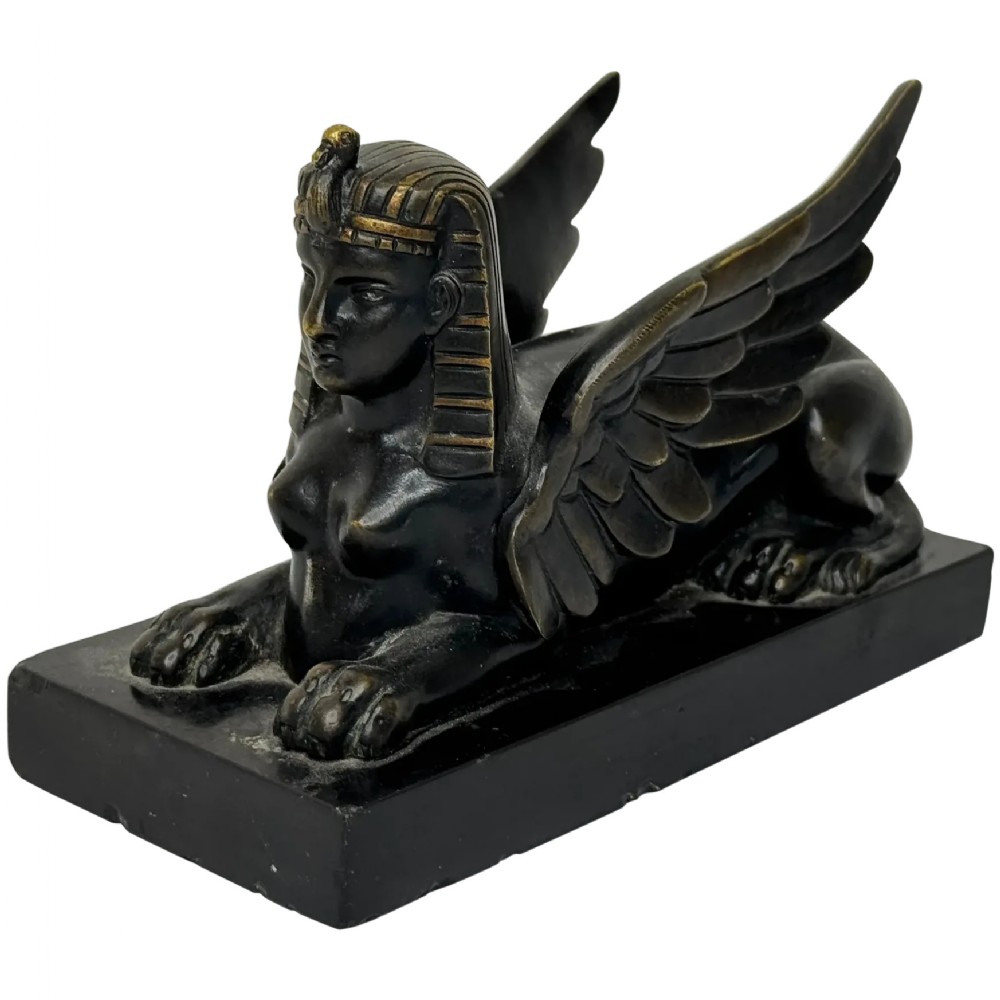
Neoclassical Grand Tour Gilt Bronze Sphinx Sculpture C1820