27,735  PAGES BROWSED TODAY PAGES TODAY • 39 ANTIQUES UPLOADED TODAYNEW ARRIVALS
GIFTS
39 ITEMS ADDED TODAY
Sort Order
Items Per Page
Antiques dealer?
Join as a Seller
Browse Categories
Sort order
Relevant Links
Items per page
ID #SA1086152
SOLD
Email Phone
Save
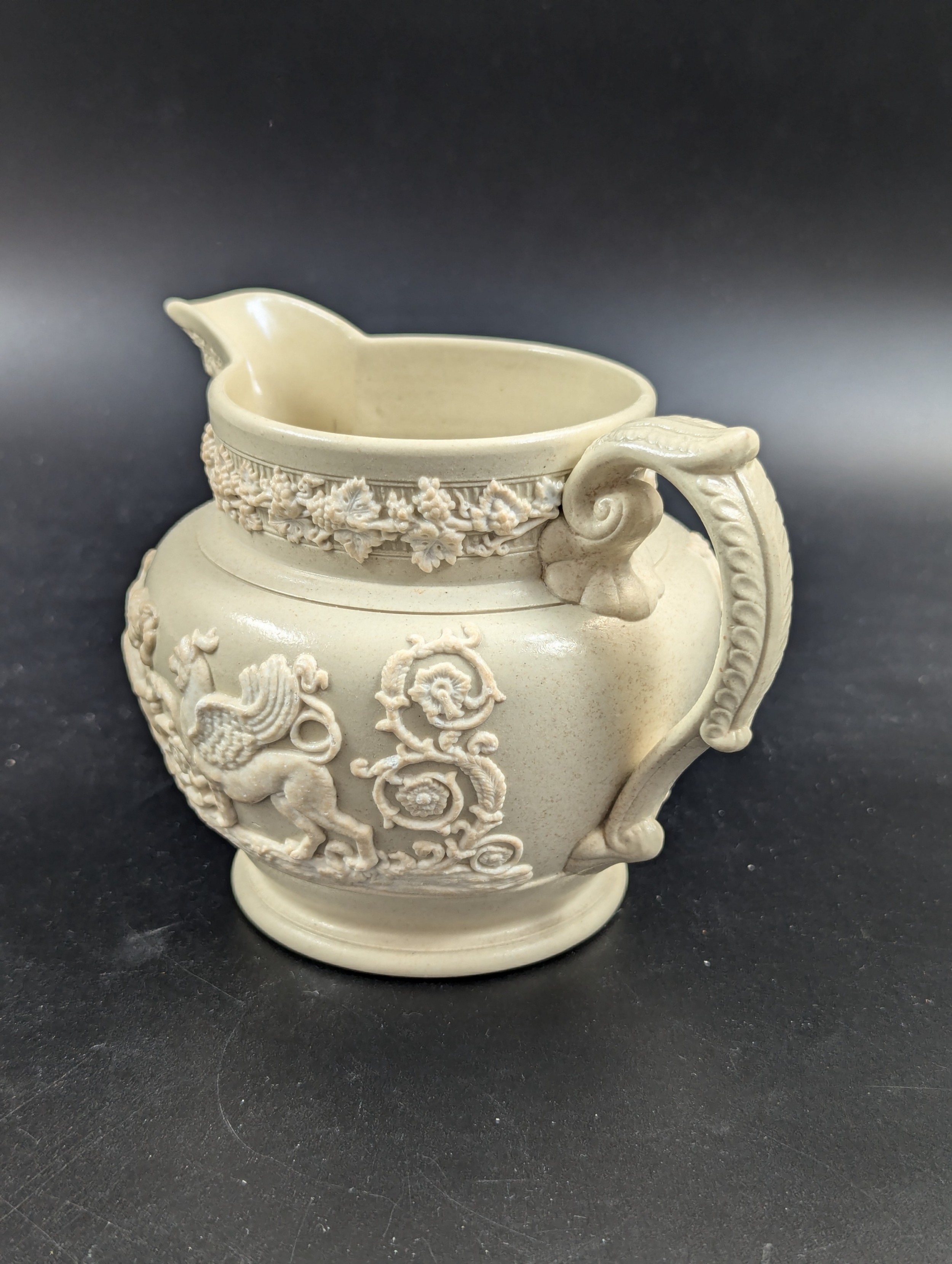
Stoneware Jug ‘Griffin and Cherub’ by Ridgway & Sons, C. 1808
Sold by Gillers Antiques Ltd
sold SA1086152
Sorry, but this item has been sold.
Gillers Antiques Ltd

Gillers Antiques Ltd

Sellingantiques Verified Since Mar 2023
Browse dealers 400 items
Id #SA1086152
PDF SHARE
SAVE

Stoneware Jug ‘Griffin and Cherub’ by Ridgway & Sons, C. 1808

19th century
Sold 4 October 2024 · Gillers Antiques Ltd
This “Stoneware Jug ‘Griffin and Cherub’ by Ridgway & Sons, C. 1808” found a buyer.

It was listed by Gillers Antiques Ltd. Sold pieces stay on Sellingantiques as a record of what has passed through, and the next one is rarely far away.

Description

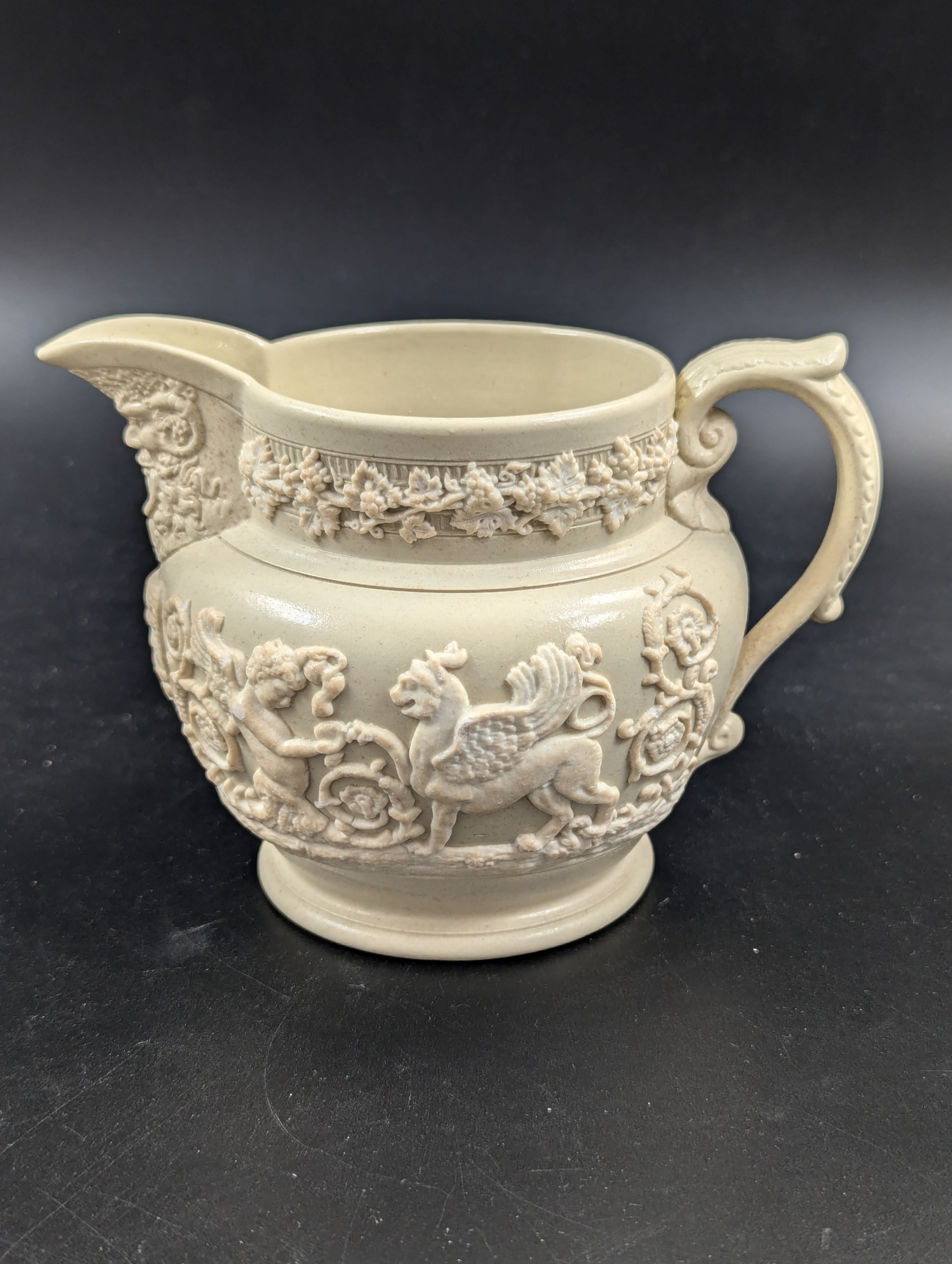
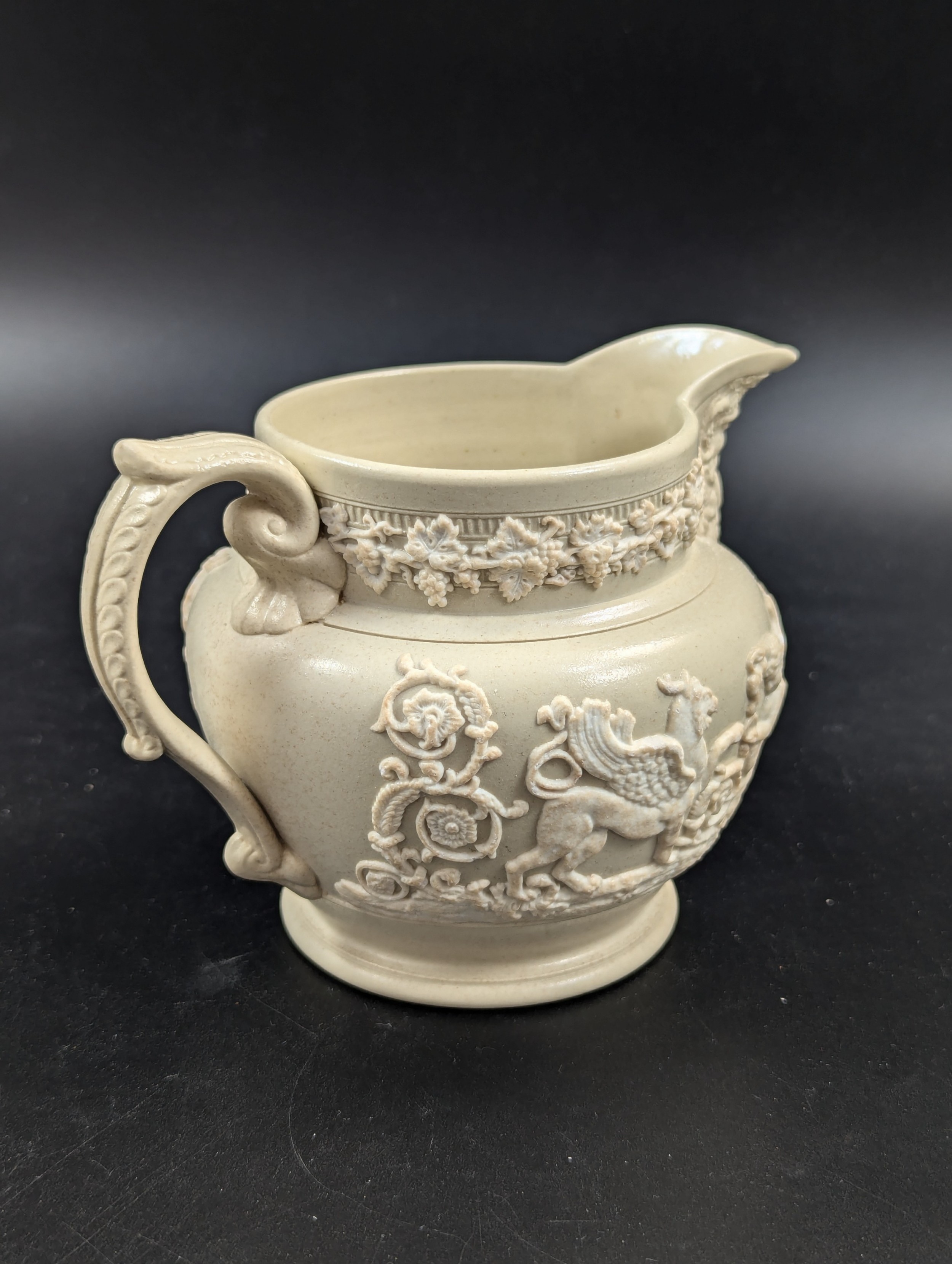
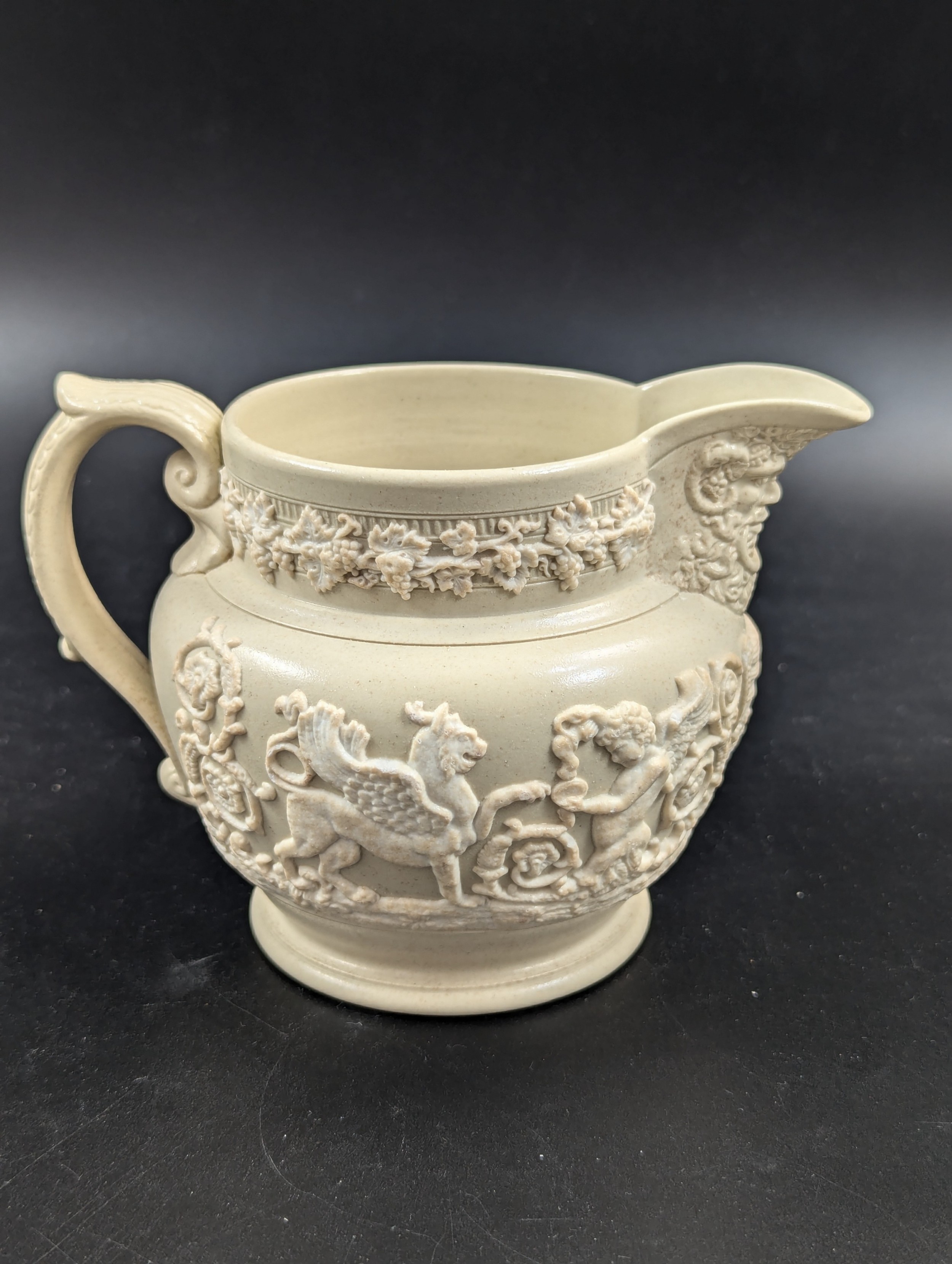
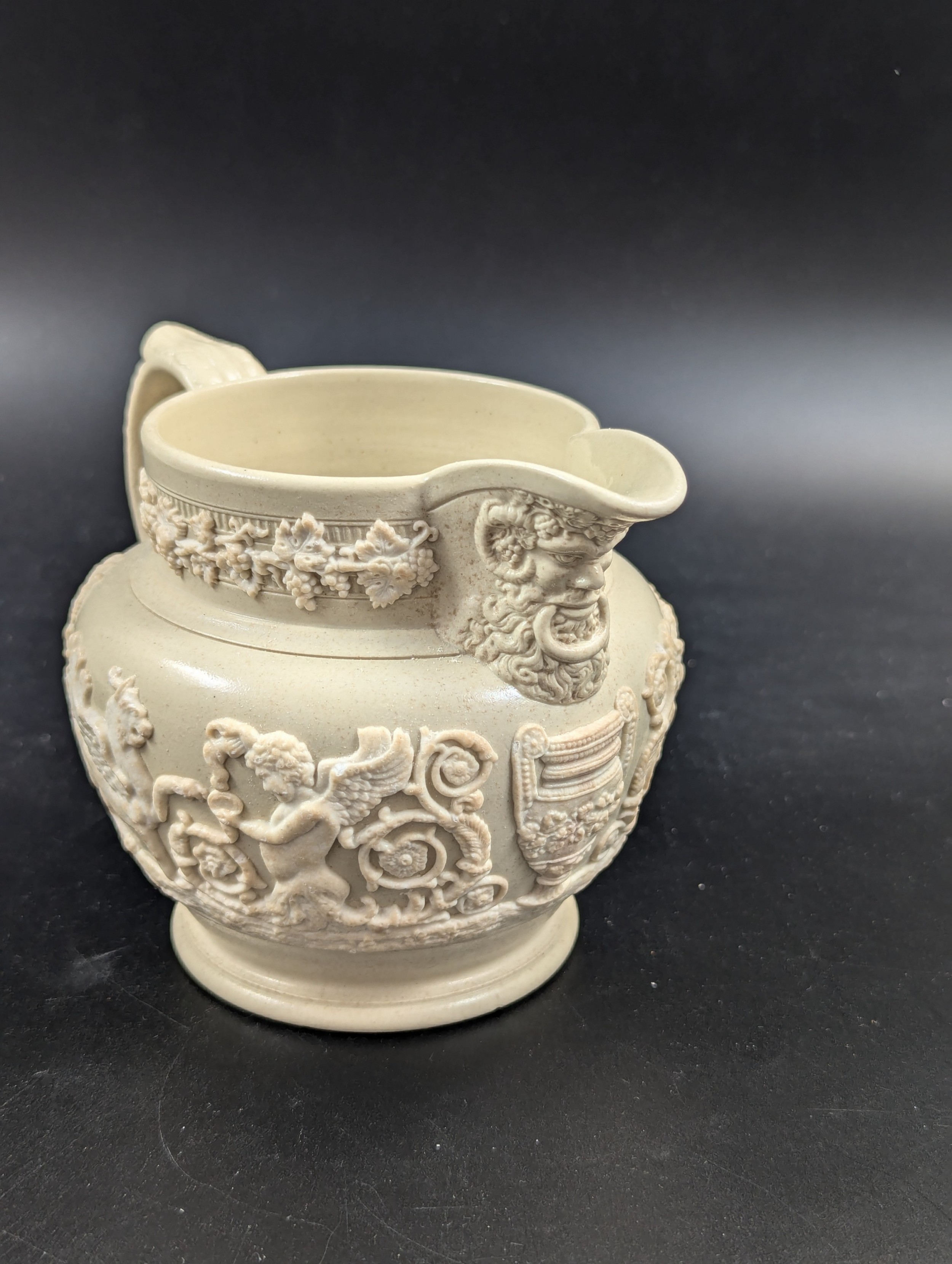
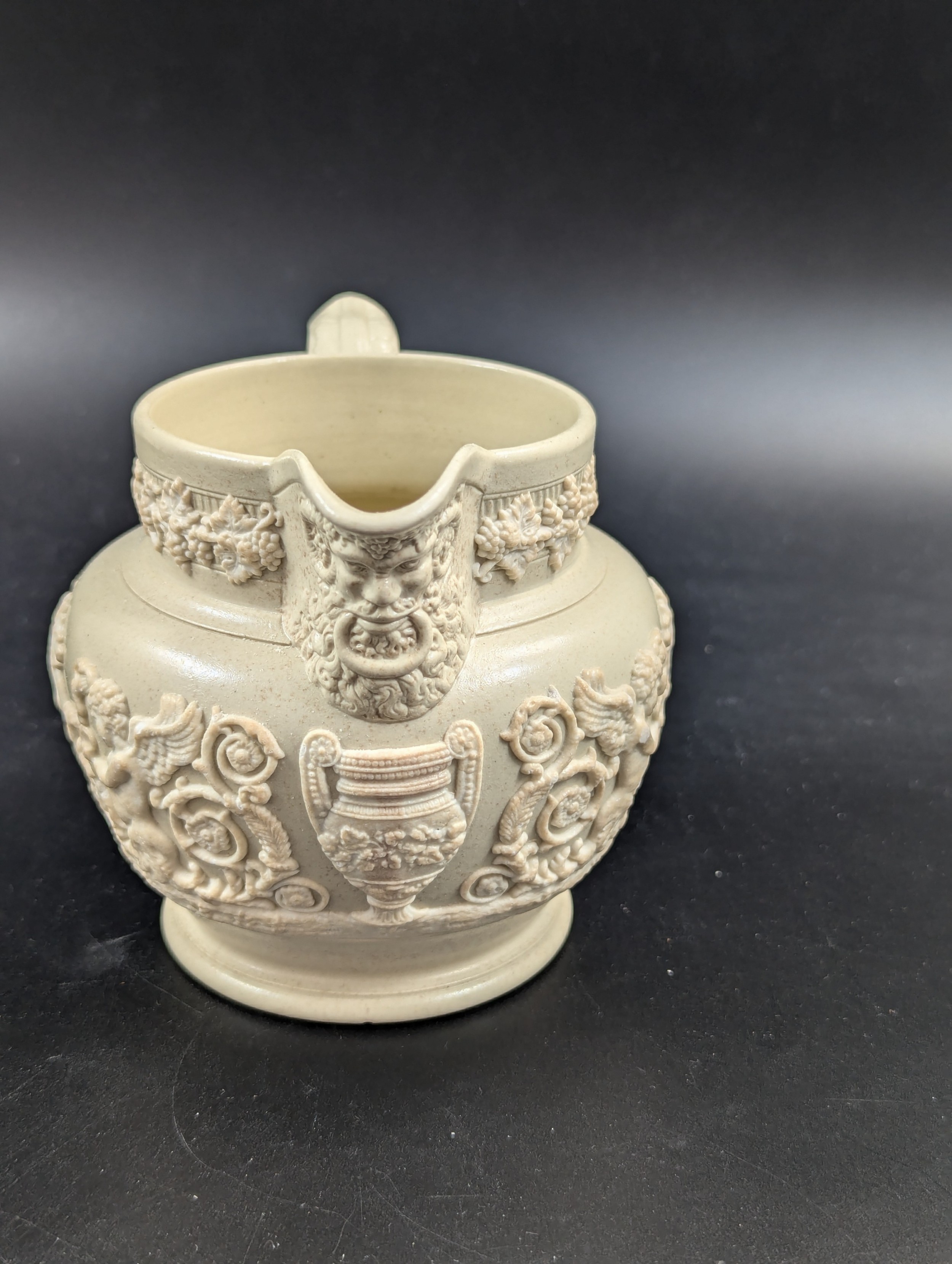
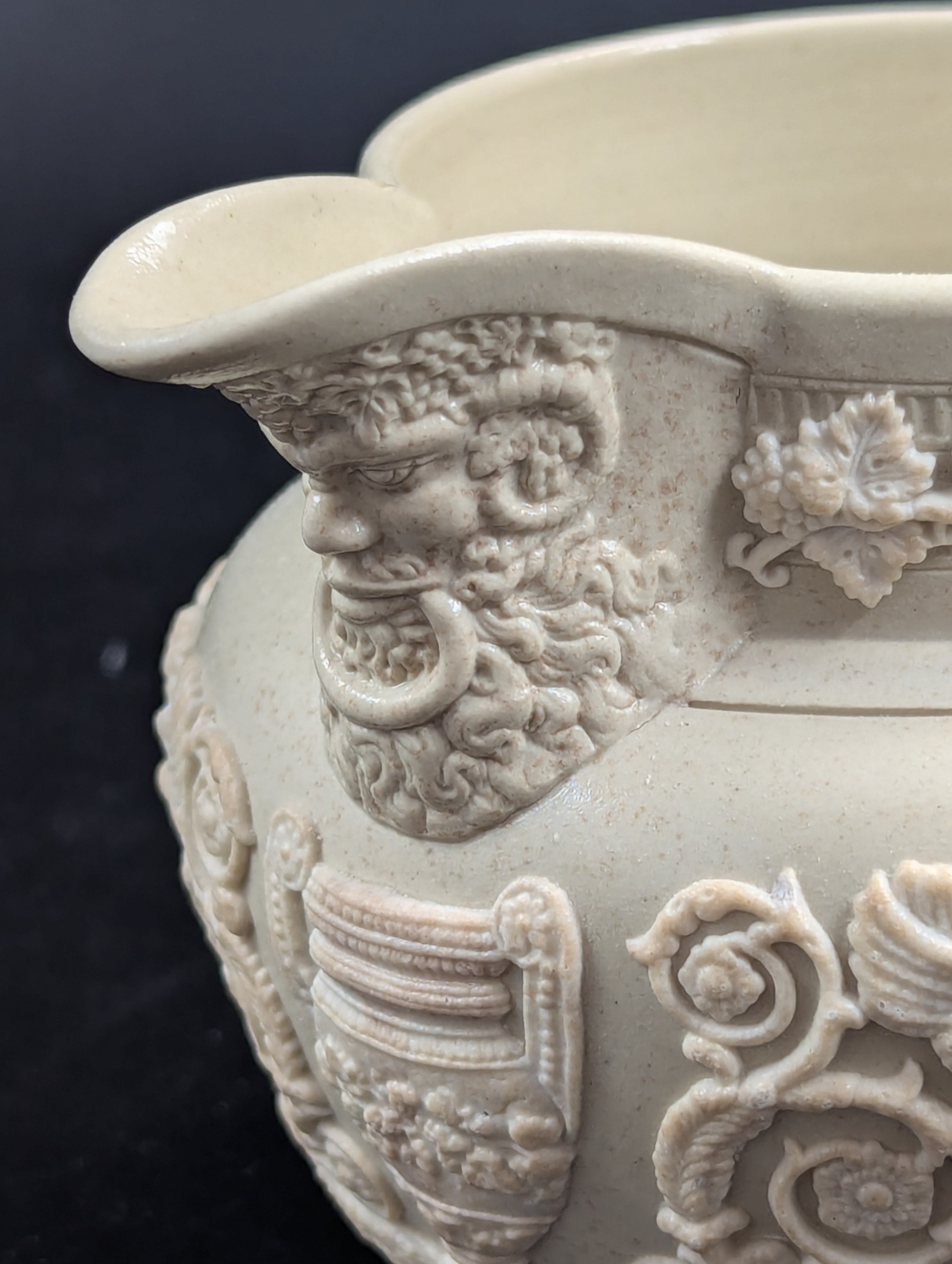
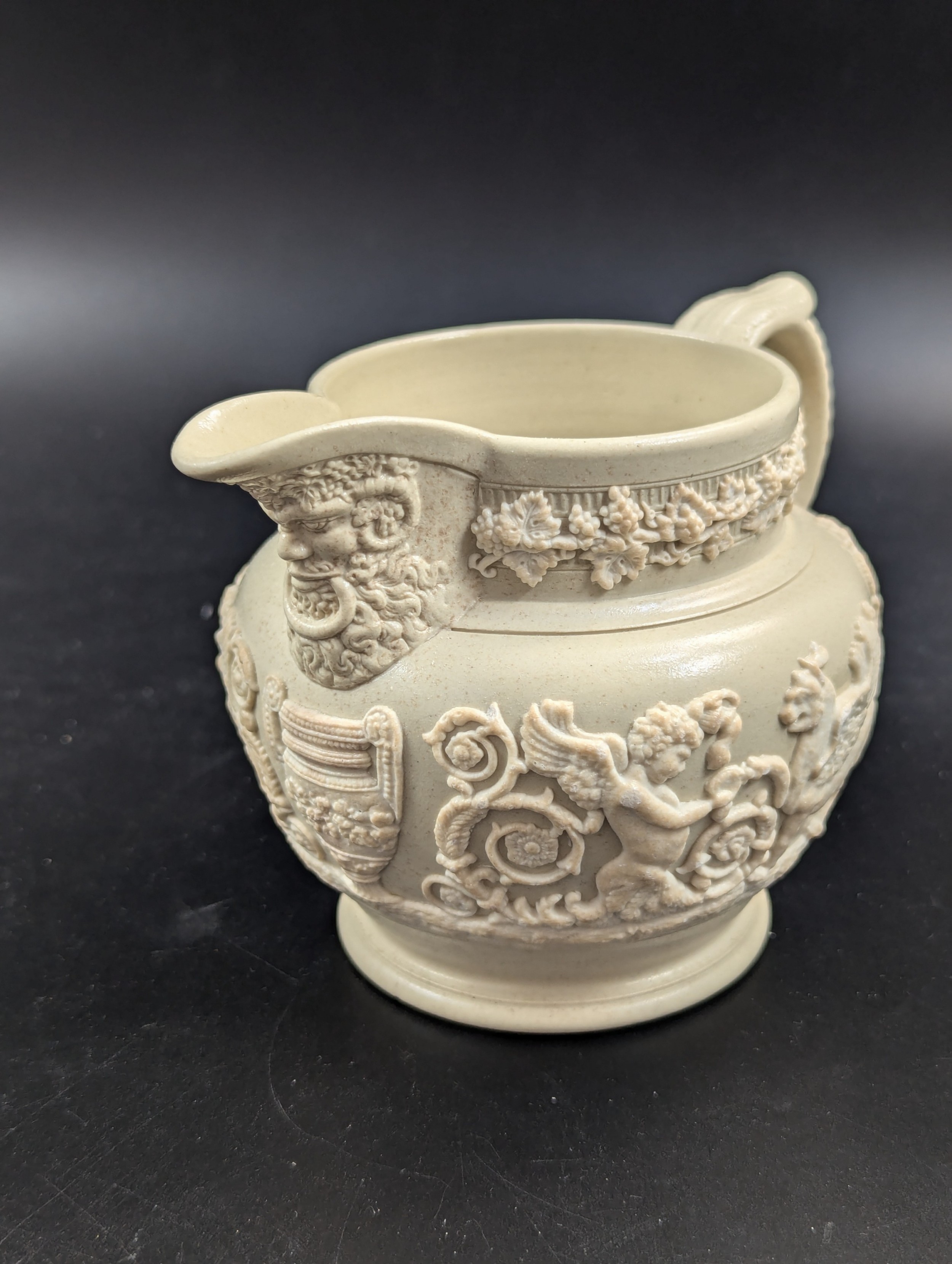
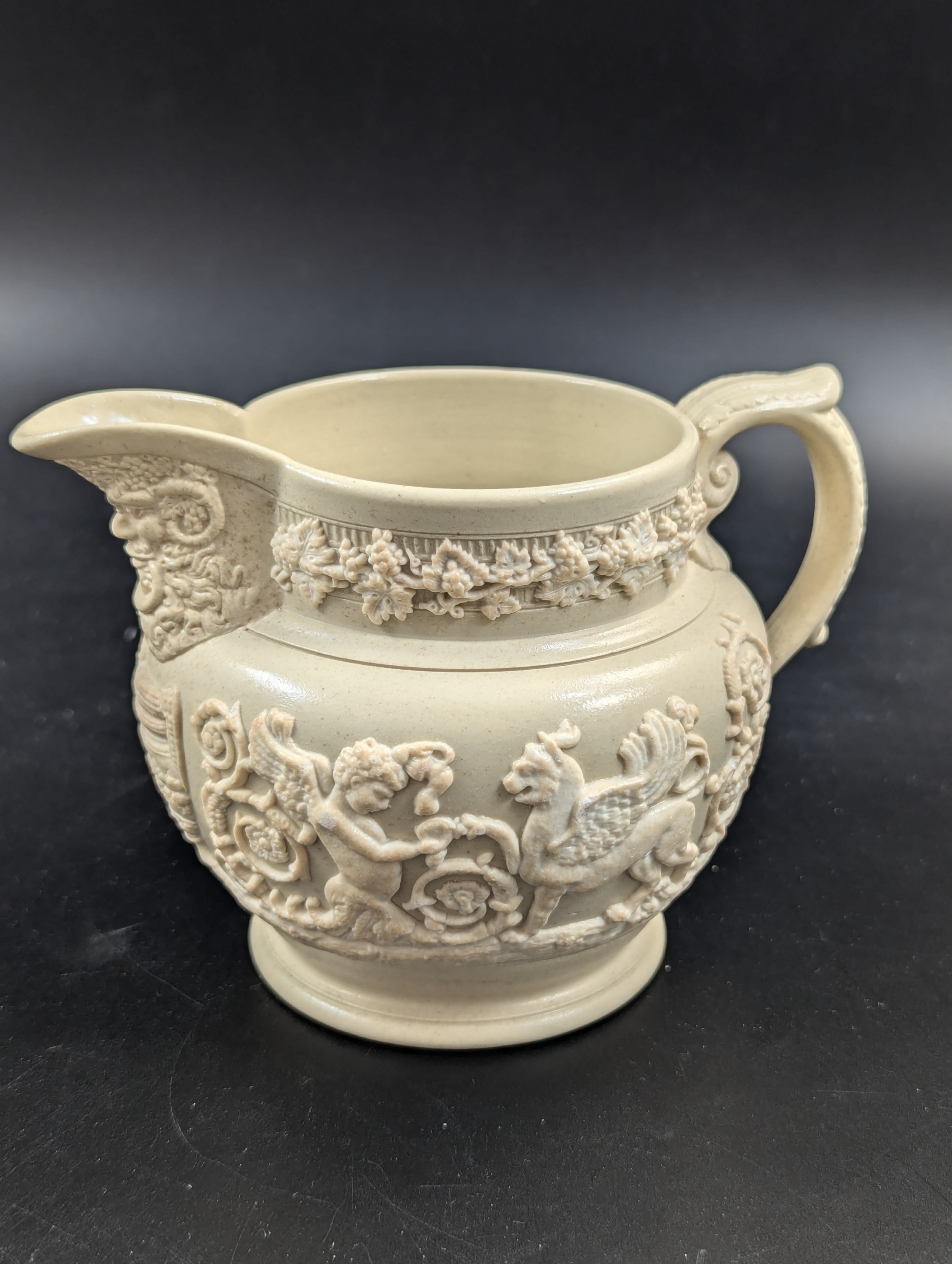
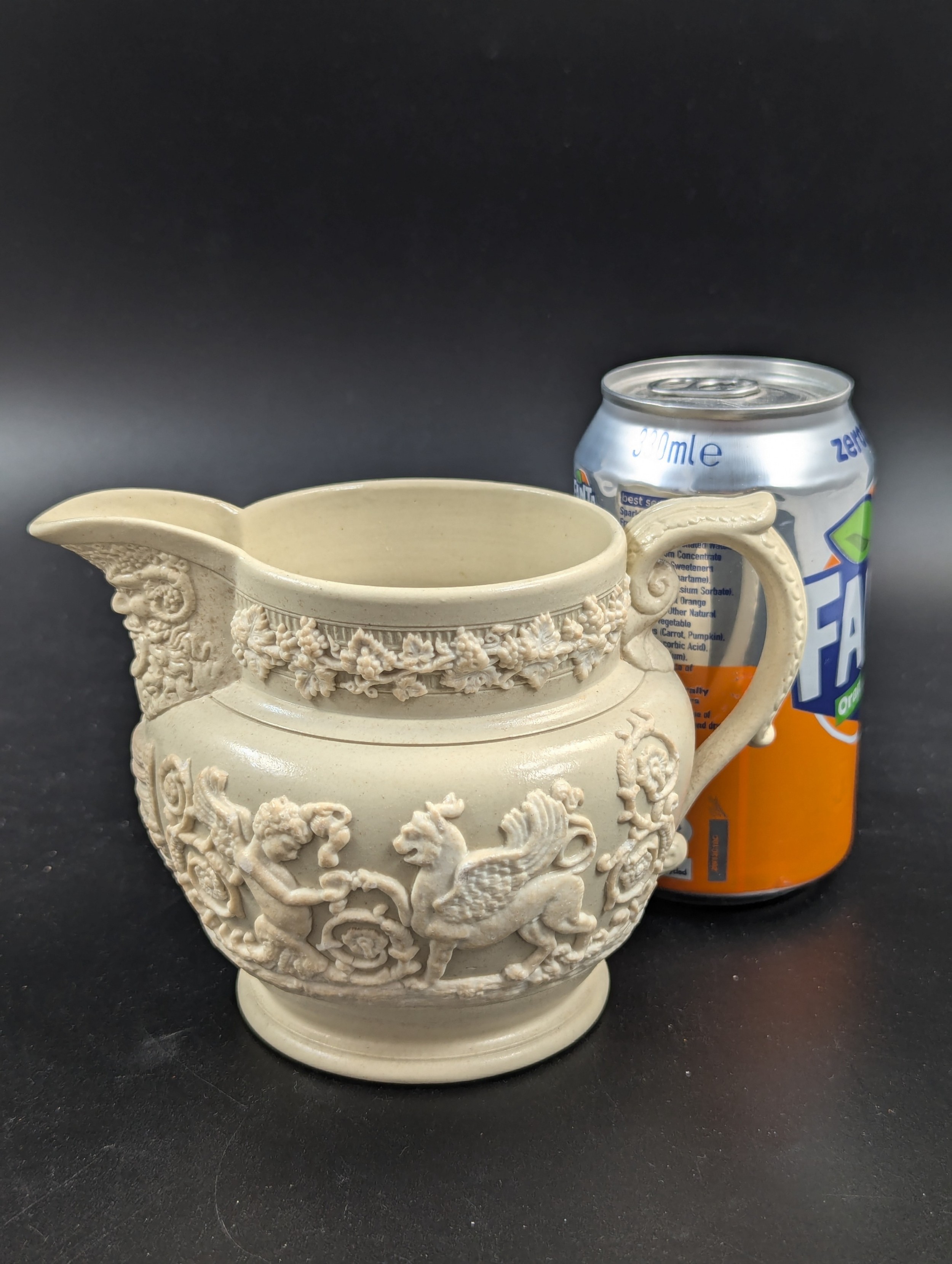
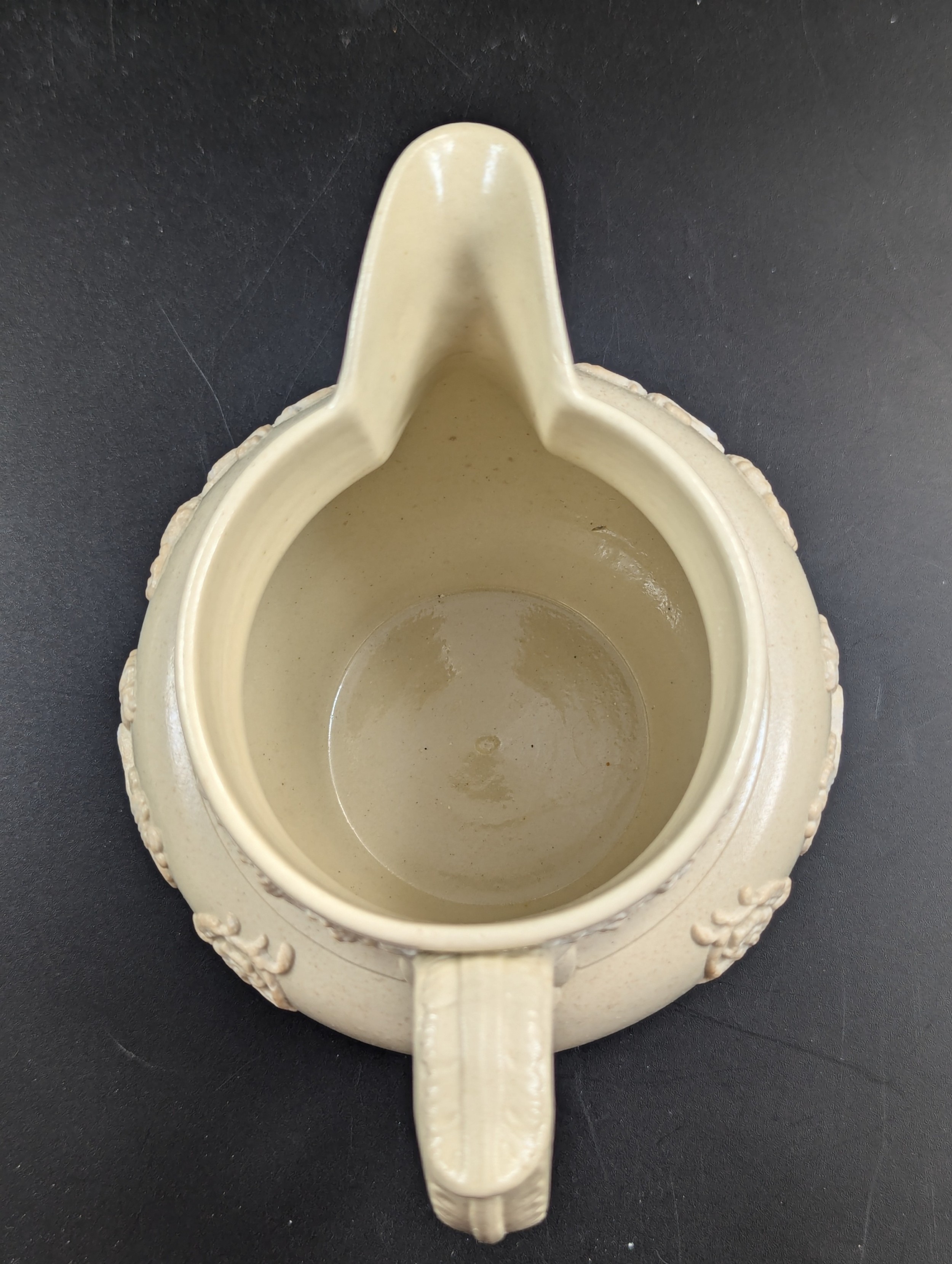
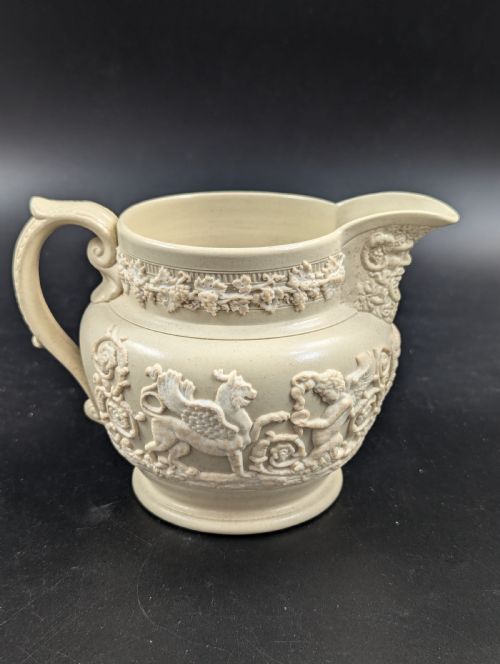
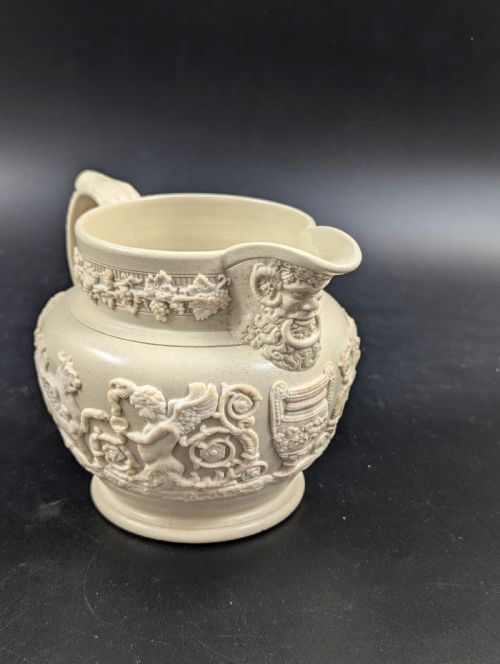
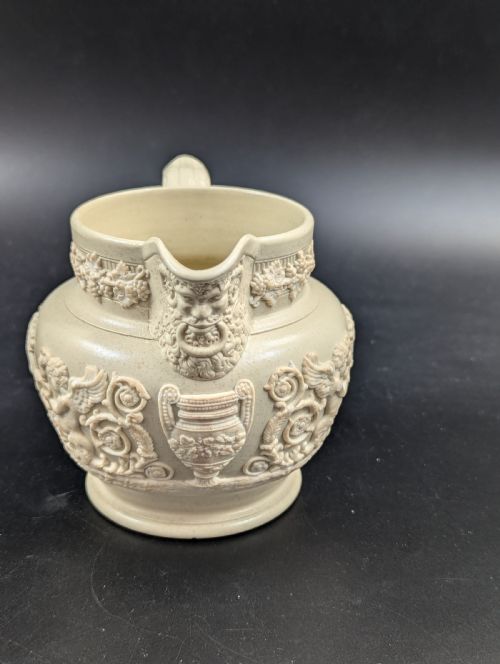
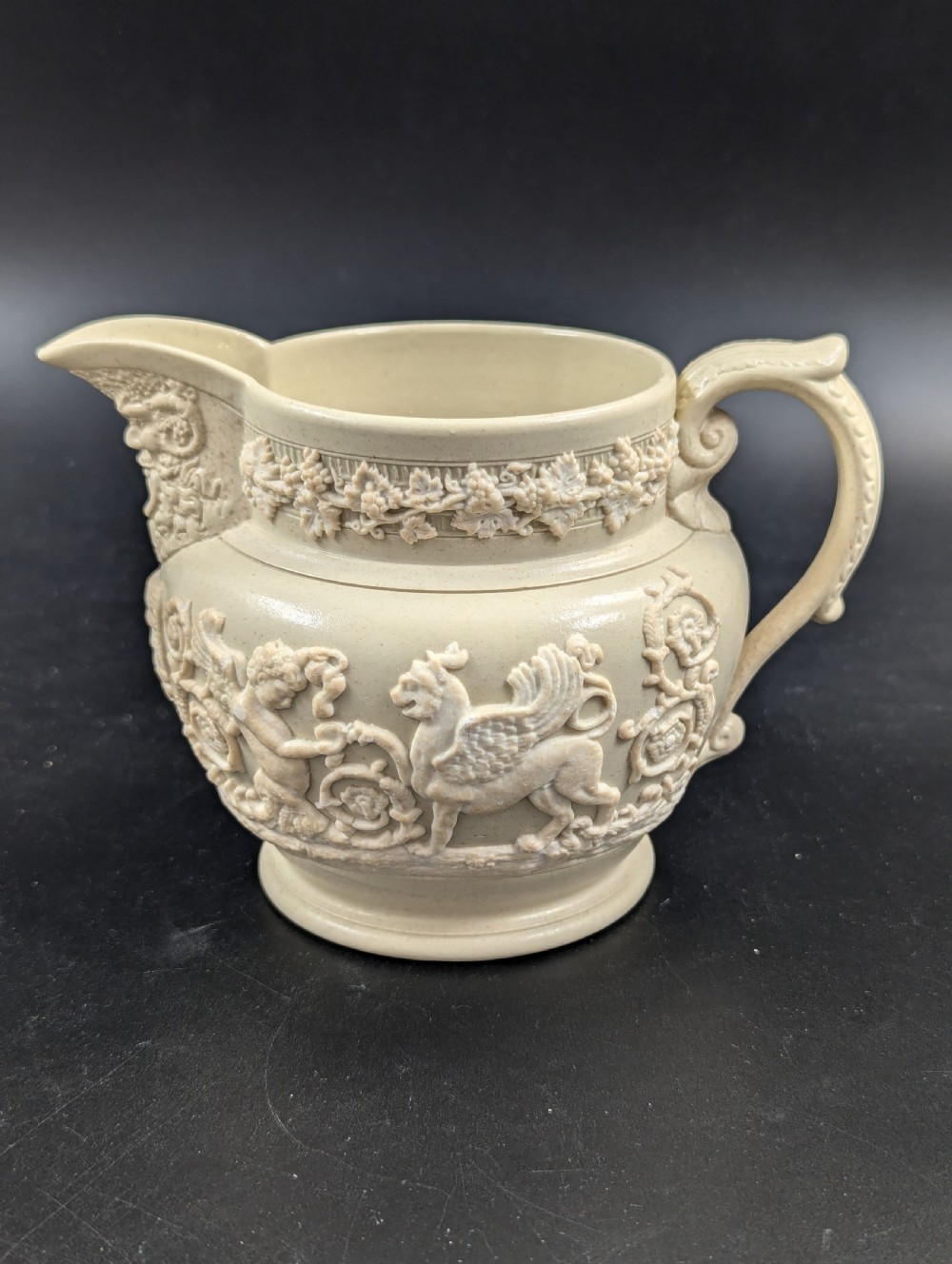
This rare and stunning antique stoneware jug features finely detailed applied scenes of griffins and cherubs. Below the rim, grapevines laden with fruit encircle the jug. The figures and decorative elements were molded from cream clay and applied to the ware body before firing, a decorative technique known as sprigging. The spout is adorned with a man's head. The jug has a smear glaze on the exterior and a full glaze on the interior. Known as drabware, this jug dates back to the early 1800s and was made by Ridgway of Cauldon Place, Shelton, Staffordshire. The base is pad-marked with pattern No. 35.
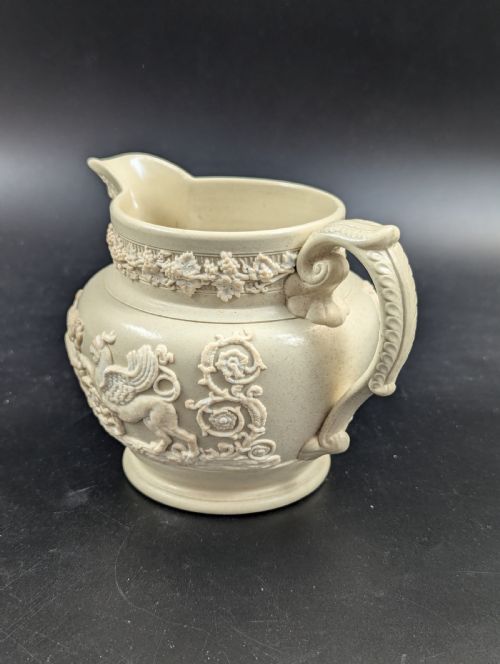
This 'Dutch' jug shape was introduced in the early 19th century and quickly became a favorite among pottery and porcelain manufacturers. The decorative frieze on the side of this jug is copied from a classical design found in "Etchings Representing the Best Examples of Ancient Ornamental Architecture," published by C.H. Tatham in 1803.
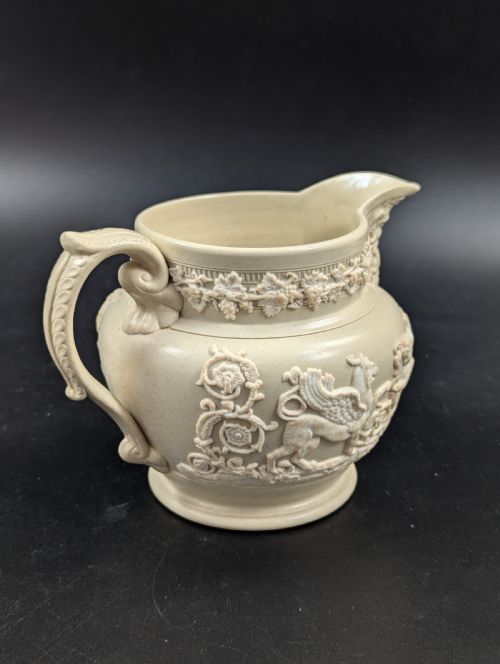
The Ridgway firm was one of the versatile family potteries that rose rapidly to prominence after the perfection of bone china around 1800. The recent concentrated period of industrialization, including significant improvements to the canal system pioneered by Josiah Wedgwood, created lucrative opportunities. While some potters, such as Enoch Wood, amassed great wealth by mass-producing ordinary pottery for export, others like Ridgway, Spode, and Davenport produced both pottery and porcelain of the highest quality and had the confidence to mark their products.
Ceramics with surprising ground colors were popular during the Regency period; along with many shades of blue, mint green, purplish-red, ginger, and drab yellow were also fashionable. Stoneware clays, which could be stained to showcase sharply molded applied ornament without obscuring glaze and could withstand rough handling, became particularly popular. As demand grew, so did the variety, but quality declined. From about 1830, fully molded stoneware jugs were mass-produced in Staffordshire and elsewhere. The Ridgway family was one of the significant dynasties in Staffordshire pottery, with many family members and business names involved from the 1790s to the late 20th century.
This is a very rare specimen. A similar jug is in the collection of the Victoria and Albert Museum. However, while the museum holds a John and William Ridgway example, we offer an even rarer piece made by Job Ridgway & Sons at Cauldon Place, Shelton, Staffordshire.
Dimensions:

Height: 10.9 cm

Width: 16 cm

Depth: 11 cm

Weight: 280 grams

Condition: Small chip on the bottom rim. Otherwise, in excellent antique condition.

Please carefully review the accompanying photographs as they form an integral part of this description. The item will be shipped with full tracking and insurance. Please note that shipping costs include labor, packaging, and postage.

Date of Manufacture

Gillers Antiques Ltd has dated this Antique Stoneware Jug to the 19th Century.

Reference Numbers
Sellingantiques Reference
SA1086152
Description
This rare and stunning antique stoneware jug features finely detailed applied scenes of griffins and cherubs. Below the rim, grapevines laden with fruit encircle the jug.
“
The figures and decorative elements were molded from cream clay and applied to the ware body before firing, a decorative technique known as sprigging.
Gillers Antiques Ltd

The spout is adorned with a man's head. The jug has a smear glaze on the exterior and a full glaze on the interior. Known as drabware, this jug dates back to the early 1800s and was made by Ridgway of Cauldon Place, Shelton, Staffordshire. The base is pad-marked with pattern No. 35.

fig 1. An antique cream stoneware jug featuring detailed relief moulding depicting griffins and cherubs.
fig 1. Stoneware Jug ‘Griffin and Cherub’ by Ridgway & Sons, C. 1808

This 'Dutch' jug shape was introduced in the early 19th century and quickly became a favorite among pottery and porcelain manufacturers. The decorative frieze on the side of this jug is copied from a classical design found in "Etchings Representing the Best Examples of Ancient Ornamental Architecture," published by C.H. Tatham in 1803.

fig 2. An antique cream stoneware jug featuring detailed relief moulding depicting griffins and cherubs.
fig 2. Stoneware Jug ‘Griffin and Cherub’ by Ridgway & Sons, C. 1808

The Ridgway firm was one of the versatile family potteries that rose rapidly to prominence after the perfection of bone china around 1800. The recent concentrated period of industrialization, including significant improvements to the canal system pioneered by Josiah Wedgwood, created lucrative opportunities. While some potters, such as Enoch Wood, amassed great wealth by mass-producing ordinary pottery for export, others like Ridgway, Spode, and Davenport produced both pottery and porcelain of the highest quality and had the confidence to mark their products.

fig 3. An antique cream stoneware jug featuring detailed relief moulding depicting griffins and cherubs.
fig 3. Stoneware Jug ‘Griffin and Cherub’ by Ridgway & Sons, C. 1808

Ceramics with surprising ground colors were popular during the Regency period; along with many shades of blue, mint green, purplish-red, ginger, and drab yellow were also fashionable. Stoneware clays, which could be stained to showcase sharply molded applied ornament without obscuring glaze and could withstand rough handling, became particularly popular. As demand grew, so did the variety, but quality declined. From about 1830, fully molded stoneware jugs were mass-produced in Staffordshire and elsewhere. The Ridgway family was one of the significant dynasties in Staffordshire pottery, with many family members and business names involved from the 1790s to the late 20th century.

fig 4. An antique cream stoneware jug featuring detailed relief moulding depicting griffins and cherubs.
fig 4. Stoneware Jug ‘Griffin and Cherub’ by Ridgway & Sons, C. 1808

This is a very rare specimen. A similar jug is in the collection of the Victoria and Albert Museum. However, while the museum holds a John and William Ridgway example, we offer an even rarer piece made by Job Ridgway & Sons at Cauldon Place, Shelton, Staffordshire.

fig 5. An antique cream stoneware jug featuring detailed relief moulding depicting griffins and cherubs.
fig 5. Stoneware Jug ‘Griffin and Cherub’ by Ridgway & Sons, C. 1808

Dimensions:

Height: 10.9 cm

Width: 16 cm

Depth: 11 cm

Weight: 280 grams

Condition: Small chip on the bottom rim. Otherwise, in excellent antique condition.

Please carefully review the accompanying photographs as they form an integral part of this description. The item will be shipped with full tracking and insurance. Please note that shipping costs include labor, packaging, and postage.

Date of Manufacture

Gillers Antiques Ltd has dated this Antique Stoneware Jug to the 19th Century.

Reference Numbers
Sellingantiques Ref
SA1086152
Gillers Antiques Ltd
Sellingantiques verified Since Mar 2023
Dealer Profile

You can view the stock and full dealer information on the Gillers Antiques Ltd Profile Page
PDF SHARE
SAVE
An antique cream stoneware jug featuring detailed relief moulding depicting griffins and cherubs. SOLD6+ MONTHS AGO
1 / 11
Archive I An antique cream stoneware jug featuring detailed relief moulding depicting griffins and cherubs. SOLD6+ MONTHS AGO

Stoneware Jug ‘Griffin and Cherub’ by Ridgway & Sons, C. 1808
Archive II An antique cream stoneware jug featuring detailed relief moulding depicting griffins and cherubs. View II
Archive III An antique cream stoneware jug featuring detailed relief moulding depicting griffins and cherubs. View III
Archive IV An antique cream stoneware jug featuring detailed relief moulding depicting griffins and cherubs. View IV
Archive V An antique cream stoneware jug featuring detailed relief moulding depicting griffins and cherubs. View V
Archive VI An antique cream stoneware jug featuring detailed relief moulding depicting griffins and cherubs. View VI
Archive VII An antique cream stoneware jug featuring detailed relief moulding depicting griffins and cherubs. View VII
Archive VIII An antique cream stoneware jug featuring detailed relief moulding depicting griffins and cherubs. View VIII
Archive IX An antique cream stoneware jug featuring detailed relief moulding depicting griffins and cherubs. View IX
Archive X An antique cream stoneware jug featuring detailed relief moulding depicting griffins and cherubs. View X
Archive XI An antique cream stoneware jug featuring detailed relief moulding depicting griffins and cherubs. View XI
Enlarged Archival View
Telephone 07738 009924
Location
Buckland House
Buntingford
Hertfordshire
SG9 0PY
United Kingdom
Verified Since Mar 2023
Items For Sale 400
Items Sold 581
Gillers Antiques Ltd
Verified Since Mar 2023
View Dealer Info
Location: Buckland House, Buntingford, Hertfordshire, SG9 0PY, United Kingdom
Verified
Mar 2023
For Sale
400
Sold
581
An antique cream stoneware jug featuring detailed relief moulding depicting griffins and cherubs.
Stoneware Jug ‘Griffin and Cherub’ by Ridgway & Sons, c. 1808
Ref: SA1086152
An antique cream stoneware jug featuring detailed relief moulding depicting griffins and cherubs.
Detail View 1
Detail View 2
Detail View 3
Detail View 4
Detail View 5
Detail View 6
Detail View 7
Detail View 8
Detail View 9
Detail View 10
Archival Detail
Every single antique dealer on our platform is individually approved by our internal team. We verify their professional trade history, ethical standards, and photographic quality to ensure a secure, high-standard buying environment. Upon joining, every dealer agrees to a strict 9-point code of conduct. While issues can occasionally arise, our dealers typically resolve them swiftly and directly with the buyer. In fact, since our founding in 2002, Sellingantiques has only had to step in to help resolve an issue on roughly five occasions—a true testament to the quality of our dealers and their dedication to your happiness.
Our dealers are highly experienced in packing and shipping fragile, high-value antiques. Because you are in direct contact with the dealer, you will be able to easily go through all available shipping and insurance options together to ensure your item arrives safely.
Antiques are the ultimate green purchase. By choosing historical pieces over newly manufactured goods, you completely eliminate the carbon footprint of modern mass production while preserving exceptional, timeless craftsmanship.
Written by Sellingantiques from the dealer’s photographs and listing
  • ObjectJug
  • Period19th century
  • StyleGeorgian
  • MaterialStoneware
  • ColourCream
  • MotifsRelief moulding, Griffin figures, Cherub figures, Foliate border

Early 19th-century English stoneware is characterised by durable, vitrified ceramic bodies often featuring intricate relief-moulded classical motifs, heavily influenced by neoclassical design movements of the Georgian era.

These pieces were typically crafted from fine stoneware clay, using metal moulds to create applied relief ornamentations known as sprigging, which were then adhered to the vessel body before firing.

Authenticity is determined by examining the crispness of the relief moulding, the weight and density of the vitrified clay body, typical base characteristics, and period-appropriate glaze or oxide finishes.

An antique stoneware jug adds textural contrast and historical depth when displayed on a bookshelf, mantelpiece, or sideboard, pairing well with both neutral modern aesthetics and traditional schemes.

Historic stoneware should be cleaned gently using a soft, dry cloth or a slightly damp sponge without harsh chemical detergents, and kept out of direct sunlight to protect the ceramic surface.
items
Add keywords to the filter
Price
£100
£250000
Era
Period
Style
Material
Origin
Stock Location
Recently Added
Online Payments
Categories