


Yorkshire Wall Art
Yorkshire wall art captures local landscapes and coastal scenes through historic paintings, watercolours, and maps.
Yorkshire Wall Art
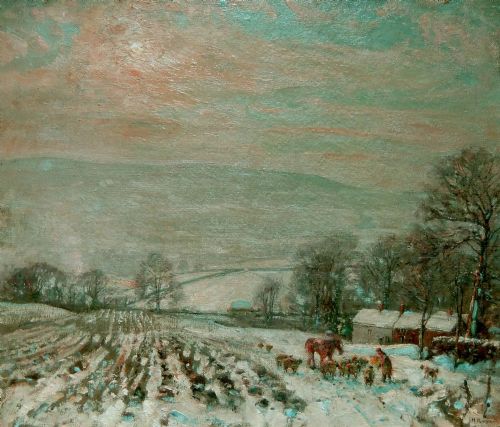
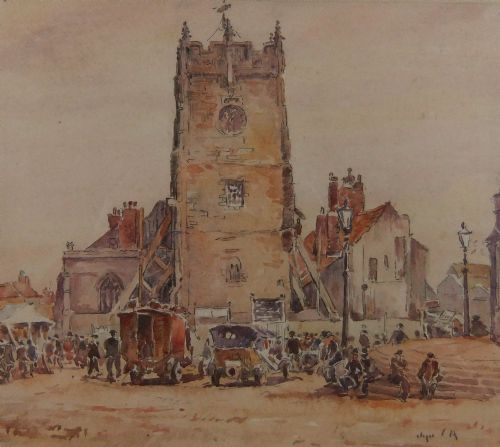
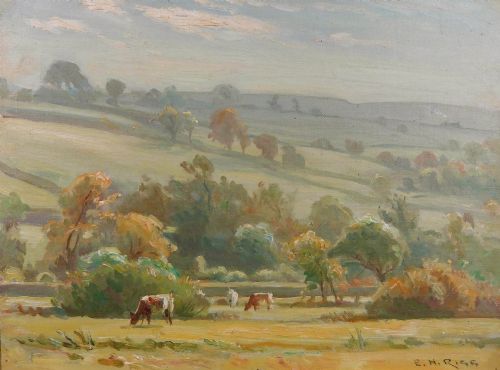
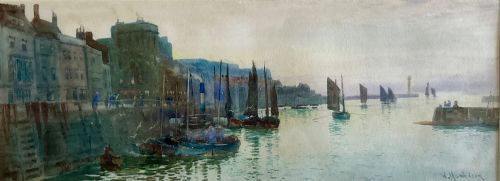
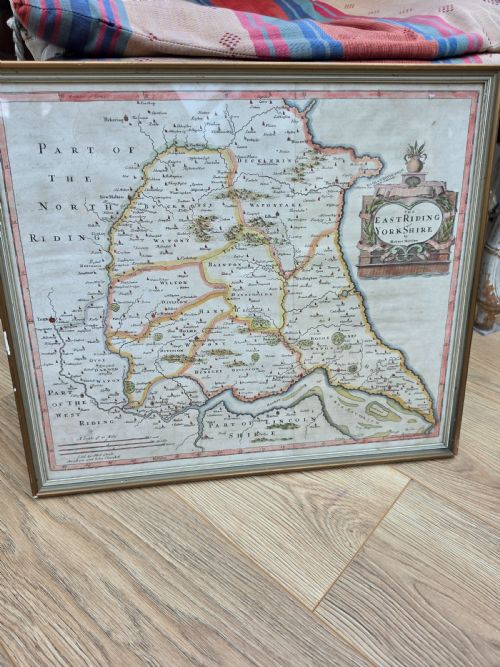
Yorkshire wall art encompasses regional paintings, watercolours, and framed maps depicting the county's distinctive towns, harbours, and dales. When searching for yorkshire wall art, buyers encounter works ranging from Victorian coastal watercolours to mid-century rural oil paintings.
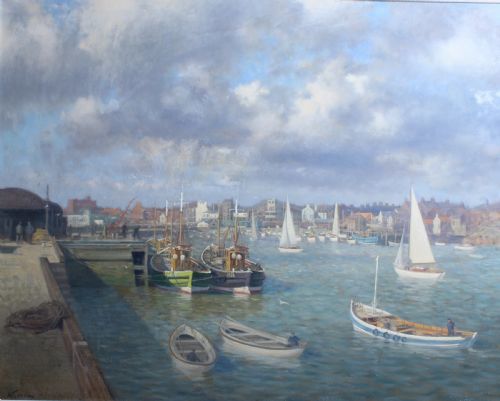
The selection centres on local scenes from places like Whitby, Staithes, and Wharfedale, executed by regional artists working across the late nineteenth and early twentieth centuries. Landscapes and marine views dominate the selection, capturing rural farmsteads and bustling fishing ports.
Works appear in various media, including canvas, paper, and board, often retained in their original framing. Buyers find pieces aligned with British Impressionism and Edwardian landscape traditions, reflecting the topography and rural life of northern England.
Materials and methods
Artists painted primarily with oil paint on canvas or board, and watercolour pigment on paper, capturing local light and weather conditions. These liquid media were applied using traditional brushwork techniques, sometimes showing visible texture in the oil works and transparent washes in the watercolours.
Several artists clearly stood in the bracing Yorkshire wind to paint bustling herring drifters and quiet farmyards.
Assessing the pieces
Quality rests upon the artist's ability to render light, atmosphere, and local topography convincingly, separating accomplished regional works from standard topographical records. Stronger compositions demonstrate confident handling of pigment and a coherent sense of space.
Condition plays a significant role, particularly the preservation of paper against foxing and the stability of oil paint on canvas or board. Original frames and clear provenance linking the artist to the Yorkshire subject matter enhance the standing of individual pieces.
Herbert Royle·Ernest Higgins Rigg·Walter Goodin·Fred Lawson·Owen Bowen·George Weatherill
The Yorkshire Wall Art Glossary
- Watercolour
- A painting method where fine pigment is suspended in a water-based solution and applied to paper. This technique allows for translucent washes that capture atmospheric coastal skies.
- Oil paint
- A slow-drying medium made by embedding pigment grains in a drying oil, usually linseed. It permits rich colour saturation and textured brushwork on canvas or board.
- British Impressionism
- An artistic movement focusing on everyday subject matter and natural light effects. Painters working in this style recorded outdoor scenes with loose, expressive brushstrokes.
- Canvas
- A heavy woven fabric stretched across a wooden frame to serve as a durable painting surface. It supports thicker applications of oil paint.
Yorkshire Wall Art: Frequently Asked Questions
What periods do these pieces date from?
The works span from the seventeenth century through to the mid-twentieth century, with a heavy concentration of pieces from the Victorian era up to the 1950s.
Buyers will find early maps alongside Edwardian watercolours and mid-century oil paintings reflecting changing artistic styles across the decades.
Where were these scenes painted?
The subjects focus entirely on Yorkshire locations, capturing coastal towns like Whitby and Staithes, alongside inland valleys such as Wharfedale and Wensleydale.
Artists frequently painted outdoors, recording specific harbours, rivers, farmsteads, and moorland views directly from the local landscape.
How should I hang and display them?
These paintings, watercolours, and maps require placement away from direct sunlight to prevent fading on vulnerable paper and canvas surfaces.
Maintaining stable indoor humidity levels helps preserve both the historic frames and the underlying paint or pigment.
Are the frames original to the artworks?
Many pieces retain their period frames, which often reflect the framing styles popular during the early twentieth or Victorian eras.
Surviving original frames contribute to the historical integrity of the piece, though condition varies across individual works.