




Yorkshire River Painting
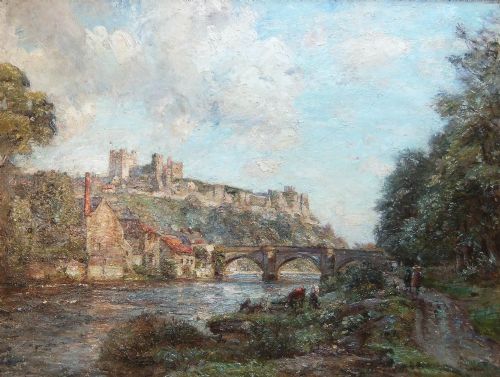
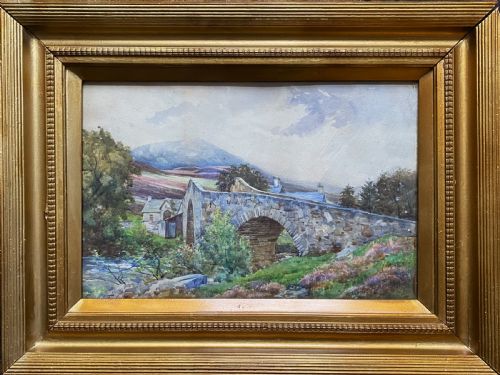
A yorkshire river painting captures the distinct light and topography of northern waterways through nineteenth and twentieth-century brushwork.
Yorkshire River Painting
A yorkshire river painting focuses on regional waterways such as the Wharfe, the Nidd, the Swale, and the Esk, documenting rural valleys and historical bridges. These works typically date from the nineteenth century through the mid twentieth century, reflecting Victorian, Edwardian, and early modern British art movements.
Buyers encounter two primary mediums on this page: watercolours on paper and oil paintings executed on canvas, panel, or board. The compositions range from intimate pastoral stream views to broader depictions of rivers running past castles, abbeys, and industrial mills.
The regional focus ties directly to specific artistic hubs, including the Staithes group and local painters who recorded the dales and coastal harbours. These pieces serve as topographical records as well as examples of British landscape impressionism and naturalism.
How They Were Made
Painters utilised traditional oil paints on primed canvas or wood panels, building up rich textures and deep tones to capture light on water. Watercolour works employ transparent washes and gouache highlights on paper, often created <em>en plein air</em> along riverbanks before being finished in the studio.
Supports vary according to the period, with nineteenth-century pieces frequently utilising heavy woven canvas or thick watercolour paper, while later twentieth-century examples occasionally employ board or panel substrates.
Listings feature watercolours and oils spanning the nineteenth and twentieth centuries, documenting locations along the Wharfe, Nidd, and Swale.
What Varies in Quality
The success of a yorkshire river painting depends upon the artist's command of atmospheric perspective, tonal balance, and the fluid rendering of water. Stronger works demonstrate confident brushwork and a coherent treatment of northern light, whereas lesser examples rely on formulaic compositions and rigid colouring.
Condition also plays a role in the standing of a piece, distinguishing works preserved with stable pigment and clean paper from those affected by heavy fading, foxing, or inappropriate restoration.
Herbert Royle·Alfred George Morgan·Arthur Reginald Smith·Owen Bowen·Florence Hess·William Joseph Boyes·William Mellor·Fred Stead·Henry Barlow Carter·Frederick Williamson·Amos Green·Ernest Higgins Rigg·Fred Lawson·Walter John Bayes·Ernest Moore·John D. Walker·Tom Dudley·Bernard Walter Evans·Walter Meegan·Everett Watson Mellor·John Syer·Walter Horsnell·James Hardaker·Claude Horsfall·Henry Cave
The Yorkshire River Painting Glossary
- Watercolour
- A painting method using pigment suspended in a water-based, gum-binder solution applied to paper. It allows for luminous, transparent washes that capture shifting light on river surfaces.
- Oil on Canvas
- A technique where slow-drying oil paint is applied over a woven fabric stretched across a wooden frame. This medium permits rich impasto and deep tonal layering.
- Impressionism
- An art style characterised by relatively small, thin, yet visible brush strokes and an open depiction of light. In British works of this type, it manifests as looser handling of outdoor scenes.
- Gouache
- An opaque water-based paint often used alongside watercolour to add highlights and solid areas of colour. It provides sharp contrast against transparent washes.
- Panel
- A rigid wooden board or prepared surface used as a support for oil paintings instead of canvas. Artists frequently utilised panels for smaller, portable landscape studies.
Yorkshire River Painting: Frequently Asked Questions
What periods do these paintings come from?
The works span from the early nineteenth century through the mid twentieth century. They primarily represent Victorian, Edwardian, and early modern British artistic traditions.
Changes in palette and medium reflect the evolving tastes of these eras, moving from detailed topographical watercolours toward looser impressionist oils.
How do I identify the specific location shown?
Many pieces feature contemporary inscriptions, signatures, or exhibition labels on the reverse or margin naming landmarks such as the River Wharfe or Bolton Abbey.
Local bridges, mills, and ruined abbeys serve as key geographical markers for cross-referencing northern topography.
Are these works original or prints?
Every piece listed is a unique, hand-painted original work executed in oil or watercolour. Artists painted these directly on location or in their studios from preparatory sketches.
Brush texture, pigment depth, and paper or canvas grain confirm the hand-painted nature of each item.
How should I frame and display a watercolour?
Watercolours require conservation framing behind glass to protect the paper and pigments from ultraviolet light and humidity. Acid-free window mounts keep the paper from touching the glazing.
Placement away from direct sunlight preserves the delicate washes typical of nineteenth-century river scenes.