




Yorkshire Dales Landscape Art
Yorkshire dales landscape art captures the rugged northern terrain through watercolours, oils and drawings spanning Victorian realism to mid-century modernism.
Yorkshire Dales Landscape Art
Yorkshire dales landscape art comprises original watercolours, oil paintings and ink drawings depicting iconic northern locations like Wensleydale, Swaledale and Wharfedale. These works record regional scenes from domestic farmsteads and ancient castles to open fells and river valleys.
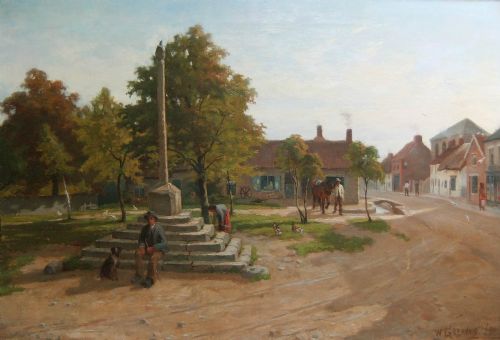
The version most frequently met on this page is the watercolour or oil painting produced during the early twentieth century. Artists working in this period focused on local topography, capturing specific weather conditions and seasonal changes across the dales.
How they were made
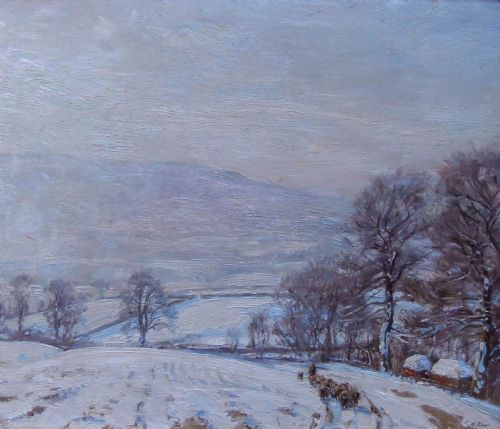
Painters utilised oil paint on canvas or board to build textured surfaces representing hillside vegetation and stone architecture. Watercolours on paper enabled artists to record fluid light effects across rivers and winter snowfalls with rapid precision.
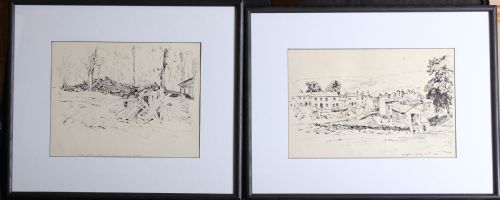
Draftsmanship underpinned these compositions, often combining ink line work with watercolour washes to define landscape contours. Support materials range from stretched canvas and traditional paper to artist boards employed in regional studios.
Listings feature works executed in oil, watercolour, ink and canvas spanning the Victorian era through the mid-twentieth century.
What varies in quality
The strength of the composition and the confidence of the brushwork separate accomplished regional pieces from routine topographical records. Superior examples demonstrate a distinct command of light and atmospheric perspective rather than mere technical accuracy.
Depth of tonal contrast and deliberate colour harmony elevate individual works, particularly in capturing seasonal variations like winter snow or evening light. Handling of medium-specific properties, such as translucent watercolour washes or textured oil impasto, dictates the visual impact of each piece.
Fred Lawson·William Greaves·Arthur Reginald Smith·Reginald Grange Brundrit·John Frederic Greenwood·Herbert Royle·Fred Stead·Ernest Higgins Rigg·Walter H. Allcott
The Yorkshire Dales Landscape Art Glossary
- Watercolour
- A paint consisting of pigment suspended in a water-soluble vehicle, applied to paper to achieve translucent washes of colour. It allows artists to capture transient effects of light and weather in open landscapes.
- Oil Paint
- A slow-drying paint made with pigments suspended in a drying oil, typically linseed. This medium permits rich colour saturation and textured impasto work on canvas or board.
- Impressionism
- A nineteenth-century painting style focusing on the visual impression of the moment, particularly shifting light and ordinary subject matter. British practitioners adapted these principles to local rural scenes.
- Canvas
- A closely woven heavy fabric used as a surface for oil painting, typically stretched over a wooden frame. It provides a resilient and responsive support for expressive brushwork.
Yorkshire Dales Landscape Art: Frequently Asked Questions
What periods do these paintings cover?
The available works span from the late Victorian era through Edwardian times and early twentieth-century modernism. Pieces extend across the decades into the mid-century period.
This chronological range reflects changing artistic approaches to regional British scenery over half a century.
Which Yorkshire locations appear most often?
Artists frequently recorded views across prominent northern dales including Wensleydale, Swaledale and Wharfedale. Specific landmarks such as Bolton Castle and local rivers feature repeatedly.
These identifiable locations provide a clear topographical record of rural Yorkshire settlements and countryside.
What materials were used by these artists?
Makers employed traditional materials including oil paint on canvas and board, alongside watercolours and ink on paper. Artists selected their medium to suit either studio painting or plein-air observation.
Paper supports dominate the watercolour works, while heavier canvas and board accommodate oil applications.
How do these works reflect regional art movements?
The collection demonstrates influences from British Impressionism, Victorian realism and mid-century modernism applied to local topography. Painters interpreted northern landscapes through evolving twentieth-century stylistic idioms.
These varied approaches illustrate how regional artists engaged with broader national artistic developments.