
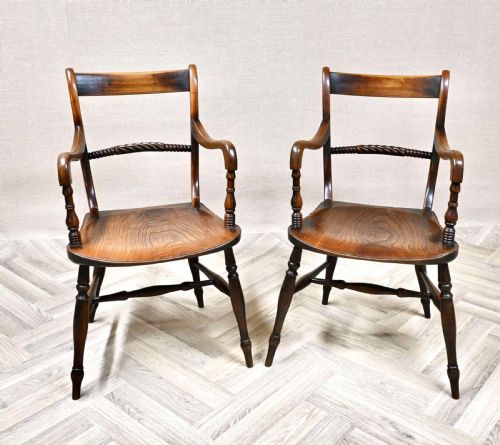
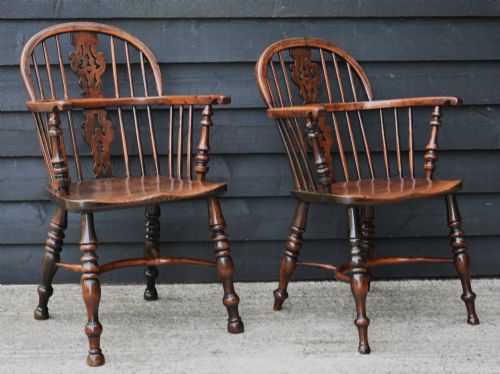
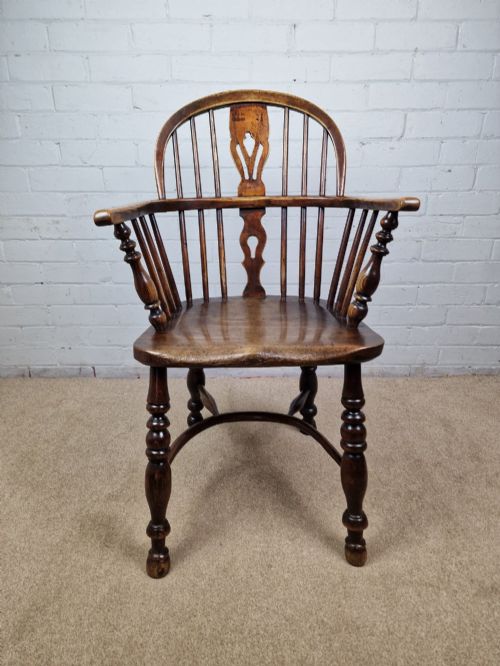


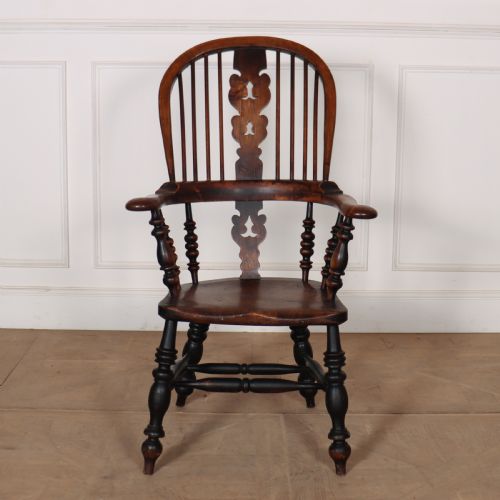
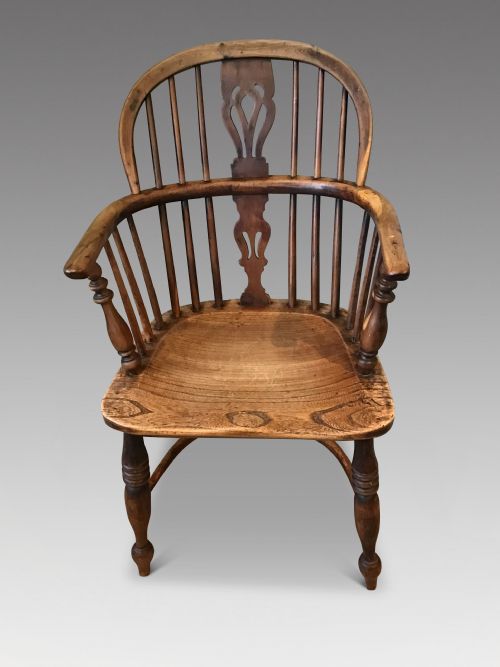

Yewwood Country Armchair
A yewwood country armchair brings rich timber grain and vernacular seating traditions straight into a modern interior.
Yewwood Country Armchair
When you search for a yewwood country armchair, you are looking at solid vernacular seating rooted in English furniture history. The pieces gathered here span the Georgian, Victorian, and wider nineteenth-century periods, showing regional forms developed for domestic comfort.
You are most likely to meet Windsor chair variations on this page, including low back, high back, barback, comb back, and broad arm designs. These armchairs typically combine yew with elm, ash, beech, or fruitwood to create robust seating with characterful grain patterns.
Originating from English country workshops and makers such as Allsop of Worksop, these chairs display regional craftsmanship from centres like Nottinghamshire and Yorkshire. Each piece demonstrates the practical construction methods of nineteenth-century country furniture makers.
Materials and construction methods
These armchairs were constructed using a combination of native timbers, predominantly pairing yewwood for prominent parts with elm for solid, shaped seats. Makers selected ash, beech, and fruitwood for spindles, legs, and bending parts to ensure structural resilience.
The traditional Windsor construction method involves bodged or turned components fitted directly into a thick, saddled wooden seat base. Steam-bending techniques were utilised to shape the distinctive bows and arm rails found on comb back and low back models.
Some nineteenth-century makers evidently grew weary of straight timber and twisted ropetwist grain just to make you smile.
Judging quality and character
The distinction between ordinary and exceptional examples rests in the richness of the timber selection and the boldness of the turning. Richly figured yew grain combined with well-proportioned spindles elevates the presence of a country armchair.
Allsop Worksop
The Yewwood Country Armchair Glossary
- Windsor chair
- A chair built with a solid wooden seat into which the legs and back spindles are separately inserted. This structural method defines the primary form seen across these country armchairs.
- Comb back
- A chair design featuring a low backrest topped by a horizontal headrest piece, resembling the teeth of a comb. This regional vernacular style provides distinct lower back support.
- Broad arm
- An armchair featuring significantly widened wooden armrests designed for writing or comfort. These generous proportions are characteristic of specific nineteenth-century English country workshops.
- Draught back
- A chair style featuring extended wing panels or curved wooden shields designed to deflect cold air away from the sitter. It represents a practical adaptation for historical domestic interiors.
- Barback
- A seating variation incorporating a horizontal wooden bar across the upper backrest for added stability. This feature appears on nineteenth-century vernacular chair designs.
Yewwood Country Armchair: Frequently Asked Questions
What is a yewwood country armchair?
A yewwood country armchair is a traditional wooden seating form featuring a solid carved seat, turned legs, and spindle backs. These chairs were produced in English regional workshops during the Georgian and nineteenth-century periods.
They combine native hardwoods like yew, elm, and ash to create durable seating that prioritises both ergonomic comfort and rustic visual character.
How were Windsor armchairs constructed?
Windsor armchairs were built using stick-construction techniques where individual turned legs and back spindles are driven into bored holes in a thick wooden seat. Steam-bending was applied to shape the continuous bows and armrails.
This method created strong, resilient furniture without requiring traditional frame joinery.
How do I identify a Georgian country armchair?
Georgian country armchairs are identified by their eighteenth-century proportions, traditional timber combinations, and regional vernacular design details. They often feature robust elm seats paired with figured yew wood components.
Examining the turning style on the legs and spindles helps distinguish eighteenth-century examples from later Victorian reproductions.
How do I live with a country armchair?
Living with a country armchair involves placing it in spaces where its natural timber grain and traditional form can be appreciated. These chairs function well as desk seating or accent pieces in living rooms.
Maintain the timber by keeping the chair away from direct heat sources and applying appropriate wax polish to preserve the historic surface.