


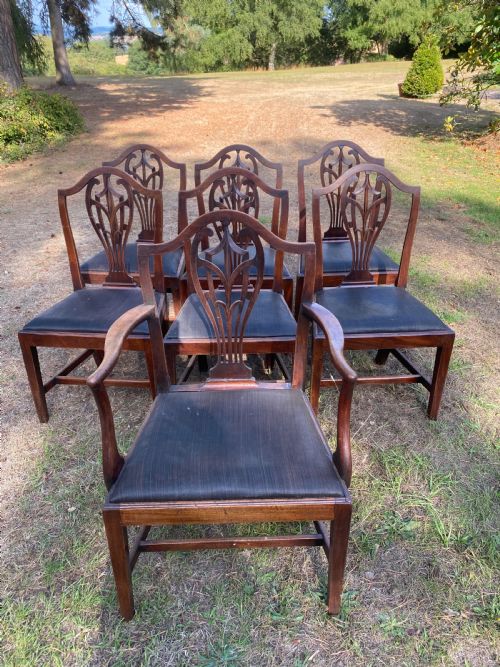
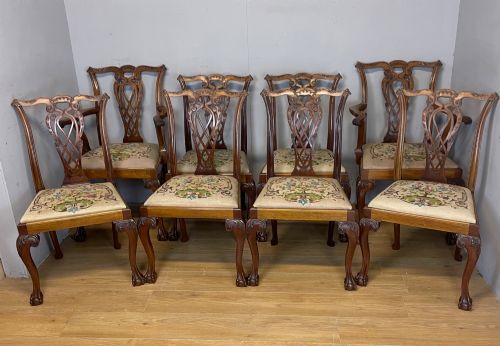
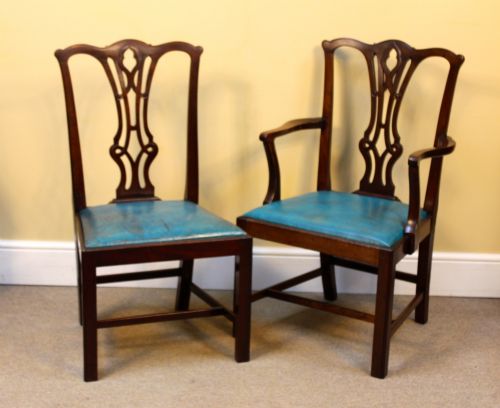
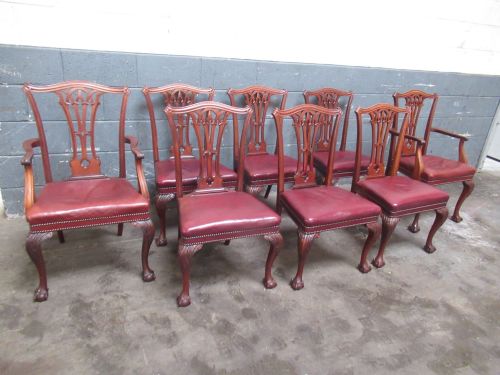
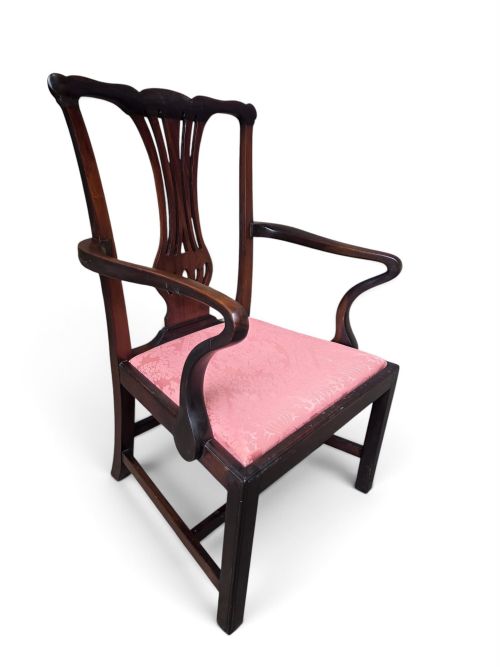
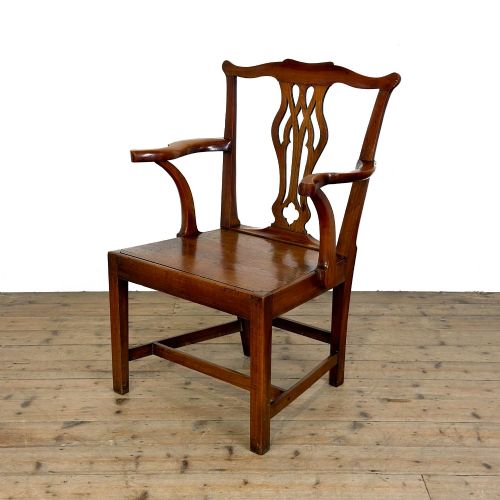
Pierced Splat Carver Chair
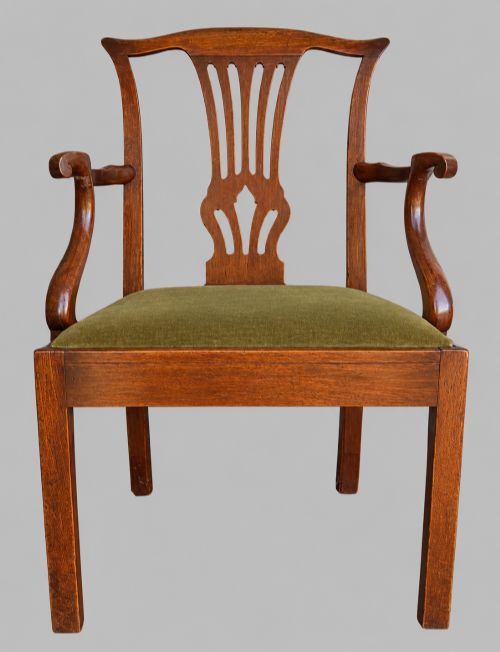
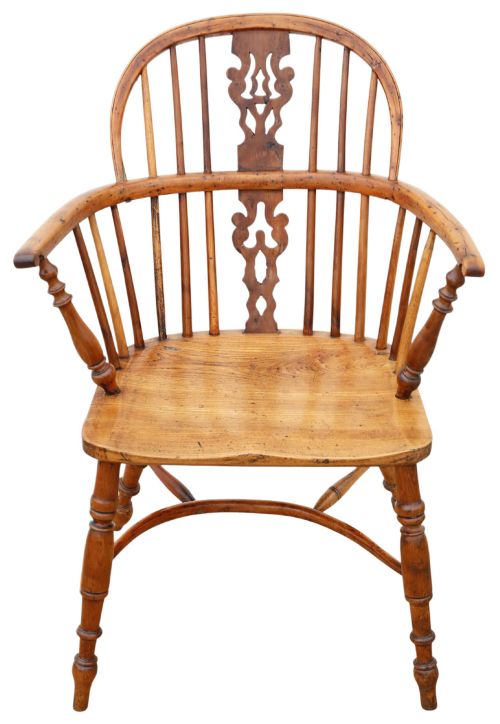
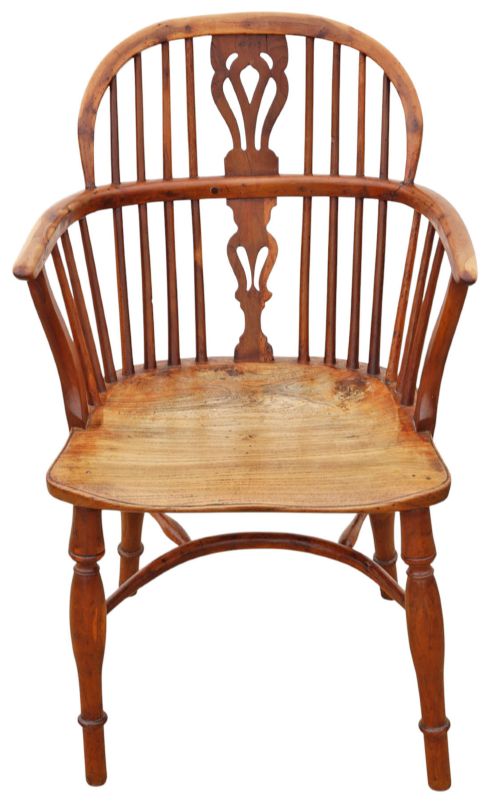
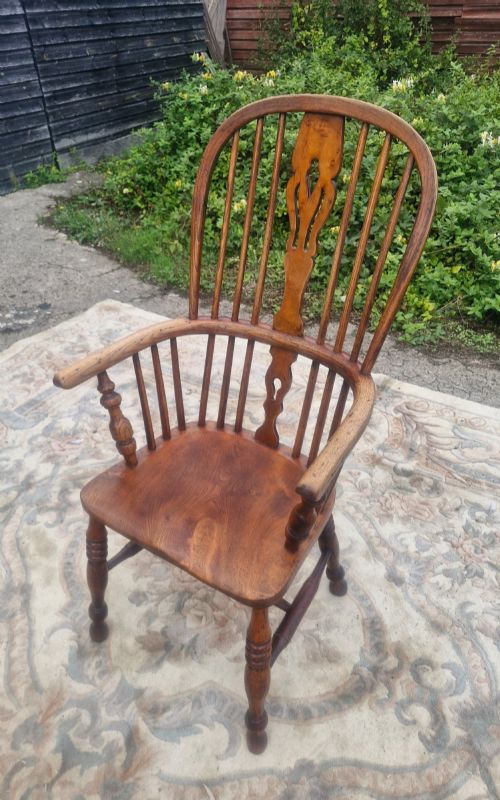
These pieces are a pierced splat carver chair, offering sturdy arm support and distinctive back designs for dining or desk use.
Pierced Splat Carver Chair
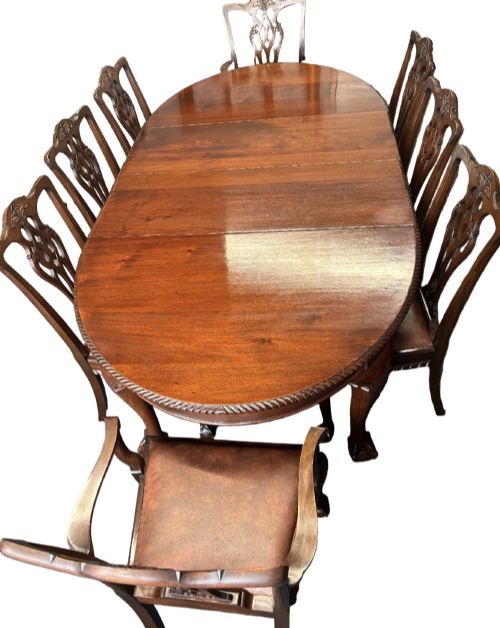
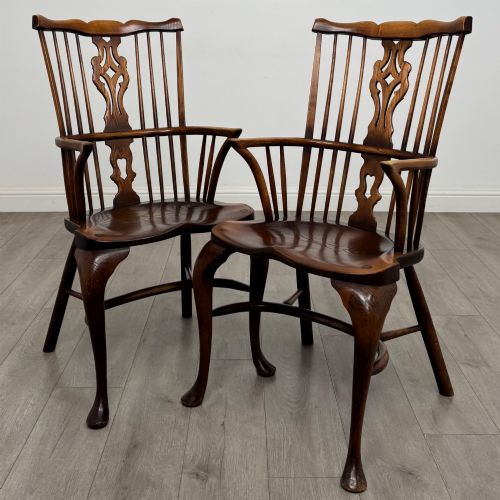
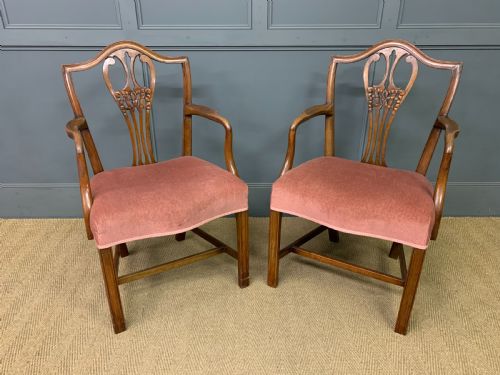
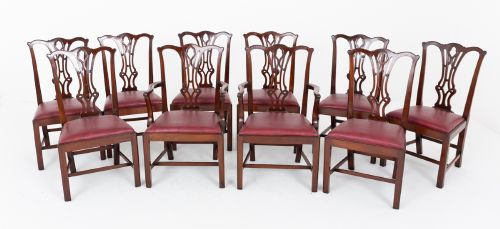
A pierced splat carver chair brings substantial presence to a dining table or writing desk through its integrated arms and openwork back design. Buyers searching for a pierced splat carver chair will find examples ranging from 18th Century Georgian originals to later Victorian revivals and Edwardian pieces. The selection includes single armchairs, matched pairs, and larger dining sets featuring mahogany, yew, and elm construction.
Most pieces follow traditional English country and Chippendale styles, incorporating regional Windsor forms alongside formal mahogany designs. Makers utilised local timbers like ash and beech alongside imported hardwoods to create sturdy seating with carved splats or spindle backs. These chairs served variously as gentleman's elbow chairs, morning room seats, and farmhouse seating.
Design and Execution
Quality separates standard production seating from exceptional examples through the crispness of carved details on the pierced splat and arm terminals. Finer chairs display well-proportioned splats with balanced fretwork, refined claw and ball or Marlborough feet, and tight joinery that maintains structural integrity without excessive reinforcement.
The choice of primary timber also dictates the tier of the piece, with richly figured old-growth mahogany and beautifully grained yew commanding greater respect than simpler utilitarian elm or mixed fruitwood variants. Original upholstery webbing, leather, or fabric layers add further distinction when preserved intact.
Some sturdy country Windsors include a crinoline stretcher ring beneath the seat, keeping feet off cold flagstone floors.
Warings
The Pierced Splat Carver Chair Glossary
- Carver chair
- An armchair, typically designed en suite with a set of dining chairs to sit at the head of the table.
- Pierced splat
- The central vertical slat of a chair back pierced with decorative cut-outs, prominent in Chippendale designs.
- Windsor chair
- A wooden chair built with a heavy solid seat into which the legs, back spindles, and bow are driven directly.
- Elbow chair
- An alternative historical term for an armchair, referencing the supportive armrests designed to hold the sitter's elbows.
- Comb back
- A Windsor chair variation where the central spindles rise through a low comb-piece or headrest above the main bow.
Pierced Splat Carver Chair: Frequently Asked Questions
What is a pierced splat carver chair?
A pierced splat carver chair is an armchair featuring a decorative wooden vertical slat down the centre of the backrest with cut-out openwork designs. These chairs were traditionally placed at the heads of dining tables or utilised as desk and writing seats.
They combine robust framing with ornamental back panels, bridging the gap between formal reception furniture and practical daily seating.
How do I date an antique carver chair?
Dating relies on examining the timber species, tool marks, construction methods, and prevailing stylistic influences. Georgian pieces exhibit precise hand-carved mahogany details, whilst 19th-century revivals often utilise heavier proportions or machine-assisted turning.
Regional Windsor variants show local vernacular traits that help pinpoint their origin to specific English counties during the 18th or 19th centuries.
Where were Windsor carver chairs used?
Windsor carver chairs served primarily in English country houses, farmhouses, and morning rooms as durable everyday seating. Their sturdy elm seats and bentwood hoops made them resilient enough for heavy daily use.
Over time, they transitioned from utilitarian kitchen and parlour chairs into prized decorative items for period interiors.
How do I care for antique wooden chairs?
Antique wooden chairs require stable indoor humidity levels away from direct heat sources and strong sunlight to prevent timber shrinkage and cracking. Periodic application of quality furniture wax maintains the finish and nourishes dry wood.
Checking joints regularly for stability ensures the chair remains structurally sound during everyday use.