
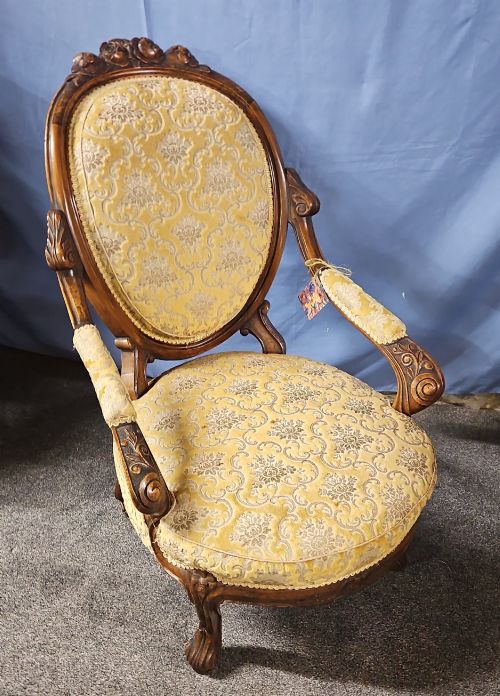
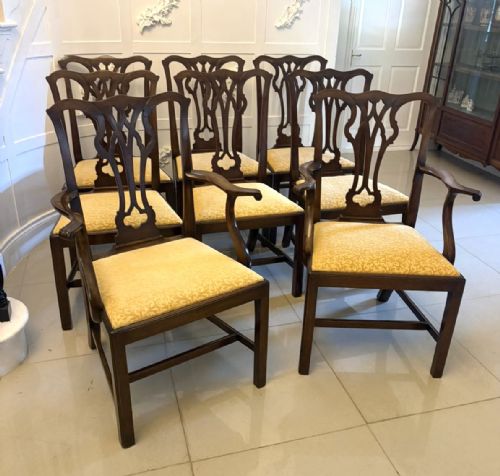


Yellow Wooden Armchair
A yellow wooden armchair brings warmth and character to a room, offering comfortable seating crafted from solid timber.
Yellow Wooden Armchair
When you search for a yellow wooden armchair, you encounter a selection of seating options spanning periods from the eighteenth century through the Edwardian era and the early twentieth century. These pieces encompass various forms including salon chairs, carver chairs, tub chairs, and windsor stick back chairs constructed from woods such as mahogany, walnut, and oak.
You are most likely to meet painted wooden armchairs or chairs featuring upholstered textile panels within these listings. The selection includes styles ranging from Victorian and Regency to Arts and Crafts and Rococo Revival, alongside country pieces like primitive comb back armchairs.
How they were made
Maker construction relies heavily on traditional hardwoods including mahogany, walnut, and oak, shaped into frames for carver chairs, dining chairs, and open armchairs. Paint finishes and inlay work frequently appear on the wooden surfaces.
Upholstery techniques incorporate fabric and textile panels, notably needlepoint tapestry, secured to the wooden armchairs. Brass details occasionally complement the primary materials.
What varies in quality
Quality differences emerge in the execution of the woodwork, from the intricacy of carved mahogany details to the simplicity of country stick back construction. Finer pieces demonstrate superior joinery and refined proportions across styles like Louis XVI and Victorian Chippendale Revival.
The sophistication of the surface finish and upholstery also separates examples, distinguishing painted French open armchairs with needlepoint panels from simpler farmhouse seating.
The Yellow Wooden Armchair Glossary
- Carver chair
- An armchair, typically designed to match a set of dining chairs but with armrests for the head of the table. These often appear in mahogany or oak.
- Comb back
- A traditional chair design where the vertical spindles of the backrest extend up through a headboard resembling the teeth of a comb. This style is found in primitive country armchairs.
- Needlepoint
- A type of canvas work embroidery used for upholstery panels. It frequently decorates the seats and backs of nineteenth century French open armchairs.
- Tub chair
- An armchair featuring a rounded, enclosed back that curves continuously into the armrests. Inlaid mahogany versions appear in Victorian furniture.
- Windsor stick back
- A chair constructed with a solid wooden seat into which the legs and back spindles are direct-inserted. Painted versions appear in nineteenth century listings.
Yellow Wooden Armchair: Frequently Asked Questions
What periods do these armchairs span?
The available pieces cover a wide chronological range, beginning in the eighteenth century and moving through the Regency and Victorian eras. Later examples extend into Edwardian and early twentieth century production.
This variety includes distinct stylistic revivals such as Rococo Revival, Louis XVI, and Victorian Chippendale Revival alongside traditional country furniture.
What woods were used for these chairs?
Construction primarily utilises traditional hardwoods such as mahogany, walnut, and oak. These timbers form the structural frames for armchairs, carvers, and dining chairs.
Additional surface treatments involve paint finishes and wood inlays, sometimes complemented by brass elements.
How do open armchairs differ from salon chairs?
Open armchairs generally feature exposed wooden arms and supportive frames, often upholstered with textile panels like needlepoint tapestry. They are designed for prominent placement in reception rooms.
Salon chairs serve as lighter, decorative seating options typically associated with Victorian interiors, focusing on refined wooden frames and upholstery.
What is a gondola chair?
A gondola chair is a nineteenth-century seating form characterised by a curved, concave backrest resembling the shape of a Venetian boat. These historical pieces originate from the eighteenth century.
They combine classical aesthetic influences with comfortable wooden framing.