



Yellow Painted Wooden Sculpture
Yellow painted wooden sculpture brings together carved forms and historic pigment schemes that collectors seek for their strong visual presence.
Yellow Painted Wooden Sculpture
When you search for yellow painted wooden sculpture, you encounter carved figures, architectural models, and folk art pieces finished in bright or weathered surface coatings. These objects span periods from the nineteenth century into the early twentieth century, originating from diverse regional traditions.
Makers and artisans across these eras utilised wood as a primary substrate, applying gesso, pigment, and paint to achieve striking visual depth. Each piece demonstrates how functional carving and decorative surface work intersect within historic decorative arts.
How they were made
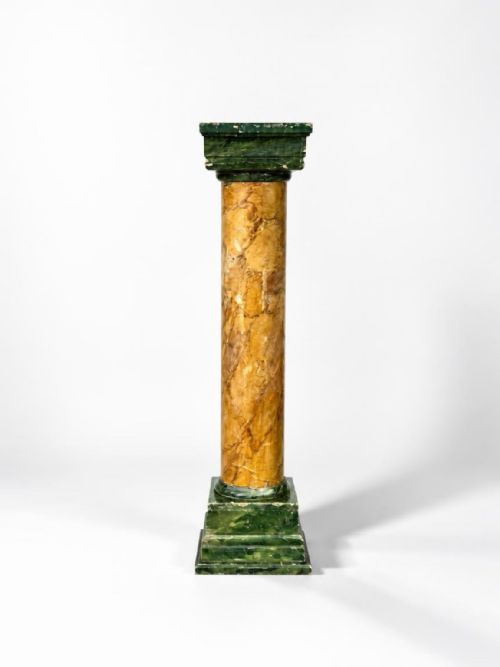
Makers typically began by carving solid blocks of timber into figurative or architectural shapes using hand chisels and gouges. Woods such as pine were common foundations for larger architectural columns and decorative pedestals.
Surfaces were frequently prepared with layers of gesso before painters applied pigments and final coats of paint. This ground layer provided a smooth base for polychrome detailing, simulation finishes, or folk art decoration.
Yellow Painted Wooden Sculpture Retail Price Guide 2026
Typical asking prices for yellow painted wooden sculpture among the pieces listed under this phrase on Sellingantiques today, from the lower quarter to the upper quarter. They describe what is for sale here now, not the wider market.
A life-size wooden cricketer stands ready to face an invisible bowler across a century of quiet village greens.
What varies in quality
The strength of the carving distinguishes finer examples, where crisp tool marks and anatomical accuracy demonstrate the maker's skill. Weaker pieces often display heavy-handed execution or flat planes that lack proportion.
Surface preservation determines desirability, particularly the integrity of original paint and gesso layers. Traces of early pigment and honest weathering indicate age, whereas heavy modern overpainting obscures the historic character of the timber.
The Yellow Painted Wooden Sculpture Glossary
- Polychrome
- Decorated in multiple colours. This term describes historic painted surfaces on wooden sculptures and architectural fragments.
- Gesso
- A plaster mixture used as a paint base. Artisans applied this substance to wooden surfaces to prepare them for fine pigment application.
- Folk art
- Utilitarian or decorative objects made by self-taught creators. These pieces reflect regional traditions rather than academic fine art conventions.
- Simulated finish
- A painted surface imitating a costlier material. Makers frequently utilised this technique on pine pedestals to replicate marble.
Yellow Painted Wooden Sculpture: Frequently Asked Questions
How do I clean a painted wooden sculpture?
Dust surfaces gently with a soft, dry brush to prevent disturbing historic pigment. Avoid liquid cleaners and modern solvents that might strip delicate layers of old paint or gesso.
Keep pieces away from direct sunlight and damp environments to protect the underlying timber from warping and flaking.
Where were these painted sculptures made?
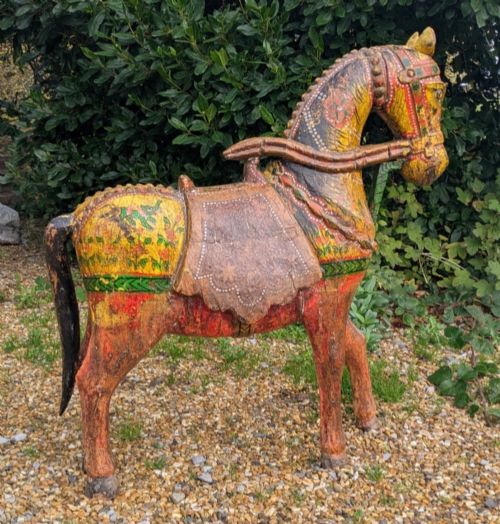
The pieces originate from various international traditions, including Indian workshops, French folk art circles, and Tibetan monastic environments. Each region employed distinct carving styles and local pigments.
Geographic origins heavily influence the specific decorative motifs and the types of wood utilised in the construction.
How can I tell the age of the paint?
Historic paint layers show natural craquelure, fading, and wear consistent with age and handling. Inspecting the surface under magnification reveals multiple historical strata rather than uniform modern application.
Original gesso beneath the paint often hardens and yellows over centuries, providing a reliable indicator of period authenticity.
Are architectural models considered sculptures?
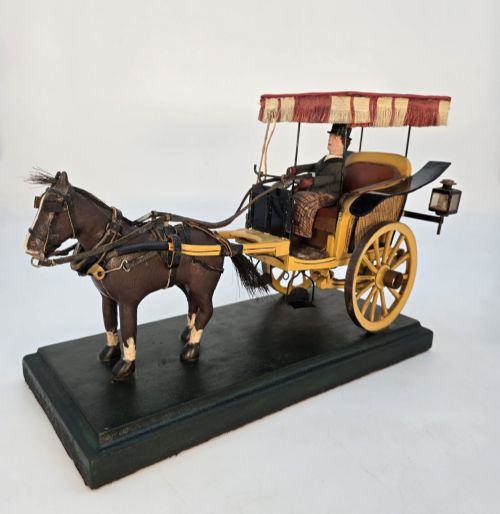
Architectural models and carousel panels share the same hand-carved construction methods and painted finishes as freestanding statues. Collectors often group them together under the wider heading of decorative wooden sculpture.
These items served decorative or functional purposes in historic buildings and public attractions before entering collections.