


Yellow Painted Drawers
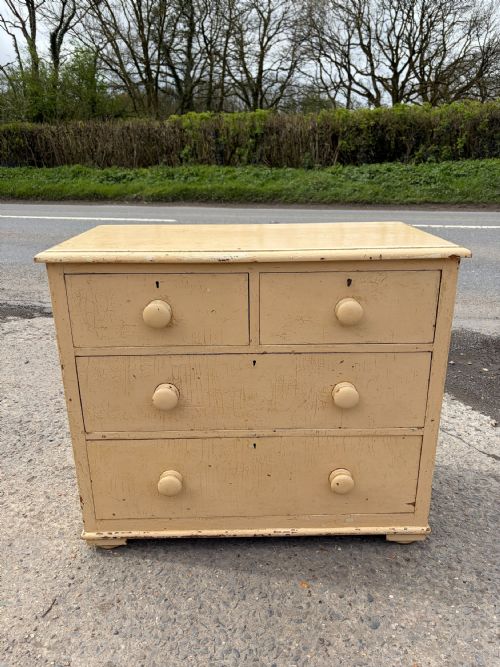
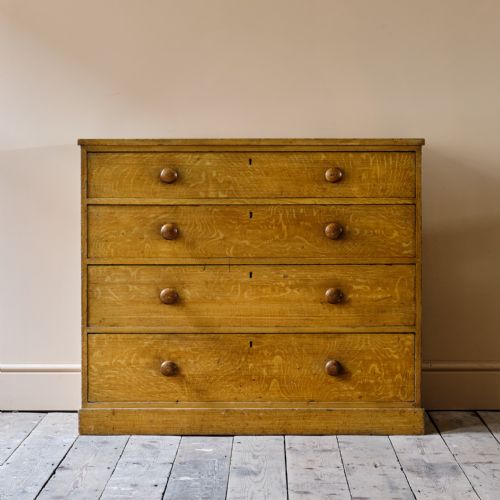
Yellow painted drawers bring immediate warmth to a room through their bright, enduring finishes.
Yellow Painted Drawers
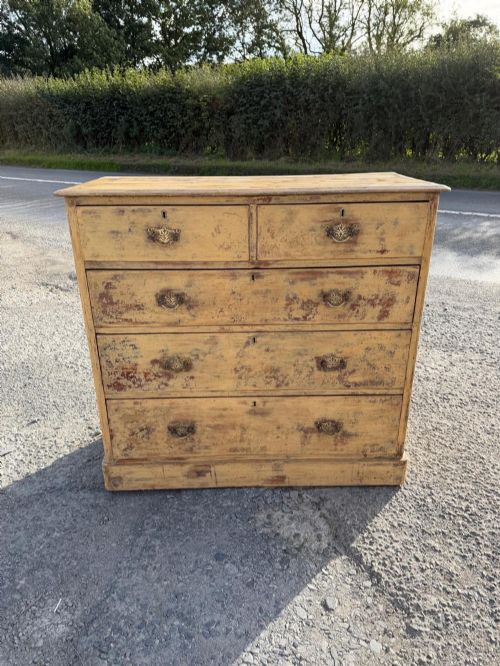
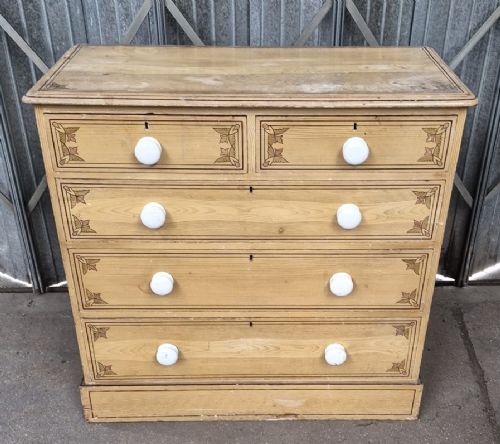
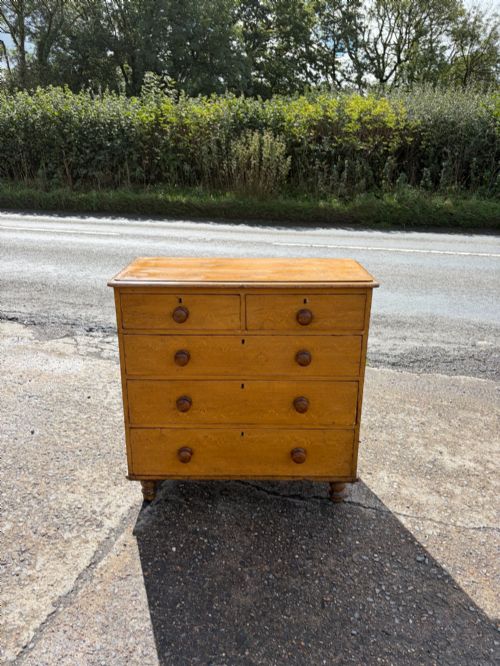
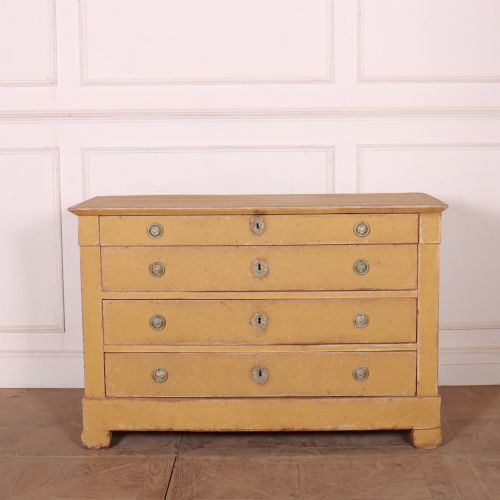
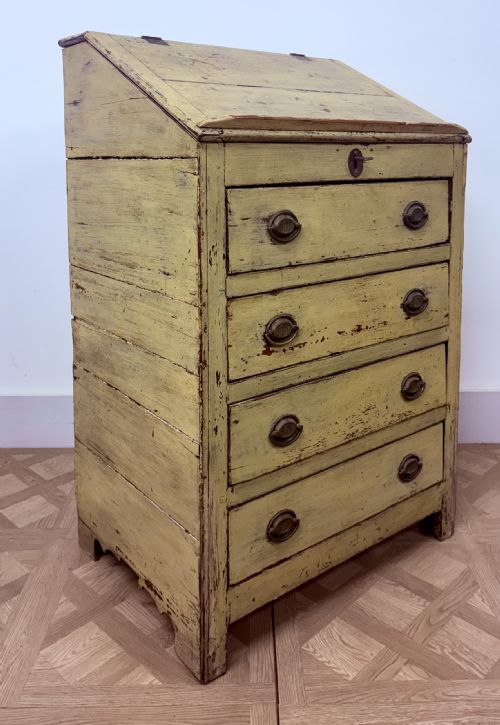
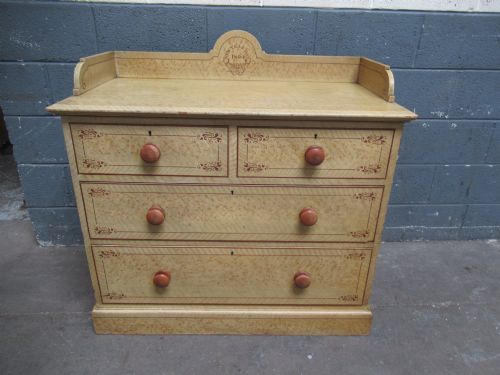
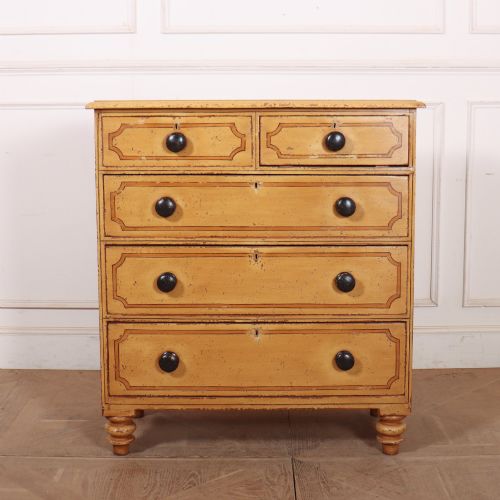
Yellow painted drawers comprise chests of drawers, commodes, and bureaux spanning the Georgian, Victorian, and later periods. These pieces originate from English, French, Italian, and Scandinavian traditions, often rendered in country house or provincial styles.
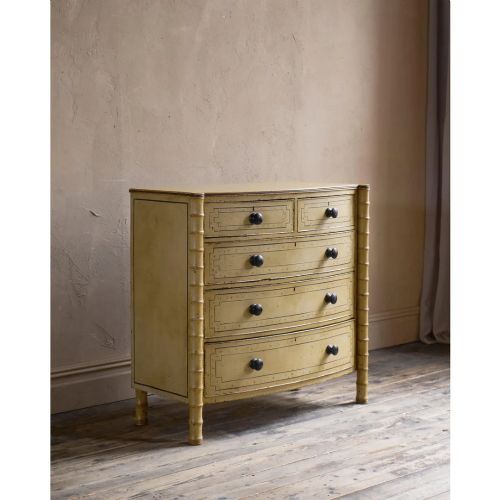
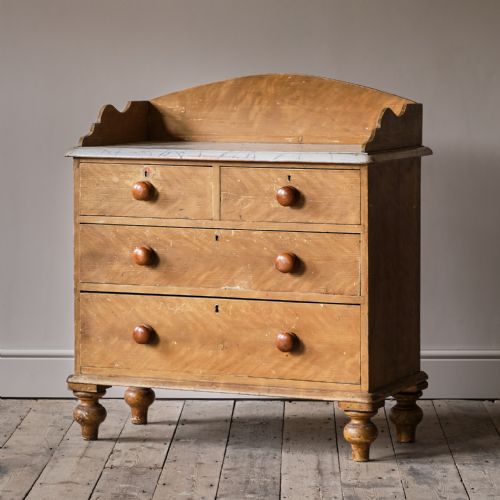
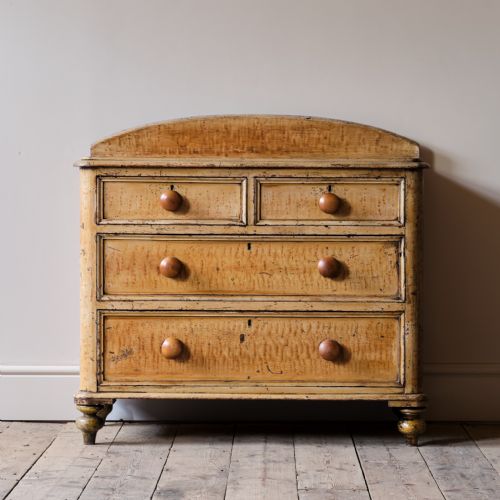
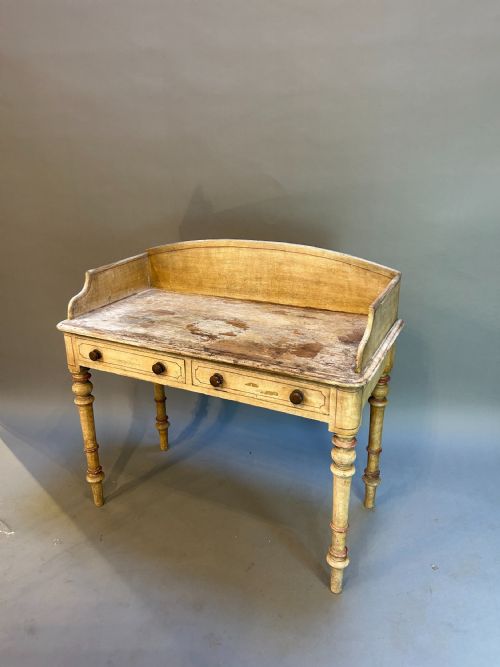
The selection here centres primarily on pine chests of drawers coated in original paint, alongside faux bamboo and japanned decorative surfaces. Buyers encounter both utilitarian domestic pieces and more ornate decorated forms featuring writing slopes and dressing attachments.
How they were made
Makers constructed these carcasses predominantly from solid pine and wood, applying layers of oil- or water-based paint directly to the timber. Many surfaces display original paint, scumble glaze, or lacquer, sometimes finished with hand-painted decoration or simulated graining.
Hardware such as brass handles and iron fittings complete the construction, secured to drawers built with traditional joinery. The application method ranges from simple country brushwork to deliberate faux bamboo moulding and detailed Japanning.
Several chests sport faux bamboo turnings, proving that Victorians loved tropical botany so much they turned their plain pine drawers into jungle thickets.
What varies in quality
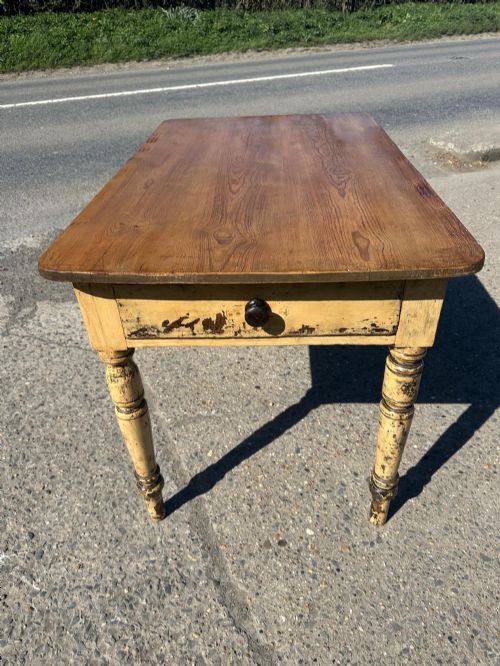
Quality rests in the survival of the original surface finish and the integrity of the underlying timber construction. Pieces retaining undisturbed historic paintwork command greater interest than those stripped or heavily recoated in modern times.
Proportion and decorative detail also separate standard utility items from finer examples, such as those with crisp faux bamboo turning or delicate Chinoiserie motifs. The harmony between the original hardware and the painted carcass defines the overall coherence of the piece.
The Yellow Painted Drawers Glossary
- Original paint
- A surface coating applied during the period of manufacture that has not been stripped or repainted. This preservation of early pigment is central to the character of antique painted furniture.
- Scumble paint
- A translucent glaze manipulated with tools like combs or rags to imitate the grain of more expensive hardwoods. Country house pieces frequently utilise this technique over a pale or yellow base.
- Faux bamboo
- Wood turned and carved to imitate natural bamboo stalks, popular during the nineteenth century. It often appears finished in pale or painted colours to suit lighter interior aesthetics.
- Japanning
- A European imitation of East Asian lacquerwork involving layered varnishes and decorative motifs. Pieces finished this way display smooth, glossy surfaces with subtle tonal variations.
Yellow Painted Drawers: Frequently Asked Questions
How do I care for original painted drawers?
Keep painted wooden surfaces away from direct sunlight and excessive moisture to protect the historic pigment and binding mediums. Dust gently with a dry, soft cloth rather than using chemical polishes or modern cleaning sprays.
Maintain stable room humidity to prevent the underlying timber from expanding or contracting, which can cause the paint layer to crack or flake over time.
Are these drawers suitable for daily bedroom use?
Most antique pine chests and commodes offer robust construction designed for practical storage. The drawers slide within their original tracks, though older wooden channels benefit from occasional waxing with plain beeswax to ensure smooth operation.
Consider lining the interior bases with acid-free tissue paper to protect delicate clothing from rough historic wood surfaces.
What is scumble glaze?
Scumble glaze is a decorative finishing technique where a translucent, tinted medium is brushed over a lighter base coat and manipulated with combs, brushes, or rags. This creates simulated wood grain or mottled effects on pine carcases.
In period pieces, this finish added texture and depth to furniture built from less costly timbers.
How can I tell if the paint is original?
Original paint shows age-appropriate wear, subtle craquelure, and integration with the underlying timber structure. Examination under magnification often reveals cumulative layers of dust and oxidation trapped within the microscopic crevices of the pigment.
Later overpainting typically lacks this integrated wear pattern and sits uniformly across the hardware and timber joints.