
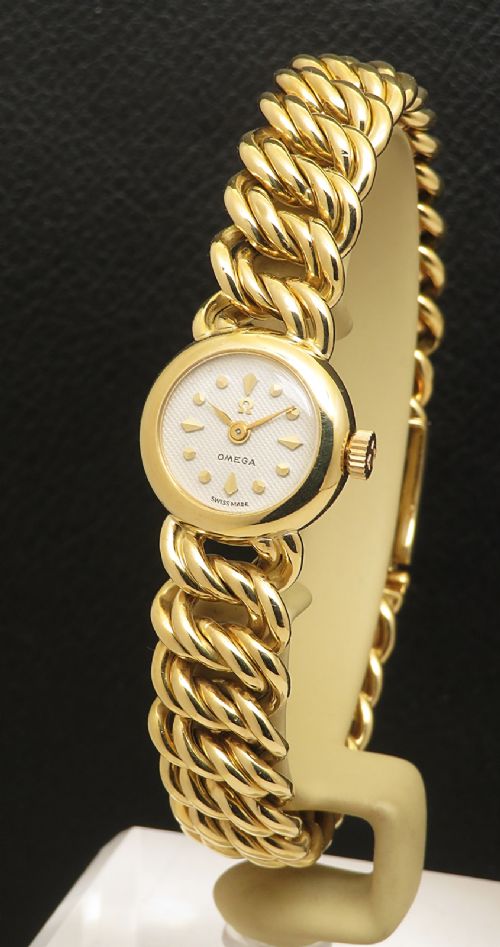
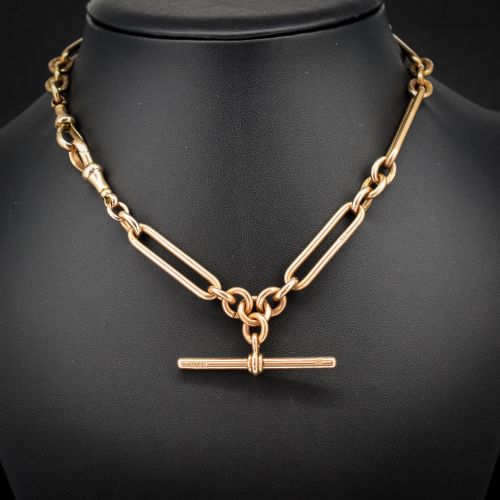
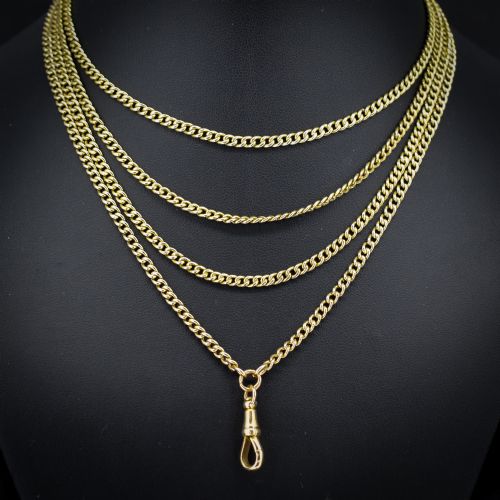
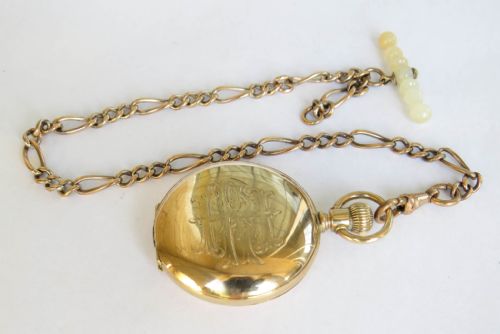
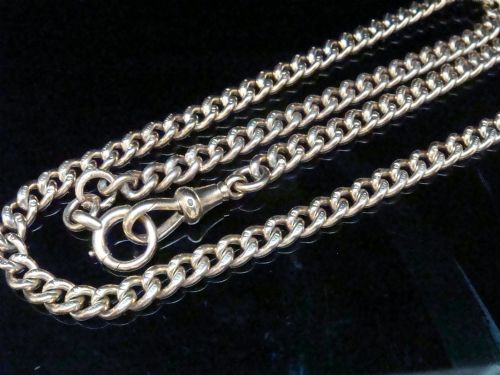
Yellow Gold Watch Chain
A yellow gold watch chain offers solid wearable history, providing substantial wrist or neck presence from the Victorian and Edwardian eras.
Understanding a yellow gold watch chain
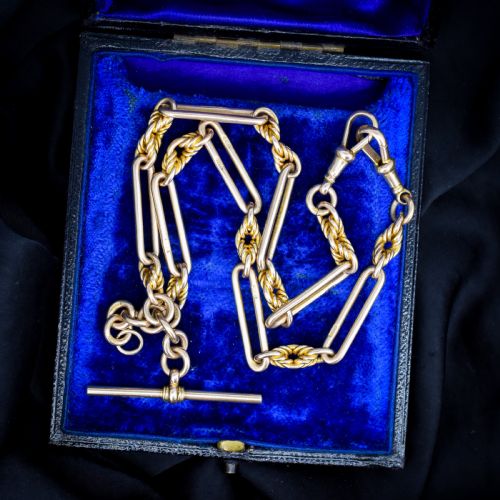
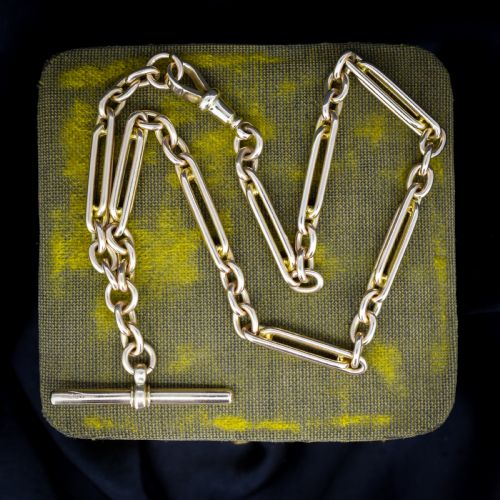
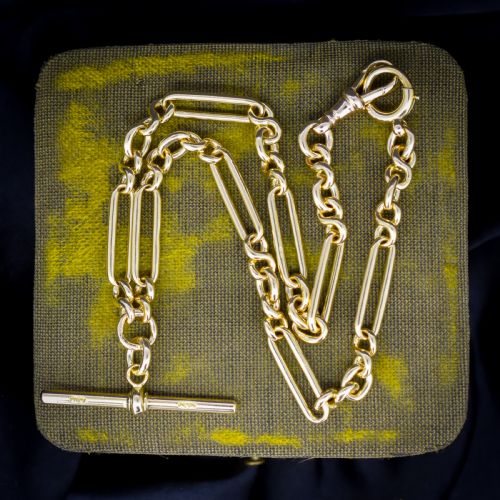
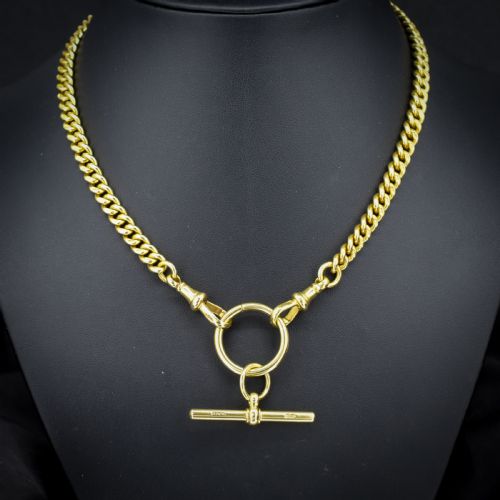
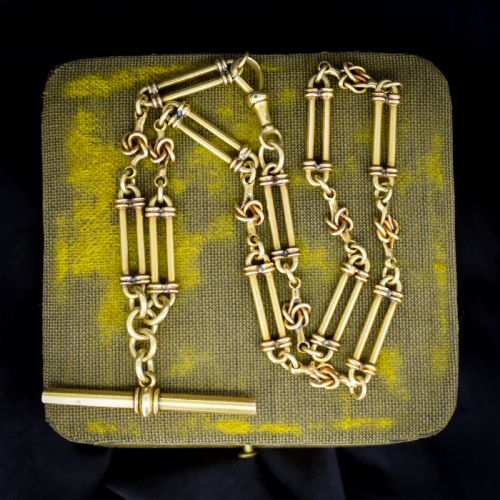
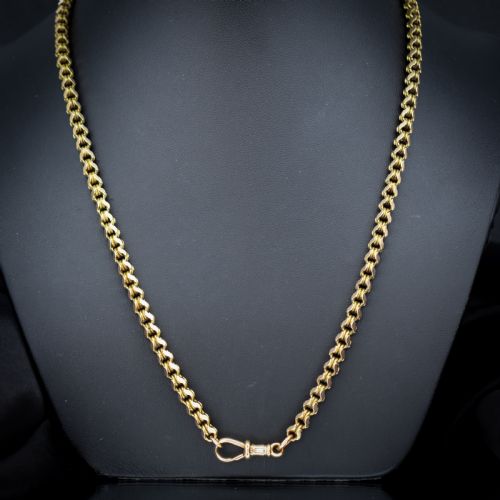
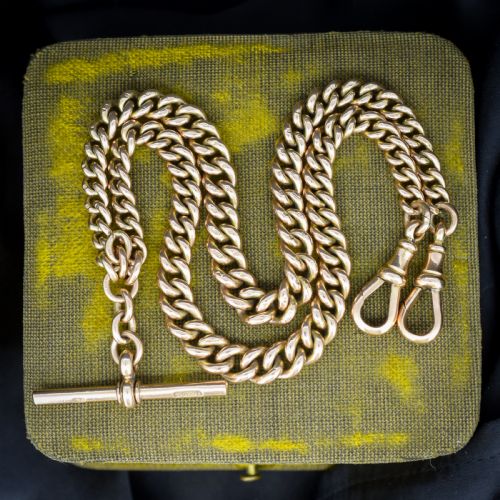
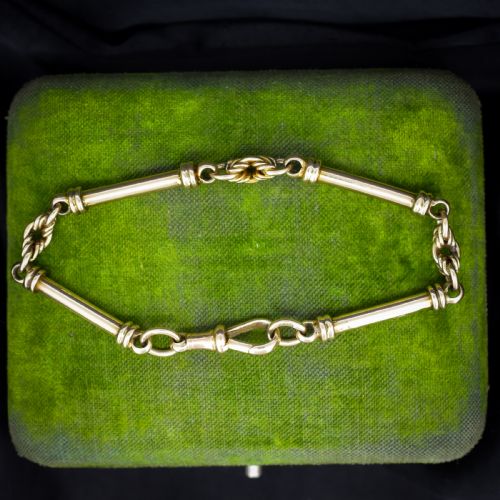
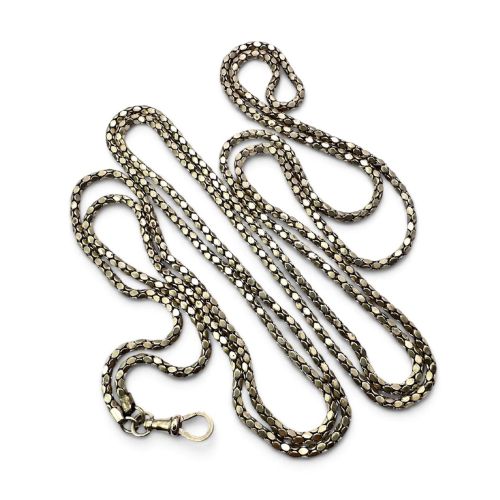
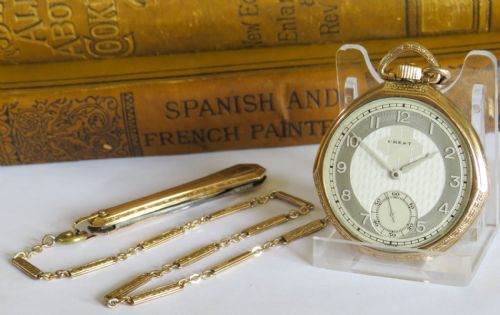
A yellow gold watch chain connects pocket timepieces to garments or functions today as a necklace. These items emerge from nineteenth century and early twentieth century workshops in forms such as curb links, fetter links, and trombone links.
Most examples span the Victorian and Edwardian periods, including pieces with dog clips and double watch chain configurations. Lengths vary from shorter lengths suited to neckwear up to substantial pieces designed for traditional pocket wear.
The material composition ranges from solid nine carat and eighteen carat yellow gold to rolled gold variants. Certain pieces incorporate platinum details alongside yellow gold construction.
Materials and construction methods
Goldsmiths constructed these chains using various purities of yellow gold, notably nine carat, fifteen carat, and eighteen carat metal. Rolled gold alternatives provided an accessible option by bonding a gold layer to a base metal core.
Links were individually formed, shaped, and connected by hand to create durable patterns like the trombone or curb link. Secure fastenings such as dog clips and trigger clasps were then attached to complete the functional design.
Retail Price Guide 2026
Typical UK retail prices for yellow gold watch chain, calculated from the Sellingantiques database of over a million retail prices indexed since 2003. This retail price guide relies exclusively on Sellingantiques data; no external sources or auction records are used, so the figures do not describe the wider market.
Listings feature items spanning the nineteenth century through to nineteen twenty, utilising nine carat, fifteen carat, and eighteen carat yellow gold alongside rolled gold.
Factors of quality and execution
Superior examples display precise link articulation and consistent colour across every component, including the dog clips and T-bars. Substantial gauge thickness and intact hallmarks distinguish higher grade pieces from lighter or rolled gold alternatives.
The complexity of the link pattern, such as alternating long and short trombone links or finely engraved curb links, elevates the standard of the piece. Preservation of original clasps and minimal wear at the pivot points indicate careful historical use.
The Yellow Gold Watch Chain Glossary
- Albert chain
- A type of watch chain designed to secure a pocket watch to a waistcoat, featuring a T-bar at one end. Victorians named this style after Prince Albert, who popularized the fashion.
- Dog clip
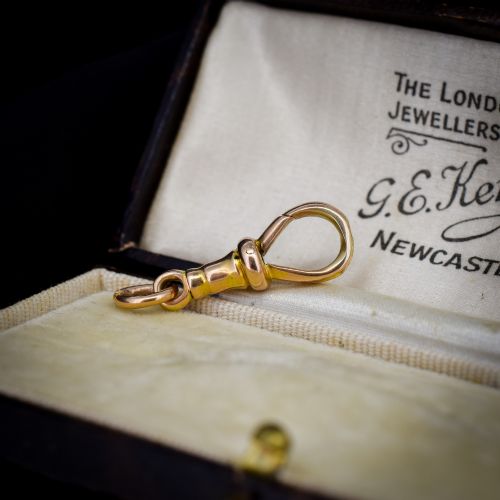
- A spring-loaded snap hook attached to the end of a watch chain. This mechanism allowed secure attachment to pocket watches, fobs, or garment buttonholes.
- Trombone link
- A watch chain link pattern consisting of elongated rectangular links interspersed with smaller circular or oval rings. The design resembles the shape of musical instruments.
- Rolled gold
- A material made by mechanically bonding a thin sheet of gold to a base metal core under heat and pressure. This technique offered the appearance of solid gold at a lower cost.
- Fetter link
- A chain pattern alternating long flat links with smaller circular links. The name derives from historical iron shackles, though executed here in refined precious metal.
Frequently Asked Questions
How do I wear an antique watch chain as a necklace?
Many watch chains measure at lengths that allow them to be worn directly around the neck as short necklaces. You can fasten the dog clip to any point along the chain to adjust the drape or attach pendants.
Heavier examples provide a distinct look when worn alone, while lighter links pair easily with other gold jewellery. Ensure the clasps remain secure before daily wear.
What is the difference between solid gold and rolled gold?
Solid gold chains consist entirely of precious metal alloy throughout the links, graded by carat weight such as nine carat or eighteen carat. These pieces hold their material value and develop a soft patina over decades.
Rolled gold items feature a thin outer layer of solid gold fused to a base metal interior. This construction offers the warm colour of yellow gold with a lighter overall weight.
How do I identify the period of a watch chain?
Dating relies on hallmarks stamped onto the links, dog clips, or T-bars, which indicate assay offices and specific years of manufacture. Stylistic markers such as robust Victorian curb links or Edwardian platinum accents also provide clear chronological clues.
Consulting the specific link style and fastening mechanism helps narrow down the era of production. Maker marks can further pinpoint the workshop origin.
Can these chains support heavy pendants?
Solid eighteen carat or fifteen carat chains with thick link gauges easily support substantial pendants or lockets. The durability of the links and the strength of the dog clip determine how much weight the chain can safely bear.