
Yellow Gold Sapphire Jewellery
Yellow gold sapphire jewellery brings together rich blue gemstones and warm precious metal across Victorian, Edwardian, Art Deco and vintage eras.

Yellow Gold Sapphire Jewellery
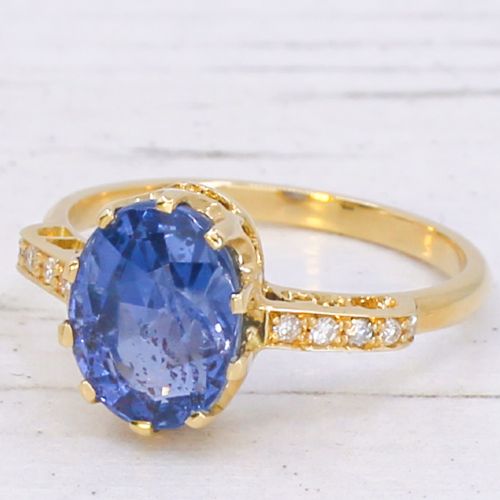
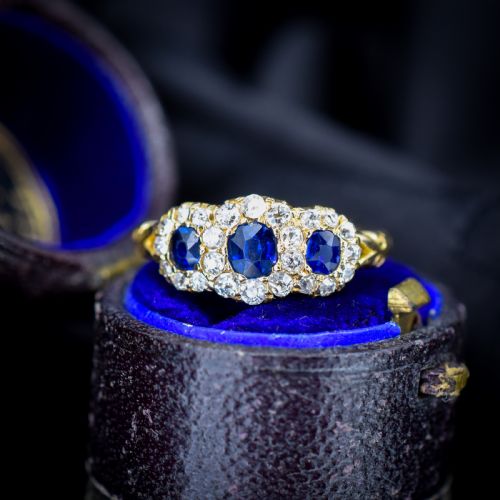
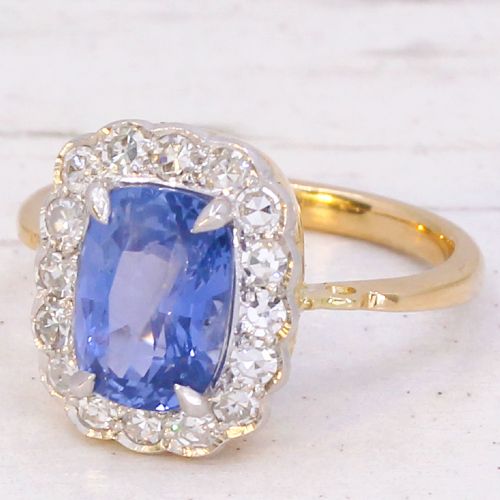
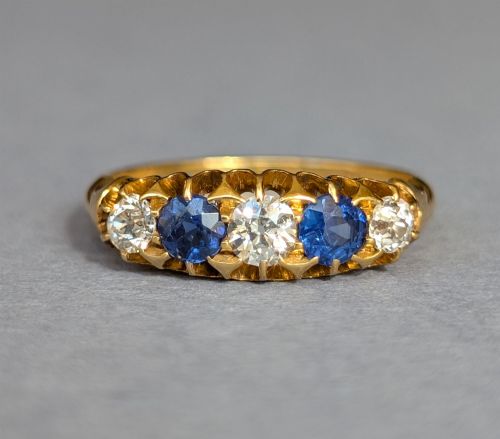
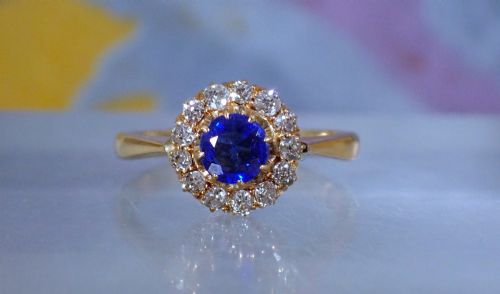
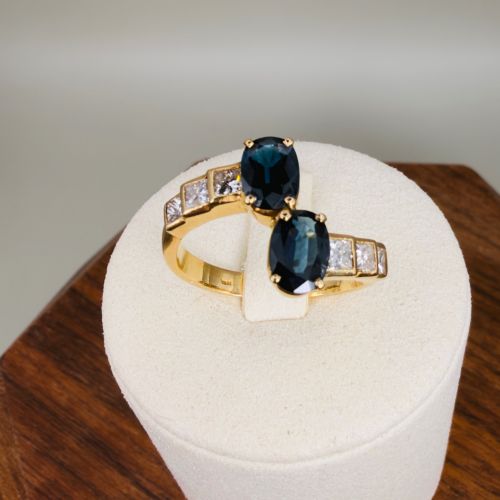
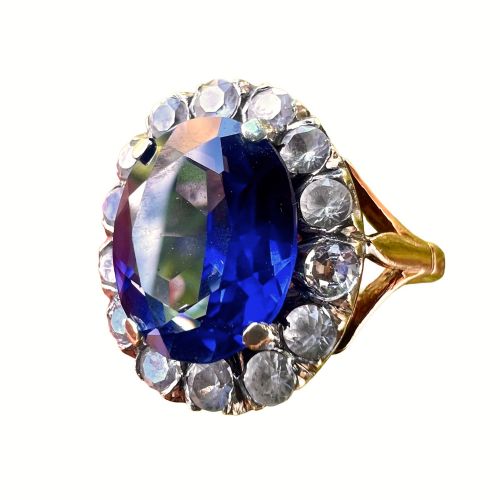
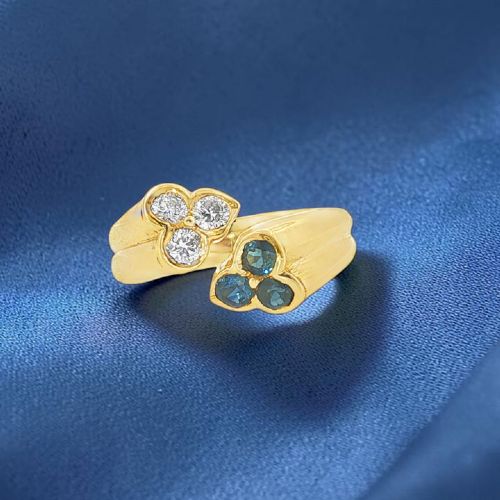
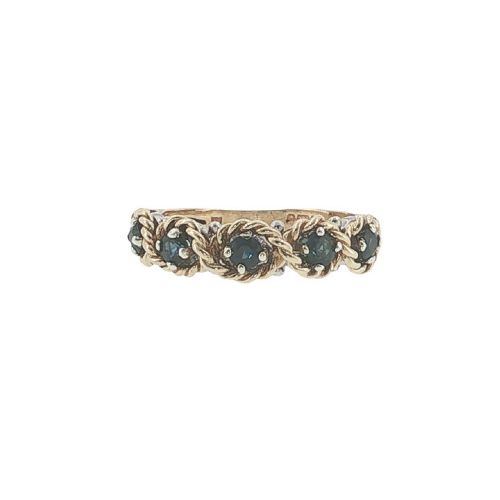
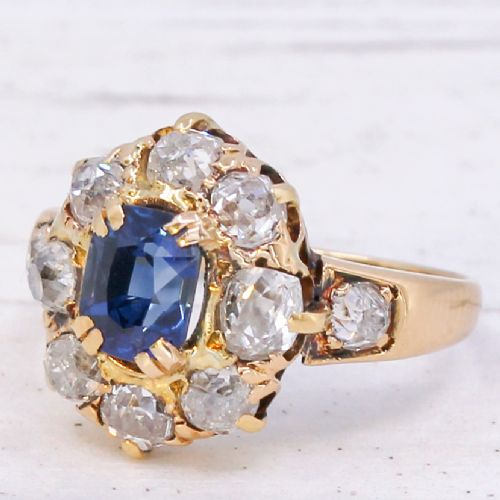
When you search for yellow gold sapphire jewellery, you encounter a varied selection of rings, earrings, pendants and bracelets spanning the late nineteenth century through the mid-twentieth century and beyond. The most common forms are cluster and daisy rings, where a central blue sapphire is surrounded by sparkling diamonds in an 18ct or 9ct yellow gold setting.
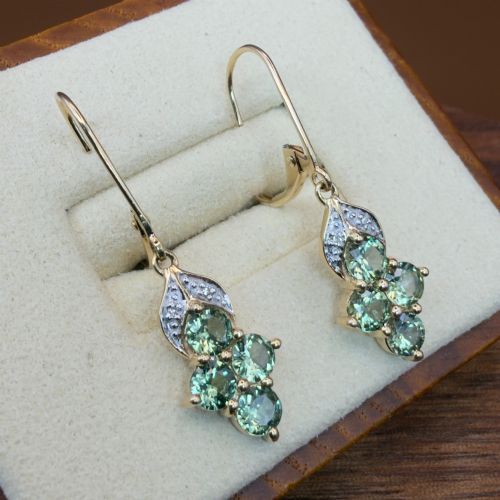
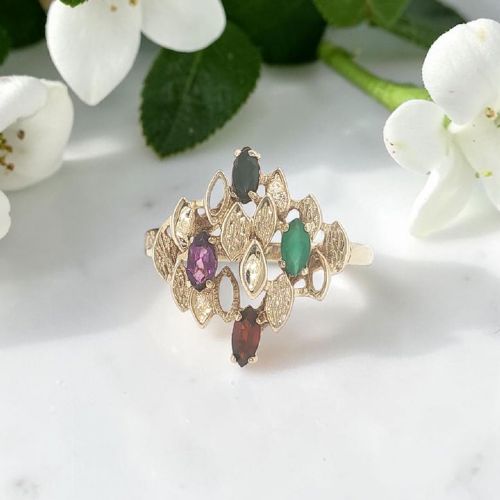
The pieces include Edwardian halo designs, Art Deco geometric cluster rings, and gypsy settings alongside drop earrings and pendant necklaces. Alongside traditional blue stones, items feature teal green sapphires, pink sapphires, padparadscha sapphires, and unheated gems originating from Ceylon, Burma and Kashmir.
Materials and Working Methods
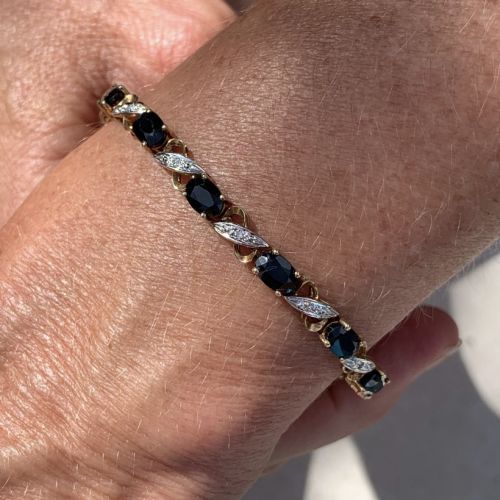
Goldsmiths utilised 18ct yellow gold, 9ct gold, and occasionally platinum or silver to mount the stones, shaping bands and settings through casting and hand-working. Stones were cut in various forms including old mine cuts, oval cuts, marquis cuts, and cabochons, then secured with meticulous claw, bezel or star settings.
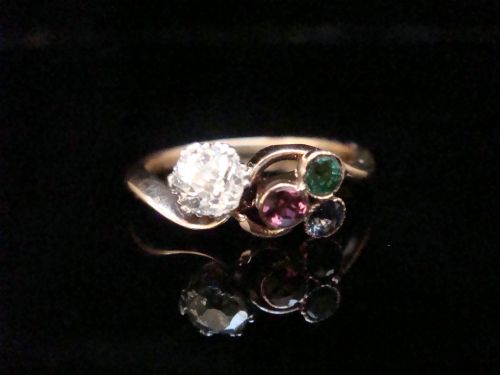
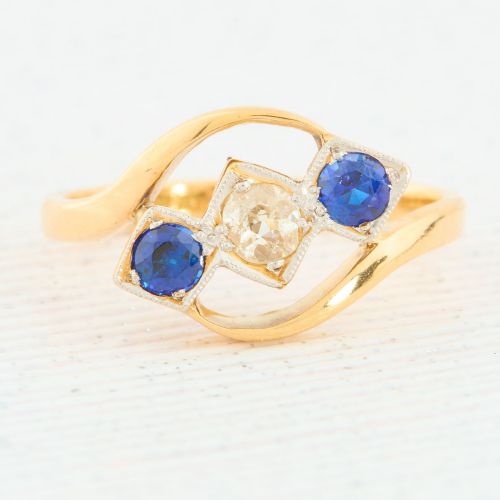
Makers paired sapphires with old cut diamonds, pearls, rubies and emeralds, creating structural contrast between the deep blue of the corundum and the bright sparkle of surrounding diamonds.
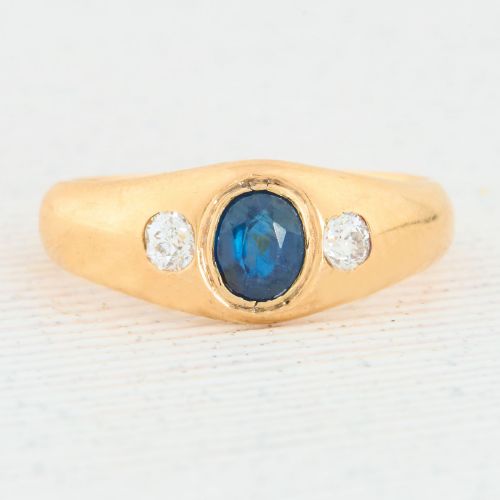
Some Edwardian rings tuck tiny diamonds and sapphires so closely into starburst gypsy settings that they wink cheerfully from the heavy gold band.
Distinctions in Quality
Quality rests upon the origin, treatment and natural depth of colour within the sapphire itself, with unheated stones from specific origins commanding particular attention. The precision of the diamond accompaniment and the structural integrity of the gold mount also define the standing of each piece.
Age and hallmark clarity contribute to desirability, where untouched Edwardian and Art Deco settings maintain their original proportions and structural harmony without later alterations.
Kutchinsky
The Yellow Gold Sapphire Jewellery Glossary
- Cluster ring
- A ring featuring a prominent central gemstone encircled by a group of smaller stones, typically diamonds.
- Gypsy ring
- A style where stones are flush-set directly into a heavy tapered gold band rather than held in elevated claws.
- Cabochon
- A gemstone cut with a smooth, rounded, convex upper surface rather than faceted planes.
- Unheated
- A descriptor for natural sapphires that have undergone no thermal enhancement to improve their colour or clarity.
- Old mine cut
- An early diamond facet arrangement featuring a cushion outline, high crown and small table.
Yellow Gold Sapphire Jewellery: Frequently Asked Questions
How do I care for antique sapphire jewellery?
Clean yellow gold sapphire jewellery gently using warm soapy water and a soft brush, avoiding harsh chemical dips that might harm softer surrounding gems or pearls.
Store pieces individually in lined boxes to prevent the harder diamonds from scratching the gold or the sapphire surfaces.
Can I wear a sapphire ring every day?
Sapphire is an exceptionally hard mineral that resists daily wear well, making these rings suitable for regular use if settings are checked periodically by a professional.
Lighter 9ct gold bands and delicate Edwardian or Victorian settings benefit from being removed during heavy manual tasks to preserve their structure.
How can I tell an Edwardian ring from an Art Deco one?
Edwardian rings often feature delicate filigree, millegrain edges, and floral or daisy motifs set in yellow gold and platinum combinations.
Art Deco pieces display bold geometric lines, symmetry, and target or double-oval clusters reflecting the design shifts of the 1920s and 1930s.
What does unheated sapphire mean?
An unheated sapphire is a natural gemstone that has not been subjected to artificial heat treatment to alter or enhance its colour and clarity.
Such stones retain their natural geological characteristics and often carry independent gemological reports confirming their origin.