

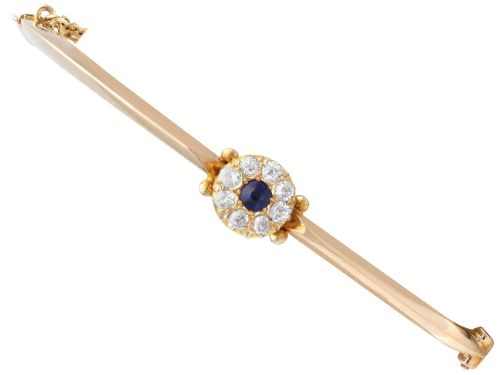


Edwardian Sapphire Bracelet
An edwardian sapphire bracelet brings together delicate gemstones and fine gold work, offering a wearable piece of early twentieth-century elegance.
Edwardian Sapphire Bracelet
An edwardian sapphire bracelet is a piece of fine jewellery spanning the late nineteenth and early twentieth centuries, though examples stretch into the Art Deco period. You will find both delicate line bracelets and hinged bangles set with rich blue stones.
The materials range from 9ct and 18ct yellow or rose gold to platinum settings, frequently paired with diamonds, pearls, or seed pearls. The forms vary from slender gold bands to intricate geometric platinum mountings.
How they were made
Goldsmiths utilised metals such as 9ct gold, 18ct yellow gold, rose gold, and durable platinum to frame the central stones. Platinum became the preferred choice for securing intricate diamond and sapphire clusters during the transition into the nineteen-twenties.
Gemstones including sapphires, diamonds, pearls, and seed pearls were meticulously hand-set into the metal frameworks. Jewellers balanced coloured gemstones with sparkling diamond accents and lustrous pearls to create varied textural contrasts.
Edwardian Sapphire Bracelet Retail Price Guide 2026
Typical asking prices for edwardian sapphire bracelet among the pieces listed under this phrase on Sellingantiques today, from the lower quarter to the upper quarter. They describe what is for sale here now, not the wider market.
Listings for this phrase include items spanning from the Victorian era through the nineteen-thirties, incorporating both 9ct gold and platinum.
What varies in quality
The choice of setting metal and the integration of supporting gemstones largely dictate the calibre of the piece. Platinum mounts paired with substantial diamond weights represent the upper tier of execution, while simpler 9ct gold iterations offer a more understated charm.
The graduation and matching of sapphire stones, alongside the fineness of the gold or platinum wirework, separate standard workshop output from exceptional examples of the period.
The Edwardian Sapphire Bracelet Glossary
- Edwardian
- Pertaining to the reign of King Edward VII, characterised by light, airy jewellery designs and the increasing use of platinum. This era followed the Victorian period and preceded Art Deco.
- Platinum
- A dense, ductile precious metal used extensively in fine jewellery for its strength and bright white lustre. It allowed jewellers to create delicate settings that held diamonds and sapphires securely.
- Seed pearl
- A very small, natural or cultured pearl used in clusters or rows as delicate decorative accents. These tiny pearls add soft texture alongside faceted sapphires.
- Art Deco
- A design style emerging in the nineteen-twenties, favouring geometric lines and symmetrical patterns. Pieces from this era often feature platinum and heavy diamond work alongside sapphires.
- Bangle
- A rigid bracelet that slips over the hand or fastens with a hinge. Many antique variations incorporate secure clasps and intricate gold or platinum surface decoration.
Edwardian Sapphire Bracelet: Frequently Asked Questions
How do I care for my bracelet?
Antique jewellery requires gentle handling due to age and delicate stone settings. Avoid exposing pearls and softer metals to harsh chemicals or ultrasonic cleaning.
Store each piece separately in a lined box to prevent scratches between the platinum, gold, and gemstones.
Are these bracelets made of solid gold?
Yes, listings commonly feature solid gold standards such as 9ct, 15ct, and 18ct yellow or rose gold, alongside platinum mountings.
The metal purity is often stamped or hallmarked on the inner band or clasp of the jewellery.
How can I tell the period?
Dating relies on the stylistic markers of the setting, the combination of metals like platinum with yellow gold, and the cut of the stones. Edwardian pieces lean towards delicate filigree, while subsequent nineteen-twenties and thirties pieces show geometric Art Deco influences.