


Vintage Gold Tennis Bracelet
A vintage gold tennis bracelet brings flexible brilliance to the wrist, combining continuous gemstone settings with enduring precious metals.
Vintage Gold Tennis Bracelet
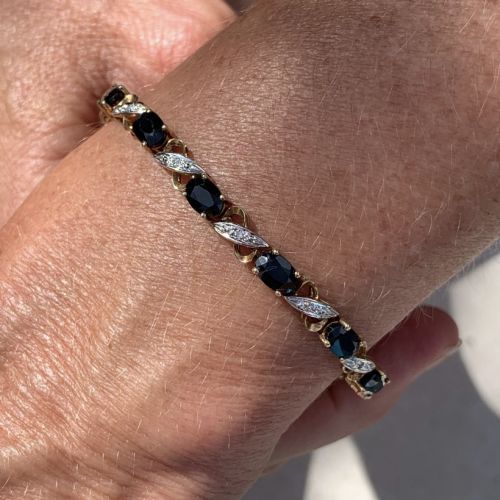
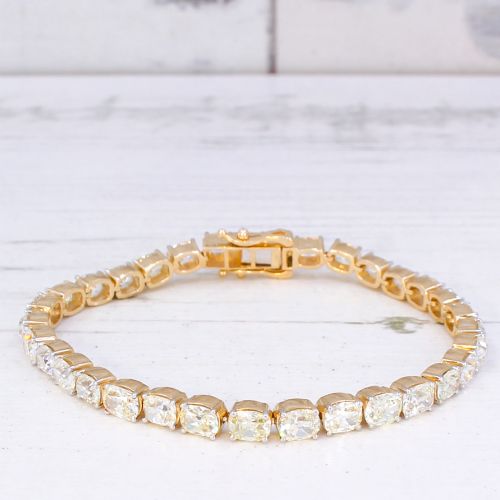
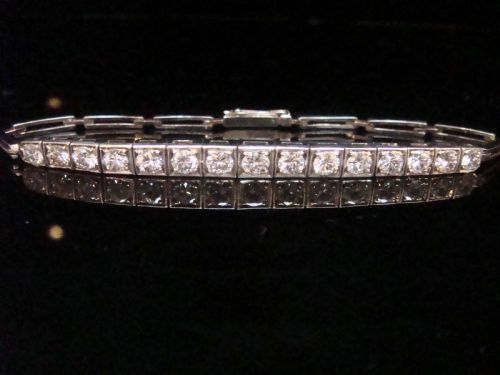
When searching for a vintage gold tennis bracelet, collectors encounter flexible line bracelets spanning the Victorian, Edwardian, Art Deco, and Mid-Century periods. These pieces set continuous lines of diamonds, sapphires, rubies, or green zircons into gold mountings.
The format ranges from old mine cut diamond strands set in the late nineteenth century to geometric Art Deco configurations and 1960s fine jewellery creations. Yellow gold, white gold, and rose gold variants appear alongside mixed metal constructions of gold and silver.
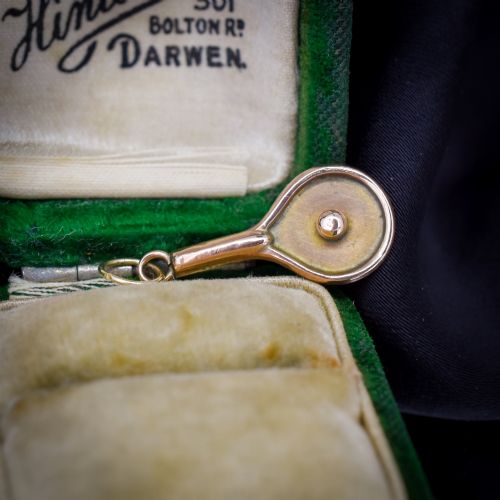
Alongside standard line bracelets, related forms like gemstone charms and pendants occasionally surface within these searches. Most examples follow the classic flexible articulated link structure designed to drape smoothly around the wrist.
Materials and construction
Makers utilised various carats of yellow, white, and rose gold, ranging from nine carat and fifteen carat to eighteen carat gold. Certain Edwardian and Victorian examples incorporated silver alongside gold to enhance the brilliance of diamond settings.
Stones are secured using traditional techniques such as collet settings, grain settings, and claw mounts tailored to old mine cut, cushion cut, and brilliant cut gemstones. Articulated links are meticulously joined to ensure total flexibility while maintaining structural integrity across the length of the bracelet.
Listings feature gold variants from nine carat up to eighteen carat, alongside platinum-topped silver settings from the Victorian and Edwardian eras.
What separates the finest pieces
Quality rests upon the uniformity and match of the set gemstones, whether diamonds, sapphires, rubies, or green zircons. Consistent stone sizing and well-matched colour grades elevate a piece significantly above standard production.
The precision of the articulation determines how fluidly the bracelet drapes against the skin. Master goldsmiths achieved tight, seamless hinge connections that conceal the mechanics while allowing effortless movement.
The Vintage Gold Tennis Bracelet Glossary
- Tennis bracelet
- A flexible line bracelet featuring a symmetrical, continuous sequence of gemstones, typically diamonds. The name stems from a famous incident on the tennis court in the nineteen eighties.
- Collet setting
- A metal collar that encircles the edge of a gemstone, holding it securely in place. This method was widely favoured in older fine jewellery before modern prong settings dominated.
- Old mine cut
- An early diamond cut characterised by a cushion shape, high crown, small table, and large open culet. These stones display a distinctive warm sparkle under candlelight.
- Cushion cut
- A square or rectangular gemstone cut with rounded corners and larger facets, popular in antique and Edwardian jewellery. It maximises light return and retains a softer outline.
- Articulated link
- A hinged connection between individual gemstone settings that permits the bracelet to bend and curve fluidly. Good articulation prevents pinching and ensures the piece sits flat on the wrist.
Vintage Gold Tennis Bracelet: Frequently Asked Questions
How do I wear a vintage gold tennis bracelet daily?
These flexible bracelets pair easily with everyday attire, resting comfortably alongside modern watches or worn alone for understated elegance.
Secure clasps and robust gold settings ensure the piece handles regular wear, provided you store it safely when not on the wrist.
Can I resize a vintage gold tennis bracelet?
Adjusting the length depends entirely on the repeating pattern of the gemstone settings. A skilled jeweller can usually remove or add identical linked sections.
Symmetrical line layouts make shortening straightforward, though maintaining the continuous pattern requires matching stone sizes carefully.
How do I identify an Edwardian tennis bracelet?
Edwardian examples frequently combine eighteen carat white gold or platinum with silver-topped settings to maximise diamond brilliance. Look for delicate openwork filigree and refined claw mountings characteristic of the early twentieth century.
Proportions remain light and airy, reflecting the graceful design ethos prevailing before the bold geometric shifts of the Art Deco era.
What is the difference between old mine cut and brilliant cut diamonds?
Old mine cut diamonds feature hand-cut facets with smaller tables and larger culets, producing a charming, deep-set luminescence. Modern brilliant cuts utilise standardised mathematical symmetry for maximum white light reflection.
Finding old mine cuts usually points toward Victorian or Edwardian origins, whereas brilliant cuts dominate mid-twentieth century and later pieces.