


Vintage Diamond Tennis Bracelet
A vintage diamond tennis bracelet combines continuous sparkle with flexible metalwork, offering a wrist ornament that transitions effortlessly from daywear to evening wear.
Vintage Diamond Tennis Bracelet
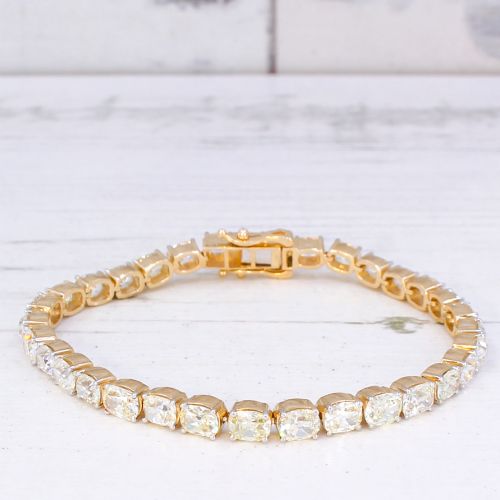
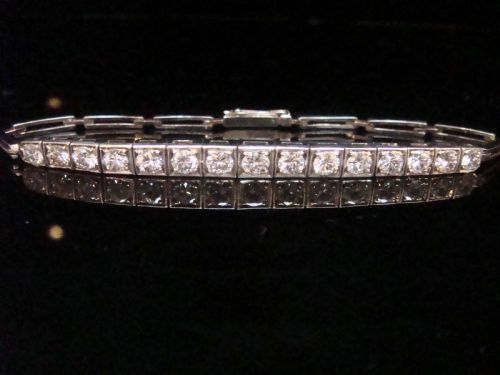
A vintage diamond tennis bracelet presents an unbroken line of stones linked securely around the wrist, typically appearing in platinum or gold settings. These pieces span multiple decades, drawing heavily on periods like the Art Deco era and the mid-twentieth century.
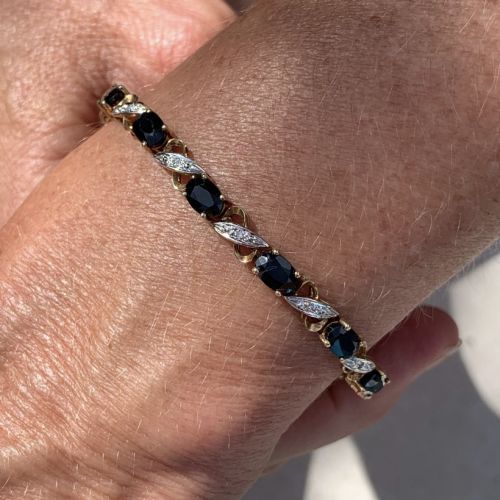
The most common forms on this page include platinum line bracelets from the nineteen-twenties and nineteen-thirties alongside gold pieces set with brilliant cut or old mine cut diamonds. Sapphire and ruby gemstone combinations also appear frequently alongside pure diamond iterations.
How they were made
The construction of these bracelets relies on durable precious metals such as platinum, eighteen carat white gold, yellow gold, and rose gold to hold rows of close set gemstones. Artisans utilised techniques like collet setting and secure link joints to ensure flexibility without compromising the structural integrity of the metal line.
Stones were carefully selected and cut by hand during earlier periods, resulting in distinctive old mine cuts or brilliant cuts that catch the light from every angle. Metalworkers balanced weight and strength, utilising lower carat golds like nine carat alongside high purity platinum depending on the decade of production.
What varies in quality
The overall standard of a piece depends heavily on the uniformity and carat weight of the stones, with higher quality examples displaying carefully matched diamond sizes and colour grades. Graduated designs require precise stone selection so that the visual flow along the wrist remains harmonious from clasp to centre.
Metalwork refinement dictates durability, as superior articulating links allow fluid movement while keeping each setting rigid enough to secure heavy diamond or sapphire weights. The crispness of period specific detailing, particularly in Art Deco platinum work, separates standard production from exceptional fine jewellery.
The Vintage Diamond Tennis Bracelet Glossary
- Tennis bracelet
- A flexible line bracelet featuring a symmetrical, continuous strand of individual gemstones set in precious metal. The term gained widespread currency later in the twentieth century.
- Old mine cut
- An antique diamond cutting style characterised by a near square girdle, high crown, and large open culet. This cut predates modern brilliant faceting and glows warmly under candlelight.
- Collet setting
- A metal collar or rim that encircles the edge of a gemstone to hold it securely in place. It represents a traditional method favoured in older fine jewellery.
- Graduated
- Describing a design where stones increase in size progressively towards the centre of the bracelet. This technique creates a balanced focal point on the wrist.
- Art Deco
- A design style spanning the nineteen-twenties and nineteen-thirties defined by geometric precision and platinum settings. It remains one of the most sought after periods for line bracelets.
Vintage Diamond Tennis Bracelet: Frequently Asked Questions
How do I wear a tennis bracelet daily?
These flexible bracelets sit closely against the wrist, making them comfortable for everyday wear when paired with casual or formal attire.
Ensure the safety clasp is fastened securely before wearing to prevent accidental loss during movement.
What is an old mine cut diamond?
Old mine cut diamonds are hand faceted stones from the nineteenth century or earlier featuring softer, chunkier facets than modern brilliant cuts.
They display a distinctive charm under low light due to their smaller table and deeper pavilion proportions.
How do I tell Art Deco bracelets apart?
Art Deco pieces typically utilise platinum settings and geometric layouts that contrast sharply with later mid-century designs.
Look for meticulous millegrain edges and structured links characteristic of the nineteen-twenties and nineteen-thirties.
Are coloured gemstones common in these bracelets?
Sapphires and rubies appear frequently alongside diamonds, often alternating within the metal line or framing the central stones.
These coloured variations reflect Victorian, Edwardian, and mid-century aesthetic preferences for contrasting hues.