
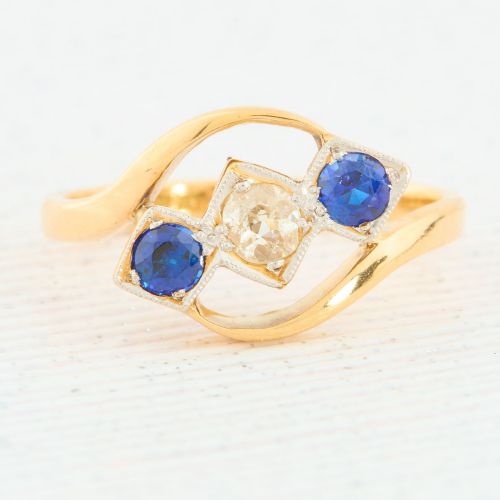
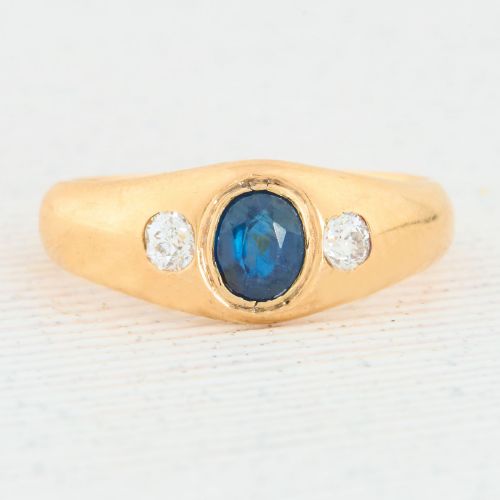
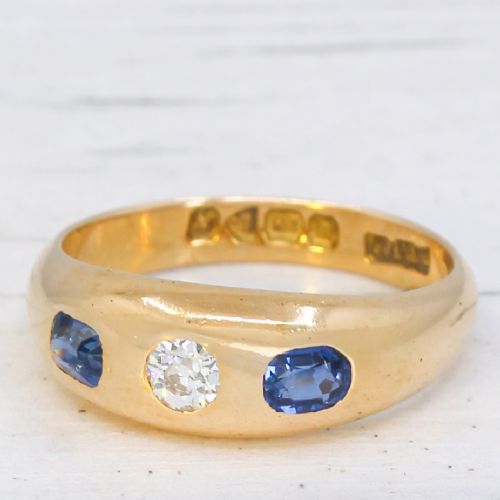


Yellow Gold Sapphire Band
A yellow gold sapphire band brings together rich blue stones and warm metal, spanning periods from Victorian craftsmanship to mid-century design.
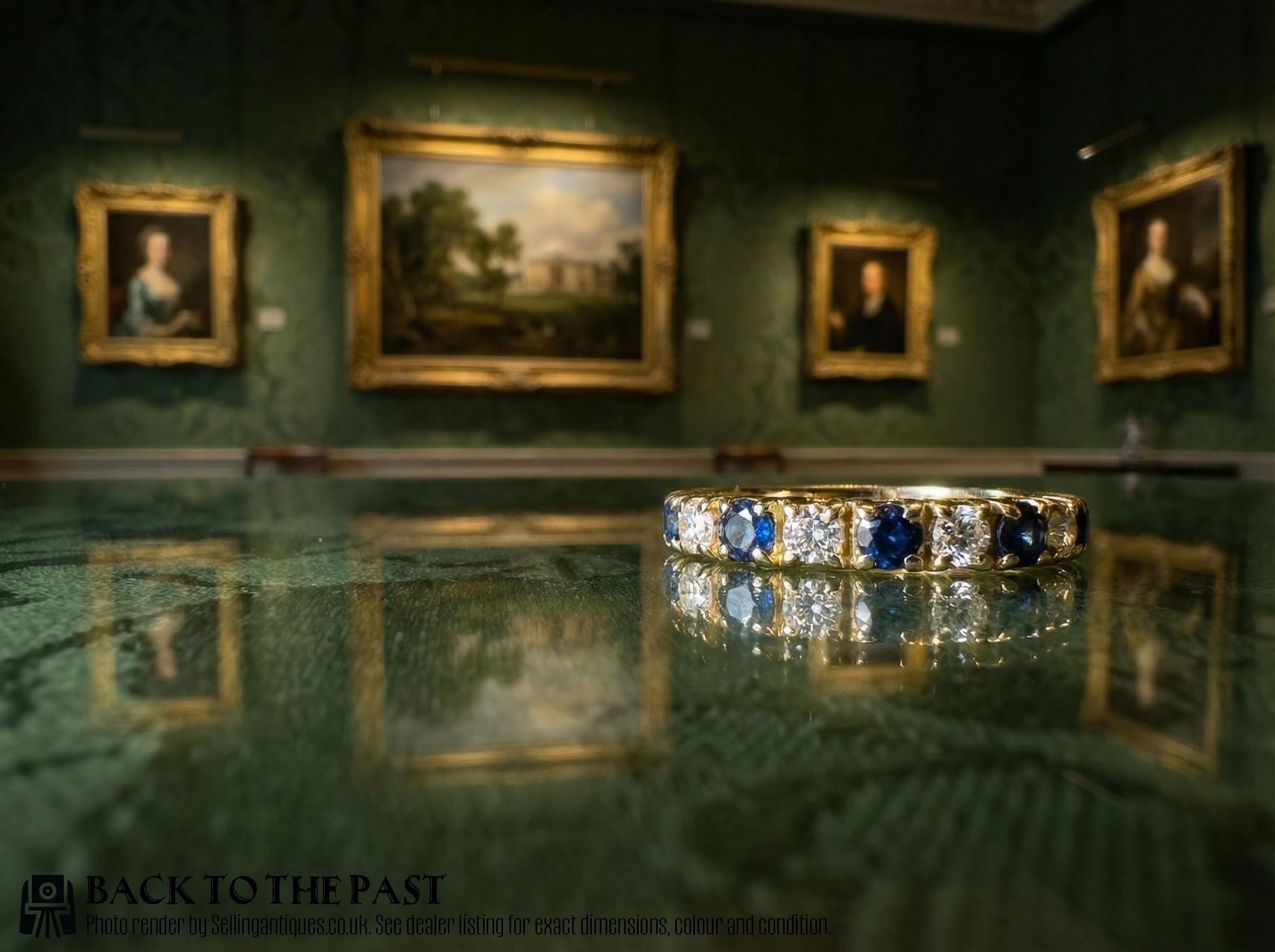
Yellow Gold Sapphire Band
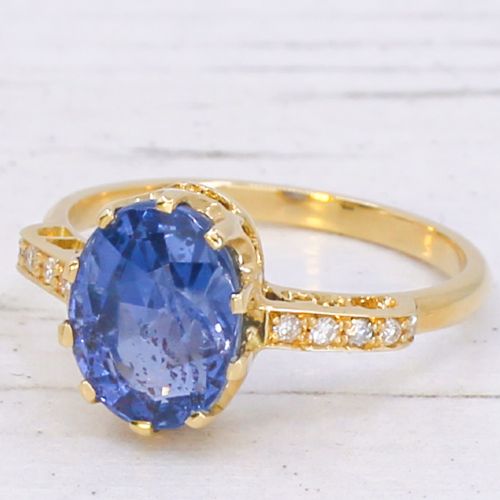
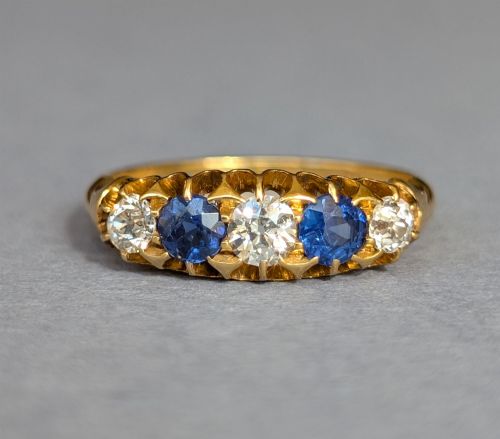
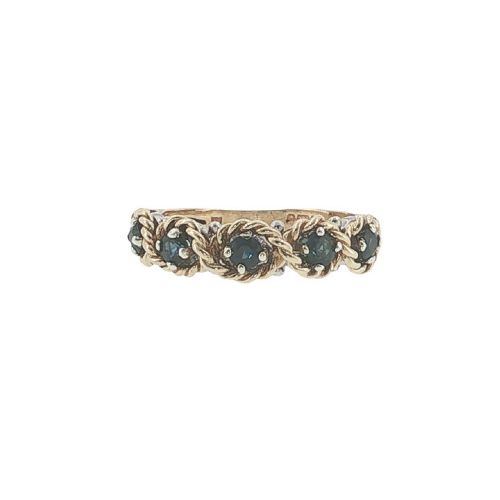
A yellow gold sapphire band is a ring that pairs blue corundum with gold metalwork, appearing in forms ranging from simple five-stone settings to intricate cluster arrangements. When searching for a yellow gold sapphire band, buyers encounter historic configurations such as Victorian boat rings, Edwardian gypsy settings, and half-eternity bands.
The selection on this page draws from eras including the Victorian, Edwardian, and Art Deco periods, alongside mid-century and later vintage pieces. These rings often incorporate diamonds alongside the central sapphires, utilising alternating stone patterns or flanking arrangements.
Origin details in the inventory point to Ceylon, Kashmir, and Burma for notable sapphire stones, paired with British gold hallmarks from assay offices like London and Chester. The forms vary from low-profile gypsy bands designed for daily wear to bolder cluster and trilogy designs.
Materials and construction
The physical structure of these pieces relies primarily on 9ct and 18ct gold, often specified as yellow gold, shaped to hold gemstones securely. Metalworking techniques visible in the inventory include traditional gypsy settings, boat-shaped mounts, and claw settings for cluster arrangements.
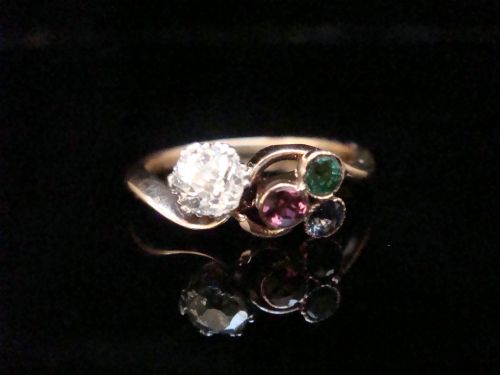
Gemstone selection pairs blue sapphires with old cut, rose cut, or modern cut diamonds, and occasionally ruby, emerald, or tourmaline accents. Stones are secured within hand-finished metal bands, frequently bearing historical hallmarking that records the assay year and metal purity.
Listings feature gold purities ranging from 9ct to 18ct yellow gold, alongside platinum accents in multi-metal Edwardian bands.
Distinctions in craftsmanship and materials
Quality in these rings rests on the geological origin and untreated nature of the sapphires, such as unheated Ceylon or Kashmir stones, weighed against commercial grades. The clarity, depth of blue colour, and cutting precision of both the sapphire and accompanying diamonds dictate the distinction between standard production and exceptional examples.
The integrity of the metalwork, the legibility of period hallmarks, and the preservation of original settings without later alterations determine the structural merit of each piece. Heavier gauge 18ct gold bands and well-preserved claw or gypsy mountings demonstrate superior original manufacture.
The Yellow Gold Sapphire Band Glossary
- Gypsy ring
- A style where stones are flush-set directly into a heavy, tapering band of metal. This technique became popular during the late Victorian and Edwardian eras for everyday wear.
- Half-eternity band
- A ring featuring a single row of gemstones set across the upper half of the band. These designs utilise stones such as sapphires and diamonds in close succession.
- Old cut diamond
- A hand-faceted diamond cut before modern machine standards were established, typically featuring a smaller table, higher crown, and open culet. They appear frequently in Georgian, Victorian, and Edwardian settings.
- Boat ring
- A mounting style shaped like an elongated boat hull, holding a row of graduated stones across the finger. This configuration is characteristic of late 19th-century jewellery.
- Trilogy ring
- A three-stone setting symbolising past, present, and future, usually pairing a central sapphire with two flanking diamonds.
Yellow Gold Sapphire Band: Frequently Asked Questions
How do I wear a gypsy band daily?
Gypsy bands feature stones set flush into the metal surface, which prevents claws from catching on clothing or everyday items. This low-profile construction makes them durable choices for continuous daily wear.
Their smooth contours protect the gem edges from impact, though checking the secure fit of the metal around the sapphire periodically remains wise.
What does an unheated sapphire mean?
An unheated sapphire is a natural gemstone that has undergone no artificial heat treatment to enhance its colour or clarity. Such stones retain their geological characteristics completely unaltered from the earth.
Independent gemological certification usually accompanies these specific sapphires to confirm their natural status and geographic origin.
How can I date my gold ring?
British gold rings often carry hallmarks stamped inside the band that indicate the assay office, metal purity, and a specific date letter. Comparing these stamps against historical hallmarking charts reveals the exact year of manufacture.
Stylistic markers like boat settings or starburst engravings also help narrow down the period when hallmarks are worn or absent.
Are half-eternity rings sizable?
Resizing half-eternity rings depends on the distribution of stones around the band and the construction of the metal shank. Because stones occupy the upper portion, a skilled jeweller must evaluate whether the metal at the back allows for adjustment.
Altering rings with stones set all the way around proves considerably more complex than adjusting those with plain metal shanks at the rear.