


Carved Gold Trilogy Band
These carved gold trilogy band rings bring together nineteenth and early twentieth-century goldsmithing with three stones, offering a classic cluster style.
Carved Gold Trilogy Band
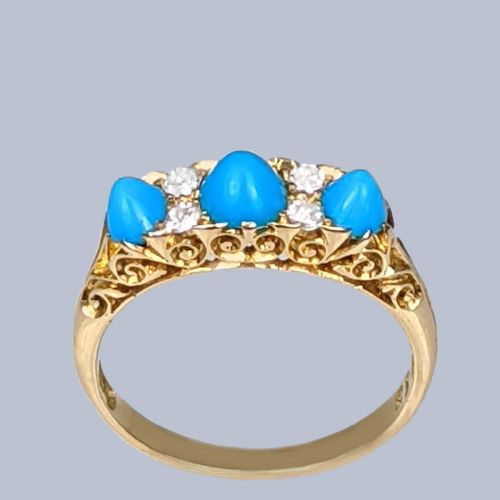
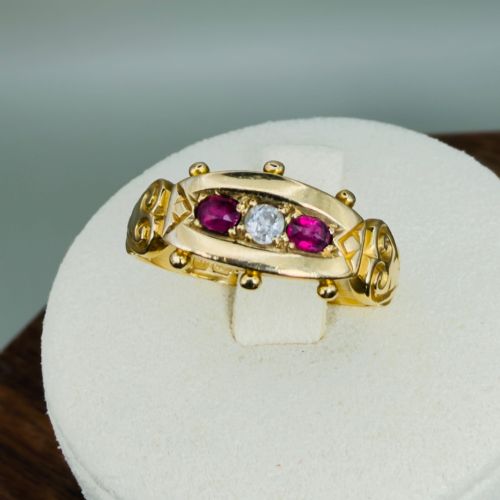
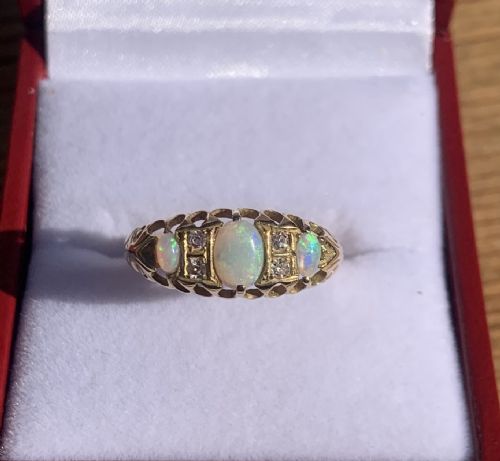
A carved gold trilogy band presents three principal stones set across the finger in mounts spanning the Victorian, Edwardian, and early twentieth-century periods. These rings most commonly feature combinations of diamonds alongside rubies, sapphires, turquoises, opals, or pearls set in yellow gold.
The form relies on a continuous band construction where the metal is often carved, chased, or engraved around the stone settings. Examples range from robust nineteenth-century mounts to lighter turn-of-the-century designs originating from provincial assay offices like Birmingham.
When seeking a carved gold trilogy band, buyers encounter pieces defined by their distinct stone pairings and gold purities, predominantly eighteen carat and nine carat yellow gold. The grouping typically showcases a central stone flanked by two matching gems, a configuration historically associated with past, present, and future.
How they were made
Goldsmiths constructed these rings primarily using eighteen carat and nine carat gold, shaping the metal through casting and hand-carving the shoulders and band. Stones such as old-cut diamonds, rubies, and sapphires were secured in claw settings or low profile mounts.
Makers utilised traditional hand-tooling techniques to engrave scrollwork or fluting directly into the gold shanks. Hallmarks stamped inside the bands often record the gold standard and assay office locations like Birmingham alongside the production era.
Several rings proudly bear the anchor mark of the Birmingham assay office, proving that even tiny bands travelled to the Midlands for testing.
What varies in quality
The distinction between tiers of these rings rests on the crispness of the hand-carved goldwork and the original matching of the gemstones. Finer pieces display deep, sharply defined chasing on the band and well-proportioned stone selections that sit harmoniously within the mount.
Subtleties in gold weight and the regularity of the claw work separate standard commercial production from more accomplished bench work. The integration of the stone settings into the carved shoulders reveals the precision applied by the original goldsmith.
The Carved Gold Trilogy Band Glossary
- Trilogy ring
- A ring set with three stones arranged in a horizontal row across the finger. This layout has a long history in British jewellery design.
- Old cut diamond
- A diamond cut by hand during the eighteenth or nineteenth century, featuring a small table, high crown, and a large open culet. These stones catch candlelight and low light with a distinct broad flash.
- Old mine cut
- An early diamond cut with a cushion shape and rounded corners, possessing deep pavilions and distinctive facets. It reflects the hand-polishing methods of Victorian workshops.
- Assay office
- An official body that tests the purity of precious metals and stamps items with hallmarks. Birmingham is a prominent example seen in these listings.
Carved Gold Trilogy Band: Frequently Asked Questions
How do I clean a carved gold trilogy band?
Clean these rings gently using warm soapy water and a soft brush to remove everyday debris from beneath the stone settings. Avoid harsh chemical dips, particularly if the piece contains softer organic gems like turquoise or opal.
Dry the ring thoroughly with a lint-free cloth after washing. Regular checks by a jeweller will ensure the claws holding the diamonds or rubies remain secure.
Can these antique rings be resized easily?
Most gold bands can be adjusted by a skilled jeweller, though the carved detailing around the shoulders requires careful handling. Altering the size on a ring with continuous hand-carved patterns demands precision to avoid disrupting the design.
Consult a specialist who works with antique jewellery to preserve any interior hallmarks and the integrity of the original shank.
What is the difference between Victorian and Edwardian rings?
Victorian rings, spanning the nineteenth century up to nineteen hundred, often utilise heavier yellow gold mounts with robust stone settings. The carved goldwork tends to be substantial and deeply chased.
Edwardian pieces from the early twentieth century frequently introduce lighter or more refined proportions, sometimes incorporating platinum alongside eighteen carat gold to highlight diamonds with greater delicacy.
Are these rings suitable for daily wear?
While these pieces were built for longevity, antique jewellery benefits from mindful wear during activities involving heavy impact. Harder stones like diamonds and rubies handle daily use well, while opals and turquoises require greater care against knocks and moisture.
Removing the ring before gardening, exercising, or heavy lifting helps protect both the stones and the carved gold band from unnecessary wear.