


Yellow Gold Navette Ring
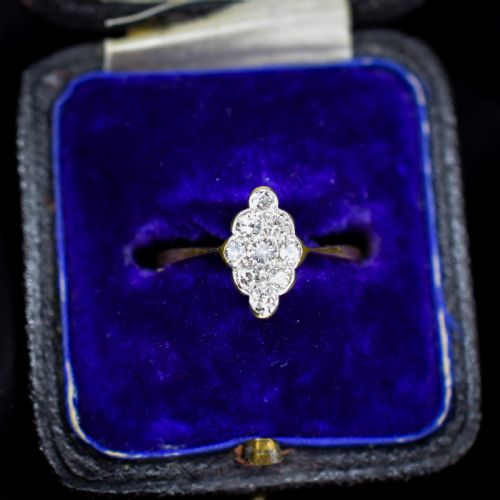
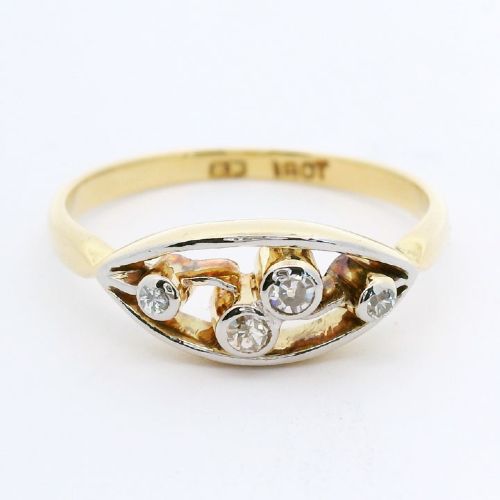
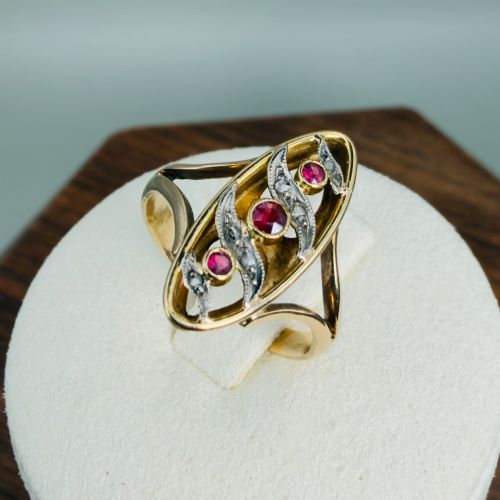
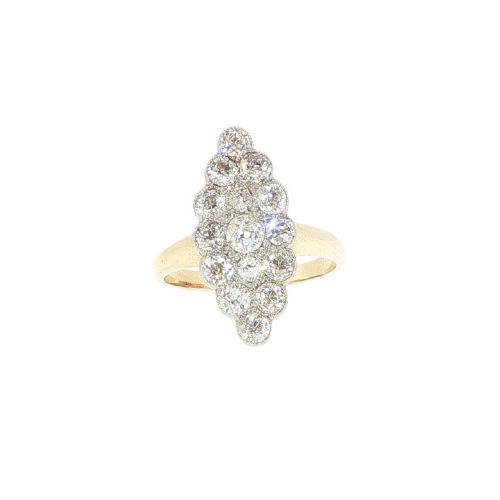
A yellow gold navette ring offers a distinctive elongated boat shape that commands the finger with period charm.
Yellow Gold Navette Ring
A yellow gold navette ring sits prominently on the hand through its characteristic boat-shaped or marquise silhouette. This elongated form stretches along the finger, creating a substantial profile that distinguishes it from round cluster designs.
The selections available here span significant periods from the late Victorian and Edwardian eras through to Art Deco and mid-century modern designs. Most examples unite yellow gold bands with contrasting platinum settings to hold the central stones securely.
Makers utilised this specific outline to maximise the visual impact of diamonds, rubies, sapphires, and emeralds. The geometry of the navette shape draws the eye along the length of the hand, offering a commanding presence.
Materials and construction
Goldsmiths constructed these rings primarily in eighteen carat yellow gold, occasionally pairing the warm metal with platinum heads or bands. This combination provided both traditional warmth and a secure white metal setting for the gemstones.
Cluster arrangements combine old cut diamonds, rose cut diamonds, and old mine stones with coloured gems including Burmese rubies, sapphires, emeralds, and natural pearls. These stones are set closely together to form the intricate outline of the navette face.
Current selections span the Victorian, Edwardian, Art Nouveau, and Art Deco periods, utilising eighteen carat yellow gold, platinum, diamonds, rubies, and sapphires.
Assessing quality in the range
The calibre of a yellow gold navette ring rests upon the harmony of its proportions and the skill of the stone setting. Finer examples display precise symmetry in the elongated outline and delicate openwork metal beneath the cluster.
Gemstone selection and matching elevate the standard of the piece, particularly where old cut diamonds and matched rubies or sapphires fill the boat-shaped face. The integration of platinum with yellow gold demands high technical precision from the jeweller.
The Yellow Gold Navette Ring Glossary
- Navette
- A boat-shaped or marquise gemstone setting that tapers to points at both ends. This French term describes the characteristic elongated silhouette found in these rings.
- Marquise
- An alternative term for the boat-shaped outline used interchangeably with navette in jewellery descriptions. It refers to the pointed oval form that sits along the finger.
- Old cut
- A diamond facet arrangement predating modern brilliant cuts, characterised by a smaller table and higher crown. These stones display distinctive broad light reflection.
- Rose cut
- A vintage diamond cut featuring a flat base and a domed crown with triangular facets. It provides a soft, translucent gleam rather than modern brilliance.
- Cluster
- An arrangement of multiple smaller gemstones gathered tightly around a central stone or set closely together. This technique forms the decorative face of the ring.
Yellow Gold Navette Ring: Frequently Asked Questions
How do I date these rings?
Dating relies on the structural characteristics, hallmarks, and gemstone cuts associated with periods like the Victorian and Edwardian eras. Old cut diamonds and platinum-topped yellow gold are common in these earlier pieces.
Mid-century examples introduce different gold purities and simpler shank constructions while retaining the traditional cluster format.
Are these rings suitable for daily wear?
These rings can be worn daily provided they receive appropriate care and regular security checks for the stone settings. The elongated shape requires mindfulness regarding impact.
Removing the ring during heavy manual tasks preserves the delicate platinum prongs and gold bands.
What stones appear in these designs?
Diamonds form the primary focal points, frequently paired with rubies, sapphires, emeralds, and pearls. Coloured stones add deep hues to the centre or surround the main diamonds.
Combinations of old cut diamonds with Burmese rubies or sapphires define the traditional palette of the late nineteenth and early twentieth centuries.