


Art Deco Navette Ring
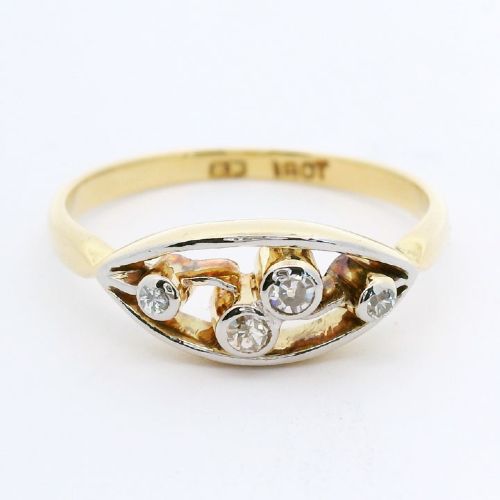
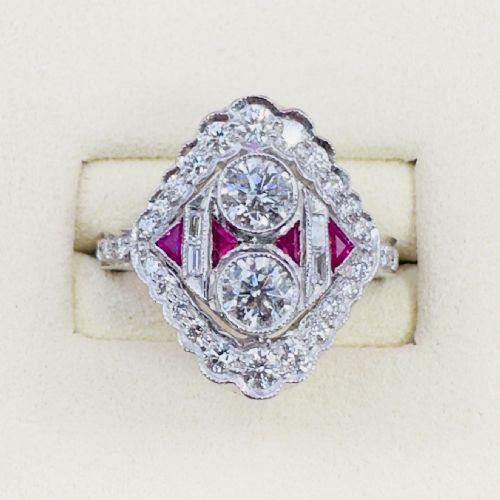
An art deco navette ring is a boat-shaped jewel designed to elongate the finger with geometric brilliance.
Art Deco Navette Ring
When you search for an art deco navette ring, you are looking at elongated, boat-shaped cluster rings that stretch gracefully along the finger. The form relies on sharp symmetry, stepped shoulders, and clustered stones to create a striking architectural silhouette.
The pieces you meet here draw on the 1920s and 1930s, alongside Edwardian examples and later mid-century iterations. They span platinum, white gold, and traditional yellow gold, frequently framing diamonds alongside rubies, sapphires, and emeralds.
How they were made
Jewellers built these rings primarily in platinum and gold, often combining an 18ct yellow or white gold shank with a platinum setting top to secure the small stones safely. This mixed-metal technique offered maximum structural strength for intricate openwork without sacrificing a bright white backdrop for the diamonds.
Stones are set using early cuts such as old transitional cuts and rose cuts, arranged in tight clusters to form the signature marquise outline. Fine millegrain borders and pierced gallery work finish the metal edges with precise textural detail.
Art Deco Navette Ring Retail Price Guide 2026
Typical asking prices for art deco navette ring among the pieces listed under this phrase on Sellingantiques today, from the lower quarter to the upper quarter. They describe what is for sale here now, not the wider market.
The French named it after a little boat, so you are essentially wearing a tiny vessel on your hand.
What varies in quality
Quality in these rings rests upon the crispness of the geometric design and the precision of the stone setting. A finer piece maintains sharp, symmetrical points at the ends of the navette boat shape without distortion or uneven wear to the millegrain edge.
The choice and matching of the gemstones also dictate the calibre of the ring, from simple diamond clusters to richer combinations featuring natural rubies, sapphires, or emeralds. Heavier platinum and gold gauge weights provide the physical substance expected in superior workshop output.
The Art Deco Navette Ring Glossary
- Navette
- A French term meaning little ship, describing a pointed, boat-shaped cluster ring that stretches along the length of the finger. It is the defining outline of the style.
- Marquise
- An alternative descriptor for the elongated, pointed oval shape shared by the navette silhouette. The term applies equally to the profile of the cluster and to specific gemstone cuts.
- Millegrain
- A decorative technique featuring a raised line of tiny, bead-like metal points along the edge of a setting. It softens the metal boundary and catches the light.
- Platinum
- A dense, white precious metal favoured in the period for its strength, allowing jewellers to create delicate, secure settings for diamonds and coloured gems.
Art Deco Navette Ring: Frequently Asked Questions
What is a navette ring?
A navette ring is a distinctive piece shaped like a little boat or an eye, designed to sit lengthwise along the finger.
The silhouette creates an elongated, elegant profile that was particularly fashionable during the 1920s and 1930s.
How do I date an art deco ring?
Dating relies on the combination of metal choices, such as platinum settings on gold shanks, and specific diamond cuts like old transitional or rose cuts.
HALLMARK evidence and stylistic markers like geometric piercing further narrow the decade of production.
Are these rings made of platinum?
Many examples utilise platinum, particularly for the top setting holding the stones, paired with 18ct gold or white gold for the band.
This dual-metal construction was standard practice among jewellers of the period to ensure structural durability.
Can I wear a navette ring daily?
These antique rings can be worn regularly provided they receive appropriate care and regular checks on the delicate settings.
Their elongated shape requires mindful wear to avoid catching the pointed ends on clothing or hard surfaces.