
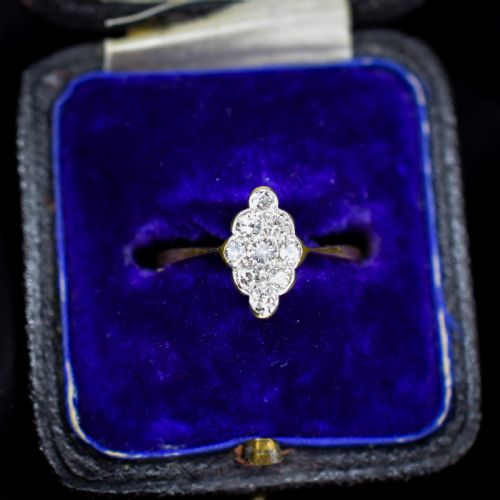
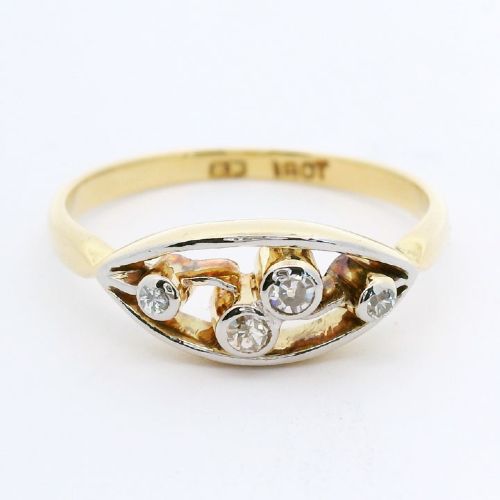
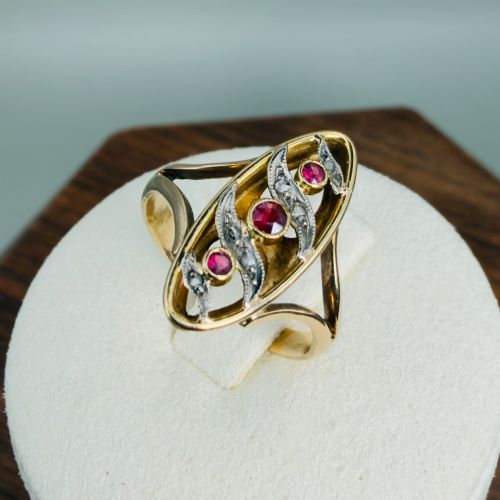
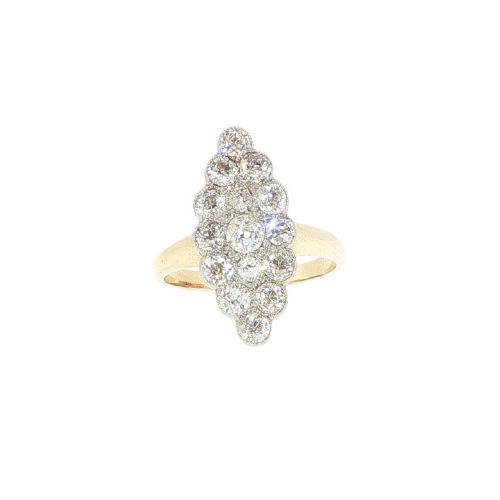


Vintage Diamond Navette Ring
A vintage diamond navette ring offers an elongated boat shape on the finger, prized for its dramatic proportions and historical craftsmanship.
Vintage Diamond Navette Ring
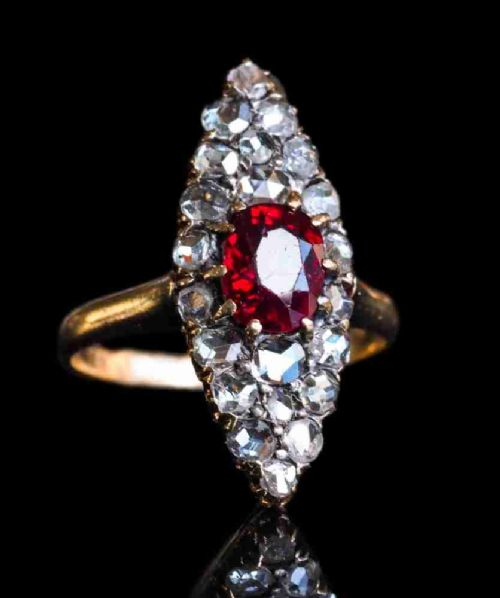
A vintage diamond navette ring presents an elongated, boat-shaped silhouette that stretches along the finger. The form draws the eye with its distinctive pointed ends and symmetrical geometry.
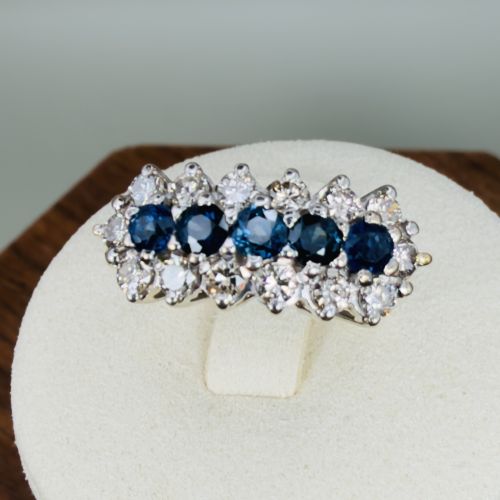
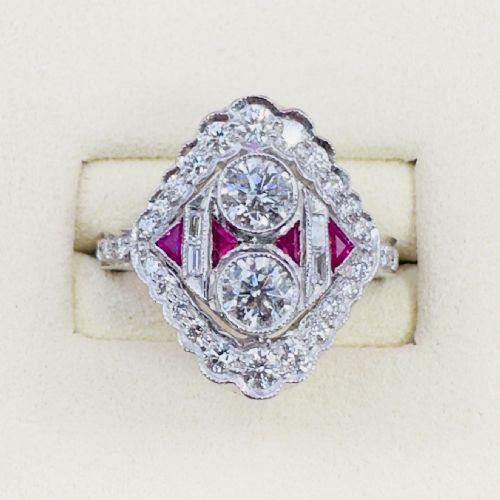
Most examples encountered here span the Edwardian and Art Deco periods, though Victorian and mid-century pieces also appear. These rings typically combine diamonds with ruby, sapphire, or emerald accents.
Makers set these stones in combinations of platinum, 18ct yellow gold, or 18ct white gold. The resulting profile sits flat or slightly raised, designed to showcase maximum sparkle across the finger.
How They Were Made
Goldsmiths constructed these rings using platinum, 18ct yellow gold, and 18ct white gold, frequently pairing platinum tops with gold shanks. Platinum provided the strength needed for delicate milgrain edges and secure claw settings.
Jewellers utilised old cut, rose cut, and transitional cut diamonds alongside natural rubies and sapphires. Stones were hand-set into complex cluster and panel arrangements to create the characteristic marquise outline.
Several pieces include certification papers, proving that paperwork has followed these little boats across a century or more of adventures.
What Varies in Quality
The precision of the stone setting and the delicacy of the metalwork dictate the standard of a navette ring. Superior pieces maintain crisp milgrain edges and balanced proportions between the central gems and surrounding melee.
The clarity and cut of the primary diamonds, alongside the depth of colour in accompanying rubies or sapphires, determine the tier of the piece. Heavier gauge metalwork on the shank also points to higher original manufacture.
The Vintage Diamond Navette Ring Glossary
- Navette
- A boat-shaped gemstone setting with pointed ends, also known as a marquise shape. It creates an elongated appearance on the finger.
- Milgrain
- A decorative beaded edge of metal often seen on Edwardian and Art Deco jewellery. It frames the stones with a fine textured border.
- Old Cut
- A hand-faceted diamond cut predating modern brilliant standards. These stones exhibit smaller tables and higher culets, glowing softly under candlelight.
- Cluster Ring
- A ring design featuring a central stone surrounded by a ring of smaller gems. This arrangement magnifies overall visual presence.
- Platinum
- A dense, durable white metal widely utilised in Edwardian and Art Deco settings. Its strength allowed jewellers to create ultra-fine wirework without risking stone loss.
Vintage Diamond Navette Ring: Frequently Asked Questions
How do I wear a navette ring safely?
The elongated shape means the pointed ends extend further along your finger than a standard round ring. Take care when wearing it alongside other bands to prevent rubbing against the delicate tips.
Removal during heavy manual tasks preserves the fine platinum or gold claws holding the smaller accent stones in place.
What is the difference between navette and marquise?
The terms are frequently used interchangeably to describe the same boat-shaped outline with pointed ends. Both styles stretch visually across the knuckle.
Historical British and French pieces often favour the name navette, while later decades leaned towards marquise for the identical silhouette.
How do I date a diamond navette ring?
Dating relies on the mounting style, metal combinations, and diamond cuts present in the piece. Edwardian examples often feature platinum-topped yellow gold with intricate openwork, while Art Deco rings embrace geometric symmetry.
Hallmarks stamped inside the band provide official assay office symbols and date letters for precise verification.
Can these rings be resized easily?
Resizing depends entirely on the decorative shoulders and the metal composition of the band. Plain gold shanks adjust simply by a jeweller adding or removing a small section of metal.
When the navette design extends far down the shoulders with pavé-set diamonds, resizing becomes complex to avoid disturbing the side stones.