

Yellow Gold Five Stone Ring
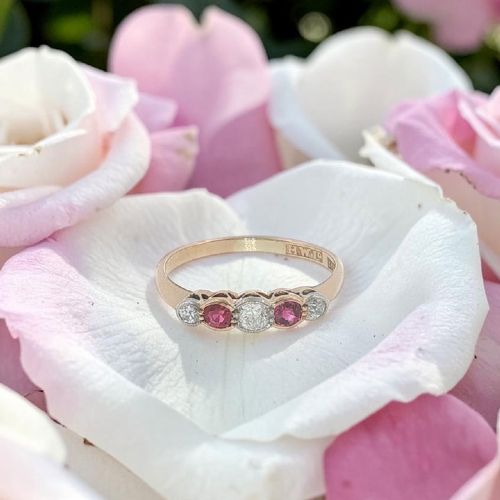
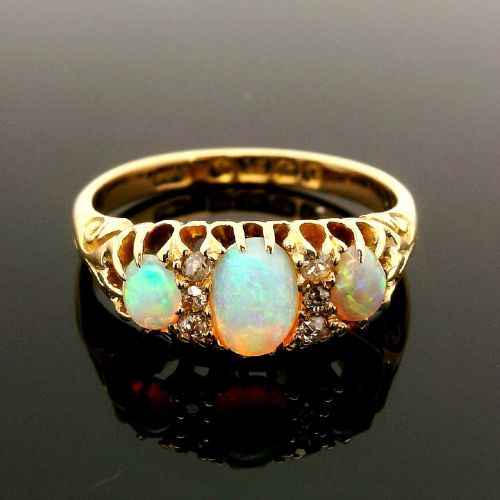
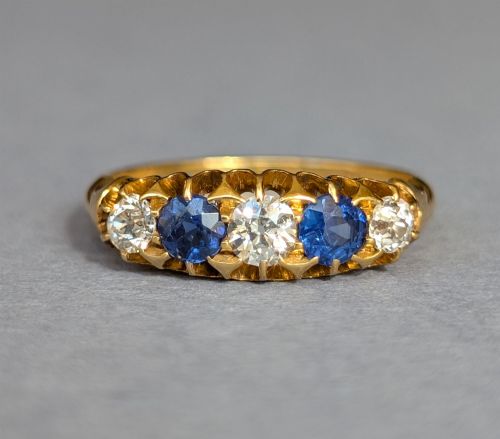
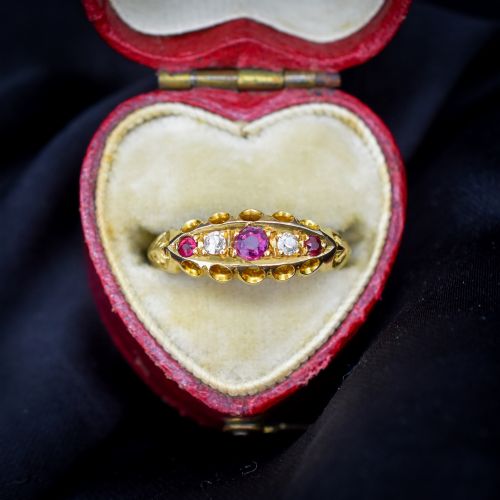
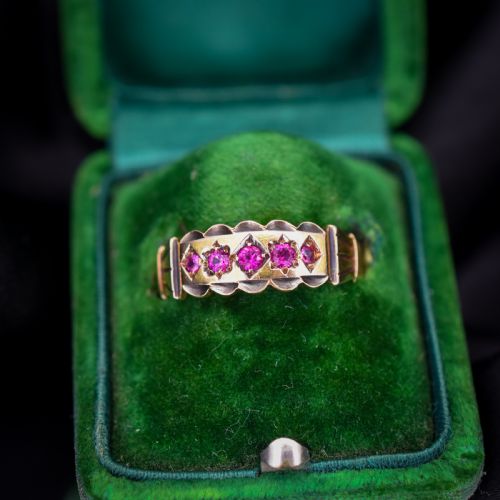
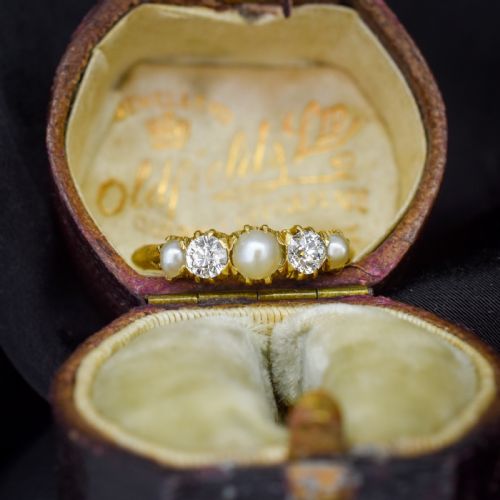
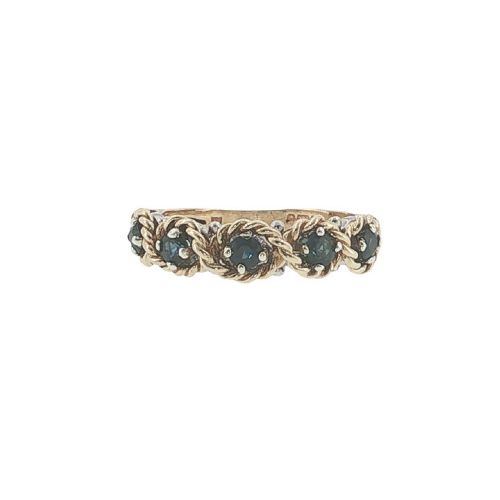
A yellow gold five stone ring brings together rows of diamonds, opals, rubies or sapphires in bright Victorian, Edwardian and vintage bands.
Yellow Gold Five Stone Ring
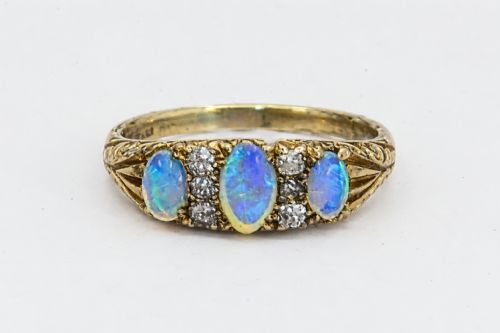
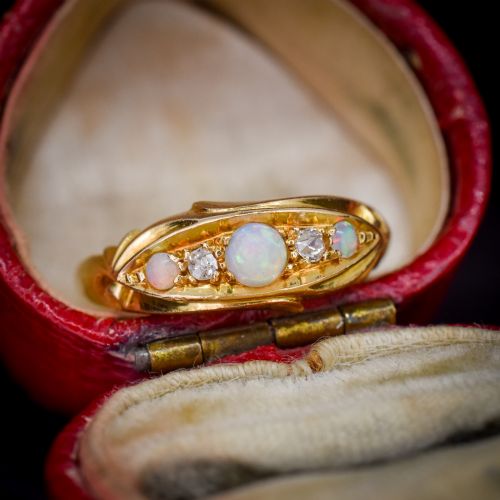
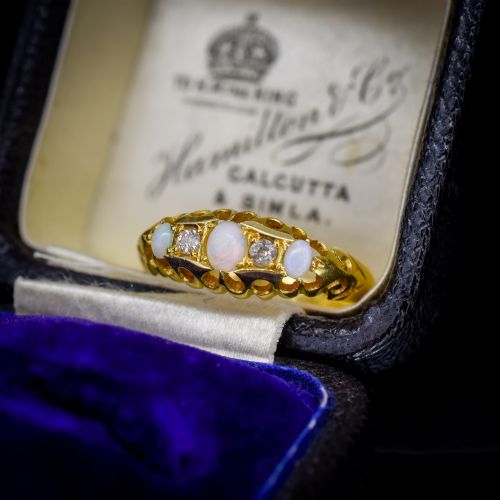
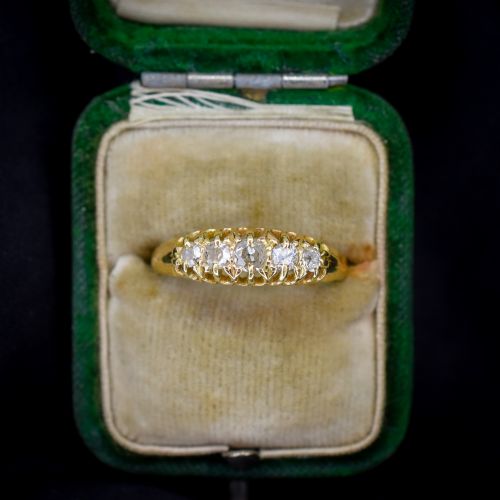
A yellow gold five stone ring sets a sequence of five gems across the finger in a row, often taking the form of a traditional boat shape or a straight band. These pieces emerge predominantly from the Victorian and Edwardian eras, continuing through the Art Deco period into mid-century vintage designs.
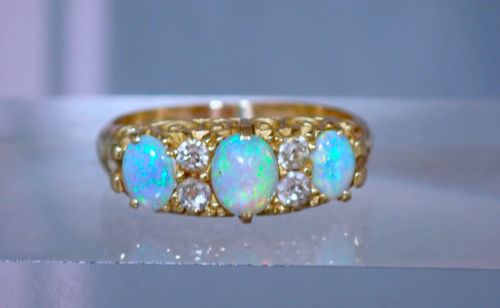
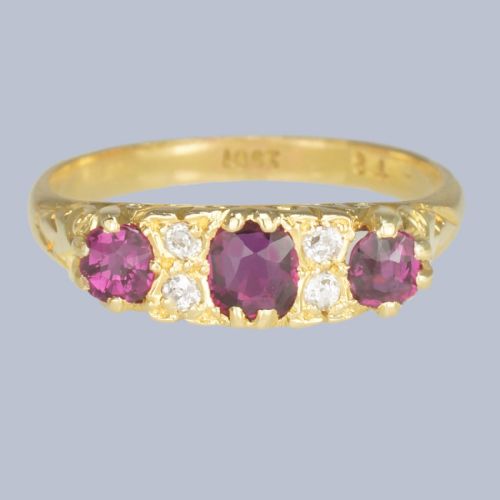
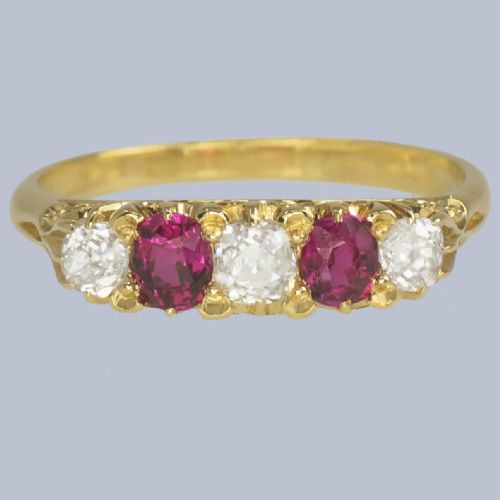
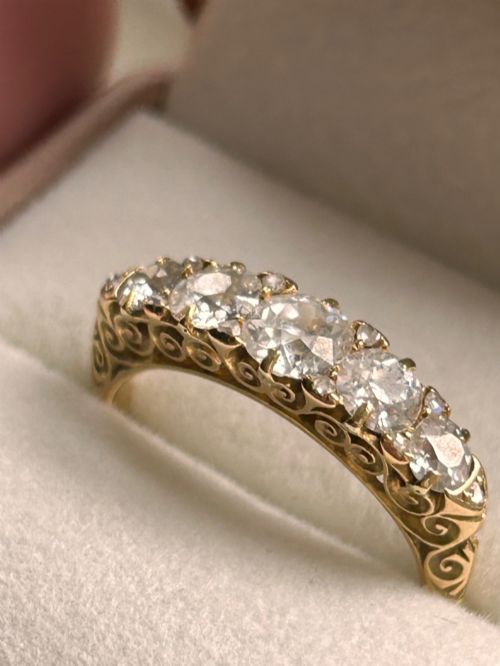
The most common examples on this page utilise bright 18ct yellow gold mounts to hold old cut diamonds, natural opals, vivid rubies or deep sapphires. The arrangement places the larger central stone flanked by four descending gems, creating a balanced line across the hand.
How they were made
The foundation rests on 18ct yellow gold, occasionally 15ct or 9ct, shaped into sturdy bands and boat-shaped settings designed to lift the gems. Goldsmiths secured stones using claw, gypsy or scroll settings, integrating platinum on later twentieth-century or Art Deco variations.
Gemstones such as old mine cut diamonds, rose-cut diamonds, rubies, garnets and opals were hand-set into the metalwork. Hallmarks stamped inside the shanks frequently record regional assay offices in cities like Chester, Birmingham and London alongside specific dates.
Some Victorian designers hid secret starburst engravings behind gem settings to catch stray light where nobody else could see it.
What varies in quality
The standard of a yellow gold five stone ring depends upon the matching and weight of the principal gemstones, particularly where old cut diamonds or natural opals display superior fire and colour. Uniformity in the size graduation across the five stones dictates the visual harmony of the face.
The crispness of the original scrollwork, claw integrity and the legibility of the assay office hallmarks preserved on the inner band distinguish finer workshop output. Substantial gold weight in the shank ensures the structural longevity of the piece through decades of wear.
The Yellow Gold Five Stone Ring Glossary
- Boat ring
- A setting shaped like the hull of a boat, curving upward gently from the finger to house a row of gems. This form was especially popular during the Edwardian and late Victorian periods.
- Old cut diamond
- A hand-faceted diamond cut before modern machinery standardisation, featuring a smaller table and a higher crown. These stones scatter candlelight with a distinctive soft warmth.
- Gypsy set
- A mounting style where the gemstone is flush-set directly into the thick gold band, leaving the metal surrounding the stone smooth and heavy.
- Half hoop ring
- A ring configuration where stones are set in a linear arc across the top half of the finger rather than encircling the entire band.
Yellow Gold Five Stone Ring: Frequently Asked Questions
How do I care for antique opals?
Antique opals require gentle handling because they contain natural water content and possess a softer Mohs hardness rating than diamonds or rubies. Avoid exposing them to harsh chemicals, ultrasonic cleaners or sudden temperature shifts.
Removing the ring before washing hands, gardening or heavy lifting protects the stone from scratches and preserves the integrity of the surrounding gold prongs.
Are old cut diamonds different?
Old cut diamonds are shaped by hand rather than by automated laser technology, resulting in smaller tables, open culets and distinctive chunky faceting patterns. These antique stones catch ambient light differently than modern brilliant cuts.
Each stone possesses unique character due to the individual hand-polishing process employed by period lapidaries.
How do I read British hallmarks?
British hallmarks stamped inside the shank typically include a standard purity mark such as 18 for 18ct gold, alongside symbols indicating the assay office like a crown for Sheffield or an anchor for Birmingham. Date letters provide the specific year of testing.
These tiny stamped marks offer a reliable method for tracing the geographic origin and exact period of manufacture for antique jewellery.