
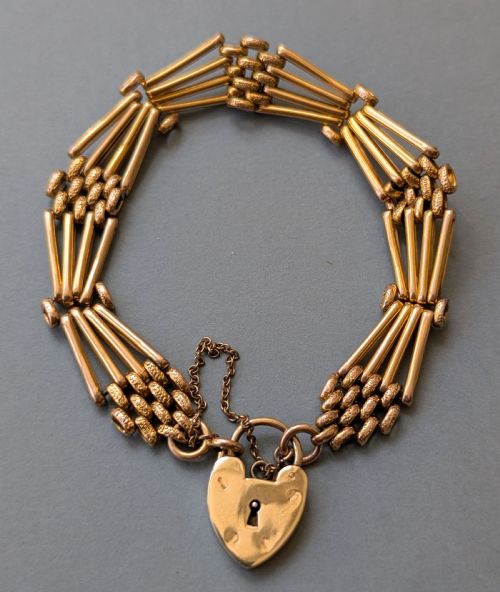


Yellow Gold Chain Bracelet
A yellow gold chain bracelet brings together historical weight and wearable design from Victorian, Edwardian, and mid-century eras.
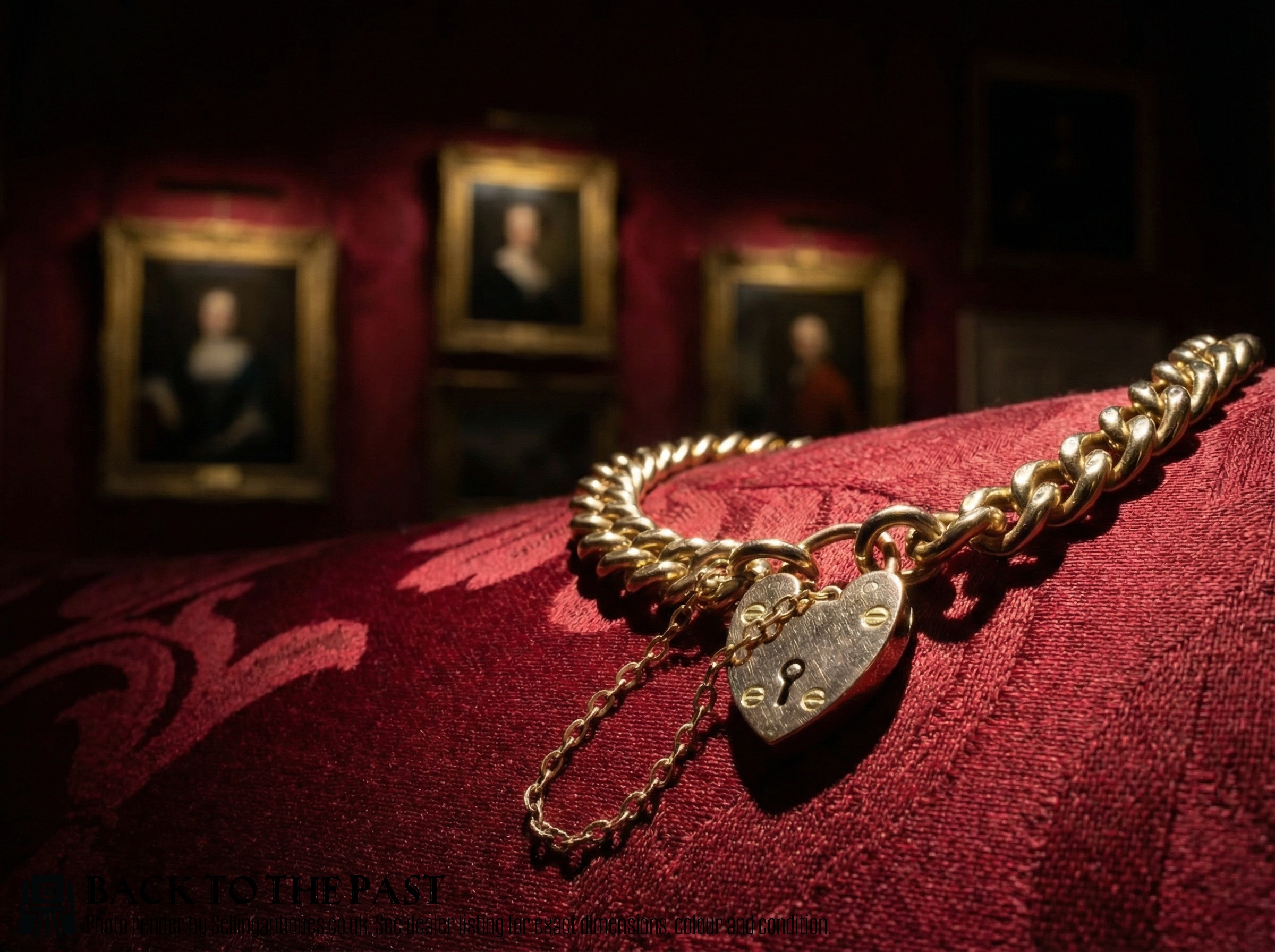
Yellow Gold Chain Bracelet
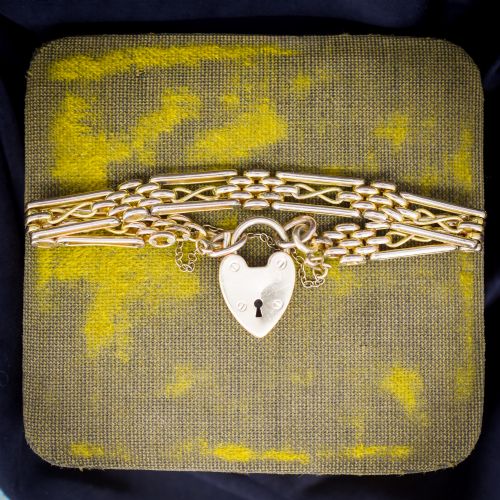
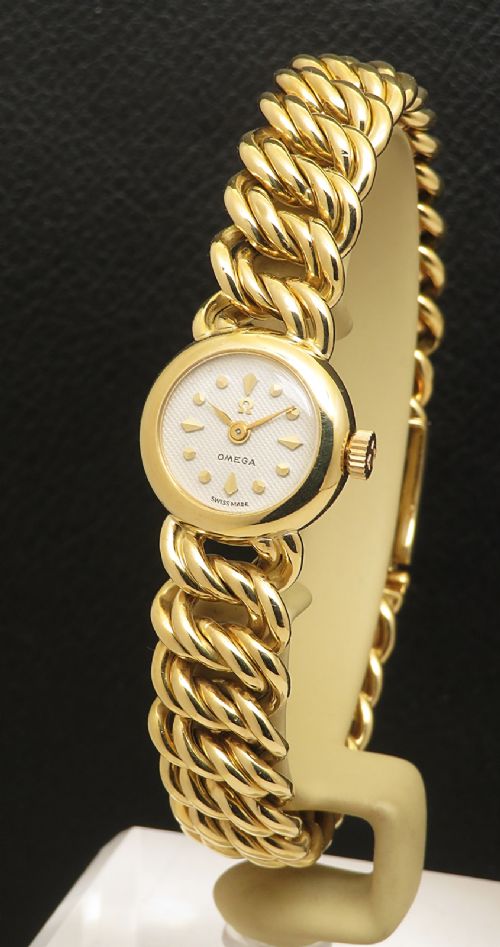
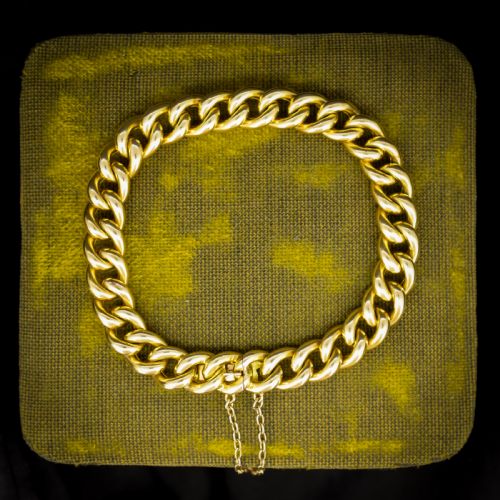
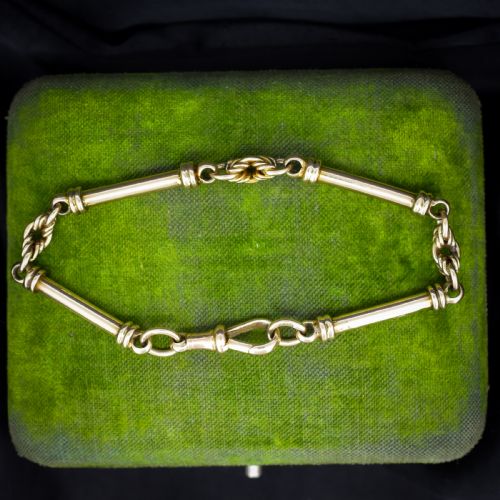
A yellow gold chain bracelet takes many shapes across the Victorian, Edwardian, and mid-century periods, ranging from curb links and gate links to fancy chains set with gemstones.
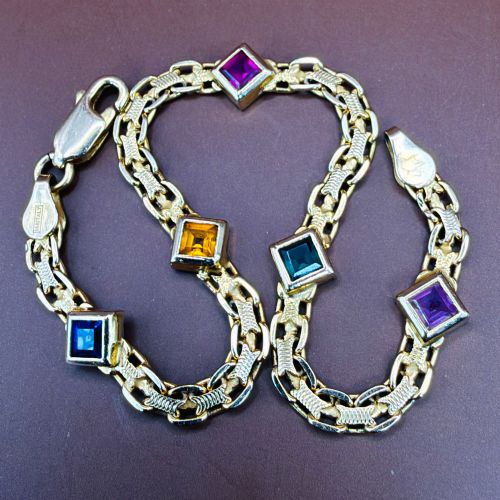
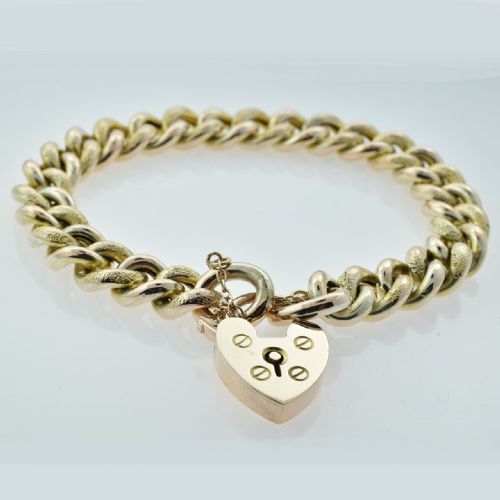
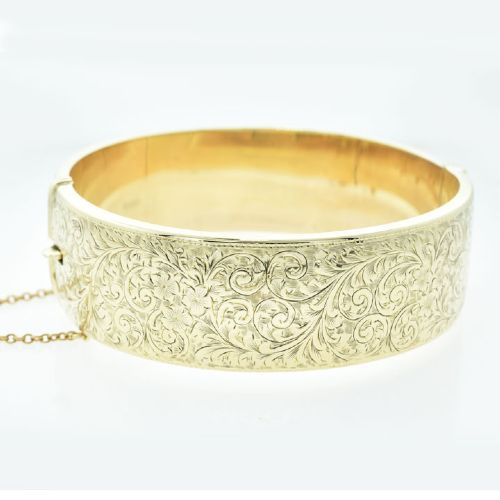
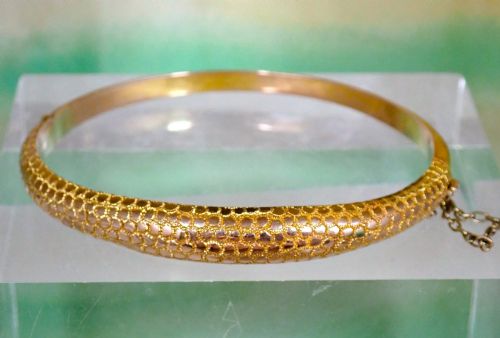
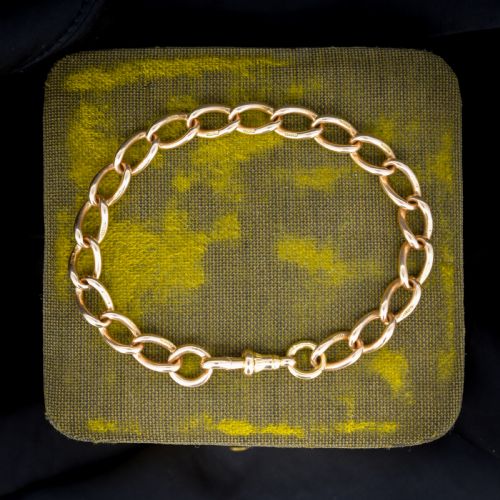
The versions most often met on this page include curb link chains secured with heart padlocks or dog clips, alongside hinged bangles and gemstone-set link bracelets.
Originating primarily from British workshops, these pieces span the late nineteenth century through to the 1960s, reflecting changing tastes in gold fineness and link geometry.
Materials and Technique
Metals span 9ct, 15ct, and 18ct yellow gold, alongside rolled gold and platinum accents, shaped into hollow or solid links, tubular bars, and intricate rope twists.
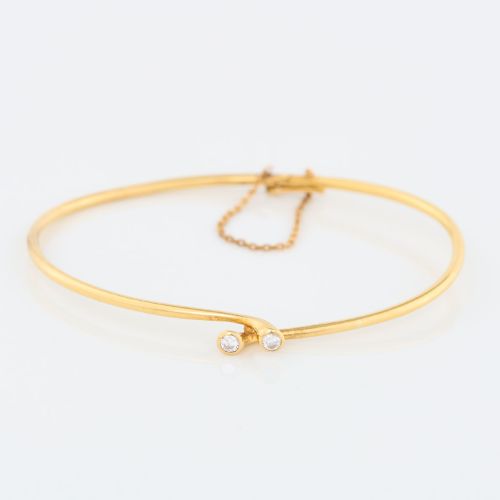
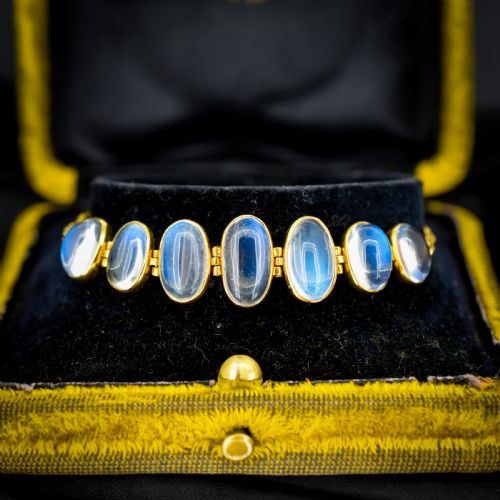
Gemstones such as diamonds, sapphires, rubies, turquoise, pearls, and amethysts are incorporated via star settings, bezel settings, and cross-over arrangements.
Construction techniques combine hand-engraving, applied wirework, and specialised clasps including concealed catches, dog clips, and heart padlocks.
Listings span the Victorian, Edwardian, and mid-century periods, utilising 9ct gold, 18ct yellow gold, pearls, and diamonds.
Assessing Quality
The caliber of a yellow gold chain bracelet depends upon the heft of the gold links and the precision of the hand-engraving or wirework detail.
Solid construction and well-preserved hallmarks distinguish superior examples from lighter, rolled-gold alternatives or pieces with excessive wear at the pivot points.
Smith and Pepper
The Yellow Gold Chain Bracelet Glossary
- Curb link
- A type of chain composed of identical interlocking links that lie flat against the wrist. This form provides a substantial feel and underpins many traditional gate link bracelets.
- Dog clip
- A spring-loaded fastener shaped like a small hound's leash snap. It functions securely as a clasp on many late nineteenth and early twentieth-century chain bracelets.
- Heart padlock
- A heart-shaped clasp mechanism frequently attached to Victorian and Edwardian curb link bracelets. These locks often secure with a functional key or a spring tongue.
- Gate link
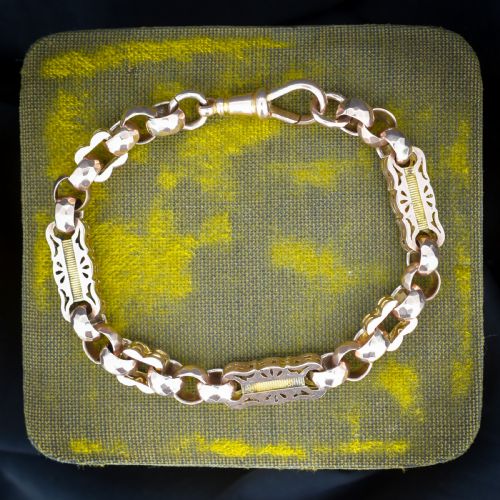
- A repeating multi-bar link design derived from rural gate construction. It forms a wide, flexible band popular in Victorian and Edwardian jewellery.
Yellow Gold Chain Bracelet: Frequently Asked Questions
What is a yellow gold chain bracelet?
A yellow gold chain bracelet is a wrist ornament constructed from interconnected metal links, spanning eras from the Victorian period to the mid-twentieth century.
These pieces use varying purities of gold, including 9ct, 15ct, and 18ct, and frequently incorporate historical clasps like dog clips or heart padlocks.
How do I date a yellow gold chain bracelet?
Dating relies on hallmarks, clasp types, and overall construction styles characteristic of periods such as the Victorian era, Edwardian period, or mid-century.
Specific link designs, like tubular bars or star-set gemstones, help narrow the decade of manufacture alongside official assay office stamps.
How were these bracelets worn historically?
Historically, link bracelets were worn daily as personal adornments, often accumulating charms or serving as secure keepsakes with locking padlocks.
Heavier curb and gate link versions were favored for their durability and substantial presence on the wrist during the late nineteenth and early twentieth centuries.
How do I care for an antique gold bracelet?
Care involves gentle cleaning with a soft cloth and avoiding harsh chemical dips, particularly when pearls or soft gemstones are set into the links.
Store the bracelet flat or in a lined box to prevent kinks in flexible chains and protect delicate engraved surfaces from scratching.