



Yellow Gold Bar Pin
A yellow gold bar pin brings together slender precious metal with fine gems, offering a neat fastener shaped by Victorian and Edwardian hands.

Yellow Gold Bar Pin
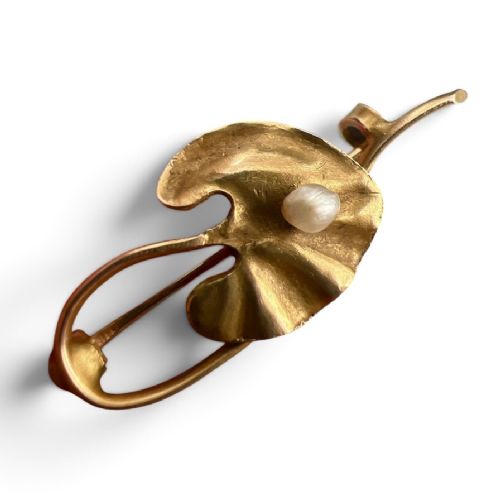
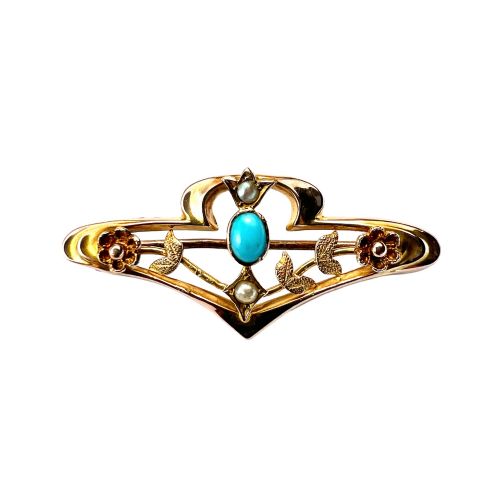
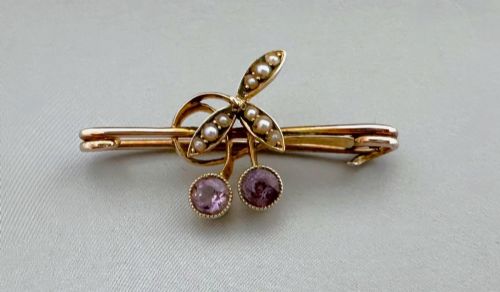
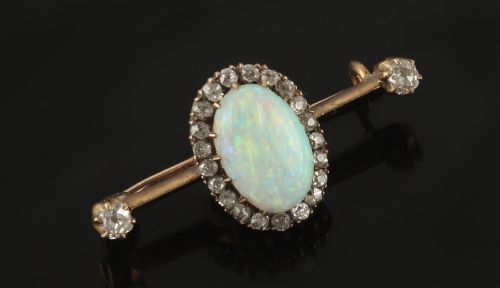
When searching for a yellow gold bar pin, a buyer encounters slender brooches designed to fasten garments with a horizontal shaft of metal. These pieces emerge predominantly from Victorian, Edwardian, and Art Deco periods, spanning the late nineteenth century into the mid twentieth century. Most examples combine a simple metallic stem with central clusters of seed pearls, diamonds, rubies, or turquoise.
The varieties on this page range from plain linear mounts to ornate floral motifs, hearts, swallows, and sporting subjects like bicycles and horseshoes. The nineteenth century yields rich 15ct gold pieces set with garnets and opals, while early twentieth century makers favour lighter 9ct and 14ct mounts set with aquamarines and peridots. Each type reflects the prevailing ornamental tastes of its decade of origin.
Origin and construction vary from English regional workshops to French boxed pieces, demonstrating diverse regional jeweller techniques. Buyers find both delicate single stone pins and heavier diamond encrusted creations that double as lapel ornaments. These items survive as functional wearable history from eras that prized meticulous miniature craftsmanship.
How they were made
Maker workshops utilised solid 9ct, 14ct, 15ct, and 18ct yellow gold alongside platinum sections to fabricate the slender bars and settings. Molten metal was drawn and shaped into wire frames, onto which delicate bezels and claw settings were soldered by hand. These metallic structures were then paired with natural gemstones including sapphires, emeralds, chrysoberyls, and old European cut diamonds.
Surface decoration involved meticulous gem-setting alongside seed pearls applied in floral, crescent, or star arrangements. Enamel work and chased details occasionally accent the gold body, while pin stems were tempered for spring and resilience. Every component relies on manual soldering and stone setting characteristic of pre-industrial and early twentieth century bench jewellers.
Among the feathered and floral motifs, a lone gold cockerel stands ready to crow from a lapel.
What varies in quality
Artistic execution and structural complexity dictate the upper tier of the range. Hand-carved motifs, enamelled cockerels, and intricate winged heart constructions demonstrate superior bench work compared to simple cast mounts. Original fitted boxes and documented French origin further distinguish collector-grade examples.
The Yellow Gold Bar Pin Glossary
- Bar brooch
- A horizontal pin featuring a slender metallic shaft that often supports central gemstones or decorative motifs. This form dominated late nineteenth and early twentieth century fastener design.
- Old cut diamond
- A hand-faceted diamond shape typical of Victorian and Edwardian jewellery, featuring a smaller table and wider facets that catch candlelight softly. These stones pre-date modern brilliant cutting standards.
- Seed pearl
- A very small natural or cultured pearl used in clusters or floral arrangements on antique brooches. Jewellers threaded them meticulously onto fine wire or glued them to golden pegs.
- Carat
- A measure of gold purity where 24 carats represents pure gold, or a measure of gemstone weight. Antique British pieces commonly utilise 9ct or 15ct gold alloys.
Yellow Gold Bar Pin: Frequently Asked Questions
How do I wear a bar pin safely?
Secure the pin through thick woven fabrics like wool or lapels rather than delicate silks to distribute weight evenly. Utilise a safety cap or modern backing clutch if the original clasp lacks a locking mechanism.
Store the brooch flat in a lined box away from other hard gems to prevent surface scratching on the gold bar.
Were these pins used as fasteners?
Victorian and Edwardian owners used these items primarily to secure cravats, lace collars, scarves, and lapels in place. Their structural design balanced decorative gem display with practical garment fastening.
Over time, many transitioned from functional fasteners to purely decorative lapel ornaments worn on coats and cardigans.
How do I tell Victorian from Edwardian pieces?
Victorian examples often feature heavier 15ct gold, deep gemstone pairings like garnets and opals, and romantic motifs such as hearts and horseshoes. These pieces tend to feel robust and earthier in their gold colour.
Edwardian and 1910s pieces lean towards lighter 9ct mounts, platinum accents, airy openwork, and diamond-set garlands or crescent moons reflecting a lighter aesthetic.
Are pearls on antique pins natural?
Many nineteenth and early twentieth century pieces incorporate natural seed pearls gathered from saltwater or freshwater sources before cultured pearls dominated the market. Jewellers arranged them tightly in floral clusters or crescents.
Examining the pearls under magnification reveals subtle organic variations characteristic of pre-cultured production methods.