




Green Gemstone Pin
These green gemstone pin items span Victorian, Edwardian, and Art Deco eras, offering collectors peridot, malachite, and chrysoprase set in gold and silver.
Green Gemstone Pin
When you search for a green gemstone pin, you encounter various forms including stick pins, bar brooches, pendant brooches, and cluster brooches. The selection spans the Victorian, Edwardian, and Art Deco periods, capturing the changing tastes in jewellery design across several decades.
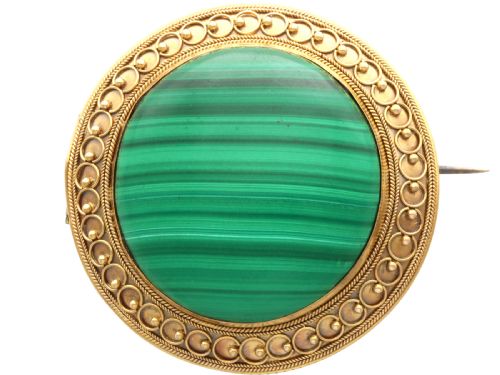
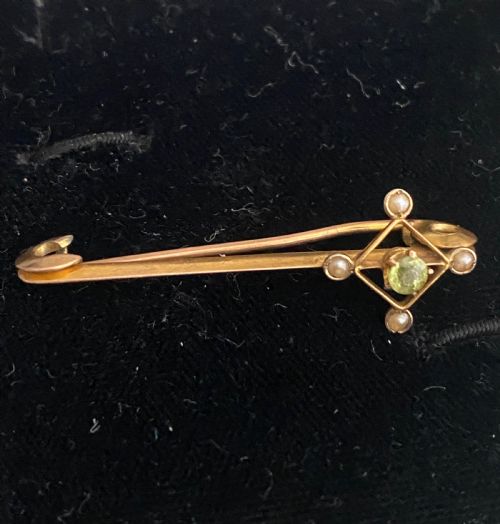
You are most likely to meet peridot mounted alongside seed pearls or diamonds in gold settings. These pieces showcase bright green peridot or malachite stones, paired with silver, yellow gold, or white gold according to their period.
How they were made
Goldsmiths utilised nine carat and eighteen carat yellow gold, alongside silver and white gold, to fabricate the structure of each brooch and pin. Gemstones such as peridot, malachite, chrysoprase, and emerald were meticulously cut and secured within these precious metal mounts.
Makers incorporated diamonds and seed pearls as accent stones around the central green gems. These delicate additions demonstrate precision handiwork, particularly in cluster and trellis formations seen across the nineteenth and twentieth century pieces.
Listings include items from the Edwardian and Victorian periods, alongside twentieth-century Art Deco examples.
What varies in quality
The sophistication of the stone setting and the complexity of the metalwork distinguish finer examples from standard items. Pieces featuring detailed trellis designs or combined diamond accents reflect higher craftsmanship than simpler bar mounts.
The clarity and saturation of the primary green stones, such as peridot and emerald, dictate the visual impact of the piece. The preservation of original components, including matching seed pearls and period specific clasps, further defines the standard of the item.
G. Colani
The Green Gemstone Pin Glossary
- Peridot
- A yellowish-green gemstone frequently utilised in Edwardian and Victorian cluster and bar brooches. It provides the characteristic bright green hue found across many pieces on this page.
- Seed pearl
- A very small, natural or cultured pearl used in delicate rows or clusters to frame central gemstones. They appear regularly alongside peridots in nineteenth-century jewellery.
- Stick pin
- A long pin with a decorative head, designed to be worn vertically in a cravat, lapel, or scarf. These functional items often display small diamonds or green stones.
- Trellis brooch
- A brooch featuring an openwork lattice or trellis framework of metal. This technique allows light to pass through the mounted stones.
- Cabochon
- A gemstone shaped and polished with a smooth, rounded surface rather than faceted. This cut is typical for stones like malachite and chalcedony.
Green Gemstone Pin: Frequently Asked Questions
What periods do these pins come from?
The pieces span the Victorian, Edwardian, and Art Deco eras, encompassing items made during the nineteenth and early twentieth centuries.
Dates range from the 1880s through to the 1930s, reflecting distinct stylistic shifts in jewellery design.
What metals are used in these items?
Craftsmen utilised various grades of yellow gold, including nine carat and twenty-one carat, alongside silver and white gold.
Settings often match the specific period, with silver and gold combinations appearing on nineteenth-century items.
Which green stones appear most often?
Peridot is the most common green stone, frequently paired with seed pearls in cluster or bar brooch configurations.
Other green materials include malachite, chrysoprase, emerald, and bloodstone.
How were these brooches worn?
Items served as functional fasteners and decorative ornaments on garments, cravats, or hats depending on whether they were configured as stick pins or brooches.
Pendant brooches offered the versatility of being worn on clothing or suspended from a chain.