


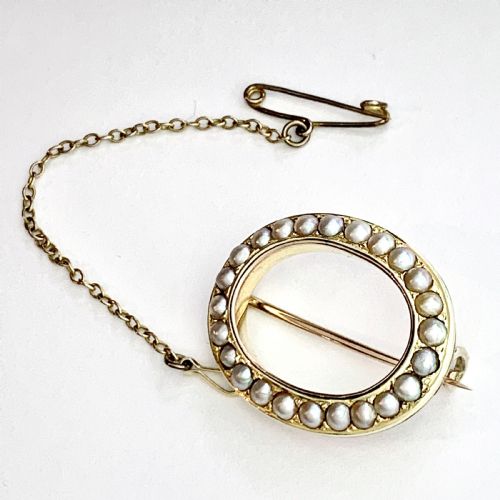


Vintage Gold Safety Pin
These vintage gold safety pin and bar brooches are finely worked personal ornaments set with pearls, diamonds, and coloured stones, prized for their secure fastenings and elegant proportions.
Vintage Gold Safety Pin
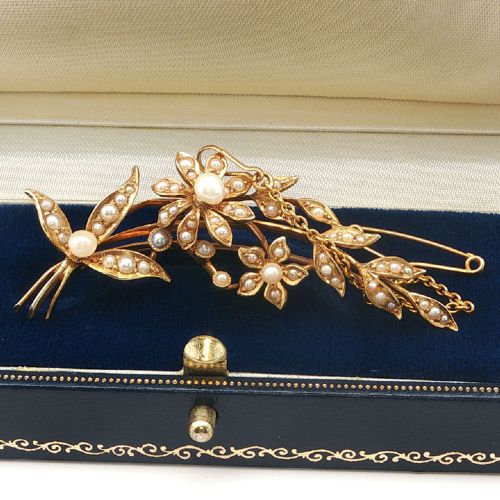
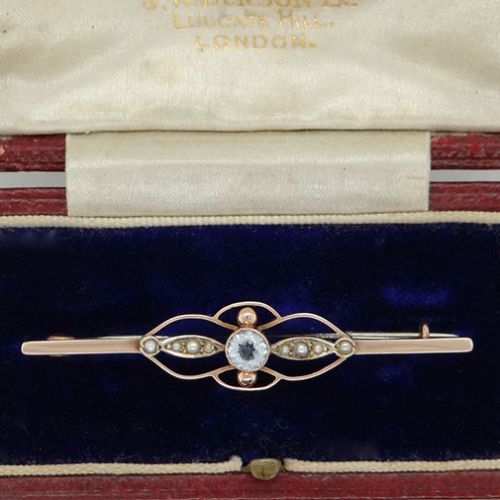
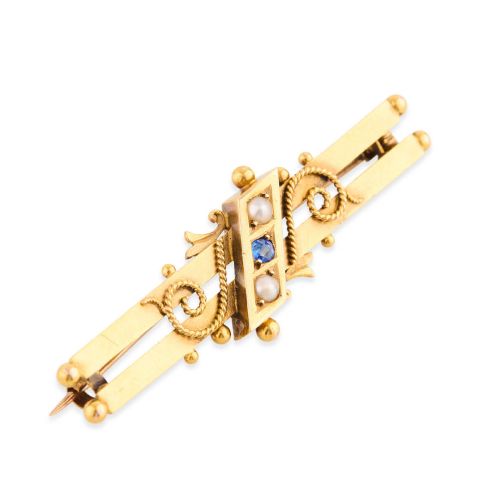
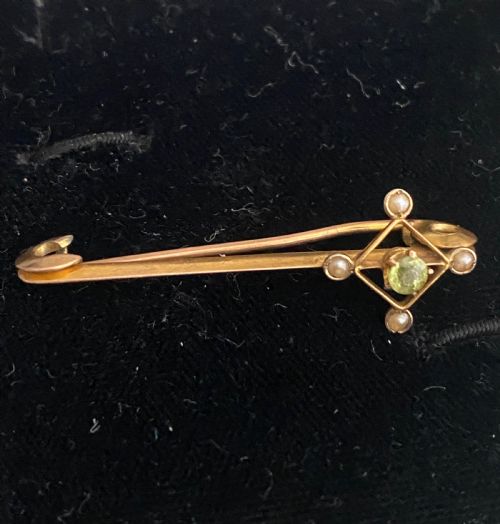
When you search for a vintage gold safety pin, you encounter bar brooches, double bar brooches, and cluster forms originating from the Victorian, Edwardian, and Art Deco periods, extending through the 1920s, 1930s, 1940s, and 1950s. These pieces function primarily as decorative fasteners or lapel ornaments, frequently incorporating structural pins with functional safety chains or clasps.
The pieces listed here showcase a range of gemstone settings, including seed pearls, aquamarine, sapphire, peridot, garnet, turquoise, and old cut diamonds mounted in 9ct and 15ct yellow or rose gold, alongside unmarked gold variants. Floral sprays, crescent shapes, heart motifs, and butterfly forms dominate the designs, reflecting the aesthetic preferences of their respective decades.
Materials and construction methods
Jewelters of the late nineteenth and early twentieth centuries constructed these brooches using solid 9ct and 15ct gold, shaping wire into bars and casting decorative motifs such as flowers, hearts, and crescents. Stones were hand-set into collets or bezels, with seed pearls often threaded or pegged onto fine gold posts.
Pins were tempered for spring and resilience, frequently accompanied by protective safety chains attached with jump rings to prevent loss during wear. Enamel work and delicate claw settings appear alongside flush-set stones, demonstrating the varied bench skills of the period.
What distinguishes finer examples
Quality in these brooches rests upon the weight and purity of the gold, alongside the selection and matching of the set stones. Finer examples display clean gemstone facets, uniform seed pearls, and crisp casting or hand-engraving on the gold mount.
The integrity of the pin mechanism and the subtlety of the stone arrangement separate standard production pieces from more accomplished jeweller work. Surviving safety chains and original clasps further elevate the integrity of a piece.
The Vintage Gold Safety Pin Glossary
- Bar brooch
- A slender horizontal pin, often straight or double-barred, designed to span a lapel or fastening. These form the structural basis for many gemstone-set pieces from the Victorian and Edwardian eras.
- Seed pearl
- A very small, natural or cultured pearl, typically undrilled or half-drilled, used in dense clusters or linear pavé arrangements. They are characteristic of late Victorian and Edwardian floral and star motifs.
- Old cut diamond
- A precursor to the modern brilliant cut, featuring a small table, high crown, and large open culet. These stones were hand-faceted to catch candlelight and gaslight.
- Safety chain
- A short length of fine chain attached to a brooch pin and pinned separately to fabric as a safeguard against loss. Their presence indicates original attention to security during wear.
Vintage Gold Safety Pin: Frequently Asked Questions
How do I wear a vintage bar brooch?
These pieces pin securely through heavy fabrics such as wool coats, lapels, or heavy knit sweaters where the weight of the gold and stones is properly supported. Many include integrated safety chains that should be secured to the garment alongside the pin itself.
They also function effectively when used to fasten thick scarves, shawls, or collars, combining decorative presence with practical utility.
Are these pins safe for daily use?
The mechanical strength depends on the tension of the pin stem and the tightness of the clasp. Most retain adequate spring for regular wear, provided the pin is not forced or bent.
For active daily wear, checking that the hinge and catch securely lock prevents accidental opening.
How do I date a gold safety pin brooch?
Dating relies upon stylistic markers, gemstone cuts, and gold hallmarks where present. Victorian and Edwardian pieces often feature delicate seed pearls and yellow or rose gold settings, while 1920s and Art Deco designs favour geometric layouts and brighter diamond configurations.
Later pieces from the 1940s and 1950s introduce heavier gold construction and varied cluster arrangements.
What is 15ct gold?
An alloy containing fifteen parts pure gold to nine parts other metals, equating to 62.5 percent purity. This specific standard was common in British jewellery manufacture during the Victorian and Edwardian periods before the introduction of the 9ct and 18ct standardisation.
It possesses a characteristic warm hue that differs perceptibly from modern yellow gold alloys.